If you’re flying from Seoul to Singapore with extra luggage, head straight for the airport that minimizes transfers, checked-bag handling, and confusion at check-in. In most cases, choosing the Seoul airport that offers the most direct international connections and straightforward ground access will save you time, reduce the number of bag transfers, and cut the chance of missed connections. The right departure airport depends on where you’re coming from in Seoul, how much extra baggage you have, and whether you prefer to pay for convenience or to accept a longer surface transfer.
This guide explains the practical tradeoffs—ground transport time, domestic-to-international transfers, airline baggage policies, and luggage-handling risks—so you can choose the departure airport that makes the Seoul to Singapore flights option with extra luggage least stressful. I’ll also give a checklist of what to verify on the airline or booking page before you buy your ticket, and how to compare direct and connecting routing options.
See current options before you compare the details
Availability and final conditions change. Open Trip.com now or keep reading for the practical comparison.
Weighing the main practical factors
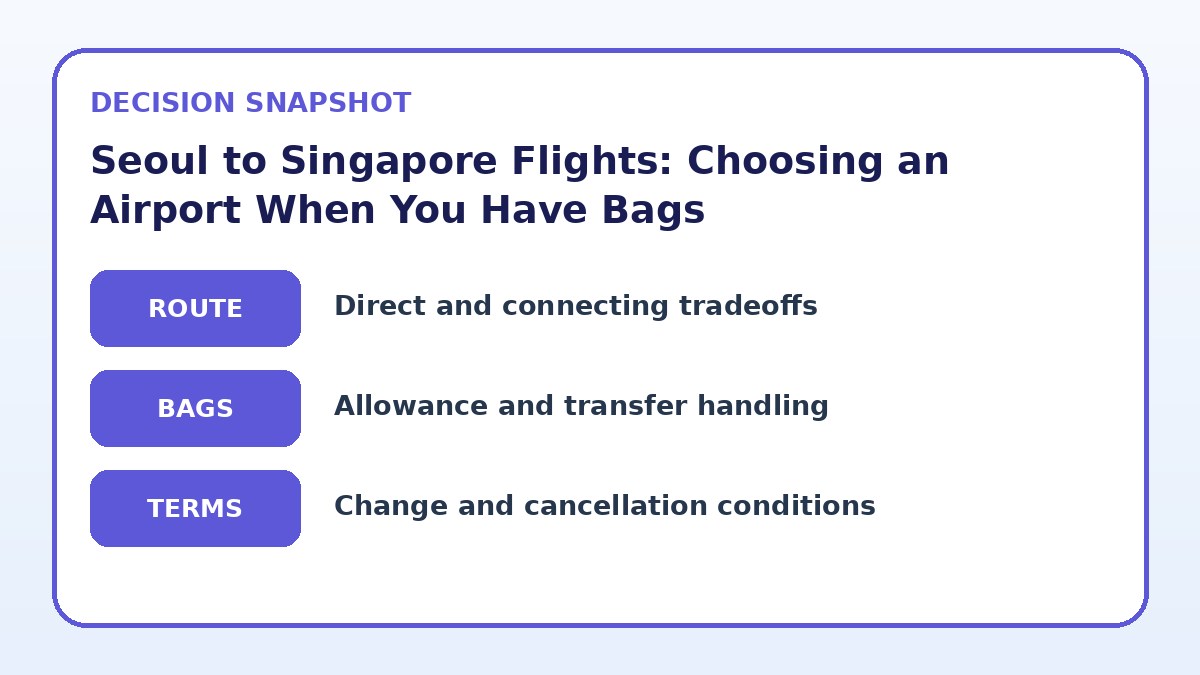
When deciding which Seoul airport to use for a Singapore flight while carrying extra luggage, focus first on three practical factors: how many times your bags will be handled, the ground travel time to the airport, and the airport’s international flight frequency to Singapore. Each transfer — taxi to a station, shuttle to an airport terminal, or rechecking bags between flights — increases the chance of delay or misplacement. Factor in how comfortable you are managing heavy bags on public transport, stairways, and platform gaps; low-cost surface transfers can save money but increase physical effort and risk.
Second, consider how airlines route baggage for connecting itineraries. If you book a through-ticket, bags are often checked to the final destination, reducing handling. If you book separate tickets or mix carriers, you may need to collect and recheck bags in Seoul. Finally, check arrivals and departure terminal layouts and whether airports offer easy curbside drop-offs, luggage trolleys, or porter services. These operational details influence whether an airport is a practical choice for travelers carrying oversized or numerous bags.
Comparing airport access and door-to-door time
Seoul’s airports sit on different sides of the metropolitan area and each requires a different door-to-door plan. For travelers living in northern or central Seoul, an airport with faster rail or highway access reduces the total journey time and the amount of baggage handling on the way. If you need a private car or taxi large enough for multiple bags, availability of wide drop-off bays and short walk distances to the terminal will matter. Also plan for peak-hour traffic; a five-kilometer shorter trip can be slower if it crosses busy corridors.
If budget or luggage size means you’ll use public transport, check whether the airport’s rail station has level boarding or lifts that can accommodate suitcases and whether there are step-free routes from platform to check-in. Sometimes a longer but more comfortable transfer — such as an express train with luggage space — is preferable to a short transfer requiring multiple staircases. Map your door-to-door time estimate including buffer for baggage handling and security, then compare that against your flight check-in and boarding deadlines.
| Approach | Best for | Tradeoff to check |
|---|---|---|
| Choose the nearest airport to your accommodation | Minimizing door-to-door time and avoiding long transfers | May have fewer direct options to Singapore or less favorable baggage services |
| Pick the airport with most direct flights to Singapore | Fewer baggage touches and simpler connections | Could mean longer surface travel and higher local transport costs |
| Use an airport with better ground transport with luggage-friendly options | Easier handling of heavy bags on trains or express shuttles | May add travel time if airport is farther in distance |
| Prioritize an airport offering curbside/priority bag drop or porters | Reducing physical strain and saving time at check-in | These conveniences sometimes come with extra fees or require advance booking |
Ready to check the option that fits your plan?
Use your exact dates and traveler details so the provider page can show the current total and conditions.
Direct versus connecting flights when you have extra luggage
Direct flights reduce baggage touches and the risk of missed connections. If direct Seoul to Singapore flights are available from a particular airport, that airport becomes more attractive for travelers with extra luggage. When comparing options, verify on the airline’s booking page whether your bags are checked through to the final destination and whether any stop involves baggage reclaims. If a layover or airline change requires rechecking, factor in enough transfer time and the effort of moving luggage between terminals or transport modes.
Connecting flights can offer lower fares or better schedules, but carry tradeoffs. More transfers can mean repeated security checks and longer waits with baggage in tow. If choosing a connecting route, prioritize itineraries with single through-checked bags, sufficient connection time, and minimal terminal transfers. When in doubt, call the airline ahead of booking to confirm baggage routing rules and whether they will accept oversized items or multiple checked bags without forced gate-checking.
Before you book
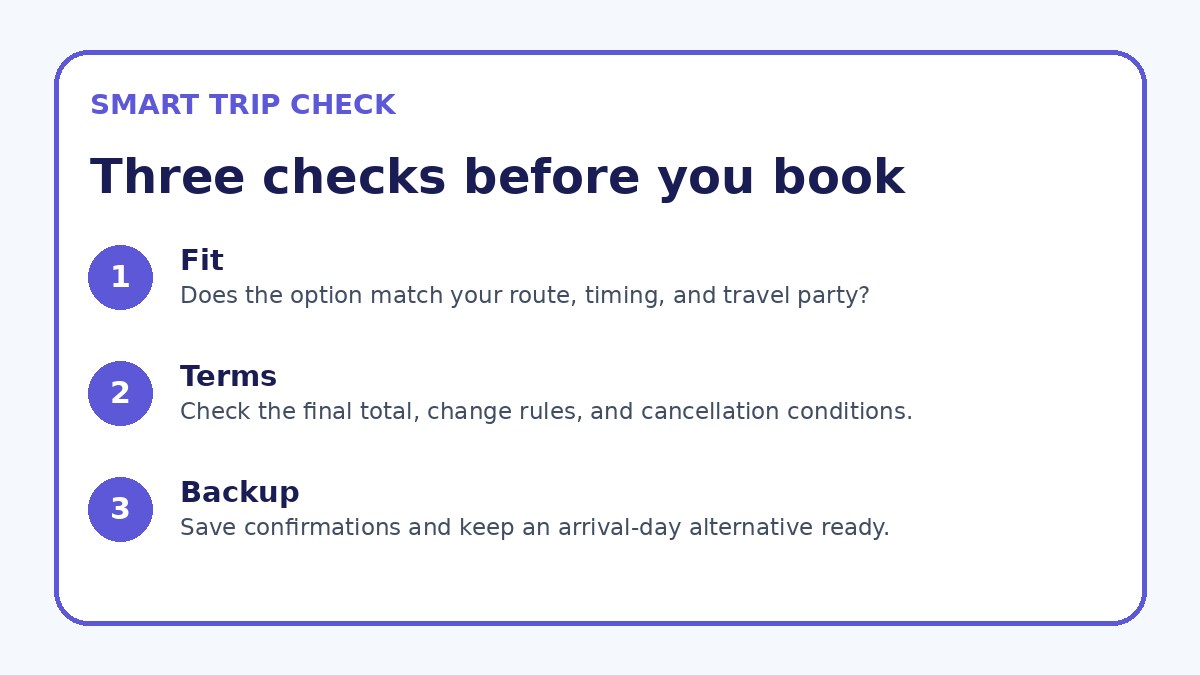
- Confirm checked baggage allowance, weight, and size limits on the airline’s official booking page before choosing your departure airport.
- Verify whether the airline will check your bags through to Singapore on connecting tickets or if you must reclaim and recheck them in Seoul.
- Estimate door-to-door travel time including expected traffic, transfers, and walking with luggage; choose the airport with the most manageable route.
- Check for airport porter services, luggage trolleys, or curbside check-in at the departure airport and book those services in advance if needed.
- If carrying oversized or special items, contact the airline to confirm acceptance rules and any required pre-notification or documentation.
- Pack essential items and a change of clothes in carry-on so you can manage if checked bags are delayed or rerouted.
Practical tips for checking baggage rules and services
Baggage policies differ by airline and fare class and can change. Always verify weight limits, number of free checked bags, size limits, and fees on the airline’s official booking page before you select an airport or flight. Also check whether special baggage — sports equipment, musical instruments, or oversized pieces — requires advance notice or a separate booking. If you rely on carry-on to avoid checked baggage fees, confirm cabin allowance dimensions that include wheels and handles; a case that fits one airline might not be accepted by another.
Look for airport services that ease travel with extra luggage: porter or skycap services, baggage trolleys, luggage storage lockers, and accessible curbside check-in. If the airline offers priority check-in or curbside bag drop at a particular airport, that convenience might justify a slightly longer transfer. Finally, plan for contingencies: know the airline’s baggage delay claim process and what documents you’ll need to report missing items, and keep essential items in a carry-on so you can function if bags are delayed.
Frequently asked questions
Can I check my bags all the way to Singapore if I change airlines in Seoul?
Whether your bags are checked through to Singapore depends on whether you have a single through-ticket and whether the airlines involved have interline agreements. If you book both legs on the same ticket with participating carriers, checked baggage is often routed to the final destination. If you book separate tickets or use carriers without an agreement, you may need to collect and recheck baggage in Seoul, which adds time and effort. Always verify baggage routing on the airline’s booking page and ask the airline representative if through-check applies to your itinerary before you travel.
How much extra time should I allow at the airport when traveling with many or oversized bags?
Allow extra time for longer check-in queues, potential weight checks, and moving between drop-off points and security. A practical buffer is to add at least 30–60 minutes beyond the airline’s standard recommended check-in time when you have multiple or oversized bags, and more if you must transfer between terminals or reclaim luggage. Check whether your departure airport offers priority bag drop or curbside check-in to reduce time at the counter, and verify these services on the airport or carrier website before departure.
If I choose a cheaper flight with a transfer, what should I do to protect my checked luggage?
To reduce risk, book itineraries on a single ticket where possible so bags are checked through, and allow generous connection time. Label your luggage inside and out with contact details, use sturdy locks, and consider lightweight protective covers for fragile items. Photograph contents for claims, and keep receipts for valuables. If you must transfer between terminals, bring a luggage cart or use porter services, and confirm baggage-handling procedures with both airlines. Finally, review the airline’s baggage delay and loss claim process on its official site so you know how to act quickly if your bags are delayed.
Final planning note
Choosing the most practical Seoul departure airport for flights to Singapore when you have extra luggage is a balance of fewer baggage touches, realistic door-to-door time, and available airport services. Start by mapping your origin to each airport and comparing direct flight availability, baggage policies, and ground transport comfort. Favor airports where you can check bags through and avoid multiple terminal transfers; if that’s not possible, give yourself generous connection buffers and arrange porter or curbside services. Before booking, confirm baggage allowances, fees, and transfer handling on the airline’s official booking page—and use comparison sites like Trip.com if you want a quick snapshot of current routing options.
Continue planning
Check current options and final conditions
Use the provider page to confirm live availability, the final total, cancellation terms, and every condition that matters to your trip.
This evergreen planning guide was created with AI-assisted drafting and a structured quality review. It does not display live prices, schedules, availability, visa guidance, or provider rankings. Verify current details before booking. Some links are affiliate links; we may earn a commission at no additional cost to you.