If you’re traveling from Seoul to Jeonju with extra luggage, the practical choice comes down to three things: where to board in Seoul, how you’ll move baggage between stations or terminals, and how you’ll arrive in central Jeonju. For many travelers the tradeoff is simple: a single transfer door-to-door with a shuttle or direct intercity bus demands more walking and vehicle loading, while a rail option may require station transfer but gives more space and stability for bulky bags. This article gives a clear, actionable plan up front — which stations to consider and how to move luggage between them — then explains the decision factors so you can match options to mobility, time, and budget constraints. Verify current schedules, luggage rules, and transfer connections on the carrier’s official pages before booking; you can also compare options on Trip.com if you want a quick snapshot of availability.
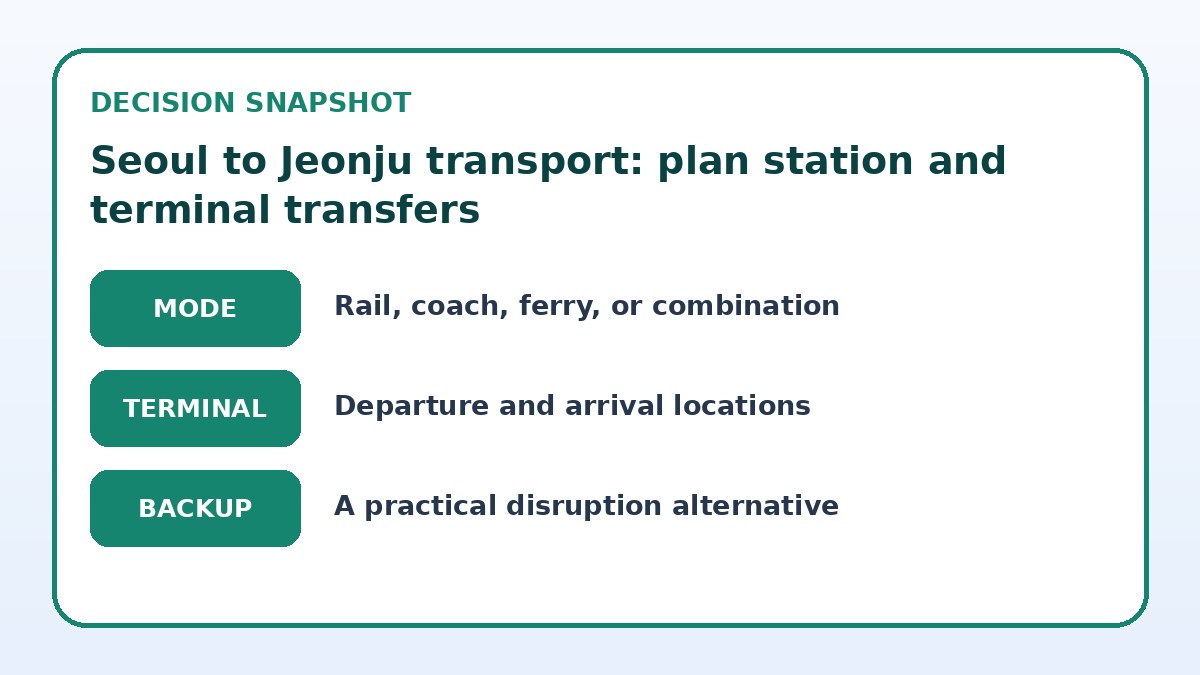
See current options before you compare the details
Availability and final conditions change. Open Trip.com now or keep reading for the practical comparison.
Where to start in Seoul: stations and terminals to consider
Seoul has multiple departure points that serve the Jeonju corridor; the right choice depends on how much door-to-door handling you want. Major railway stations and intercity bus terminals are built for luggage movement and usually offer elevators, luggage trolleys, staffed counters, and sheltered loading zones. If you’re near a terminal with intercity buses that go straight to Jeonju, that can avoid cross-city transfers. Conversely, using a national rail hub may be preferable if you value riding comfort and steadier onboard storage for suitcases.
When selecting a departure point, check the physical layout: is there step-free access from the street to platform? Are luggage lockers or porter services listed? Does the terminal have a Taxi stand or dedicated shuttle area so you can load bags directly into a vehicle without lugging them through crowds? Confirm these details on the station or carrier website, and plan your arrival at the station earlier than usual to buffer unexpected lifts or elevator queues.
Moving luggage between Seoul terminals or stations
If your journey requires transferring between a train station and a bus terminal in Seoul, choose a transfer method that minimizes handling. Options include taxi or app-based ride with a vehicle large enough for your luggage, airport-style shuttle if offered, or using station luggage forwarding services when available. Taxis reduce walking and avoid stairs but require asking for a vehicle with sufficient trunk space. If you opt for public transit for cost reasons, map the route for elevators and escalators to avoid stairs and crowd pinch points.
For multi-step transfers, pack so each case is manageable for one person: use wheeled suitcases with secure handles and consider lightweight soft bags for items taken on and off during transfers. Label all bags with your contact details and destination address to avoid mix-ups. If a carrier offers checked-luggage transfer or parcel services between stations, weigh the convenience against the need to supervise valuable or urgent items — and confirm pickup points and ID rules directly on the provider’s website before relying on them.
| Approach | Best for | Tradeoff to check |
|---|---|---|
| Direct intercity bus from Seoul terminal | Travelers who want curb-to-vehicle loading with minimal transfers | May require reaching a specific terminal and could be less comfortable for long rides |
| National rail with taxi transfer between stations | Those prioritizing onboard comfort and stable luggage storage | Involves at least one street transfer and arranging a vehicle with trunk space |
| Public transit (subway + bus) | Budget-conscious travelers with lighter or fewer bags | More walking, stairs, and elevator dependence; not ideal for large suitcases |
| Luggage forwarding or parcel service | Travelers who prefer hands-free transfers and delayed baggage pickup | Requires coordination and trust in pickup/delivery timing and handling |
Ready to check the option that fits your plan?
Use your exact dates and traveler details so the provider page can show the current total and conditions.
Arriving in Jeonju: stations, terminals, and last-mile choices
Jeonju’s main transport points are generally closer to downtown, but final choices hinge on where your accommodation sits and how you want to finish the trip. If your lodging is in the hanok village or central district, plan the arrival point that minimizes walking with bags. Some travelers find it simplest to take a taxi from the arrival station to the door; others prefer local buses if they’re confident in elevator access and have lighter baggage. Check maps for pedestrian routes that avoid long stairways and busy intersections when hauling suitcases.
Think also about luggage handling on arrival: do you want to bring bags into a hanok guesthouse with narrow stairs, or would a hotel with a staffed front desk be easier? If you expect difficulties with narrow doors or steps, call ahead and ask whether the property can meet you curbside or store luggage until check-in. If you plan to use a delivery service to send luggage to your accommodation, verify drop-off locations and hours and ensure someone will be available to receive the shipment at the other end.
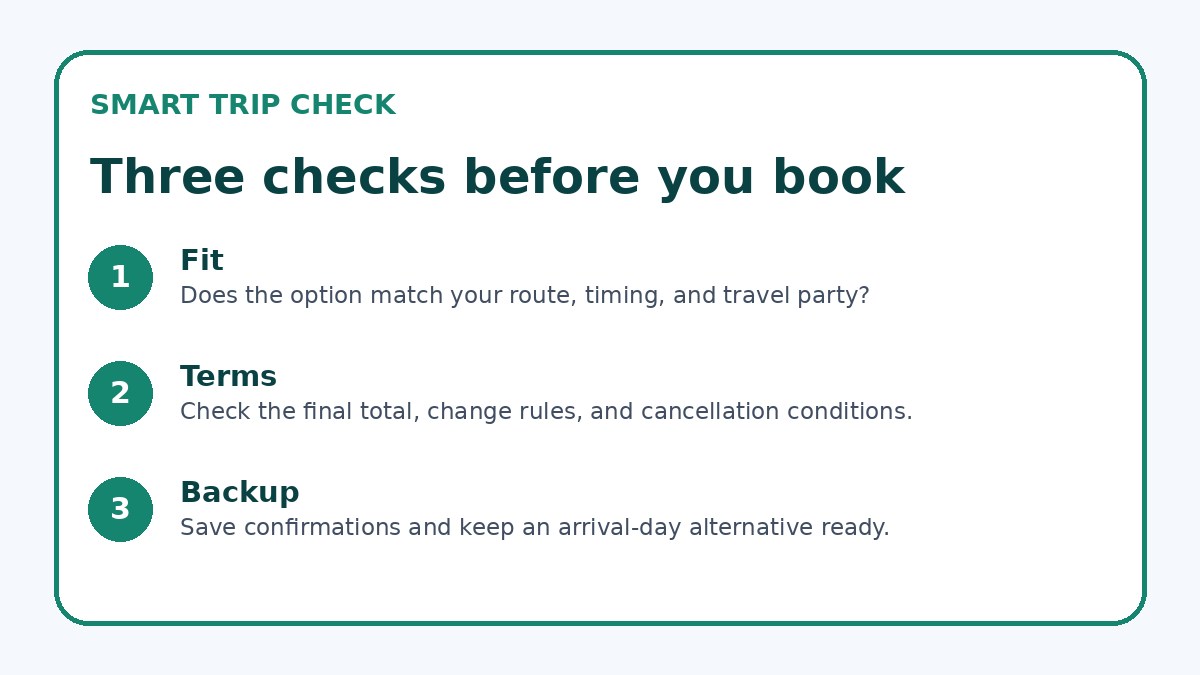
Before you book
- Confirm which Seoul departure point (station or bus terminal) is closest and has step-free entry or elevator access.
- Measure and weigh each bag; verify carrier size and weight allowances on the provider’s official booking page.
- Reserve a taxi or shuttle with adequate trunk space in advance if you need curb-to-curb service between stations.
- Check whether your Jeonju accommodation can receive luggage early or meet you at curbside for easier unloading.
- Compare direct bus and rail options for the number of transfers, then pad connection times by at least 30 minutes.
- If using luggage forwarding, verify drop-off and pickup locations, ID requirements, and the carrier’s delivery window.
Decision criteria and tradeoffs for choosing a transfer plan
When you’re choosing a transfer plan, weigh three practical factors: mobility and baggage volume, time sensitivity, and comfort preference. Travelers with mobility challenges or many large pieces will typically prioritize minimal handling and door-to-door vehicle access, even if it costs more. If you’re short on time, pick options with fewer segments and less potential for elevator or gate delays. If comfort during the ride matters more than transfers, rail with a single city transfer might be preferable to multiple short bus legs.
Also consider cost versus convenience: taxis and private shuttles reduce handling but increase expense. Public transit is cheaper but can involve stairs, crowded platforms, and limited space for oversize bags. Luggage forwarding services reduce physical labor but require trust in third-party handling and precise pickup times. For all provider-specific rules — baggage size limits, booking requirements for oversized items, or transfer connections — check the carrier’s official booking page before completing reservations.
Frequently asked questions
Can I take large suitcases on intercity buses or trains from Seoul to Jeonju?
Both buses and trains typically allow sizeable luggage but carriers differ on exact size and quantity limits and whether oversized items need advance notice. Some intercity buses provide external luggage bays designed for suitcases, while trains usually have designated luggage areas inside cars or overhead space for smaller items. Before booking, check the carrier’s official baggage policy for permitted dimensions and any requirement to reserve space for oversized baggage. If you plan to bring exceptionally large or heavy items, contact the carrier to confirm handling procedures or consider a luggage forwarding service.
What’s the easiest way to transfer luggage between Seoul terminals if I have multiple large bags?
The least-handling option is a private taxi or ride that fits all bags, so you can load at the curb and unload at the destination without stairs. If a single vehicle can’t accommodate everything, consider booking two vehicles or using a small van service. For budget-minded travelers, map a public-transit route that uses only elevators and escalators, and allow extra time. Alternatively, check whether stations offer porter services or luggage forwarding; these reduce carrying but require trusting a third party and confirming pickup details on the provider’s site.
Should I use a luggage-forwarding service when traveling to Jeonju?
Luggage-forwarding services are a good match when you want hands-free transfers or expect difficulty carrying bags through narrow streets or stairs. They remove the burden of transfers but introduce dependency on pickup and delivery windows and require precise drop-off locations. Use forwarding if your accommodation can accept the shipment and you’re comfortable with the vendor’s handling rules. Always verify service coverage for both Seoul pickup and Jeonju delivery, the required IDs, and any time restrictions on the provider’s booking page before handing over your bags.
Final planning note
Traveling from Seoul to Jeonju with extra luggage comes down to choosing the transfer pattern that minimizes handling while fitting your schedule and budget. If you prioritize minimal lifting and direct curb-to-curb movement, depart from a bus terminal or arrange a taxi/shuttle between stations. If onboard comfort matters more, select rail and plan a single taxi transfer. For those seeking minimal carry, luggage-forwarding services can help but require coordination. Whatever you choose, verify baggage rules and transfer details on the carrier’s official page and allow generous connection time. Planning these steps in advance will make the Seoul–Jeonju transfer straightforward, even with larger or multiple bags.
Continue planning
Check current options and final conditions
Use the provider page to confirm live availability, the final total, cancellation terms, and every condition that matters to your trip.
This evergreen planning guide was created with AI-assisted drafting and a structured quality review. It does not display live prices, schedules, availability, visa guidance, or provider rankings. Verify current details before booking. Some links are affiliate links; we may earn a commission at no additional cost to you.