Practical answer up front: families should choose the degree of ticket flexibility that matches how fixed their plans are. If you have a set itinerary—hotel and activities reserved on specific dates—a lower-flex, lower-cost ticket may be fine. If you expect changes because of kids’ health, weather, or shifting travel times, prioritize refundable or freely changeable tickets even if they cost more.
On Seoul to Gangneung transport, flexibility comes in three main forms: full refunds, free or low-cost date/time changes, and flexible seat selection. Compare options by thinking about cancellation windows, change fees, how easily you can rebook seats or trains, and whether you need specific departure times. Below I explain tradeoffs, what to verify on provider pages, and a practical checklist families can use before completing a booking.
Understand the types of flexibility and what families really need
Not all flexibility is the same. At booking you’ll typically see refundable tickets (allowing full or partial refund within stated terms), changeable tickets (permit date/time swaps with varying fees), and fixed tickets (low-cost but final). Families should map potential triggers for changes—child illness, childcare arrangements, inclement weather, delayed connections—and pick a level of protection that reduces stress without overpaying. Also consider who in the family holds the tickets: if one adult must travel with a child at a fixed time, prioritize seat and carriage availability over low fares.
Think beyond simple refund/change labels. Check whether the ticket allows seat reassignment on a different departure the same day, whether infant and child fares are treated differently, and whether group bookings (multiple seats under one reservation) must be changed as a unit. Some providers treat children’s tickets separately; others require the whole booking to be modified. If your trip involves a tight schedule—museum time windows, ferry connections, or hotel check-ins—give more weight to flexible-change policies than to a small fare saving.
How to compare flexibility when multiple transport options exist
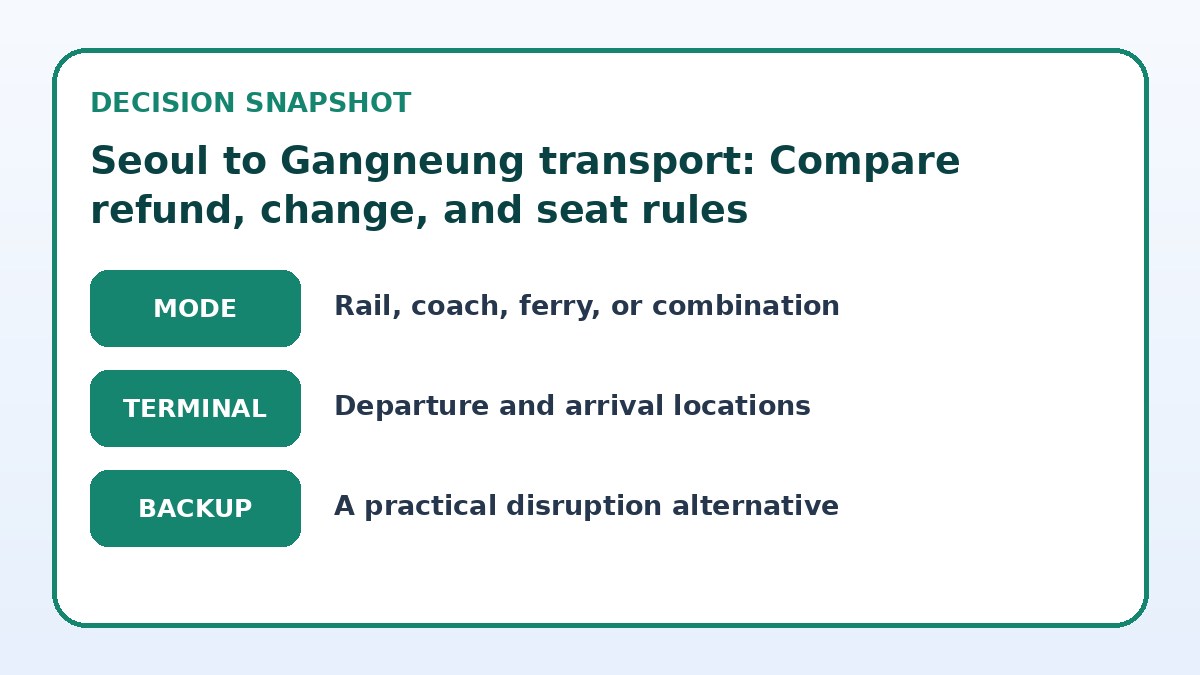
Seoul to Gangneung transport choices can include high-speed trains, regular intercity trains, buses, and car travel. Each option has its own booking rules. Compare the refundable and change policies side by side: list the refund window (how many hours before departure you can cancel), the change fee, whether changes are unlimited, and whether seat selection is transferable. For families, also note whether child or infant fares share the same terms; sometimes child tickets are non-refundable while adult tickets are refundable.
When providers offer both direct and connecting trips, compare the flexibility implications. A direct service with a higher fare but generous change rules can be less risky than several cheaper connecting options that each carry separate rules and fees. If you must transfer between services, confirm whether the booking includes protection for missed connections or whether you'll be responsible for rebooking separate tickets—this is essential when travelling with small children who increase the chance of delays.
| Approach | Best for | Tradeoff to check |
|---|---|---|
| Refundable tickets | Families with unpredictable plans or higher illness risk | Higher upfront cost but maximum cancellation protection and easier refunds |
| Changeable tickets (low/no change fee) | Families likely to shift departure times but not cancel outright | Moderate cost; may have restrictions on number of changes or time windows |
| Fixed/discount tickets | Families with locked, confirmed itineraries seeking savings | Lowest cost but little to no recourse if plans change or if you miss a departure |
| Split or hybrid bookings | Larger families balancing budget and flexibility across the trip | Requires careful management of separate tickets and potential seat-location issues |
What to verify on the provider’s booking page before paying
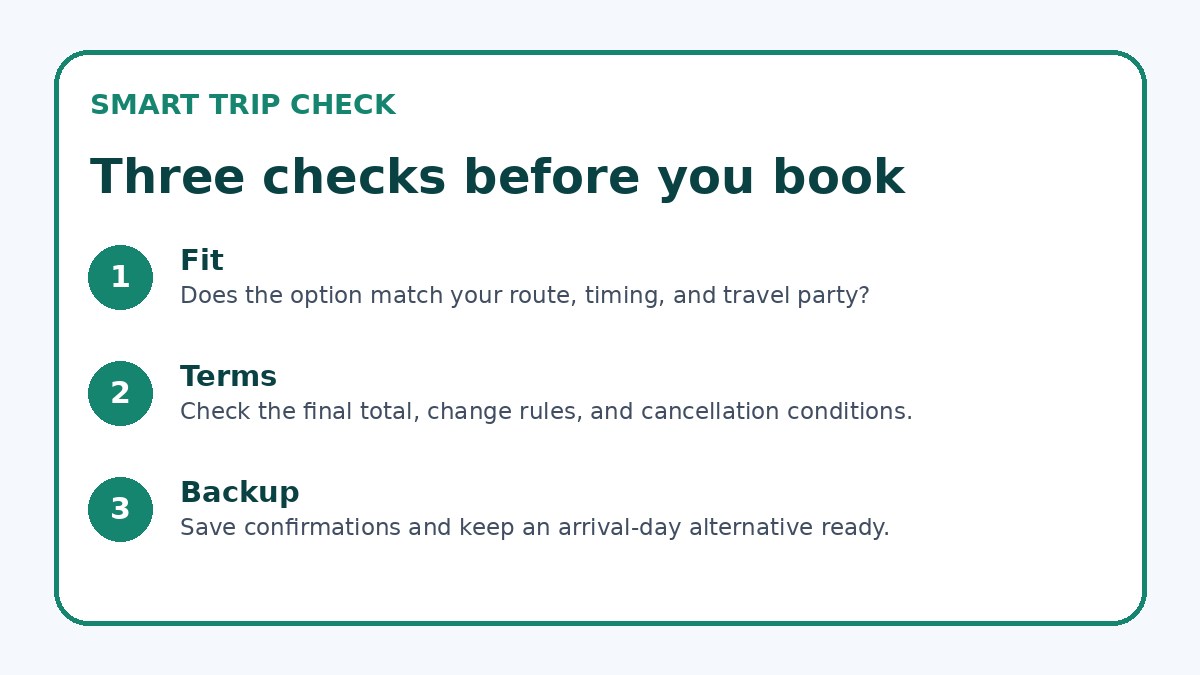
Always read the final terms on the provider’s booking page before you pay. For every ticket option confirm: the exact refund window and percentage returned, any per-ticket or per-booking service fees, how changes are handled (online, by phone, or at the station), and whether seat assignments can be changed without rebooking. If the policy refers to vague things like “service fees” or “administrative charge,” ask the provider or check the fine print to find the amount and when it is applied.
Also check whether refunds are issued back to the original payment method and how long the refund process takes—families relying on the returned money to rebook will want quick processing. For multi-seat bookings, verify if you can change individual passenger tickets or must change the whole reservation. Finally, confirm the operator’s customer-service channels and response times; a flexible policy is less useful if you cannot reach support quickly when plans shift.
Before you book
- Confirm the refund window and exact refund percentage for each ticket type on the final booking page before paying.
- Verify whether changes can be made online and the maximum number of permitted changes per ticket.
- Check if group bookings require changing all passenger tickets as a unit or allow individual edits.
- Confirm how seat reservations transfer between departures and whether adjacent seats can be held for the family.
- Note the provider’s refund processing time and method (original card, voucher, etc.) in case you need funds to rebook.
- Take screenshots of terms and the booking confirmation, including booking codes and the full change/refund policy text.
Practical booking strategies for families
If you expect possible tweaks, book the most flexible ticket you can comfortably afford. If that still feels expensive, consider a hybrid approach: book the outbound on a flexible ticket and the return on a lower-cost fixed fare, or vice versa, depending on which leg is likelier to change. Another tactic is to hold refundable accommodation for a short period after ticket purchase or use provisional reservations that give you some breathing room before committing fully to dates.
For larger families, split reservations can sometimes reduce risk: book essential travelers on flexible fares and secondary travelers on cheaper fares—but check whether the operator enforces group seating together. If seat selection matters (long journeys, wanting adjacent seats), prioritize tickets that guarantee seat reassignment during changes. Always save screenshots of booking confirmations and the full terms page; these can be vital if you need customer service help later.
Frequently asked questions
Can I book mixed ticket types (one flexible, one fixed) for different family members?
Yes—many operators allow mixed bookings, letting you buy one flexible ticket and other fixed fares in the same family trip. However, check the provider’s policy: some bookings group passengers together and require changes to apply to the entire reservation. If that’s the case, you may need separate reservations to keep rules independent. Also confirm seat allocation: mixed tickets can mean seats are not guaranteed together unless you pay for seat selection or contact customer service to request adjacent seats.
What should I do if my child falls ill and we need to change or cancel close to departure?
First, check the specific refund and change deadlines on your ticket: some fares permit same-day changes or partial refunds with medical proof. If your fare is non-refundable, contact the operator immediately—some allow exceptions for medical emergencies with documentation. Keep medical certificates or proof handy and record call or chat reference numbers. If you have travel insurance, review its medical cancellation provisions; it may reimburse non-refundable fares after you provide insurer-required documentation.
How do I choose between a direct service and a cheaper connecting option for family travel?
Weigh time, hassle, and flexibility together. Direct services reduce transfers and the risk of missed connections with children, which can make a higher fare worthwhile if it includes flexible change rules. Cheaper connecting options may seem attractive but often mean multiple tickets and separate change rules—more steps if you need to rearrange. Compare overall flexibility: a pricier direct ticket that allows free changes can be less risky and simpler than two or three cheap non-changeable legs.
Final planning note
Choosing ticket flexibility for Seoul to Gangneung transport comes down to balancing certainty, cost, and manageability. For families who expect possible changes—illness, weather shifts, or schedule juggling—prioritize refundable or freely changeable fares even if they increase the ticket price. If your itinerary is firm and you’ve built padding into connecting plans, a fixed fare can save money. Always verify the exact refund and change terms on the provider’s booking page (including fees, processing time, and whether the policy applies per passenger or per booking). Use the checklist to confirm critical details, and keep records of confirmations and policies in case you need to rearrange plans quickly.
Continue planning
Check current options and final conditions
Use the provider page to confirm live availability, the final total, cancellation terms, and every condition that matters to your trip.
This evergreen planning guide was created with AI-assisted drafting and a structured quality review. It does not display live prices, schedules, availability, visa guidance, or provider rankings. Verify current details before booking. Some links are affiliate links; we may earn a commission at no additional cost to you.