If you’re arriving in Busan alone with children and several pieces of luggage, the most practical answer is to pick a transfer option that balances door-to-door convenience with child safety and manageable handling of bags. That usually means choosing a private or shared airport vehicle when you need curb-to-hotel help, or a taxi for short distances and fewer bags. Public buses and trains are cheaper but require lifting, squeezing luggage onto racks, and supervising children through crowds and transfers. Below I explain how to compare options based on group size, stroller needs, luggage count and budget, plus what to verify on provider pages before you book.
Decide by group size, luggage and stroller needs
Start by listing who’s traveling and how much you’ll carry: adults, number and ages of children, suitcases, foldable stroller, and any big items like car seats. Solo travelers with one small child and one checked bag have very different needs than someone with two kids, two large suitcases, plus a stroller. That inventory directly affects whether you can manage public transport or need private assistance. Be realistic about lifting and carrying: if you must carry a child up or down stairs while hauling luggage, a door-to-door option will save time and reduce stress.
Also consider strollers and car seats as special items. A compact foldable stroller fits on trains and buses more easily than a full-size buggy. If you plan to use a car seat, check whether transfer providers allow you to bring or rent one; verify this on the provider’s booking page. Some taxis may accommodate car seats but require advance notice. Finally, note the child’s temperament and routine: a cranky toddler might make a multi-stop shuttle or long public transfer impractical, nudging you toward a direct option.
Private transfer vs shared shuttle vs public transit
Private transfers give you a driver waiting at arrivals, help loading luggage, and a direct ride to your door—advantages when you’re solo and supervising children. However, they can be less flexible with tight arrival windows; confirm pickup meeting points, what happens with delayed flights, and any limits on luggage or strollers on the booking page. If you need car seats, ask whether the company supplies one or if you must bring your own; many providers note this requirement at booking. Private services reduce transitions and let you manage naps and feeding in private.
Shared shuttles lower cost by combining passengers but often include multiple stops and waiting time, which can stretch journeys with children. They work best when you have fewer bags, can fold a stroller, and the child copes with longer door-to-door windows. Public transit—airport bus or rail—offers the lowest-friction navigation through dedicated luggage areas and predictable routes, but it requires you to handle suitcases, supervise children in busy stations, and sometimes walk between platforms. Compare your tolerance for transfers and physical handling before choosing.
| Approach | Best for | Tradeoff to check |
|---|---|---|
| Private door-to-door transfer | Solo travelers with lots of luggage or young children needing car seats | Higher cost and less flexibility if your schedule changes |
| Shared airport shuttle | Travelers with moderate luggage wanting lower cost and some assistance | Longer travel time due to multiple stops and possible waits |
| Taxis or ride-hailing | Short city transfers or last-minute arrivals with manageable luggage | Variable space for suitcases and uncertain child-seat availability |
| Public train or airport bus | Budget-minded solo travelers who can manage lifts and supervise kids | Requires physically handling bags and navigating stations with children |
Practical tips for arrivals and departures with kids
Prepare an arrivals kit: water, snacks, a familiar toy, hand wipes, a change of clothes, and a small first-aid item. Pack child essentials in a daypack you can carry, leaving suitcases to the transfer provider if possible. Keep passports and any documentation handy. On arrival, head to the agreed meeting point with your child in a carrier or stroller that’s easy to fold; this keeps hands free for luggage and the driver. If you plan to use public transit, scout station layouts and elevator locations in advance to avoid stair carrying.
For departures, allow extra time at the hotel to pack and organize children’s items so the vehicle pickup is smooth. Confirm pickup windows and how drivers identify you—photo, flight number, or name board—on the booking page. If using taxis, choose reputable companies recommended by your hotel or booking platform; ask the front desk to call one if you need assistance with luggage. Always leave a cushion of time around naps and meals to avoid rushed stress right before a trip to the airport.
Before you book
- Count people and bags, and list stroller and car-seat needs before comparing options.
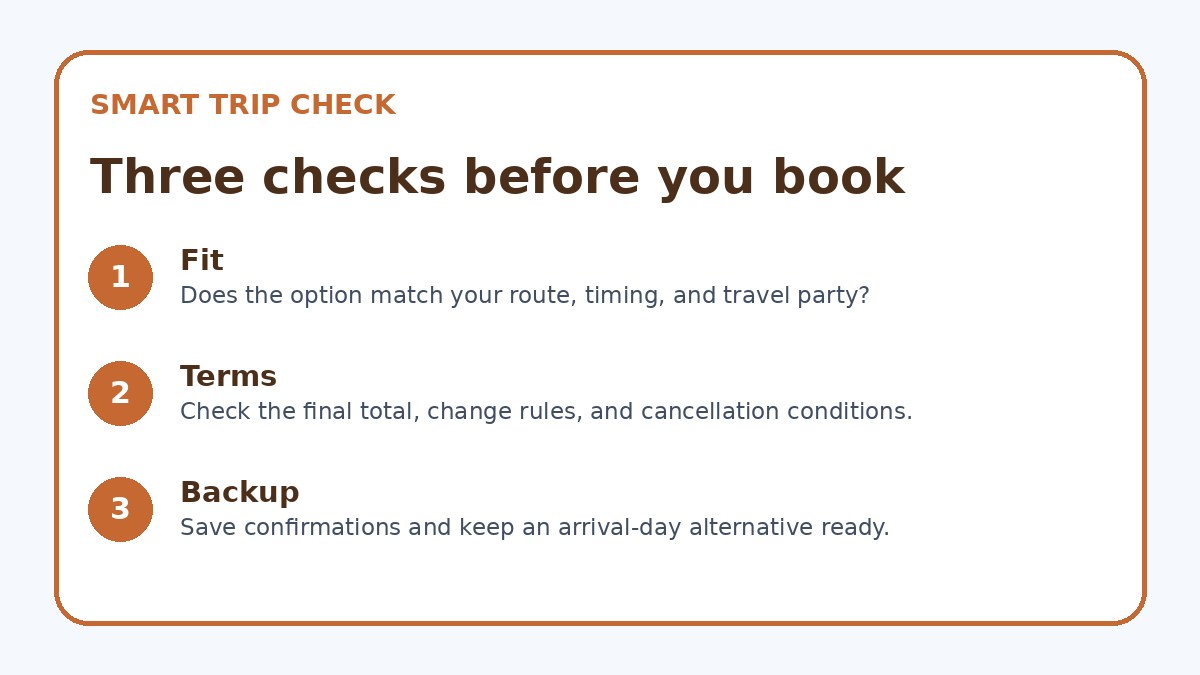
- Check the provider’s booking page for child-seat availability and exact pickup/drop-off instructions.
- Confirm luggage limits and how many large suitcases fit in the booked vehicle.
- Note the airport meeting point and what to do if your flight is delayed or early.
- Pack a daypack with snacks, medication, and entertainment for each child within easy reach.
- Ask your hotel for arrival assistance or to pre-book a transfer if you prefer staff coordination.
What to verify before you book any Busan airport transfer
When comparing transfers, check the provider’s final booking page for specifics you cannot assume: cancellation policies, whether car seats are included or available for rent, luggage limits per vehicle, the exact meeting point at the airport, and late-arrival or flight-delay handling rules. Don’t assume a picture of a vehicle means it’s the one you’ll get; many operators change vehicle sizes. If the booking page lacks clear information on child seats or stroller storage, contact the operator directly before committing.
Also compare how providers handle infants and toddlers—some set age or height limits for booster or car seats. If you’re using public transit, verify station elevator access and whether route changes are planned on your travel day. For taxi rides, check if the company accepts card payments or only cash, and whether drivers can help with bulky luggage. If you want a single place to compare options, Trip.com can be used to view current availability, but always confirm the provider’s terms on its official booking page before purchase.
Frequently asked questions
Can I use public transit from Busan airport with a stroller and luggage?
Yes, public transit can work if you use a compact stroller and travel light, but it requires planning. Check station layouts for elevator access and platform transfers, and be prepared to fold the stroller during busy periods. Luggage must be carried or placed on racks; if you have multiple large suitcases and a child to manage alone, public transit will be physically demanding. Consider a private transfer for door-to-door convenience if you want to avoid lifts, stairs, and crowd navigation.
Do taxis in Busan commonly provide child seats?
Taxi policies vary. Some taxi companies or private drivers can supply or accommodate a car seat with advance notice, but many do not. Before relying on a taxi for a young child, ask the company or driver whether a seat is available and whether it is appropriate for your child’s age and weight. If a child seat is required and the taxi cannot provide one, plan to bring a portable approved seat or book a private transfer that explicitly offers car-seat service on its booking page.
How do I decide between a private transfer and a shared shuttle for a solo parent?
Weigh convenience against cost and time. Private transfers minimize handling, reduce transition points, and usually let you manage children’s needs in privacy—helpful with naps or feeding. Shared shuttles save money but add stops and waiting, which can be disruptive with young children or heavy luggage. If minimizing physical effort and stress is your priority, lean toward private options; if you’re cost-conscious and your child copes well with longer travel windows, a shared shuttle may be acceptable.
Final planning note
Solo travel in Busan with children and luggage is manageable with a clear plan: inventory your party and baggage first, then choose the transfer type that matches your physical capacity and tolerance for stops or crowds. Private transfers reduce handling and transitions; shuttles and taxis balance cost and convenience; public transit is the most hands-on choice. Before booking, verify car-seat policies, luggage limits, exact meeting points, and delay procedures on the provider’s booking page. With a short checklist and a backup plan, you can turn arrivals and departures into calm, controlled parts of your Busan trip.
Continue planning
Check current options and final conditions
Use the provider page to confirm live availability, the final total, cancellation terms, and every condition that matters to your trip.
This evergreen planning guide was created with AI-assisted drafting and a structured quality review. It does not display live prices, schedules, availability, visa guidance, or provider rankings. Verify current details before booking. Some links are affiliate links; we may earn a commission at no additional cost to you.