For a solo traveler deciding how to go from Seoul to Busan, the central tradeoff is simple: direct options save time and reduce connection stress, while connecting itineraries can offer lower fares or better departure windows but add complexity and baggage risk. Start your planning by locking exact travel dates, your preferred airport in Seoul (Gimpo or Incheon), and how much checked baggage you need — those details change which routes are available and the total cost. This guide gives the practical answer up front: choose a direct flight if you value simplicity, short transit time, and minimal risk of missed connections; consider a connecting itinerary if cost savings, outbound time window, or specific carrier loyalty benefits matter more than the added complexity. Below you’ll find how to compare routing, baggage and connection risks, schedule fit, and fare conditions so you can make an efficient, confidence-based booking decision.
See live routes for your exact travel day
Compare direct and connecting choices with the same baggage and traveler details.
Routing: direct hubs, airports, and what to compare
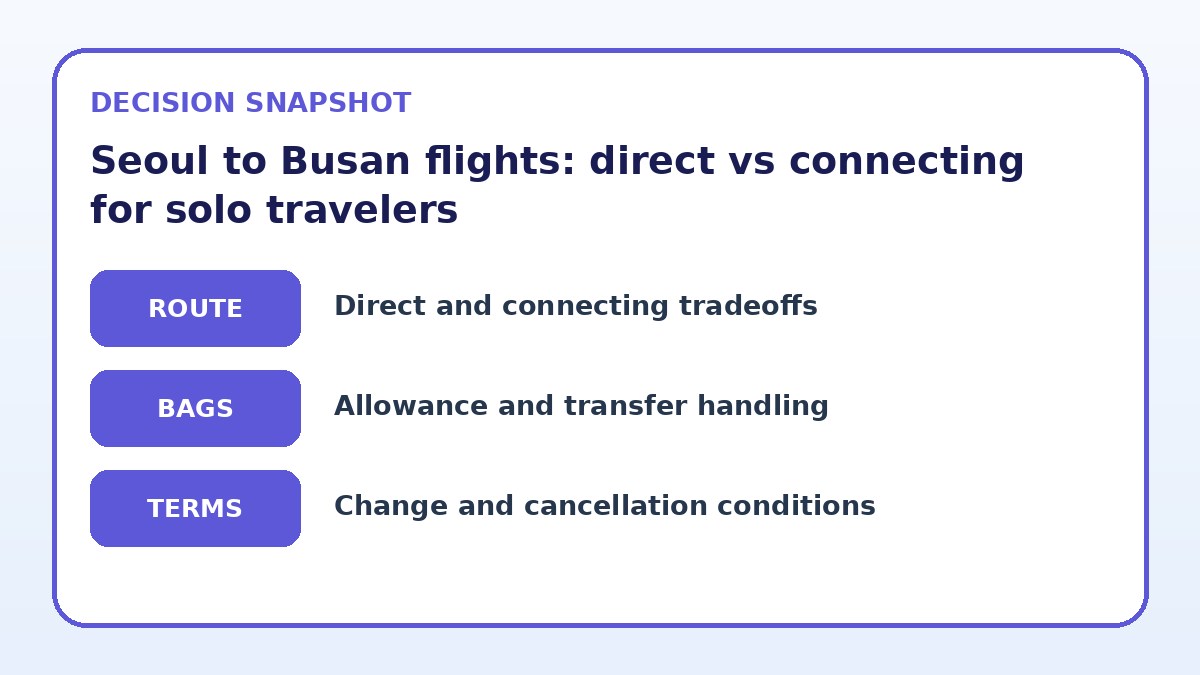
When you search Seoul to Busan flights, treat ‘direct’ and ‘connecting’ as routing categories rather than guarantees of speed or convenience. Direct itineraries fly non-stop between your chosen Seoul airport and Busan’s airport; these save transit time and remove transfer steps. Connecting itineraries route you through another Korean city or a different airport. Before you book, verify which Seoul airport is listed for departure (Gimpo is closer to central Seoul than Incheon) and whether the itinerary is non-stop or includes a change of plane. Also confirm arrival airport in Busan; a few itineraries may route through nearby hubs that alter ground transit time to your final destination.
Practical comparison steps: run side-by-side searches for nonstop options and 1-stop itineraries using identical dates and passenger details. Note the total door-to-door time, including recommended time to reach the Seoul departure airport and ground travel from Busan arrival airport. If train or bus alternatives are options for part of the route, include them as a time and cost baseline. Finally, when a connecting option looks cheaper, check if the saving compensates for the extra transfer time, potential overnight layovers, or the stress of changing aircraft.
Baggage and connection risk: what solo travelers must verify
Baggage rules are a frequent source of surprise on connecting itineraries. If your connecting flights are on the same ticket with a single carrier or partner airlines, checked luggage is often transferred automatically; if separate tickets or different carriers are involved, you may need to reclaim and recheck bags, adding time and the risk of missed connections. Solo travelers should decide whether they can comfortably manage their luggage through a transfer and whether they prefer to travel carry-on only to remove that uncertainty. Always verify the exact baggage allowance and fees on the carrier’s booking page before paying.
Connection risk extends beyond luggage. A short layover increases the chance of missing a connection if the inbound flight is delayed, and an overnight connection can create accommodation needs and extra costs. Look for the minimum connection time stated by the carrier or airport, and add a buffer for immigration, security, and transit between terminals if necessary. If you value fewer moving parts, favor direct flights or book connecting flights on a single ticket with protection for missed connections.
Compare flight-selection strategies
| Flight strategy | Best for | Risk to check |
|---|---|---|
| Non-stop flight | Solo travelers who prioritize speed, minimal hassle, and predictable arrival times | Often higher base fares and fewer options for departure windows compared with multi-leg itineraries |
| Single-ticket connecting flight with same-carrier protection | Travelers seeking lower fares while retaining protection if a connection is missed | Longer total travel time and a higher chance of delays or missed connections than non-stop flights |
| Separate tickets for cheaper connecting segments | Budget-first travelers comfortable managing baggage and rechecking between flights | No protection for missed connections and extra time needed to reclaim and recheck luggage |
| Hybrid approach: fly one-way direct, return via connection | Solo travelers balancing convenience on arrival with cost savings or schedule flexibility on return | Adds planning complexity and requires careful verification of fare rules and baggage transfer on the connecting leg |
Recheck the complete itinerary
Confirm airports, connection handling, baggage, and change conditions before deciding.
Schedule fit: departure windows, frequency, and flexibility
Solo travelers often prioritize departure times that fit their itinerary or reduce late-night arrivals. Direct flights typically run more frequently between Seoul and Busan, offering morning and evening departures that let you shape your day. Connecting options may present more time slots but can introduce long layovers or odd-hour transfers. When comparing schedules, match the total trip time and the clock times of each segment to your plans: an earlier outbound non-stop might be worth a higher fare to avoid arriving late, while a connecting itinerary with an ideal departure time could be preferable if it aligns with meetings or local check-in hours.
Flexibility matters if your plans might change. Flexible fares allow easier date or time switches, which is useful for solo travelers who may need to extend or shorten trips. Some carriers sell low-cost nonrefundable fares that are cheaper but restrictive. When evaluating schedule fit, filter search results by earliest acceptable departure, latest acceptable arrival, and minimum connection time. Then decide whether the convenience of a particular flight justifies the fare conditions tied to it.
Flight details to verify
- Choose exact travel dates and preferred Seoul departure airport (Gimpo or Incheon) before searching fares.
- Decide whether you will travel carry-on only or need checked baggage and note required dimensions and weight limits.
- Search for nonstop options and single-ticket connections side-by-side for the same dates and passenger details.
- Verify total door-to-door time, including ground transit to/from airports and any required minimum connection times.
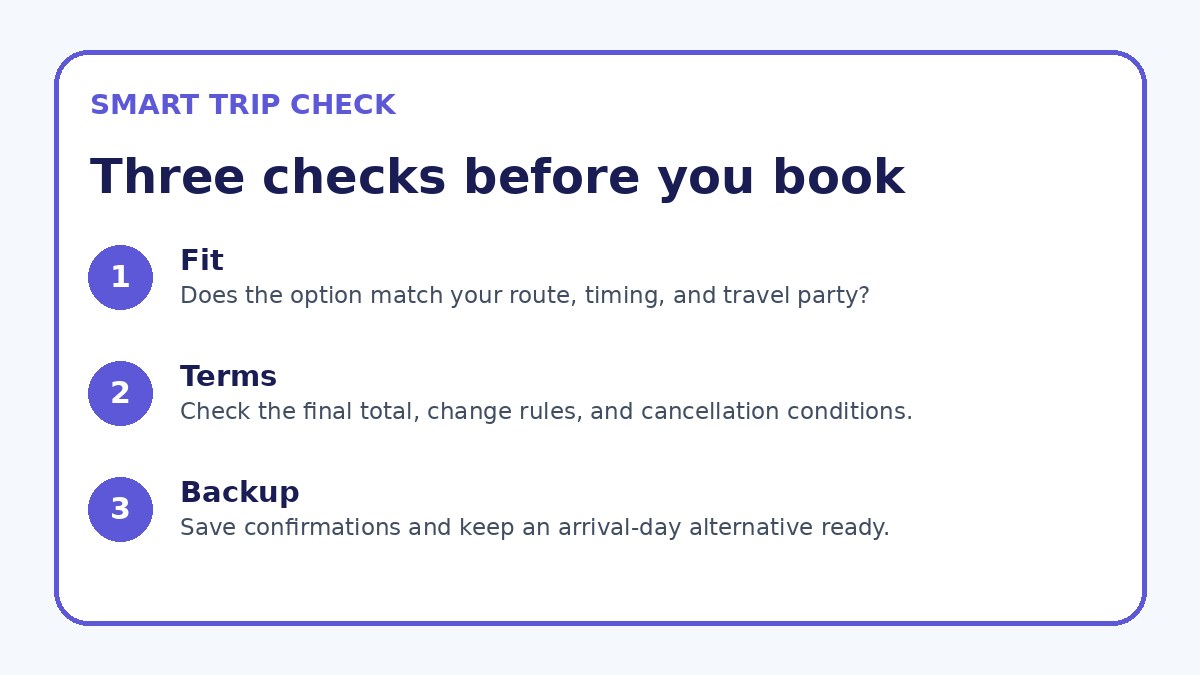
- Open the operating carrier’s booking page to confirm baggage allowances, change/cancellation rules, and final total price.
- If considering separate tickets, allow at least two hours between flights and plan for luggage reclaim and recheck.
Fare conditions and booking checks you must make before paying
Fare conditions determine your real cost beyond the headline price. Check change and cancellation rules, baggage fees, seat assignment charges, and whether meals or other services are included. A fare that looks cheaper but charges for a carry-on or has high change fees can quickly become more expensive than a slightly higher flexible ticket. If you rely on a particular loyalty program, verify whether you’ll earn miles on the chosen fare class and whether upgrades or refunds are possible under your circumstances.
Before finalizing any booking, inspect the carrier’s final booking page for exact conditions: total price with taxes and fees, baggage allowance, change and cancellation penalties, and airport terminal information. If using an online travel agency to compare options, do one last check on the airline’s site to confirm those details. You can use sites like Trip.com to compare current availability, but always verify baggage rules, connection protection, and fare flexibility with the operating carrier before you complete payment.
Flight Guide questions travelers ask
Is a direct flight always the safest choice for a solo traveler between Seoul and Busan?
Direct flights reduce the number of moving parts—no transfers, fewer opportunities for missed connections, and generally simpler baggage handling—so they are often the least stressful option. However, ‘safest’ depends on your priorities: if price is the main concern and you’re comfortable managing transfers and luggage, a connecting journey can be acceptable. Always weigh total door-to-door time, airport transfer complexity, and whether the fare offers protection for missed connections. Verify all baggage and connection protections on the carrier’s booking page before you buy.
How much extra time should I allow for a connection when booking separate tickets?
Booking separate tickets increases your personal responsibility for transfers; you must reclaim luggage if it isn’t checked through and recheck for the next flight. Allow at least a generous buffer beyond published minimum connection times—two hours is a common starting point within the same airport, more if terminals require a shuttle or if you must pass immigration. Consider the time needed for delays, baggage reclaim, security re-screening, and travel between terminals. If an overnight layover is required, factor in accommodations and local transport.
What should I verify on the airline’s final booking page before completing purchase?
On the airline’s final booking page, confirm the total fare with taxes and fees, exact baggage allowance for each passenger, permitted cabin and checked bag sizes, change and cancellation penalties, any seat selection charges, and the listed departure and arrival terminals. If your itinerary includes connections, check whether they are on a single ticket and if the carrier offers protection for missed connections. Also verify whether you earn frequent flyer credit on the chosen fare class. These details can alter the real cost and convenience of your trip.
Final decision note
For solo travelers deciding between Seoul to Busan flights, the practical choice hinges on whether you prioritize simplicity or savings. A non-stop flight minimizes hassle, lowers connection risk, and is preferable when time and predictability matter. Connecting itineraries can reduce cost or improve schedule fit but introduce baggage handling, potential missed connections, and more rules to check. Before you book, lock your dates, pick the Seoul airport that suits your ground travel plan, and compare nonstop and single-ticket connecting options with the same passenger details. Always verify baggage allowances, change/cancellation policies, and total price on the carrier’s final booking page before paying.
Continue planning
Check current options and final conditions
Use the provider page to confirm live availability, the final total, cancellation terms, and every condition that matters to your trip.
This evergreen planning guide was created with AI-assisted drafting and a structured quality review. It does not display live prices, schedules, availability, visa guidance, or provider rankings. Verify current details before booking. Some links are affiliate links; we may earn a commission at no additional cost to you.