Short answer: for most solo travelers in central Seoul, a rental car is more hassle than help — public transport and walking cover major neighborhoods, museums, markets and nightlife efficiently. However, if your plan centers on day trips outside the city to rural temples, coastal areas, or mountain trails, renting a car can be the most flexible option. This article walks through the decision criteria you need to weigh: mobility needs, comfort with local driving and parking, cost considerations beyond base rates, and where a car actually adds value for a solo trip. Read the quick tradeoffs first if you want a fast decision, then use the longer sections to match your itinerary and preferred travel style to practical next steps.
See current options before you compare the details
Availability and final conditions change. Open Trip.com now or keep reading for the practical comparison.
How Seoul’s transport fabric changes the need for a car
Seoul’s public transport network is extensive: multiple subway lines, frequent buses, and a dense taxi fleet allow you to reach most central sights quickly. For a solo traveler whose itinerary focuses on neighborhoods—Gangnam, Hongdae, Insadong, Myeong-dong—these options are cheaper and less stressful than navigating city traffic and finding parking. Walking is also practical in many districts, and many attractions cluster close enough to combine transit with short walks. If your trip emphasizes museums, cafes, street markets and evening entertainment, you’ll likely save time and money by using public transit rather than dealing with a rental car’s logistical overhead.
That said, Seoul’s network becomes less convenient when you push beyond metropolitan limits. Reaching national parks, remote temples, or coastal towns often means transfers, limited schedules, or long waits—especially early mornings or late evenings. For a solo traveler who values schedule control and wants to access trailheads or small villages at dawn or dusk, a rental car turns multiple transfers into one direct journey. Evaluate each day of your itinerary to see whether public transport connects the specific start and end points you want, and weigh that against the autonomy a car would provide.
Practical tradeoffs: cost, convenience, and comfort
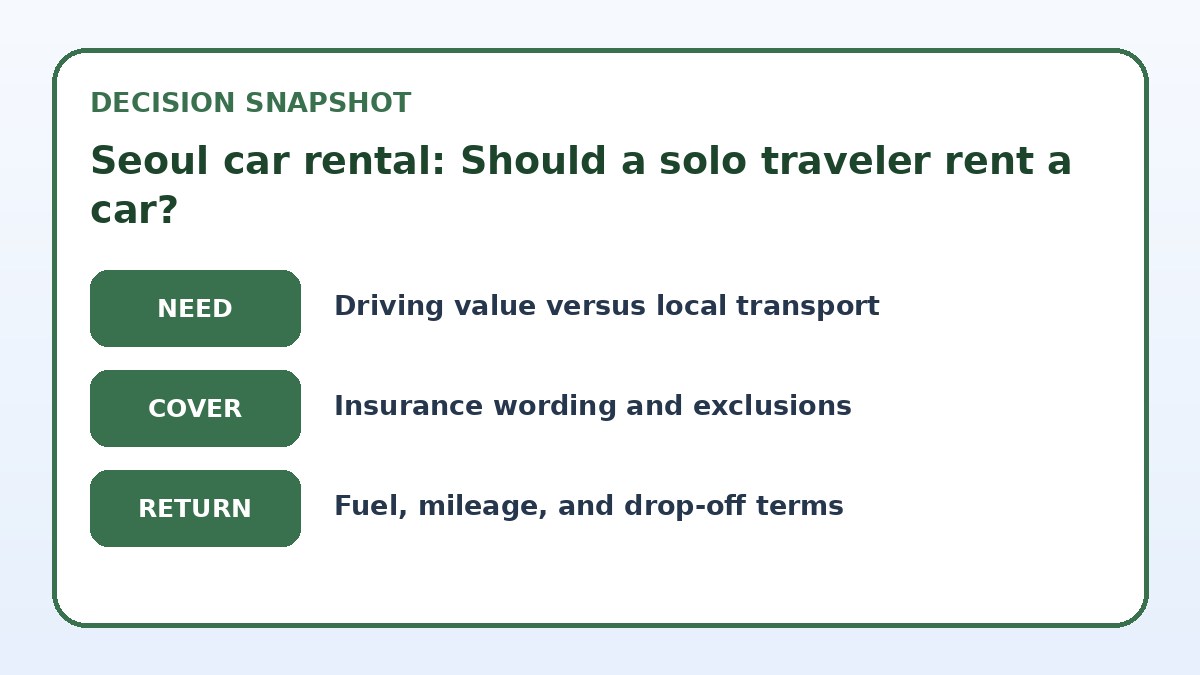
Cost is not just the rental rate. Factor in insurance coverages, fuel, tolls, parking fees, potential fines, and time spent searching for parking. Urban parking can be scarce and pricey in Seoul’s central districts; the time spent circling for a space or paying for long-term lots can make driving less efficient than hopping between subway stops. There’s also the non-monetary cost: traffic congestion during peak hours, unfamiliar signage, and the mental load of driving in a dense foreign city. For many solo travelers, those hassles outweigh the door-to-door convenience a car might offer.
Conversely, comfort and flexibility are real gains. A car lets you carry bulky gear—bikes, hiking equipment, camera gear—without juggling bags on trains and buses. If you’re sensitive to late-night transit safety or want privacy on long journeys, a rental car can feel more comfortable. For solo road trips that stitch together several off-grid sights in one region, the time saved and the ability to leave when you want often justify the added costs. Decide which matters more for your travel style: predictable, scheduled comfort or lean, transit-based efficiency.
| Approach | Best for | Tradeoff to check |
|---|---|---|
| No car—only public transport and taxis | Staying inside central Seoul, short trips, travelers who prefer low-stress urban mobility | Less flexibility for remote day trips; dependent on schedules and multiple transfers |
| Rent a car for the entire stay | Trips focused on regional sightseeing and access to remote natural sites | Higher costs, parking hassles, and more stressful city driving |
| Hybrid: public transit plus rented car days | Balanced itineraries: city exploration plus a few long day trips | Requires careful coordination of pickup/drop-off and planning which days need a car |
| Short-term car hire with a driver or guided day tours | Travelers who want comfort and local navigation without driving themselves | Higher per-day cost, less privacy, and dependence on operator schedules |
Ready to check the option that fits your plan?
Use your exact dates and traveler details so the provider page can show the current total and conditions.
Driver requirements, safety, and practical checks before booking
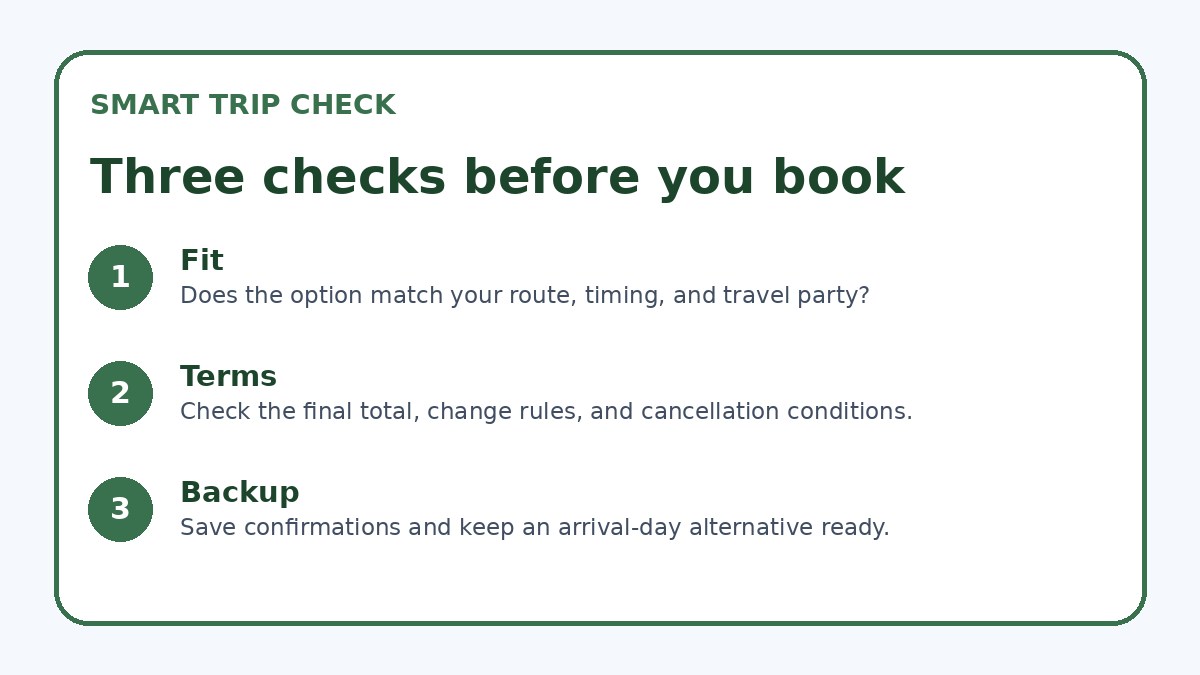
Before reserving a Seoul car rental, confirm driver eligibility: check license recognition for foreign drivers, whether an International Driving Permit (IDP) is accepted, and minimum age or license tenure rules. Insurance options vary: collision damage waivers, liability limits, and roadside assistance can all differ between providers. When a provider-specific fact could change, check the rental company’s final booking page for exact terms, permitted mileage, fuel rules, cross-border limits if you plan to leave Korea, and procedures for accidents or breakdowns. These checks avoid surprise charges and ensure you meet all legal and safety requirements.
Safety also includes understanding local driving conditions: roundabouts, narrow alleyways, and high-speed expressways outside the city present different challenges. If you’re not confident driving in unfamiliar traffic, consider alternatives like hiring a private driver for specific days or taking guided tours to remote spots. Also identify reliable pickup and drop-off locations—airport counters differ from city branches—and look at firm cancellation and amendment policies. If you use comparison sites, you can check Trip.com as one place to compare availability, but always confirm the final policy with the provider you choose.
Before you book
- List each day’s start and end points and compare door-to-door travel times for driving versus public transit.
- Confirm what driver documentation you need (home license, IDP) and minimum driver age and license tenure with the rental company.
- Check insurance options and clarify what is covered on the provider’s final booking page before you commit.
- Identify likely parking locations and costs at each overnight stay and attraction you plan to visit by car.
- Decide whether to rent for the whole trip or just specific days, then check pickup/drop-off locations and opening hours.
- If unsure about driving in Korea, price a private driver or organized day tour for comparison and include that in your budget.
When to combine a rental car with public transit
A hybrid approach often gives the best of both worlds. Use public transport inside Seoul to avoid parking headaches and then rent a car for one or two days to reach distant attractions. For example, base yourself in a central neighborhood with good subway access and schedule specific day trips by car to places that are poorly connected. This reduces total rental time and cost while giving you flexibility when you truly need it. Plan those car days in blocks to minimize rental handover fees and maximize driving efficiency.
To execute hybrid plans smoothly, map the exact start and end points of each day and compare door-to-door travel time via transit versus driving. Check where rental offices are located relative to your accommodation; a suburban pickup might be faster than an airport counter depending on your timing. Coordinate parking availability at your rural destinations and confirm fuel and toll payment options. With careful planning you can rely on Seoul’s public transport for urban days and use a rental car selectively for the routes that benefit most from a vehicle.
Frequently asked questions
Can I use an International Driving Permit (IDP) to rent a car in Seoul?
Many international visitors use an IDP together with their home country driver’s license, but acceptance can vary by rental company and your country of origin. Some nationalities need additional documentation or translations of their license. Check the rental firm’s driver eligibility rules on their official booking page before reserving: verify acceptable license types, whether an IDP is sufficient, any required notarizations, and minimum age or license-holding period. If rules are unclear, contact the rental company directly to avoid being turned away at pickup.
Is driving in Seoul difficult for a solo traveler unfamiliar with Korea?
Driving in central Seoul involves dense traffic, many lanes, frequent intersections and restrictions such as bus lanes during peak hours. Outside the city, roads can narrow and signage may be in Korean. If you’re comfortable with urban driving and GPS navigation, you can manage, but expect a higher stress level than using public transit. Consider your comfort with driving in left- or right-hand traffic differences, parking in tight spaces, and coping with toll highways. If doubt remains, plan a hybrid trip or hire a driver for unfamiliar segments.
How do I decide whether a rental car saves time on a given day trip from Seoul?
Map your exact origin and destination points and run door-to-door comparisons that include walking to transit, wait times, transfers, and last-mile travel. Compare that to estimated driving time plus expected parking time and fees. Include contingencies for traffic congestion at peak hours or on holiday weekends. If public transit requires multiple long transfers, early departures, or late returns with limited service, a rental car that day may save you several hours and simplify logistics. Make the comparison for each day to see where a car truly adds value.
Final planning note
For most solo travelers who stay within Seoul’s central neighborhoods, public transport plus occasional taxis offers the ideal blend of cost, convenience and low stress. A rental car becomes attractive when your itinerary emphasizes remote parks, coastal towns, or multi-stop rural circuits that are slow or impractical by transit. The best approach for many people is a hybrid plan: base yourself in the city and rent a car for one or two strategically chosen days. Before booking, verify driver eligibility, insurance coverages and pickup logistics on the rental company’s final page so you know exactly what’s included and whether any restrictions apply.
Continue planning
Check current options and final conditions
Use the provider page to confirm live availability, the final total, cancellation terms, and every condition that matters to your trip.
This evergreen planning guide was created with AI-assisted drafting and a structured quality review. It does not display live prices, schedules, availability, visa guidance, or provider rankings. Verify current details before booking. Some links are affiliate links; we may earn a commission at no additional cost to you.