If you have back-to-back meetings in central Seoul, the subway and buses usually beat driving for speed, predictability, and avoiding parking logistics. But if your itinerary includes multiple meetings far outside the city — industrial parks, satellite offices, or late-night site visits — renting a car can save door-to-door time and give flexibility that public transport cannot match. This guide helps business travelers weigh the two approaches by focusing on where you’ll be based, typical meeting locations, luggage and equipment needs, and the hours you’ll travel. Read the quick decision cues up front, then use the tradeoffs and checklist to confirm the best choice before you book a rental or reload a T-money card.
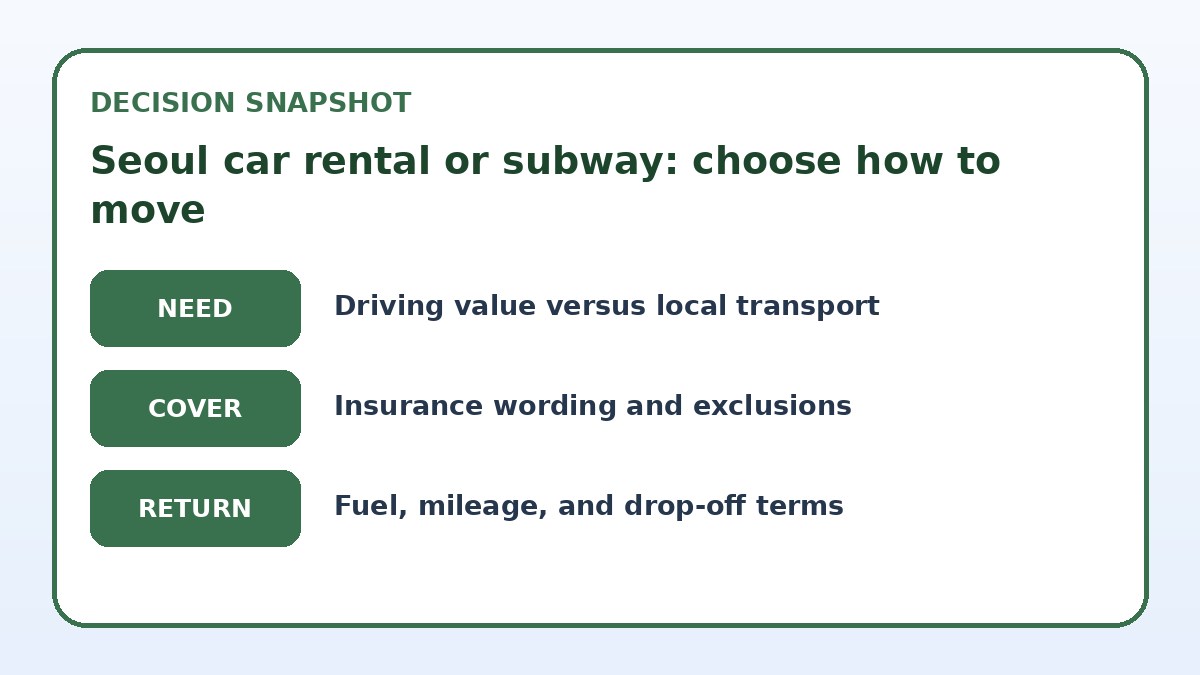
See current options before you compare the details
Availability and final conditions change. Open Trip.com now or keep reading for the practical comparison.
Practical decision: when to pick public transport
Public transport in Seoul — the extensive subway network and frequent buses — is the practical default for most business travelers whose meetings cluster in the city center. Subways connect major business hubs directly and avoid surface traffic congestion during peak hours. For a traveler who will attend meetings on consecutive days within central districts, staying near a station shortens first-mile and last-mile time and reduces stress from parking and navigating unfamiliar streets. Transfers are common, but the system is designed for quick, frequent service with clear station signage.
Choose public transport when your schedule has predictable daytime hours, when you can travel light, and when you want to avoid the overhead of rental pickup, insurance decisions, and parking logistics. Public transport also makes handling sudden venue changes easier in dense areas because you can quickly reroute without searching for parking. For short overnight stays or when traveling with colleagues who prefer not to drive, the subway and buses offer simplicity and consistent travel times that are easier to estimate for meeting planning.
Practical decision: when to rent a car
Rent a car if your itinerary includes locations outside central Seoul, such as industrial zones, university campuses, or tech parks where subway access is limited or requires long transfers. A car gives you reliable door-to-door service and flexibility for tightly spaced meetings across wide geographic areas. It also helps when you must transport samples, prototypes, or large luggage that would be cumbersome on public transport. For teams traveling together, a single rental can be more convenient than multiple transit fares and transfers, and it keeps the group on the same schedule.
Driving can be preferable for late finishes or early starts because it reduces dependence on public-transport operating hours and late-night transfers. However, driving introduces extra tasks: picking up and returning the vehicle, understanding toll roads and parking options, and managing insurance and company policy compliance. If you plan to rent, confirm the vehicle size you need, who will drive under company insurance rules, and whether your meeting locations have reliable parking; these factors heavily influence whether a car genuinely saves time.
| Approach | Best for | Tradeoff to check |
|---|---|---|
| Public transport (subway + bus) | City-center meetings, predictable daytime schedules, single travelers with light luggage | May require transfers and walking; less convenient for late-night or suburban trips |
| Car rental (self-drive) | Multi-stop suburban itineraries, transporting equipment, teams traveling together | Adds parking, insurance, tolls, and pickup/return logistics; subject to traffic congestion |
| Taxi or app-hail (occasional use) | Short off-line hops, late-night trips, first/last-mile connections from transit | Higher per-trip cost; reliability affected by traffic and demand surges |
| Mixed approach (transit + occasional rental or taxi) | Flexible itineraries that combine central meetings with sporadic suburban visits | Requires planning to coordinate modes and may complicate expense reporting |
Ready to check the option that fits your plan?
Use your exact dates and traveler details so the provider page can show the current total and conditions.
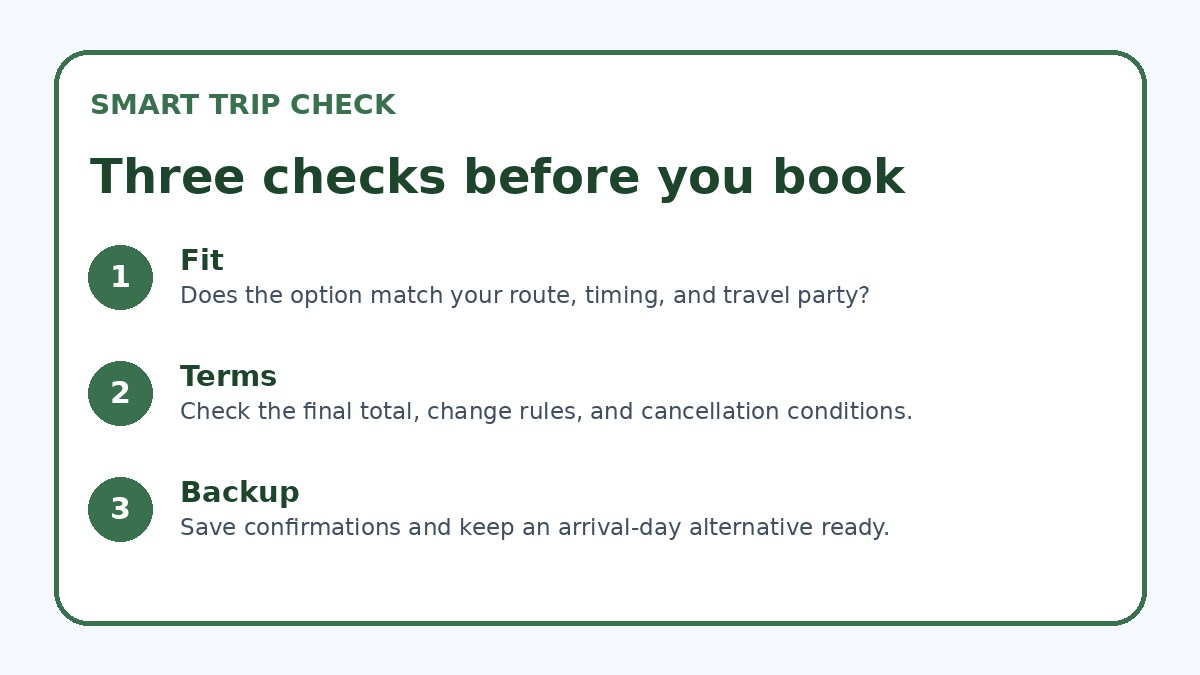
Tradeoffs: cost, time reliability, and convenience
Cost comparisons are contextual: public transport uses fixed fares and predictable recharge options, while renting a car adds base rental, fuel, parking, and possible tolls. For single travelers with concentrated central meetings, the transit card approach minimizes variable costs and administrative hassle. Conversely, a rental can be cost-effective for groups or when many suburban trips would require expensive taxi rides. Remember that administrative costs for your company — invoicing, expense reports, and insurance — should enter your calculation as well.
Time reliability favors public transport in heavy traffic corridors; subways follow schedules unaffected by road congestion. Driving wins when there’s a need for point-to-point speed outside dense corridors or when you must move bulky items. Convenience is also subjective: some travelers value the privacy and quiet of a personal car for calls between meetings, while others prefer the predictability of transit connections and the ability to work without worrying about parking. Balance these tradeoffs against your itinerary to make a pragmatic choice.
Before you book
- Map every meeting address and note the nearest subway station plus walking time to each venue.
- Identify which meetings require transporting samples, equipment, or oversized luggage and estimate space needed.
- Check parking availability and costs at each meeting location before booking a rental.
- Confirm driver eligibility, insurance coverage, and company policy for rental cars on the provider’s booking page.
- Preview typical travel times at your meeting hours using a mapping tool for both transit and driving routes.
- If choosing transit, buy or top up a reloadable transport card and download route apps for live updates.
How to confirm before you book
Before committing, map your exact meeting addresses and estimate door-to-door journeys both by transit and by car. For public transport, check station proximity and number of transfers; for driving, check parking availability at each stop and likely routes between points. Use local mapping tools to preview routes at the meeting times to compare realistic travel durations, and note whether any journeys require a taxi for first-mile or last-mile links. If considering a rental, confirm driver eligibility under the rental terms and your company’s expense policy.
When checking providers, verify the final booking page for up-to-date vehicle availability, insurance options, fuel policy, and cancellation terms. If you use Trip.com as one comparison point, treat it as a marketplace listing that should be verified against the rental company’s confirmation. For transit, confirm any special-event schedules or temporary line changes on operator pages before travel. These final checks prevent surprises and ensure your transportation choice aligns with actual meeting constraints.
Frequently asked questions
Will renting a car save time compared with the subway for a day of meetings across Seoul?
It depends on where your meetings are. If they are scattered across different suburbs or industrial areas with limited subway access, a car can cut door-to-door time by avoiding transfers and long walks. If most meetings sit on or near subway lines in central districts, the subway is usually faster during weekday peak periods because trains bypass surface traffic. To decide, map the day’s stops and run time estimates for transit and driving at the intended meeting hours to see which yields shorter average travel times.
How should I handle parking and toll concerns when planning to drive in Seoul?
Treat parking and tolls as part of the planning process. Confirm whether each meeting venue provides guest parking or if nearby public garages are available; note expected walking distance from the parking spot to the venue. Identify likely toll routes you may encounter between distant points and whether electronic toll collection is available or a manual payment is needed. Check the car rental company’s policy on toll payment devices and how tolls are billed so you can budget and avoid administrative surprises after the trip.
Can I combine a rental with public transport efficiently during a short business trip?
Yes — a mixed approach often delivers the best compromise. Use the subway for clusters of central meetings and reserve a rental or taxi for specific off-line visits or late-night transfers. Coordinate meeting times to minimize switching modes during peak hours and choose a rental pick-up location that’s easy to access from your base, such as near a major station or your hotel. Keep receipts and maintain clear records to simplify expense reporting when mixing transport types.
Final planning note
For most business travelers whose meetings are concentrated in central Seoul, public transport offers predictable travel times, fewer logistics, and easier day-to-day planning. Rent a car when your schedule requires frequent visits to suburban campuses, transporting bulky items, or late-night flexibility; just account for parking, tolls, and company insurance rules. The right choice starts with mapping your actual meeting addresses and testing sample routes at the times you’ll travel. Use the checklist to confirm parking, driver eligibility, and itinerary constraints, then book the option that minimizes commute time and administrative hassle so you can focus on your meetings.
Continue planning
Check current options and final conditions
Use the provider page to confirm live availability, the final total, cancellation terms, and every condition that matters to your trip.
This evergreen planning guide was created with AI-assisted drafting and a structured quality review. It does not display live prices, schedules, availability, visa guidance, or provider rankings. Verify current details before booking. Some links are affiliate links; we may earn a commission at no additional cost to you.