Practical answer first: for most families visiting central Seoul, a rental car is more hassle than help — public transit, taxis, and walkable neighborhoods usually cover the city efficiently. However, a car can be the right choice if your itinerary includes day trips beyond the Seoul metropolitan core, you’re traveling with bulky equipment or very young children, or you need a flexible schedule that public transport won’t accommodate. This article helps you decide by laying out clear tradeoffs: convenience vs. cost, parking vs. mobility, and city driving vs. regional road trips. You’ll find straightforward criteria to compare against your group’s needs, plus a checklist of specific things to verify on rental and accommodation pages before you book. If you want to compare current availability or providers, Trip.com is one optional place to check live options and provider terms.
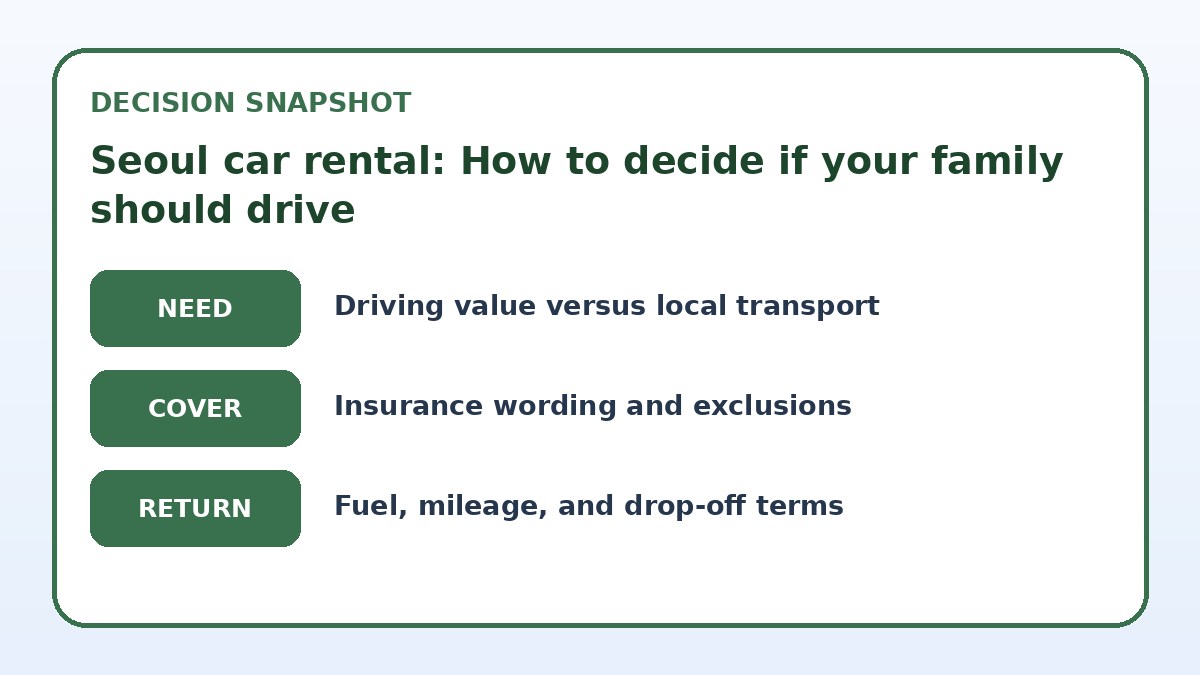
See current options before you compare the details
Availability and final conditions change. Open Trip.com now or keep reading for the practical comparison.
When a Seoul car rental makes sense for families
A rental car starts to pay off when your family's plan includes more driving than sightseeing inside Seoul’s central neighborhoods. Typical triggers are extended day trips to coastal areas, mountain parks, or attractions where public transit requires long transfers. Families with toddlers or infants sometimes prefer a car for straightforward nap schedules, easier luggage handling, and the privacy of a single enclosed space. Also consider multi-destination days where using several suburban stops in one day would be slow or awkward by train or intercity bus.
Another common reason families choose a car is accessibility: if any traveler has mobility limitations, driving can reduce walking between transit nodes and sites. If you’ll be carrying a stroller, multiple suitcases, or sports gear, evaluate trunk space and the number of seats. Finally, think about timing—early-morning departures or late-night returns are easier by car when public transit options are limited or require complicated connections.
When to skip a vehicle and use public transit instead
Seoul’s subway and bus network is extensive, frequent, and covers most attractions parents want to see: palaces, child-friendly museums, parks, and markets. For families staying in central districts like Jongno, Jung, or Gangnam, walking and transit typically save money and spare you the stress of city driving and finding parking. Taxis are plentiful for short hops with luggage or tired children and can be a reasonable complement to transit when you want door-to-door convenience without a rental.
If your group size is small and you don’t need to reach outlying areas daily, skipping a car avoids rental paperwork, insurance complexity, fuel stops, tolls, and parking fees. Consider how much time you’ll spend stuck in traffic during rush hours; commuting windows in Seoul can substantially lengthen drives. Also remember that many accommodations near tourist hubs expect guests to arrive on foot or by transit and may not have affordable on-site parking.
| Approach | Best for | Tradeoff to check |
|---|---|---|
| Drive a rental for the whole trip | Families with multi-day regional day trips or mobility needs | Higher total cost, parking hassles, and urban traffic stress |
| Rent only for specific day trips | Families who mostly use transit but need occasional rural access | Extra time to pick up/return car; might lose flexibility on short notice |
| Rely entirely on transit and taxis | Families staying within central Seoul and sightseeing-focused plans | Less convenient for remote sites and carrying bulky gear |
| Hybrid: transit in city, car for airport or long transfers | Families wanting minimal driving with occasional long transfers | Need to coordinate timing and verify airport/hotel parking or drop-off rules |
Ready to check the option that fits your plan?
Use your exact dates and traveler details so the provider page can show the current total and conditions.
How to weigh costs, parking, and child-safety details
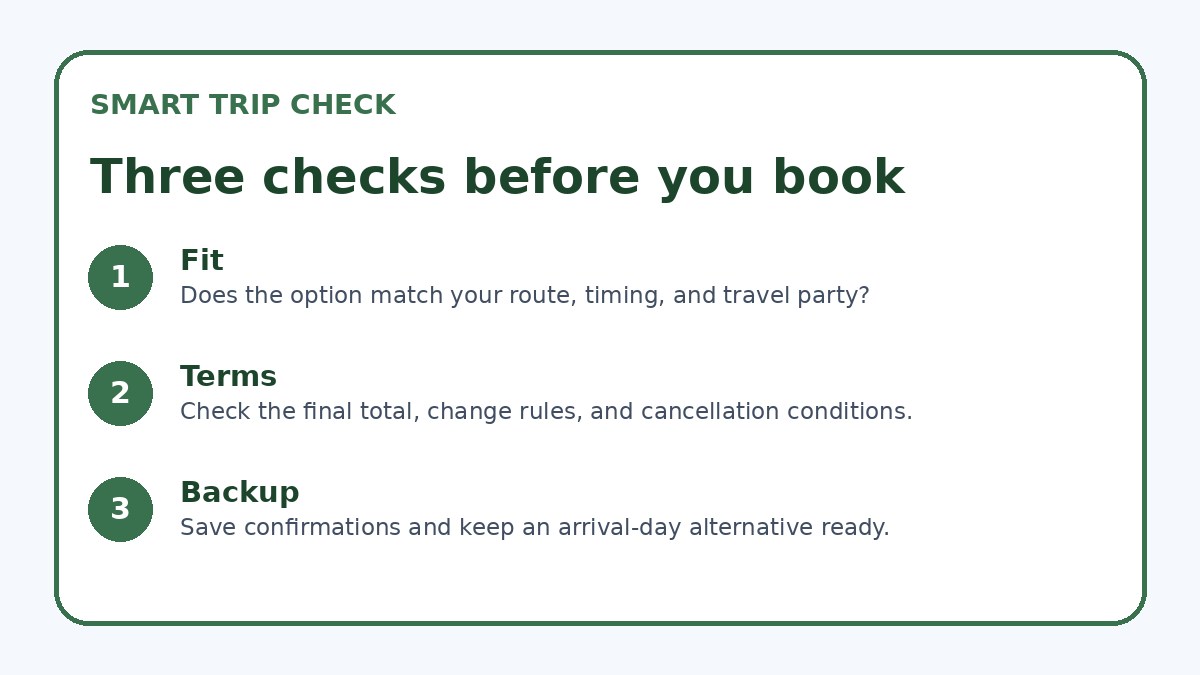
Compare total trip costs rather than headline rental rates. Add insurance options, fuel, tolls, parking fees, and any additional driver or young-child equipment charges. Parking is a particular cost and logistical factor: inner-city lots can be expensive and limited, while some hotels charge per night or require advance reservation for a space. Also check street-parking rules for the neighborhoods you’ll visit; tickets and towing are a risk if you park where signs prohibit it.
Child-safety is nonnegotiable: verify what types of car seats the rental company offers, whether you can bring your own, and whether installation assistance is available at pickup. Check license and permit rules for foreign drivers, and confirm whether your driver’s licence, International Driving Permit, or other documents are accepted by the rental company. On the rental page you should verify the vehicle’s seating, trunk capacity, and exact insurance terms before you book.
Before you book
- List every day’s main stops and compare door-to-door time by transit versus driving to see where a car saves time.
- Call or message your hotel to confirm parking availability, nightly fees, reserved spaces, and vehicle size limits.
- On the rental page, verify acceptable driver licences, whether an International Driving Permit is required, and bring original documents.
- Confirm child-seat options: model, age/weight suitability, whether installation help is provided, and any extra fees.
- Add likely parking, toll, and fuel costs to the rental quote to create a realistic total-trip budget before booking.
- Check pick-up/return locations and hours so you won’t be charged for after-hours service or forced into extra transfers.
Practical planning steps before you decide
Map each day of your intended itinerary and calculate door-to-door travel time using both transit and driving estimates. For driving, include likely delays such as rush-hour traffic or weekend congestion near popular day-trip sites. For transit, count walking between stations, transfers, and time to manage strollers or luggage. This comparison will show whether the car saves meaningful time or simply shifts inconvenience to another part of the day.
Next, contact your chosen accommodations to confirm parking availability, cost, and any height or size limits for spaces. On the rental provider page, check fuel policies, mileage limits, cross-border rules if you might travel outside Korea, and the company’s cancellation and refund terms. Finally, read the fine print on extra fees for child seats, additional drivers, or out-of-hours pick-up so there are no surprises when you collect the car.
Frequently asked questions
Can I drive in Korea with a foreign driver’s licence and is it straightforward to rent in Seoul?
Rules for driving with a foreign licence vary by nationality and local regulation. Many visitors need an International Driving Permit alongside their home licence, while some countries' licences may be accepted with official translations. Rental companies typically list acceptable documents on their booking pages; verify those requirements before you plan to pick up a vehicle. Also check whether the rental agency requires additional identity documents, a passport, or proof of a return flight. Confirming this directly with the provider avoids last-minute problems at the counter.
Are child seats available from rental companies and safe to rely on?
Many rental companies offer child seats for an extra fee, but models, availability, and installation support differ. If you require a specific type (rear-facing for infants, high-back booster for older children), check the exact seat specifications on the provider’s booking page and reserve in advance. If you bring your own seat, ensure it is compatible with the vehicle’s anchor points; ask the company whether they allow customer-supplied car seats. For safety, have a firm plan to confirm the seat is correctly installed before you drive off.
How should families handle parking and avoiding fines in Seoul?
Parking rules vary by district and lot; pay attention to posted signs, permitted hours, and payment methods. Many commercial lots use digital payment apps or ticket machines, and illegal parking can result in fines or towing. If your hotel has a guaranteed space, get written confirmation of where to park and any access codes. For street parking or public lots, factor the time needed to find a legal space into your daily plans, and if in doubt, use paid lots or hotel parking to minimize risk.
Final planning note
Deciding whether a Seoul car rental fits your family trip comes down to comparing your planned activities to the realities of driving and parking. If your itinerary is mostly central Seoul sightseeing, the subway, buses, and taxis usually offer faster, less stressful options and let you avoid extra costs. If you have frequent day trips into the countryside, need specific accessibility options, or carry a lot of bulky gear, a rental can provide clear benefits—provided you factor in parking, child-seat needs, and documentation requirements. Use the checklist above, map your daily routes, verify rental and hotel terms on their booking pages, and choose the option that reduces daily friction for your family rather than chasing marginal convenience.
Continue planning
Check current options and final conditions
Use the provider page to confirm live availability, the final total, cancellation terms, and every condition that matters to your trip.
This evergreen planning guide was created with AI-assisted drafting and a structured quality review. It does not display live prices, schedules, availability, visa guidance, or provider rankings. Verify current details before booking. Some links are affiliate links; we may earn a commission at no additional cost to you.