If you’re arriving in Seoul with oversized suitcases, sports gear, or extra bags, prioritize pickup and return terms before picking a vehicle. The practical answer: choose a car class with confirmed trunk capacity and flexible pickup/return windows, verify luggage-related fees, and confirm where you can park and unload at both airport and city locations. These three checks prevent last-minute stress and extra charges. After booking, immediately review the provider’s final booking page for baggage rules, allowed vehicle swaps, and the exact pickup/return address and hours. Later sections explain tradeoffs—size versus parking ease, one-way returns, and airport versus downtown desks—so you can decide which compromises make sense for your itinerary and budget.
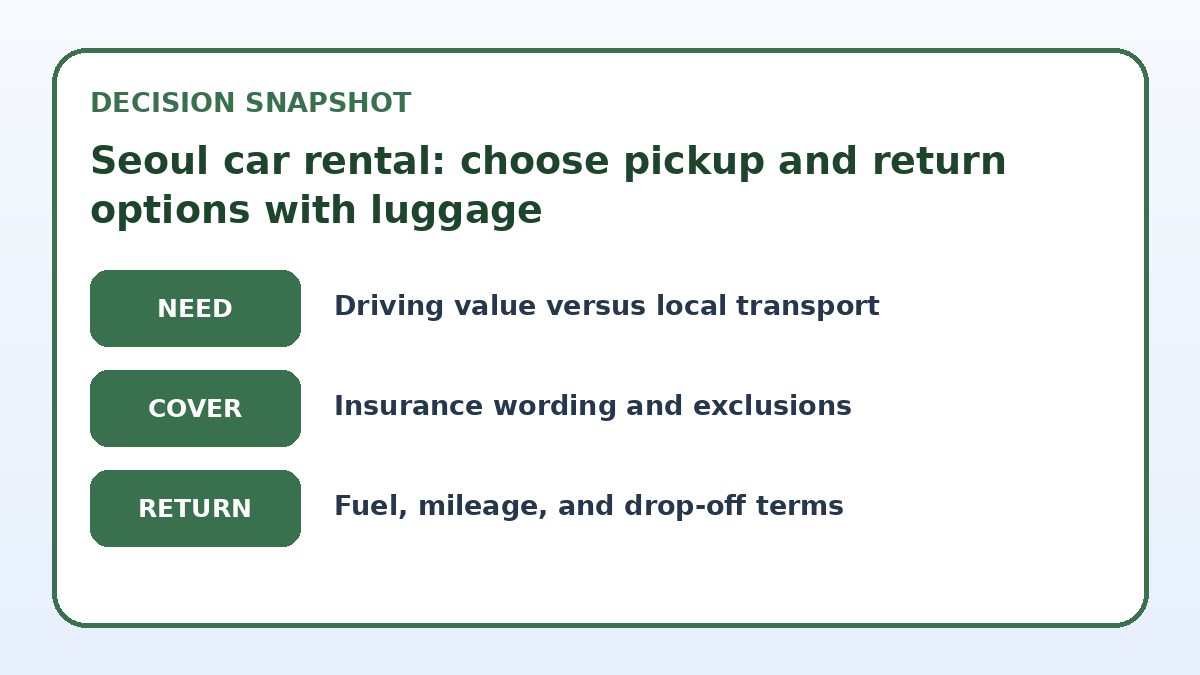
See current options before you compare the details
Availability and final conditions change. Open Trip.com now or keep reading for the practical comparison.
Pickup logistics: where you start matters
Choosing the pickup location is the first practical decision that affects luggage handling. Airport counters usually have space to load and unload and staff who can help with heavy bags, but airport pickups often operate on stricter hours or involve shuttle transfers from off-site lots. Downtown branches may be easier to reach by public transport if you’re already staying inside Seoul, but consider whether the office has a convenient curbside or dedicated parking for a quick handover—the last thing you want is to lug suitcases several blocks to a rental desk.
When you contact the provider or check the booking page, verify the exact curb address, whether a meet-and-greet service exists, and if there’s a dedicated parking bay for loading. Ask whether agents will help load bulky items into the trunk; not all companies offer physical assistance. If you need a roof box, confirm whether the branch can install it at pickup—installation may take extra time or require a nearby garage appointment, which is a significant tradeoff if you have a tight schedule after arrival.
Vehicle size and luggage fit: beyond seat count
Don’t rely on generic categories like 'compact' or 'SUV' alone—trunk shapes and seat-fold options vary widely. For irregular gear such as ski bags, surfboards, or several large suitcases, ask the rental company for trunk volume in liters or request specific vehicle models that previous renters have noted as roomy. If measurements aren’t available online, provide your luggage dimensions and ask the agent to confirm fit; good agents will recommend a larger category when necessary. Folding rear seats increase flexibility but can compromise passenger comfort if you still have multiple travelers.
Balancing luggage capacity with driving and parking in Seoul is a key tradeoff. Larger vans and SUVs offer space but can be harder to maneuver, park, and fit into some underground garages common across the city. If you expect to park in older areas with tight spaces, consider whether a roof box plus a compact vehicle might be a better compromise than a wide-bodied car. Be explicit about how many people will ride and whether you require room for both luggage and frequent on-and-off loading.
| Approach | Best for | Tradeoff to check |
|---|---|---|
| Airport pickup with airport return | Travelers with heavy or bulky luggage seeking assisted loading and straightforward transfers. | Airport desks can have restricted hours and higher surcharges; may cost more than city branches. |
| City branch pickup and airport return (one-way) | Those staying in central Seoul who want to avoid airport queues and return near departure terminal. | One-way fees and coordinating return logistics can add cost and require precise timing. |
| Larger vehicle or van | Groups or travelers with oversized gear who need interior space without rooftop mounts. | Harder to park and may not fit in some garages, increasing urban driving stress. |
| Smaller car with rooftop box | Travelers balancing compact city driving with extra luggage capacity. | Adds installation time, extra cost, and affects fuel economy and height clearance. |
Ready to check the option that fits your plan?
Use your exact dates and traveler details so the provider page can show the current total and conditions.
Return procedures and after-hours flexibility
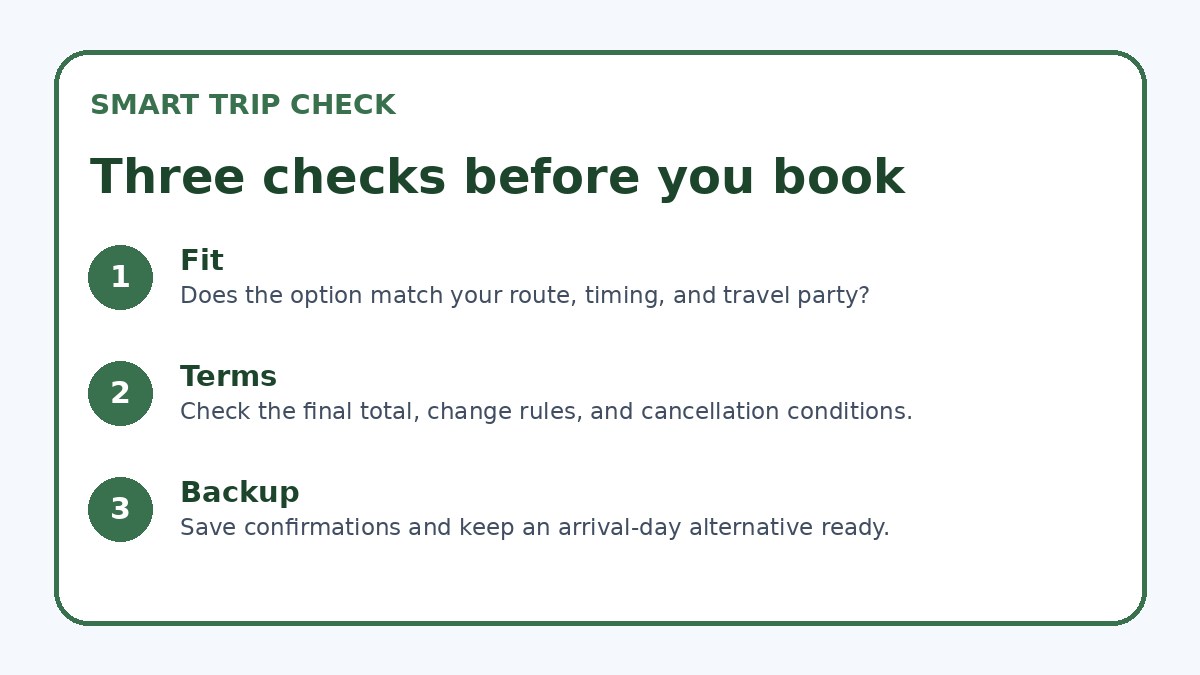
Return rules can trigger unexpected fees or logistical hassle, especially if your flight or train departs at an odd hour. Confirm whether your booking allows after-hours drop-off and whether the branch requires receipts or a final inspection in person. Some companies permit key drop boxes but still charge if the vehicle is returned unclean, has unreported damage, or lacks a full fuel level. If your return day includes long transfers to the airport, confirm the time window for a free return and whether staff can provide a stamped return receipt for your records.
Also check whether the company inspects the vehicle on the spot or reviews photos after return; this affects how quickly deposits are released. When returning at a different location or an airport counter, ensure you understand one-way drop fees, exact drop-off points, and whether the final branch provides immediate shuttle service to terminals. If you must leave bulky gear in the car for a short period before your flight, ask if storage or a holding area is available—policies differ and can be the deciding factor in your choice.
Before you book
- Measure your largest suitcase or oversized item and compare dimensions to the vehicle’s trunk or seat-folding specs before booking.
- Contact the rental provider to confirm pickup address, curbside loading availability, and whether staff will help load luggage.
- Ask for written confirmation of any rooftop carrier, bike rack, or oversized-item fees and whether installation is included at pickup.
- Verify after-hours return policy, key-drop procedures, and whether a stamped return receipt or photo evidence is provided.
- Check one-way drop rules and fees if picking up in Seoul and returning elsewhere, and plan extra time for branch handovers.
- Save screenshots or emails of the final booking terms, luggage limits, and any agreed exceptions to avoid disputes at return.
Fees, documentation, and what to verify before booking
Before committing, confirm luggage-related charges that may not be obvious on the initial quote. Common additions include rooftop carrier rental, oversized-item handling fees, and extra-insurance costs if you want cover for skis or bicycles. The provider’s final booking page is the authoritative source for these items: check the full terms and conditions there for surcharges, deposit amounts, accepted payment methods, and fuel return rules. If the provider lists optional extras, decide in advance whether you need them and whether they can be added at pickup if plans change.
Also verify required documentation and any limits on driver counts or ages—some policies impose higher excess or refuse coverage if the primary driver is very young or inexperienced. Ask whether roadside assistance is included and how to contact help in English if needed. If you find ambiguous language on the booking page, message the supplier for written confirmation and save that exchange; clear documentation prevents disputes over fees or coverage related to luggage damage or late returns.
Frequently asked questions
Will I be charged extra if my bags don’t fit in the trunk?
Many companies expect you to pick an appropriate size and may charge for oversized items or rooftop equipment. Before you book, contact the provider with your luggage dimensions or request a larger vehicle category. If you arrive and the chosen car is too small, some branches will swap you for a bigger vehicle subject to availability and price difference; others require an on-the-spot upgrade fee. Always confirm in writing on the booking page whether rooftop boxes or excess luggage handling is included or priced separately.
Is it easier to load luggage at the airport or in the city?
Airport locations typically offer more space and staff accustomed to assisting arriving travelers, which makes loading heavy suitcases easier. City branches can be quicker if your accommodation is nearby, but they vary widely in curb access and parking. If you have very heavy or awkward items, airport pickup reduces the need to haul luggage on public transport. Verify hours and meet-and-greet options; if the airport counter closes early, an off-site shared lot may require a shuttle transfer that complicates loading.
How should I plan return timing when I have a late flight from Seoul?
Plan extra buffer time between vehicle return and your terminal arrival to allow for branch handovers and final inspections. Confirm whether the rental agent will perform the inspection on the spot or record photos later—if inspection is delayed, get a stamped receipt showing return time to protect your deposit. If your flight is late at night, verify after-hours drop-off details and whether the branch accepts key drops without a staff inspection; confirm whether any late return could trigger fees and how to reach customer support if questions arise.
Final planning note
For travelers with extra luggage in Seoul, the right approach is pragmatic: match vehicle capacity to your measured bags, choose pickup and return locations that simplify loading, and get luggage-related fees and after-hours policies in writing. Prioritize clarity on one-way returns, rooftop equipment, and inspection procedures since these items often cause surprises. When in doubt, ask the rental company to confirm fit with dimensions or a model suggestion, and save all communications and the final booking page. With those checks done, you’ll reduce stress on arrival and departure and have a plan that fits your gear and schedule.
Continue planning
Check current options and final conditions
Use the provider page to confirm live availability, the final total, cancellation terms, and every condition that matters to your trip.
This evergreen planning guide was created with AI-assisted drafting and a structured quality review. It does not display live prices, schedules, availability, visa guidance, or provider rankings. Verify current details before booking. Some links are affiliate links; we may earn a commission at no additional cost to you.