
If you’re booking Sapporo travel deals for the first time, pick a cancellation policy that matches how likely your plans are to change. The simplest, practical rule: choose fully refundable for uncertain schedules, a moderate-flex policy if plans are mostly firm but might shift, and nonrefundable only when you’re sure and comfortable accepting the loss. Read the provider’s final booking page for exact cutoff times, penalties, and what counts as a qualifying reason for refunds or credits. This article walks through the decision tradeoffs — remote weather, seasonal events, transit connections, and lodging flexibility — and gives a short checklist to use when comparing options across flights, hotels, and package deals.
See current options before you compare the details
Availability and final conditions change. Open Trip.com now or keep reading for the practical comparison.
How cancellation flexibility affects first-time Sapporo visitors
Flexibility matters differently for each part of a trip. Flights, hotels, and tours have separate rules and often different definitions of “refundable” or “flexible.” For a first visit to Sapporo you may need wiggle room for weather-related delays, late visa processing, or sudden personal changes. A refundable hotel room can give you time to confirm arrival details without losing the entire accommodation cost, while a flexible flight or one with generous change conditions reduces the risk of heavy rebooking fees if a connection is missed.
Consider the local factors that raise the value of flexibility. Sapporo’s winter weather, festival weekends, and travel to Hokkaido from the mainland can introduce unpredictability. If your trip depends on particular dates—say a festival or ski window—book the nonrefundable parts only when the dates are locked in. For exploratory trips where you might extend your stay or change region, flexible multi-night hotel rates and modestly flexible rail or bus passes will make last-minute adjustments easier.
Comparing flight options: refundable, changeable, or basic fares
When evaluating Sapporo flight options, don’t assume identical terminology means the same protection. Airlines may label fares as “flexible” but still impose fees or require fare differences for changes. For first-time visitors, the best approach is to compare three items on the carrier’s final booking page: the fee for changes, whether the fare difference applies, and the refund process if you cancel. If a refundable ticket is available at a reasonable premium, it simplifies sudden cancellations and is worth considering for peace of mind.
Also weigh direct versus connecting itineraries through the lens of cancellation risk. Connecting flights increase the chance of delays that force changes; a refundable or change-friendly ticket reduces the penalty if you miss a connection. If you find lower basic fares, confirm what credit, voucher, or partial refund (if any) is given on cancellation, and whether insurance or a travel credit card will cover change fees. Always verify the carrier’s exact deadlines for free changes or full refunds.
| Approach | Best for | Tradeoff to check |
|---|---|---|
| Fully refundable bookings | Travelers with uncertain dates, first-timers needing peace of mind | Higher upfront cost but simplest path to a full refund if plans change |
| Moderately flexible fares | Those who expect minor tweaks or possible date shifts | Lower premium than refundable fares but may include change fees or fare differences |
| Nonrefundable budget options | Confident travelers on a tight budget who won’t alter plans | Cheaper price but little to no refund or only vouchers provided on cancellation |
| Split approach (mix of flexible and nonrefundable) | Travelers optimizing cost and resilience for key trip elements | Requires careful tracking of separate policies and penalties across components |
Ready to check the option that fits your plan?
Use your exact dates and traveler details so the provider page can show the current total and conditions.
Hotels and packages: what flexible booking really covers
Hotel flexibility can range from full refunds up to a check-in date, to partial refunds or credits, to strict nonrefundable deals. For first-timers who haven’t settled an arrival time, flexible hotel rates that allow free cancellation up to 24–72 hours before arrival reduce stress. If you book a package that bundles hotel with activities or transfers, examine the cancellation terms for each component: sometimes the hotel is flexible while guided tours or transfers are not, and the nonrefundable element can determine the overall risk.
When reviewing the provider’s policy, confirm which actions trigger penalties: is a change of guest name allowed without charge, are amendments to room type treated as cancellations, and how are no-shows handled? Some operators issue travel credits instead of refunds; decide whether a credit is useful for future travel. For accuracy, always copy or screenshot the final terms displayed on the supplier’s booking page so you can reference exact cutoff times and refund methods if a dispute arises.
Before you book
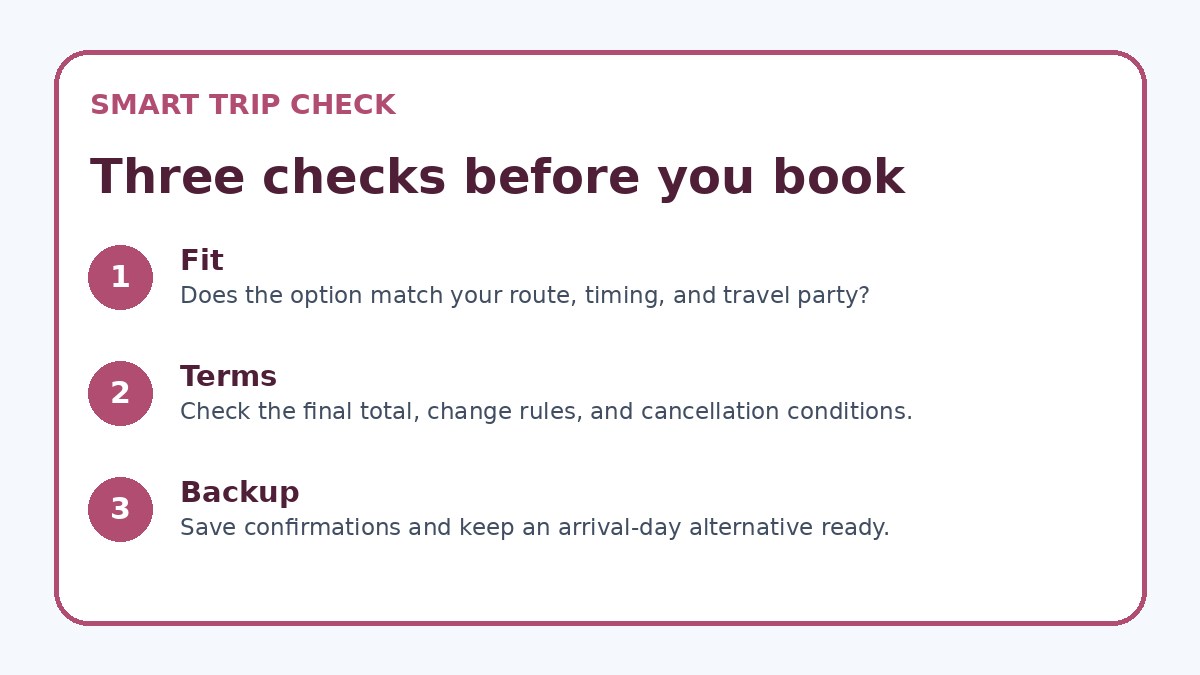
- Open the supplier’s final booking page and scroll to the exact cancellation and change terms; copy the cutoff times in your notes.
- Confirm whether refunds are issued to your original payment method, as a voucher, or as travel credit and note the processing timeframe.
- Compare change fees plus potential fare differences for flights rather than relying on the word “flexible.”
- For packages, list each component (flight, hotel, tour, transfer) and record which components are nonrefundable.
- Check whether travel insurance or a credit card benefit covers change or cancellation fees and how to file a claim.
- Take screenshots or save confirmation emails showing the booking terms so you can reference them if policies or summaries change.
Decision criteria: how to pick the right balance for your trip
Start by rating your trip on two axes: how likely are your plans to change, and how costly would a cancellation be to you? If your dates are firm and you’re confident about connections and visas, accept some restrictions to save money. If you need flexible arrival windows, if your trip depends on weather-sensitive activities like skiing, or if you’re traveling during a local event window, prioritize refundable or largely changeable options. This matrix helps you translate abstract comfort into concrete choices.
Also factor in your personal risk tolerance and budget. Some travelers prefer a low outlay and tolerate stricter terms; others pay premiums for full refunds. Remember to check third-party protections: travel insurance, travel credit cards that waive change fees, or refundable deposits through your booking platform. Finally, when comparing across sites, verify the exact penalty amounts, the method of refund (cash, card credit, voucher), and the timeline for receiving it on the supplier’s final booking page before committing.
Frequently asked questions
Should I always pick flexible fares for a first visit to Sapporo?
Not always. Flexible fares are valuable if your schedule is uncertain or if your trip depends on weather-sensitive activities. They offer peace of mind but usually come at a higher upfront cost. If your dates are fixed and you have firm connections or travel documentation, a lower-cost nonrefundable option can be reasonable. Consider a hybrid approach—flexible options for the most critical parts of your trip (flights, first-night hotel) and cheaper options for lower-risk components.
How do I evaluate a bundled Sapporo package’s cancellation risk?
Break the bundle into its components and assess each cancellation policy separately. A package’s headline policy might not apply uniformly: flights may be strict, hotels somewhat flexible, and tours strictly nonrefundable. Record which piece carries the largest financial risk and prioritize flexibility there. Before you book, confirm whether the package provider will handle all refunds centrally or whether you must contact each supplier individually, and save the exact terms shown on the final booking page for reference.
Can travel insurance replace flexible booking when visiting Sapporo?
Insurance can cover many risks but often has exclusions and documentation requirements. Policies differ on covered reasons, claim windows, and reimbursable amounts, so read the insurer’s policy wording carefully. Insurance may reimburse nonrefundable costs for covered reasons like illness, but it typically won’t waive airline change fees. Use insurance to supplement—not automatically substitute—flexible booking, and verify the insurer’s process for claims and proof required before you rely on it.
Final planning note
For first-time visitors planning Sapporo travel deals, the right cancellation flexibility depends on how fixed your dates are and how much risk you’re willing to accept. Prioritize refundable or changeable options for flights and your first nights if you anticipate schedule shifts; use stricter, cheaper options for predictable parts of the trip. Always confirm exact cutoff times, penalty amounts, and refund methods on the provider’s booking page before you finalize a reservation. If you want a single place to compare current availability and policies, you might check Trip.com as one option, but always rely on supplier pages for final terms. Keeping clear records of the terms you accepted will make any necessary changes or claims far smoother.
Continue planning
Check current options and final conditions
Use the provider page to confirm live availability, the final total, cancellation terms, and every condition that matters to your trip.
This evergreen planning guide was created with AI-assisted drafting and a structured quality review. It does not display live prices, schedules, availability, visa guidance, or provider rankings. Verify current details before booking. Some links are affiliate links; we may earn a commission at no additional cost to you.