For business travelers choosing between faster routes and lower fares, the tradeoff is straightforward: pay more time or pay more risk. On the San Francisco to Vancouver corridor that means balancing direct-flight convenience and predictable arrival windows against cheaper itineraries that add connections, tighter layovers, and baggage transfer risk. Start by confirming exact travel dates, flight times, loyalty status, checked-bag needs, and any carry-on essentials you cannot afford to lose. With those facts in hand, you can compare schedule fit, connection buffer, and fare conditions—especially change and baggage rules—before you click book. Below you’ll find a practical plan for routing choices, baggage handling, connection risk control, schedule alignment with meetings, and the fare terms to verify on the airline’s final booking page.
See live routes for your exact travel day
Compare direct and connecting choices with the same baggage and traveler details.
Routing: direct versus connecting for business priorities
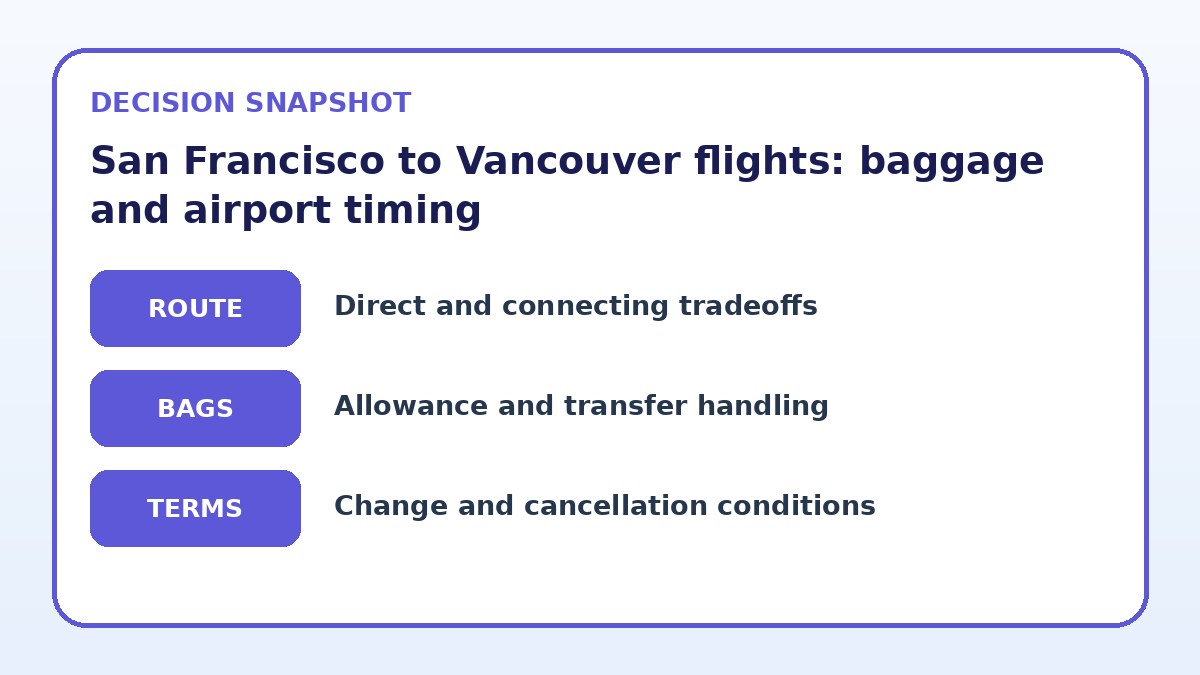
When planning San Francisco to Vancouver travel, the primary routing decision is whether to prioritize a nonstop flight or accept a connection for lower cost or different times. Nonstops reduce touchpoints: fewer takeoffs and landings, no re-clearing of security or re-checking through customs mid-journey, and typically shorter total travel time. For an afternoon meeting in Vancouver, a nonstop that arrives with a buffer is often the simplest way to protect your schedule. If direct options align with your meeting window, they usually minimize the need for contingency plans.
Connecting itineraries can open up earlier or later departure times and lower fares, but they introduce variables—tight layovers, baggage transfer time, and dependency on the first flight’s punctuality. If you consider a connection, check minimum connection times at the transit airport and favor layovers that provide at least 60–90 minutes for domestic-to-international transfers, longer if you need to change terminals. Always map how baggage will be handled during the connection and whether you must clear customs or pick up and re-check bags en route.
Baggage and connection risk: what to pack and verify
For business travelers, carry-on strategy matters. Place meeting materials, a laptop, charger, presentation clicker, and one change of clothes in your carry-on so a delayed checked bag won’t derail a critical appointment. Verify carry-on dimensions and weight limits with the airline and plan for liquids and electronics to pass security quickly. For items you can replace or postpone, checking a bag reduces carry burden—but increases exposure to delays and mishandling on connecting itineraries.
Before booking, confirm on the airline’s final booking page whether checked bags are guaranteed to transfer on a single ticketed itinerary or if you must collect and re-check at a connection. Also verify whether your fare includes priority tagging or expedited transfer services; some carriers offer priority baggage handling for premium fares or status members, which can reduce arrival delays. If the booking involves separate tickets, plan additional buffer time and assume checked bags will not be protected between carriers without interline agreements.
Compare flight-selection strategies
| Flight strategy | Best for | Risk to check |
|---|---|---|
| Nonstop, refundable or flexible fare | Travelers who need predictable arrival windows and minimal connection risk | Higher fare for convenience and easier rebooking when plans change |
| Nonstop, basic or restricted fare | Those prioritizing a direct schedule but minimizing ticket cost | Lower price but tighter baggage and change restrictions to verify |
| Connecting itinerary with single-ticket protection | Budget-conscious travelers who still want transfer protections | Longer travel time and higher dependence on the first flight’s punctuality |
| Separate-ticket connections for cheapest routing | Travelers maximizing savings and able to accept delay risk | No interline protection for missed connections; plan extra buffer and baggage handling |
Recheck the complete itinerary
Confirm airports, connection handling, baggage, and change conditions before deciding.
Schedule fit: aligning flight times with meeting windows
Start by freezing the exact meeting start time and then work backward to select flight times that give you a reliable buffer for delays. For morning meetings, consider arriving the night before to avoid weather-related or operational risks, especially if meetings are high-stakes. If same-day travel is unavoidable, choose flights that land with at least 90–120 minutes before your first appointment to cover deplaning, customs, baggage claim, and transit to your meeting point within Vancouver.
When comparing flights, examine departure times from San Francisco relative to typical airport congestion—early morning and late afternoon can both be busy. Remember to account for time needed to reach SFO, parking or rideshare pickup, and any required pre-departure COVID or travel paperwork that could add processing time. For return trips, plan similarly: schedule flights after the day’s last commitment with an adequate buffer for overrun meetings or unforeseen delays.
Flight details to verify
- Confirm exact travel dates, meeting times, and preferred arrival buffer before searching fares.
- Decide which items must travel in your carry-on and pack them in an organized, security-friendly case.
- Check the airline’s baggage allowance, fees, and whether priority or expedited baggage handling is available on the booking page.
- If comparing connecting options, verify minimum connection times, terminal changes, and whether checked bags transfer automatically.
- Book a fare class that matches your change/cancellation flexibility needs and add travel insurance if required by company policy.
- Save the airline’s contact number, your reservation code, and allocate extra time for reaching SFO and clearing security.
Fare conditions: what to check on the booking page
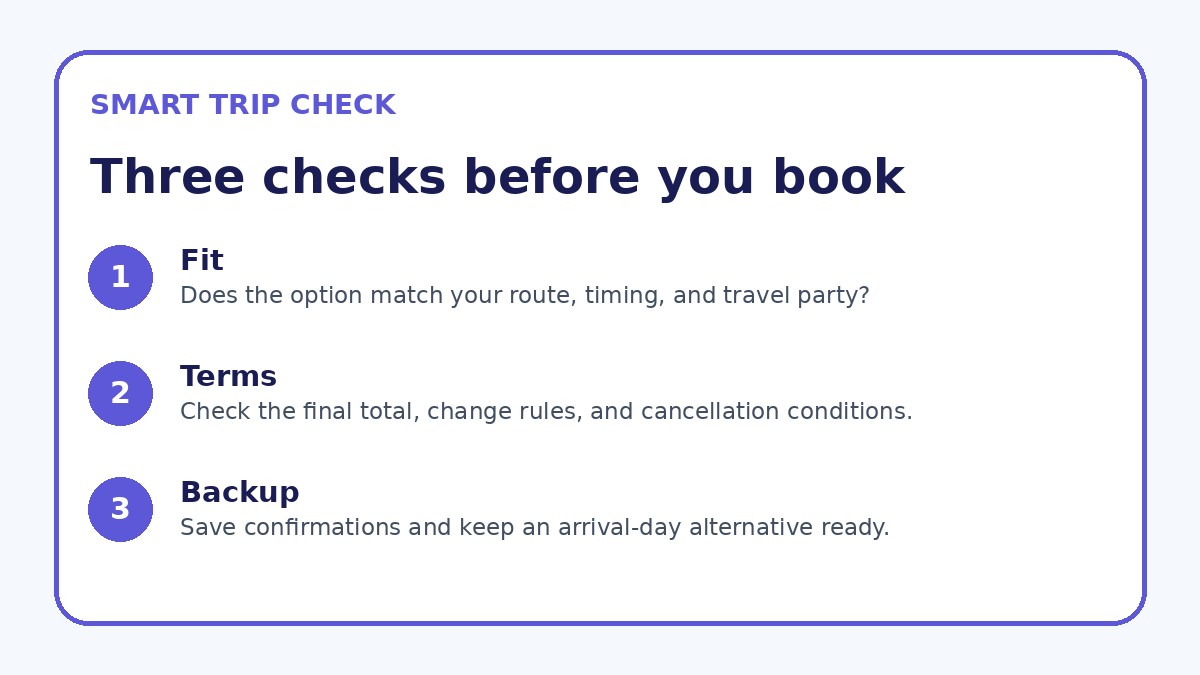
Fare conditions determine your flexibility when plans change. Before completing a reservation, read the airline’s final checkout page to confirm baggage allowances, change and cancellation fees, and the specific conditions for waivers or flexible tickets. Pay attention to whether the fare is refundable, how much it costs to change to another time or date, and whether any fare class restrictions affect seat selection or elite benefits. These details are the only authoritative source for what happens if you must change or cancel.
Also verify whether the fare includes priority boarding or expedited security options that can speed your airport time. If your itinerary mixes carriers or involves separate tickets, check whether protections apply for missed connections or whether you’re responsible for rebooking. Use the confirmed traveler details—name spelling, frequent flyer number, and contact information—at booking to reduce the chance of issues. If you want a quick comparison of current schedules and fare conditions, you can check providers like Trip.com, but always validate rules on the airline’s own site.
Flight Guide questions travelers ask
How early should I arrive at San Francisco Airport for a San Francisco to Vancouver business flight?
For international travel from San Francisco to Vancouver, most business travelers aim to arrive at the airport at least 90–120 minutes before departure. This covers check-in for checked luggage, security screening, and possible lines at TSA or terminals. If you need to check a bag on a connecting itinerary or during peak travel periods, add extra time; if you only have carry-on and have mobile boarding passes and TSA PreCheck, you may safely shorten that buffer, but confirm the airline’s recommended check-in cutoff on the booking page. Adjust arrival time based on whether you need to drop a rental car, park at an offsite lot, or handle company paperwork before departure.
If my checked bag is delayed on a connection, what steps protect my business schedule?
Pack essentials—work materials, a change of clothes, chargers, and any urgent medication—in your carry-on so you can attend meetings if a checked bag is delayed. Before booking, check whether your ticket is on a single itinerary with interline baggage agreements; that typically improves the chance your bag travels through to your final destination. If your bag is delayed, file a baggage report immediately with the airline at the arrival airport and request priority delivery; document the contents for claims and keep receipts for any purchases your company requires for reimbursement. For high-stakes travel, consider priority-tagged services or traveling with a lightweight second outfit in your carry-on.
Should I book refundable or changeable fares for business travel between San Francisco and Vancouver?
Refundable or flexible fares reduce the stress of last-minute meeting changes or cancellations, since they often permit ticket changes with minimal penalties. If your employer reimburses for flexibility or if your itinerary is subject to change, a more flexible fare can be a sensible investment. Before choosing, compare the specific change and cancellation terms shown on the airline’s final booking page, because ‘flexible’ labels vary considerably. If budget constraints are tight, weigh the potential cost of a nonrefundable fare plus a change fee against the price differential for a flexible ticket that lets you rebook with less friction.
Final decision note
Business travel between San Francisco and Vancouver is manageable with a clear plan: pick the routing that matches your meeting priorities, protect essentials in your carry-on, and confirm fare and baggage rules on the airline’s booking page before purchase. Direct flights simplify timing and reduce baggage-transfer risk, while connections can lower fares at the cost of more planning and buffer time. Always freeze dates and traveler details before shopping, verify baggage allowances and change rules, and prepare an in-airport time budget that reflects your security status and company protocols. With those steps, you can book confidently and keep your focus on your meetings.
Continue planning
Check current options and final conditions
Use the provider page to confirm live availability, the final total, cancellation terms, and every condition that matters to your trip.
This evergreen planning guide was created with AI-assisted drafting and a structured quality review. It does not display live prices, schedules, availability, visa guidance, or provider rankings. Verify current details before booking. Some links are affiliate links; we may earn a commission at no additional cost to you.