If you’re traveling from Melbourne to Adelaide with more or heavier bags than usual, your priority on the travel day should be door‑to‑door practicality: minimizing transfers, avoiding tight connections, and ensuring each transfer point can handle oversized or multiple items. Start by choosing the mode (train, coach, private transfer, or a combination) that reduces the number of times you need to lift, recheck, or move bags. Factor in how you’ll get to and from terminals, what luggage allowances and physical constraints exist at stations or depots, and a realistic buffer for delays. This article gives a clear decision path, covering terminal fit, luggage friction, timing flexibility, and a disruption backup so you can choose and execute the smoothest possible journey for your extra luggage.
How to choose between train, coach, private transfer, or a mixed plan
Start by mapping the full door‑to‑door chain rather than only the main leg. Trains and coaches both serve intercity corridors, but they differ in boarding flow and baggage policy: trains often allow passengers to keep large items with them near car doors or luggage racks, while coaches can have underfloor bays that require lifting and staff handling. Private transfers or hire vehicles may appear expensive on paper but reduce transfers and physical luggage handling because everything goes straight from your pickup address to your destination. Mixed plans—such as a train for the main leg and a short private transfer at either end—can balance cost and convenience while minimizing repeated lifts.
To decide, list your priorities: minimum handling, lowest number of transfers, or lowest cost. For heavy or cumbersome items prioritize fewer physical lifts and direct dropoffs; for many small suitcases prioritize storage capacity and ease of loading. Consider driveway or stair access at both ends—if either property has limited parking or narrow stairs, a small shuttle from the nearest public stop to your door may be necessary. Finally, check luggage size policies and what physical assistance is offered at stations and coach depots; these practical details often determine which mode makes the most sense for your extra baggage.
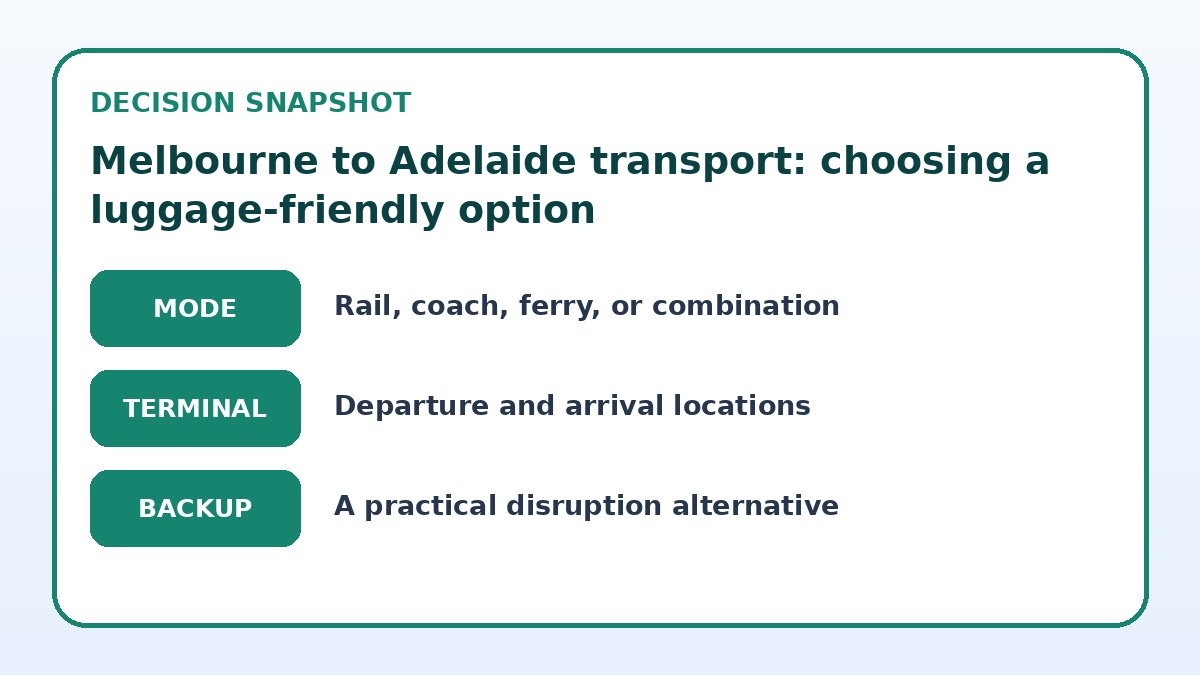
Choose the end-to-end journey plan
| Journey approach | Best for | Friction to check |
|---|---|---|
| Single private transfer (door‑to‑door) | Travelers prioritizing minimal lifts and direct dropoffs with many or heavy items. | Higher per‑kilometre cost and limited public transport flexibility if roads are congested. |
| Direct train with local taxi legs | Those who want a stable, roomy main leg and can manage short local transfers. | Requires at least two additional lifts and depends on station luggage facilities and taxi loading space. |
| Long‑distance coach with checked luggage | Travelers with bulky or awkward items that are easier stored undercoach rather than carried on board. | Risk of extra handling at loading/unloading and less control over fragile items compared with keeping them with you. |
| Mixed plan: coach or train plus short hired vehicle | Balancing cost and convenience—use public intercity leg plus a local vehicle for easy door access. | More handoffs than a single transfer; timing coordination is needed to avoid rushed transfers. |
Check live intercity options
Look beyond the ride itself and compare terminals, transfers, luggage, and arrival fit.
Terminal fit and luggage/transfer friction on the travel day
Assess terminal layouts and transfer paths before travel. Major stations and coach depots vary: some have level access from kerb to platform, luggage carts, elevators, and staff to help, while others might involve steps, narrow ramps or long walks between platforms and pickup areas. If you must navigate stairs or long corridors, that increases time and the risk of strain or damage. Use station maps, photos, and recent traveler reports to confirm whether trolleys or lifts are available and whether staff can assist with bulky items; if in doubt, plan additional help such as a local taxi with loading assistance.
Think about modal transitions: from house to station, station to vehicle, vehicle to destination. Each transition usually involves a lift and short carry; multiply those by the number of transfers to estimate total handling. For example, a plan with a train plus two taxis involves more person‑to‑person handling than a single private transfer. If you have irregularly shaped or fragile items, request special handling in advance wherever possible and verify how these items are carried between vehicle and boarding area so you can pack accordingly and avoid surprises on the travel day.
Timing flexibility and realistic buffers for luggageed travellers
When you’re managing extra luggage, leave bigger time cushions than you normally would. Allow extra time for packing, loading and unloading, securing items, and any assistance you may need at a station or depot. If your chosen intercity operator suggests an arrival time before departure for check‑in or loading, honor the recommendation and add an extra 30–60 minutes if you have oversized or many bags. For connections, aim for longer connection windows; a missed short link can force extra handling and unexpected overnight stays or transfers.
Plan around predictable friction points: peak travel hours, weekend coach depot congestion, and local traffic when crossing metropolitan areas. If you need to travel from a suburban address to a central station, test the transfer route beforehand or try a dry run loading your heaviest bag into the vehicle you’ll use. When booking, choose options with flexible ticketing or clear policies for changing times—this reduces stress if you need to switch to a later service to avoid rushed transfers with heavy luggage.
Compare the practical alternatives
Use the final page to confirm what is actually offered on your dates and save a workable fallback.
Intercity travel checklist
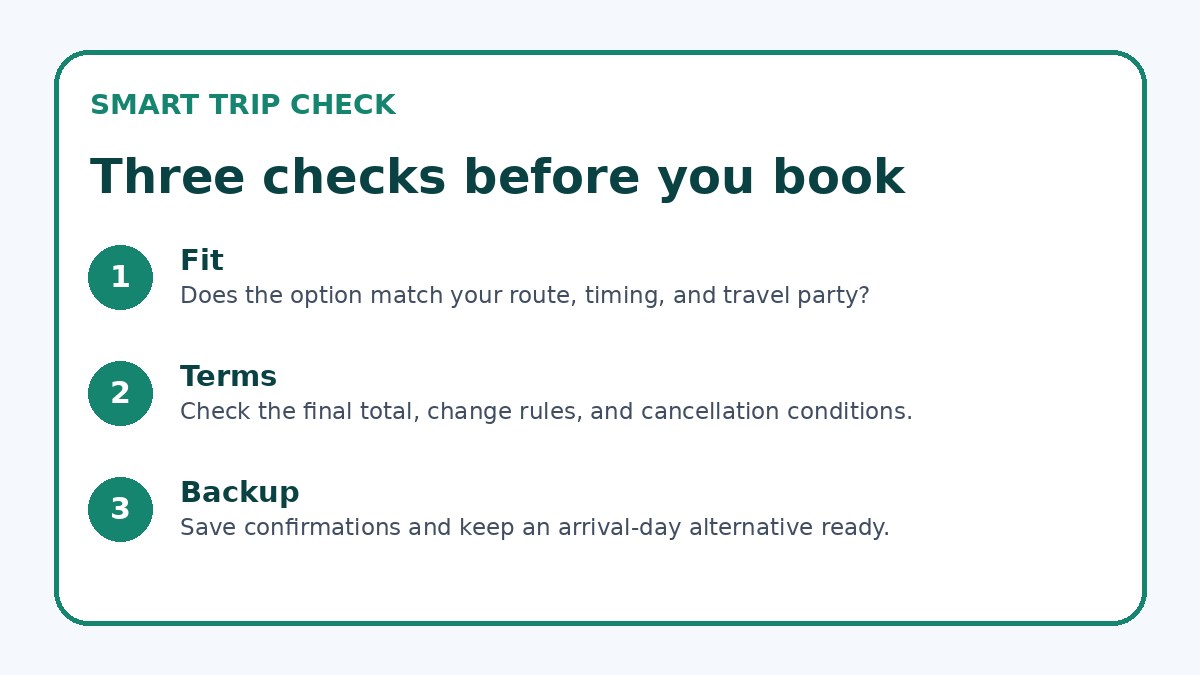
- Measure and weigh every bag; confirm size and weight rules on the operator’s final booking page before you pay.
- Photograph and label each item with your contact details and the day’s itinerary in case of misplacement.
- Reserve or prebook any special handling or oversized baggage service the operator offers and keep confirmation numbers accessible.
- Plan a clear pickup/dropoff point with level access, and notify drivers or station staff of bulky items before arrival.
- Pack a small essential bag with valuables and items you must keep with you to avoid unpacking checked luggage mid‑trip.
- Save local taxi and courier numbers and the nearest station depot address for rapid backup if your primary plan changes.
Disruption backups and practical contingency plans
Create a simple backup plan that you can execute quickly. Options include having the number of a local taxi company that offers vehicles with roof racks or larger boots, identifying paid baggage storage at the arrival or departure station, or arranging a short paid courier or local removalist for oversized items. Also identify an alternate pickup or dropoff point that's easier for loading—many suburbs have a nearby hotel or public carpark with level access which can serve as an emergency meeting place if your primary address is inaccessible on the day.
Prepare documentation and communications: take photos of fragile items, label bags with contact details, and keep booking references ready on your phone. Share the backup plan with whoever will assist you on the travel day so decisions can be made quickly. Finally, know where to check live conditions for your chosen mode—train or coach operator pages, or comparison sites like Trip.com for availability—and verify luggage handling policies on the final booking page before you travel.
Rail & Intercity Transport questions travelers ask
Can I keep my large suitcases with me on trains between Melbourne and Adelaide?
Policies vary by operator and can change, so check the carrier’s final booking page for current rules. Many long‑distance trains provide luggage racks and space near car doors for suitcases, but they may have limits on size or ask you to stow larger items in designated areas. If you need assistance loading or unloading, contact the operator in advance to confirm staff availability. On-board space is finite; when booking, look for options that explicitly mention oversized baggage handling or allow you to reserve space.
What is the easiest way to avoid heavy lifting during transfers?
The simplest approach is to minimize the number of transfers: choose a door‑to‑door private transfer or a mixed plan that uses a single local vehicle at each end. If that isn’t practical, prebook taxis with ample boot space or arrange station assistance where available. Use luggage with wheels and, if possible, distribute weight across multiple bags so that each lift is manageable. Also identify level access points and elevators on station maps beforehand to avoid stairs or long carries on the travel day.
If my main service is delayed, how do I protect oversized or fragile items?
Have a disruption plan that you can activate immediately: know nearby paid storage or left‑luggage facilities at arrival or departure points, carry contact details for local couriers or removalists, and ensure your bags are clearly labeled and photographed. If you cannot wait, consider arranging a short paid transfer for fragile items to their final destination. Always check the operator’s policies on delayed luggage handling on the final booking page and keep booking references accessible to speed up any claims or retrieval.
Final decision note
Traveling from Melbourne to Adelaide with extra luggage requires planning that treats the whole journey as an end‑to‑end process. Choose the mode that minimizes handoffs if you value fewer lifts and simpler logistics, or use a mixed approach to balance cost and convenience. Before you book, verify luggage policies, terminal access, and assistance options on the provider’s final booking page, and prepare a clear backup plan—local taxis, paid storage, or a short hired vehicle—to reduce stress if something changes. With measurements, labeled bags, realistic timing buffers, and a practical contingency plan, the travel day becomes manageable and far less likely to produce unpleasant surprises.
Continue planning
Check current options and final conditions
Use the provider page to confirm live availability, the final total, cancellation terms, and every condition that matters to your trip.
This evergreen planning guide was created with AI-assisted drafting and a structured quality review. It does not display live prices, schedules, availability, visa guidance, or provider rankings. Verify current details before booking. Some links are affiliate links; we may earn a commission at no additional cost to you.