If you’re a solo traveller booking a Queenstown car rental, the single most useful thing you can do is read the pickup and return terms before you book. These terms control where you collect the car, what time windows are allowed, whether after-hours collection or return is permitted, and which charges you may face for late returns, refuelling, or additional mileage. They also determine whether one-way rentals, airport collections and returns, or cross-border travel are allowed. Knowing the specifics saves time, avoids stress at the counter, and protects your security deposit. This article walks through the key clauses to check, explains tradeoffs for each decision, and gives a practical checklist you can use while comparing offers and finalising a booking.
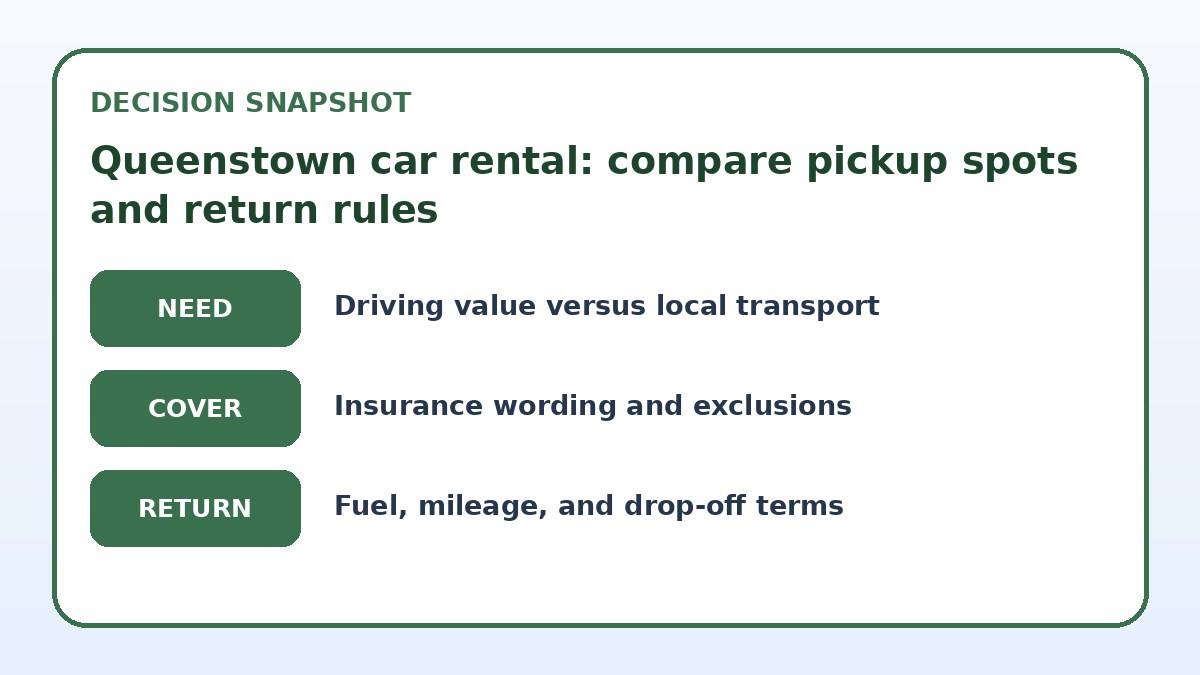
See current options before you compare the details
Availability and final conditions change. Open Trip.com now or keep reading for the practical comparison.
Where to pick up: airport, town centre, or off-site depot
Choosing where to collect your Queenstown car rental affects logistics and cost. Airport desks are convenient but can have extra surcharges or busy peak queues; some companies use an off-site depot that requires a shuttle transfer. Town-centre locations might be quieter and easier to reach if you’re staying nearby, but they can also have limited hours. When comparing options, read the pickup address and the provider’s notes about transfer shuttles, meeting points, and whether a booking confirmation specifies a counter or a remote collection process.
Practical decisions to weigh include your arrival time, luggage, and desire for immediate mobility. If you arrive late, confirm after-hours pickup procedures and whether a pre-authorised key collection or late pick-up fee applies. Solo travellers may prefer a single, straightforward pickup with clear staff contact details rather than saving a small fee for an off-site depot that adds complexity. Always note the exact instructions on the provider’s final booking page, including the phone number and any reference code required on arrival.
Return terms: timing, location flexibility, and penalties
Return terms cover when and where you must drop off the car, and what happens if you miss the window. Some companies allow a short grace period; others charge for each hour or day late. One-way returns (dropping the car at a different location) are useful for linear routes but may carry a hefty drop-off fee. Solo travellers who plan to fly out or catch a bus should match the return location to their departure point to avoid backtracking and extra fees.
Also check after-hours returns: some offices accept key-drop returns but still inspect the car the next business day and may charge for damage found later. Review the final booking page for instructions on fuel state at return, mileage check procedures, and photo evidence processes. If you anticipate arriving outside business hours, request written confirmation of the after-hours process to reduce disputes about condition or time of return.
| Approach | Best for | Tradeoff to check |
|---|---|---|
| Airport pickup and return | Arrivals with flights or large luggage who want immediate access to a car | May incur airport surcharges, longer queues, or limited after-hours options |
| Downtown or hotel desk pickup | Staying in central Queenstown and wanting shorter transfer times | Shorter opening hours and potentially fewer vehicle choices |
| Off-site depot with shuttle | Lower daily rates or access to specific vehicle types | Requires shuttle transfers and can add complexity on arrival or return |
| One-way drop-off at different town | Linear itineraries or travelling onward without backtracking | Often carries a significant drop-off fee and requires clear booking confirmation |
Ready to check the option that fits your plan?
Use your exact dates and traveler details so the provider page can show the current total and conditions.
Insurance, deposits and authorised drivers for solo travellers
Insurance options and deposit rules directly affect your financial risk. Basic liability may be included while collision damage waiver (CDW), theft protection, and excess-reduction options are frequently optional. Agencies often require a credit card for the security deposit and will place an authorisation hold that can be substantial. Solo travellers should calculate the tradeoff between paying extra to reduce excess and keeping a larger hold on their card — and verify on the booking page what payment methods are accepted for the deposit.
Authorised driver rules are crucial: many companies permit only named drivers to operate the vehicle. Adding another driver can be inexpensive or prohibited depending on the firm, and failing to register a driver can void insurance. If you plan to switch drivers at any point, register them in advance. Also check age-related restrictions, as younger drivers frequently face surcharges or tighter insurance limits — details you must confirm on the provider’s final booking page.
Before you book
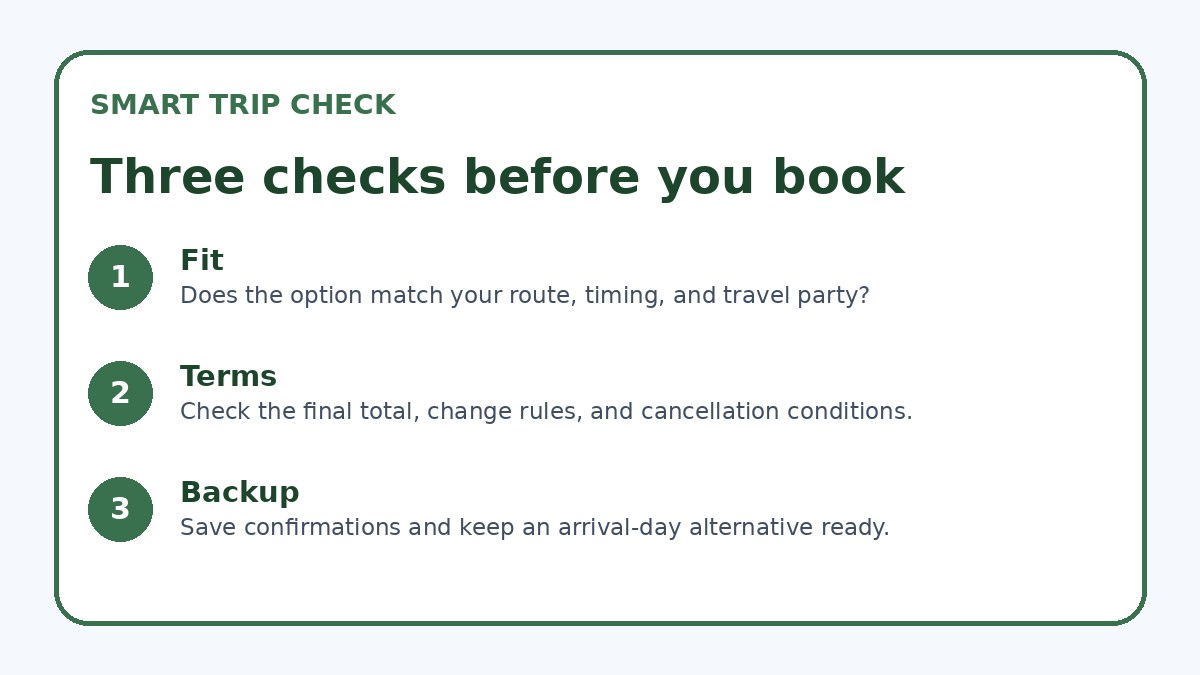
- Confirm the exact pickup address, opening hours, and after-hours procedure on the provider’s final booking page.
- Check required ID, authorised driver names, and whether additional drivers must be pre-registered.
- Verify the fuel policy (full-to-full, prepaid, or charged per litre) and note instructions for receipts or photo evidence.
- Read the deposit and payment rules, including the card type required and the size and release timing of any hold.
- Confirm mileage limits, permitted roads (sealed/unsealed), and whether cross-region travel is allowed.
- Document vehicle condition with timestamped photos at pickup and return and keep the inspection sheet or return receipt.
Fuel, mileage, and cross-border considerations
Fuel policies vary and have direct cost and convenience implications. Common options include full-to-full (bring it back full), prepaid fuel, or penalties for missing fuel. Full-to-full is transparent and usually simplest: pick the car up full and return it full, taking a receipt if you refuel near drop-off. Prepaid fuel saves time but rarely returns unused value if you drive less. Always confirm how fuel level is assessed and whether agents use photos or gauges during check-in and check-out.
Mileage caps and cross-border permissions matter if you plan extensive drives or hope to visit nearby regions. Some rentals come with unlimited kilometres; others limit daily or total mileage and apply per-kilometre charges. If you intend to cross regional borders or take the car onto gravel or unsealed roads common around Queenstown, confirm permissibility and note any excluded roads. These permissions and limits must be verified on the final booking page — especially for trips involving ferry transfers or travel into neighbouring regions.
Frequently asked questions
Can I pick up a Queenstown rental car late at night if my flight arrives after office hours?
Possibly, but policies vary by company. Many agencies offer after-hours collection via a secure key box or an agreed meeting point, while others require you to collect during business hours only. Before booking, check the provider’s explicit instructions on their final booking page about after-hours pick up, any associated fees, and whether a staff member will meet you. If you expect to arrive late, request written confirmation of the process and a contact number so you aren’t left waiting without a documented plan.
What should I do to avoid disputes over damage when returning a car in Queenstown?
Do a careful walk-around and take clear timestamped photos of all sides, the interior, and the odometer at pickup and again at return. Ensure the rental agent signs the inspection sheet or provides a return receipt noting the fuel level and odometer reading. If returning after hours, follow the provider’s documented drop-off procedure and keep photo proof. If damage is discovered later, having those time-stamped images and the signed inspection reduces the chance of unfair charges — and verify how long the company keeps photos or inspection records on the booking page.
How do I compare excess-reduction versus relying on my card insurance for a solo trip?
Compare what the rental contract’s excess is, what the excess-reduction option lowers it to, and the specific exclusions or conditions for each policy. Your credit card or travel insurance may cover rental damage but often has requirements such as paying the full rental cost with the card and producing certain documents after an incident. Request clear, provider-specific language on the booking page about when excess reduction applies, which damages are excluded (tyres, undercarriage, windscreen), and the procedure for making a claim. That lets you decide if paying the rental firm to reduce excess is worth it for peace of mind.
Final planning note
For solo travellers, the pickup and return terms determine whether your Queenstown car rental is convenient or a headache. Focus first on practicalities: pickup location and hours, after-hours procedures, authorised driver rules, fuel policy, and deposit requirements. Then weigh tradeoffs such as airport convenience versus potential surcharges, paying to reduce excess versus accepting a larger card hold, and one-way flexibility versus drop-off fees. Always verify these specifics on the provider’s final booking page, get any non-standard agreement in writing, and document vehicle condition at pickup and return. If you want to compare live availability and current rental terms, Trip.com is one place to view providers side by side — but always confirm the exact terms on the supplier’s booking page before you finalise your reservation.
Continue planning
Check current options and final conditions
Use the provider page to confirm live availability, the final total, cancellation terms, and every condition that matters to your trip.
This evergreen planning guide was created with AI-assisted drafting and a structured quality review. It does not display live prices, schedules, availability, visa guidance, or provider rankings. Verify current details before booking. Some links are affiliate links; we may earn a commission at no additional cost to you.