The practical answer: choose a transfer that matches your flight time, meeting schedule, luggage, and risk tolerance—book a licensed private transfer for predictable pickup windows, or allow extra time if you’ll use a taxi or ride‑app after last‑minute meetings. For business travelers, the key priorities are time certainty, security, and course‑corrections if meetings run late. Plan a buffer for traffic and airport screening, confirm pickup location and driver contact, and have a clear fallback. This piece walks through tradeoffs and decision criteria—timing, reliability, cost versus certainty, and in‑city pickup logistics—so you can pick the right approach for your itinerary and company travel policy.
See current options before you compare the details
Availability and final conditions change. Open Trip.com now or keep reading for the practical comparison.
Decide your top priorities before choosing a transfer
Start by listing what you cannot compromise on: exact departure time from your hotel, a guaranteed driver waiting, luggage handling, or the ability to change pickup time without penalty. Business travelers often juggle meetings and deadlines, so pick the single most important factor—usually time certainty—or accept a tradeoff like higher cost for a stress‑free handoff. Also check whether your company travel policy requires a vetted provider or receipts for reimbursement; that will remove some options and simplify the decision.
Next, map the constraints around your flight: how early you need to be at the terminal for check‑in and security, whether you anticipate carrying carry‑on only or checked bags, and the local traffic windows that affect travel time. Use those constraints to set a target departure time from your accommodation that includes a buffer for delays. With priorities and constraints on paper, comparing options becomes a matter of matching provider features to your nonnegotiables rather than guessing which is “best.”
Compare the main transfer approaches and what to verify
There are four common approaches: prebooked private shuttle or sedan, hotel arranged transfer, standard airport taxi from an approved stand, and ride‑app services. For each option, check the provider’s stated pickup point, how they handle delays or meeting overruns, whether waiting time is included or charged, and how they handle large or multiple pieces of luggage. If your flight connection is early morning or late at night, confirm that services operate at those hours and what alternative the provider offers if they cannot fulfill the booking.
When provider‑specific facts could change, verify those details on the provider’s final booking page before you commit. Look specifically for cancellation terms, driver contact procedures, required passenger identification, and whether the quote includes taxes and tolls. Trip.com can be used as one place to compare availability and listed terms, but always read the provider’s own terms for refund and change policy to avoid surprises on the day of travel.
| Approach | Best for | Tradeoff to check |
|---|---|---|
| Prebooked private transfer | Travelers who need a fixed pickup time and meet strict company standards | Typically higher cost but more predictable pickup and direct communication with driver |
| Hotel-arranged transfer | Convenience and single‑point coordination through concierge services | May be slightly more expensive and depend on hotel’s supplier reliability |
| Airport taxi from approved stand | Simple, on‑the‑spot option with official airport oversight | Less control over wait time and variable fares depending on traffic and luggage |
| Ride‑app services | Flexible booking and potential cost savings for non‑peak departures | Pickup locations and surge pricing can add uncertainty; verify app pickup rules |
Ready to check the option that fits your plan?
Use your exact dates and traveler details so the provider page can show the current total and conditions.
Planning for timing and traffic in Mexico City
Mexico City traffic patterns are a major variable; morning and evening peaks, event traffic, and localized construction can all affect travel time to the airport. Account for the direction you’ll be traveling—routes into the airport can slow dramatically during peaks—and build a buffer that reflects both typical congestion and the cost of being late to the flight. Business travelers should consider tighter buffers for international departures that require extra time at check‑in and security, and may reduce buffer slightly for purely domestic itineraries if comfortable with lower risk.
If your schedule is tight, prefer a transfer that offers a guaranteed pickup window and clear protocols for delays. For meetings that may overrun, choose a supplier with flexible change policies or that allows on‑the‑day adjustments via direct driver contact. If you rely on a ride‑app, make sure pickup locations in the city are practical and legal for commercial pickups, and be prepared to move to a nearby approved curbside point if drivers cannot stop exactly at your door.
Before you book
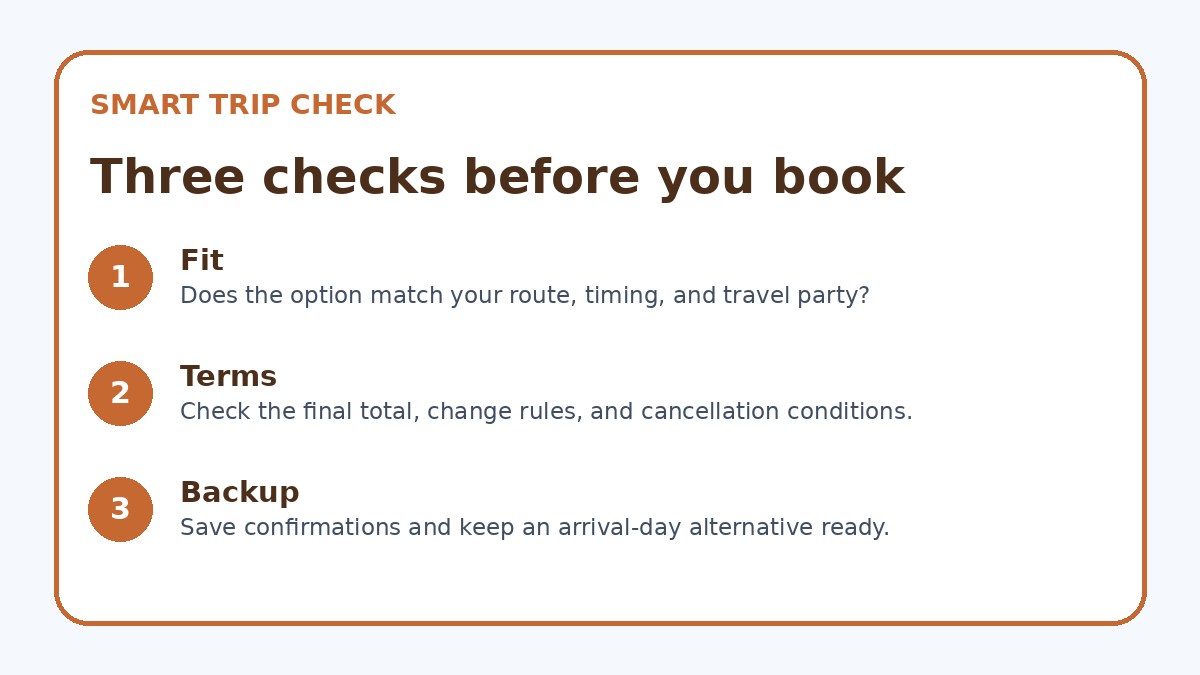
- Confirm your pickup window by adding the buffer you need for meetings and traffic and note it on the booking.
- Verify provider cancellation, wait‑time, and change policies on the final booking page before paying.
- Save driver contact number and the company’s emergency phone in both phone and printed form.
- Check exactly which terminal and curbside or formal pickup point to avoid last‑minute walking between areas.
- Load a ride‑app and ensure your payment method works as a fallback if your prebooked option fails.
- Keep all booking confirmations and any required corporate approval documents accessible for reimbursement.
Logistics at the airport and last‑minute contingencies
Know your arrival terminal, airline check‑in procedures, and where curbside or designated pickup areas are located. If you’ve prebooked a private transfer, provide your flight number so the operator can monitor delays; still confirm where you will meet on arrival and that the driver’s phone number is working. For hotel‑arranged pickups, ask the front desk for the exact pickup procedure and any additional time the hotel needs to prepare luggage or process the bill before departure.
Prepare contingency plans: a second transfer option you can book quickly, a backup ride‑app profile with payment ready, or instructions for a trusted colleague to assist if you get delayed. Keep digital and printed copies of confirmation numbers, pickup addresses, and any company travel approval forms. Finally, build a short debrief into the trip to record what went well and what to change for your next Mexico City return transfer.
Frequently asked questions
How much extra time should I allow for a Mexico City transfer to the airport?
There isn’t a single correct number because traffic, time of day, and whether you need to check bags all change the calculation. For business trips, many travelers plan a buffer that covers typical peak congestion plus airline check‑in needs; if your schedule is tight, skip risky margins and choose a transfer that allows flexible pickup or an earlier confirmed departure. Always confirm how the provider handles delays and whether they monitor your flight number so they can adjust pickup automatically.
Is it safe to use ride apps or street taxis for a late‑night airport transfer?
Safety depends on using official channels and common‑sense precautions: use reputable ride‑apps with in‑app driver details and contact sharing, or take taxis from approved airport stands rather than hailing on the street. For late‑night trips, prebooking a licensed service or arranging a hotel transfer reduces uncertainty and provides written confirmation. If you choose a ride‑app, confirm the pickup point is legal and well‑lit, share trip details with a colleague, and ensure payment is set up so you don’t need to handle cash at the curb.
What should my company travel policy require when booking transfers in Mexico City?
A practical travel policy balances cost control with traveler safety and punctuality: require vetted providers for late‑night or early‑morning trips, mandate documentation for expense reimbursement, and specify acceptable buffer times before international departures. The policy should list approved booking channels, whether hotel arrangements are allowed, and how to handle on‑the‑day changes. Include instructions for reporting problems and obtaining emergency support if a prebooked transfer does not arrive.
Final planning note
Planning the return trip to the airport in Mexico City means choosing the tradeoffs you’re willing to accept between punctuality, cost, and convenience. For most business travelers, the best practice is to define your nonnegotiables—usually a firm departure window and a reliable pickup method—then verify provider terms, pickup location, and contact details before booking. Keep a practical fallback in the ride‑app or an alternative provider, and build a sensible time buffer for traffic and check‑in. With clear priorities and contingencies, you’ll reduce stress and arrive at the airport ready to travel.
Continue planning
Check current options and final conditions
Use the provider page to confirm live availability, the final total, cancellation terms, and every condition that matters to your trip.
This evergreen planning guide was created with AI-assisted drafting and a structured quality review. It does not display live prices, schedules, availability, visa guidance, or provider rankings. Verify current details before booking. Some links are affiliate links; we may earn a commission at no additional cost to you.