If you’re arranging a business trip in Queenstown and will rent a car, the fastest way to avoid extra charges is to check fuel and mileage rules before you book. Fuel policy (how providers expect you to return the tank) and mileage allowance (daily or total kilometre limits) determine whether you pay for fuel at drop-off or for excess distance. These rules affect your itinerary flexibility, expense reporting, and whether you need to top up locally or buy a provider’s refill option. Read the provider’s final booking terms, compare the tradeoffs between convenience and cost, and confirm how fuel and mileage will be recorded on your rental agreement for company reimbursement.
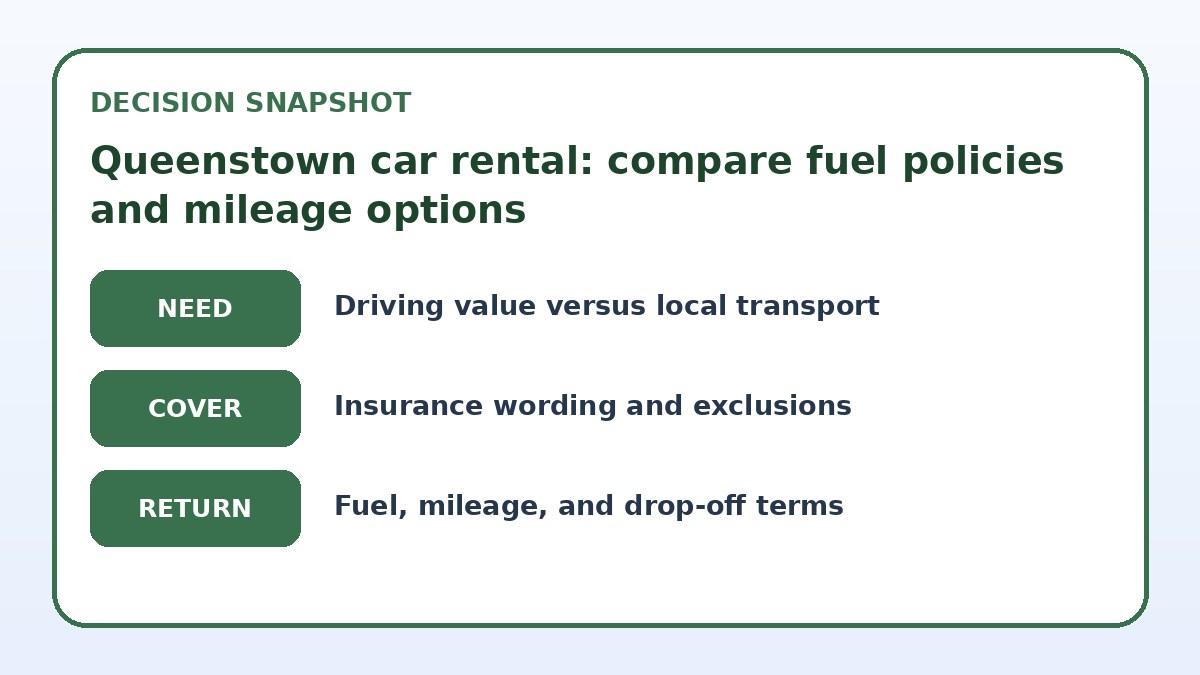
See current options before you compare the details
Availability and final conditions change. Open Trip.com now or keep reading for the practical comparison.
Understand common fuel-policy types and what they mean
Rental companies typically offer a handful of fuel-policy formats: full-to-full, fuel purchase upfront, or provider refuel at drop-off. Full-to-full means you collect with a full tank and must return it full; it’s the simplest to verify at pickup and the cheapest when you refuel at local prices. Upfront purchase lets you pay for a full tank at the outset and return emptier; it’s convenient if you lack time but often costs more per litre than local stations.
Provider refuel-at-drop-off (sometimes called ‘refuel service’) allows returning the car without filling it, but the company will charge a refuelling fee plus a per-litre rate that typically exceeds public petrol station prices. For business travellers on tight schedules, the time saved may justify the premium, but for expense-sensitive trips you should check whether your company will reimburse that markup. Always inspect the fuel gauge at pickup and photograph it if you plan to dispute later charges.
Mileage allowances: unlimited vs capped and how to calculate risk
Some rentals include unlimited kilometres, which is ideal if you expect to cover long distances or are visiting surrounding regions. Capped mileage is usually expressed as a daily allowance or a total for the rental: for example, a daily cap of 200 km or a total cap of 1,000 km. If your planned drives approach these thresholds—airport transfers, multi-site meetings, and scenic detours—calculate your expected total kilometres conservatively and compare that to the allowance.
If a cap applies, the penalty is a per-kilometre fee that can be significant for long drives. For business trips, factor excess-kilometre costs into your per-day vehicle budget and consider whether a higher-rate, unlimited option might be cheaper than paying penalties. When in doubt, ask for a written breakdown of the per-kilometre charge and how the company measures distance (odometer reading at pickup and return is common).
| Approach | Best for | Tradeoff to check |
|---|---|---|
| Full-to-full (driver refuels before return) | Cost-conscious business travellers who can spare time to refuel locally | Requires time at return and a valid receipt for expense claims; risk of forgetting to refill |
| Pre-purchase full tank at pickup | Time-pressed travellers who prefer predictable billing and no return refuelling | Usually more expensive per litre than local stations and may not be fully used |
| Provider refuel-at-drop-off service | Tight schedules where convenience outweighs added cost | Higher per-litre rate plus service fees; ensure company will reimburse the markup |
| Unlimited mileage option | Long-distance itineraries or flexible road trips around Queenstown | Higher daily rental rate but avoids unpredictable excess-kilometre penalties |
Ready to check the option that fits your plan?
Use your exact dates and traveler details so the provider page can show the current total and conditions.
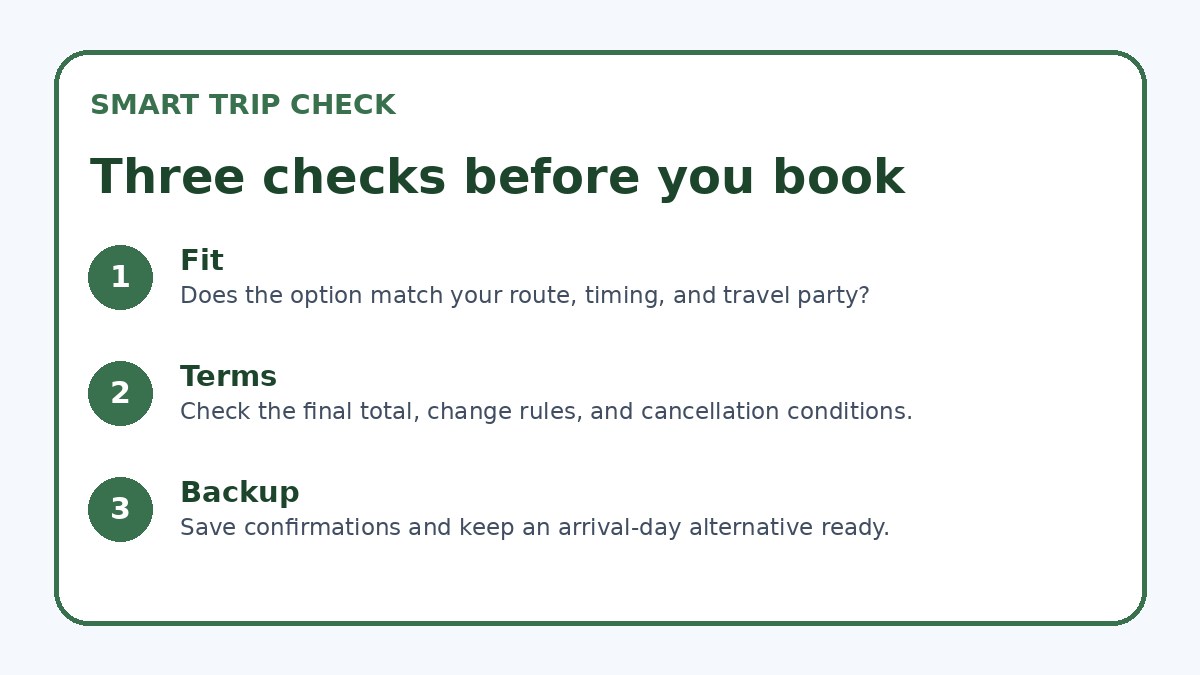
How fuel and mileage choices affect expense reporting and compliance
Company travel policies often require receipts or itemised invoices showing fuel purchases and any rental charges. If you buy fuel at a station, get a receipt stamped with litre and price details; if the supplier charges for refuelling after drop-off, ensure the rental invoice shows the litres or a clear charge description. For mileage, companies may reimburse either per-kilometre or actual fuel costs; confirm the format your finance team needs and request a rental agreement that shows odometer readings or an itemised distance record.
Some firms prefer predictable line items (a single daily rate or an unlimited-mileage rental) to simplify expense reconciliation, while others accept variable costs if supported by receipts. Align booking decisions with the finance team before you commit: cheaper but document-poor options can cause reimbursement delays. Also confirm whether your corporate card will cover provider-charged refuelling fees and excess kilometres or if you should pay these personally and claim them back.
Before you book
- Read the booking page fuel policy language and take a screenshot of the exact terms before you pay.
- Calculate your expected total kilometres from planned meetings and drives, then compare to the provider’s stated allowance.
- Request a written breakdown of per-litre refuelling rates and per-kilometre penalties on the booking page or at the counter.
- At pickup, photograph the fuel gauge and odometer and confirm both values are recorded on the rental agreement.
- Keep all fuel station receipts and the rental invoice showing any provider refuelling or excess-kilometre charges for expense claims.
- Check your company’s travel policy for acceptable fuel options and confirm whether corporate cards will cover potential post-rental charges.
What to verify on the provider’s booking page and at pickup
Before finalising a reservation, read the exact fuel-policy label and the mileage section on the provider’s booking page—look for words like ‘full-to-full’, ‘pre-purchase’, ‘refuel service’, and whether mileage is ‘unlimited’ or limited to X kilometres per day or per rental. Where provider wording could be ambiguous, click any linked terms and conditions and save or screenshot the text. If the page lists refuelling rates or excess-kilometre fees, note the units (per litre, per gallon, per kilometre) and whether any taxes or service fees apply.
At pickup, re-confirm the fuel level and have the agent record it on the rental agreement; take photos or a short video with a timestamp of the gauge and the odometer to prevent disputes. Ask the agent to explain how refuelling charges are calculated if you return without filling up, and request the recorded odometer reading at handover. These steps give you evidence to support expense claims and protect you from unexpected post-rental charges.
Frequently asked questions
If my company requires receipts, what documentation should I collect when refuelling in Queenstown?
Collect an itemised receipt from every fuel purchase showing date, litres, price per litre, and total paid; the station name and pump number help too. If you use a provider’s refuel service at drop-off, ask the rental company for an itemised invoice that shows the litres charged or clearly describes the refuel fee and per-litre rate. Also save the rental agreement with recorded odometer readings and the booking confirmation, because finance teams often require a paper trail that links distance driven to fuel costs.
How can I estimate whether unlimited mileage is worth the extra cost for a business trip?
Estimate your total kilometres by mapping each leg of your itinerary—airport transfers, meetings, client sites, and likely detours—and add a margin for unplanned travel. Multiply expected excess kilometres (if you choose a capped plan) by the provider’s per-kilometre fee to get a potential penalty total. Compare that to the incremental daily cost of the unlimited option across your rental days. Factor in the intangible value of schedule flexibility and lower administrative work for expense reconciliation when deciding.
What should I check on the rental company’s final booking page to avoid surprises?
Confirm the exact fuel policy label and click its full terms to read how charges are applied; note whether fuel is charged per litre or as a flat service fee. Verify the mileage allowance and the stated penalty rate per kilometre, and check whether any taxes or compulsory insurance affect those calculations. Save screenshots of the booking page and terms, and ensure the booking confirmation or voucher repeats these critical details—this is the text you should present if billing or reimbursement questions arise.
Final planning note
For business travellers in Queenstown, fuel and mileage rules are practical items that shape both cost and convenience. Decide whether you value predictable costs (pre-purchase or unlimited mileage) or lower base rates with more management (full-to-full). Always verify the provider’s exact fuel policy language, per-litre refuelling rates, and mileage penalties on the final booking page and at pickup; collect receipts, photos of the gauge and odometer, and an itemised invoice for expense reporting. If you need a quick comparison of current offers, Trip.com can be used as one place to view availability, but rely on the supplier’s booking terms for the definitive rules you’ll be billed against.
Continue planning
Check current options and final conditions
Use the provider page to confirm live availability, the final total, cancellation terms, and every condition that matters to your trip.
This evergreen planning guide was created with AI-assisted drafting and a structured quality review. It does not display live prices, schedules, availability, visa guidance, or provider rankings. Verify current details before booking. Some links are affiliate links; we may earn a commission at no additional cost to you.