
If you need to be productive, punctual, and calm on travel day, start by choosing the transport option that minimizes risk to your schedule and gives you reliable work time en route. For Prague to Vienna transport, that means weighing direct vs connecting trains, express coach vs regional rail, or a flight with potential connections — and planning the travel day around the most likely disruptions: transfers, luggage handling, and local ground transit at each end. Put the essentials first: how many check-in or boarding steps the option adds, how comfortable and private the workspace will be during transit, and how flexible your ticket is if meetings shift. Below you'll find concise tradeoffs, a simple comparison of decision approaches, a practical checklist for the morning of travel, and answers to common planning questions so you can pick the mode that protects your meeting schedule and preserves your workday.
Choose the travel mode by what you must protect
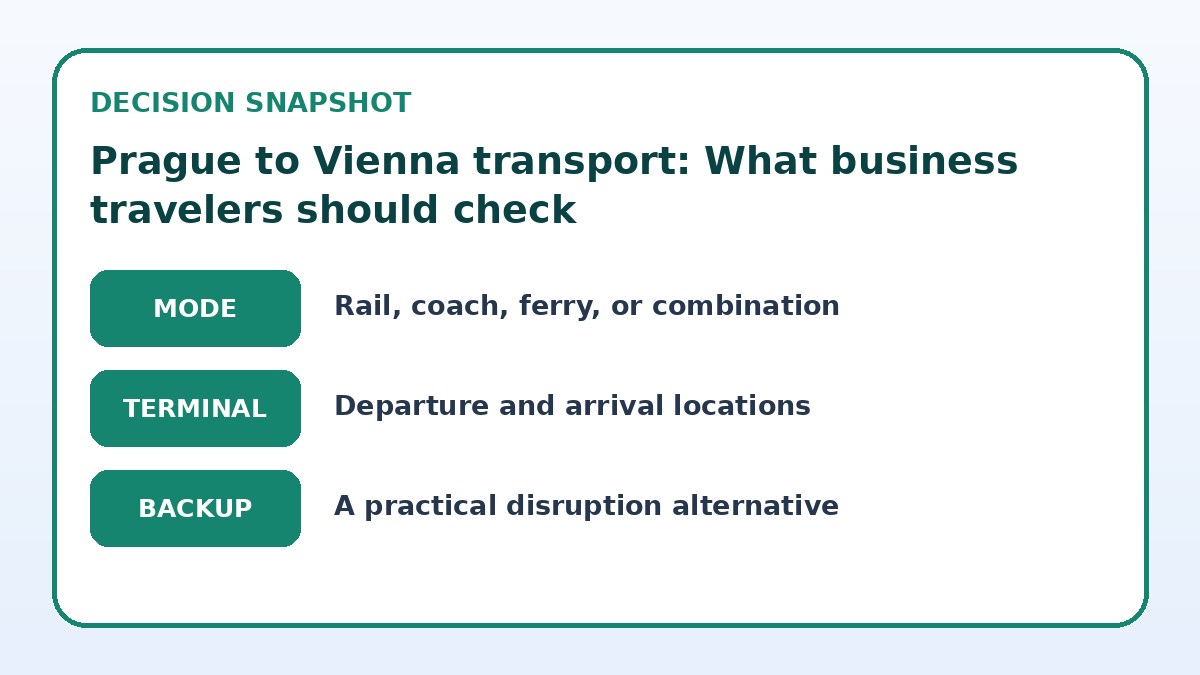
The first decision for Prague to Vienna transport is not speed alone but which part of your business day you cannot risk losing: a fixed meeting time, uninterrupted work time, or minimal airport/station hassle. If the meeting time is fixed and cannot shift, favour an option with the fewest legs and simplest connections. If you need contiguous time to prepare or write, choose a vehicle or class that provides privacy, desk space, and reliable power. Consider how each option changes your buffer — a tight connection or long taxi ride at either end can erase any time savings gained in transit.
Also consider the consequences of a delay. If a train delay would make you miss a morning client, a slightly longer but more reliable option could be better. If your schedule allows flexibility, a faster option with higher variability might save you time overall. Finally, think about the travel day itself: how many security lines, passport checks, or platform changes are involved, and how comfortable you’ll be carrying work materials between them. The chosen mode should match the thing you most need to protect on the day.
Pack and stage for productive travel
Packing for a business travel day is about accessibility and redundancy. Keep essential documents, charging cables, power bank, noise-cancelling earbuds, and a compact presentation kit in a small carry-on that fits under the seat. Store a printed or offline version of key meeting materials in case of connectivity gaps. If you rely on digital tools, download required files and have at least one local copy that opens without an internet connection. Charge devices the evening before and carry a lightweight charger that can top up a laptop and phone quickly.
Staging refers to arranging departures and transfers for minimal friction. The night before, decide where you’ll eat breakfast, which entrance to use at your lodging, and the exact taxi rank or transit stop for the shortest route to the station or airport. If you often switch devices during travel, add a small cable pouch and label chargers. When bringing luggage, prefer a compact, easily wheeled bag you can manage solo between platforms and taxi pickups. Finally, set clear alarms and reminders for departure times and boarding gates or platforms so you avoid last-minute scrambles.
| Approach | Best for | Tradeoff to check |
|---|---|---|
| Direct high-speed train or express service | Minimizing transfers and keeping a steady work environment on board | May have fewer departure times and limited local station access depending on route |
| Coach or express bus with onboard Wi‑Fi | Low-cost, predictable door-to-door routes and longer uninterrupted stretches | Less privacy and variable comfort for focused work; road delays affect schedule |
| Flight (direct or connecting) | Shortest airborne travel time when available; useful for tight long-distance gaps | Adds check-in, security, and possible transfers that reduce reliable work time |
| Multi-leg rail with flexible tickets | Flexibility to rearrange travel day without large penalties | More handoffs increase risk of missed connections and require careful staging |
On travel day: time buffers, security, and local transfers
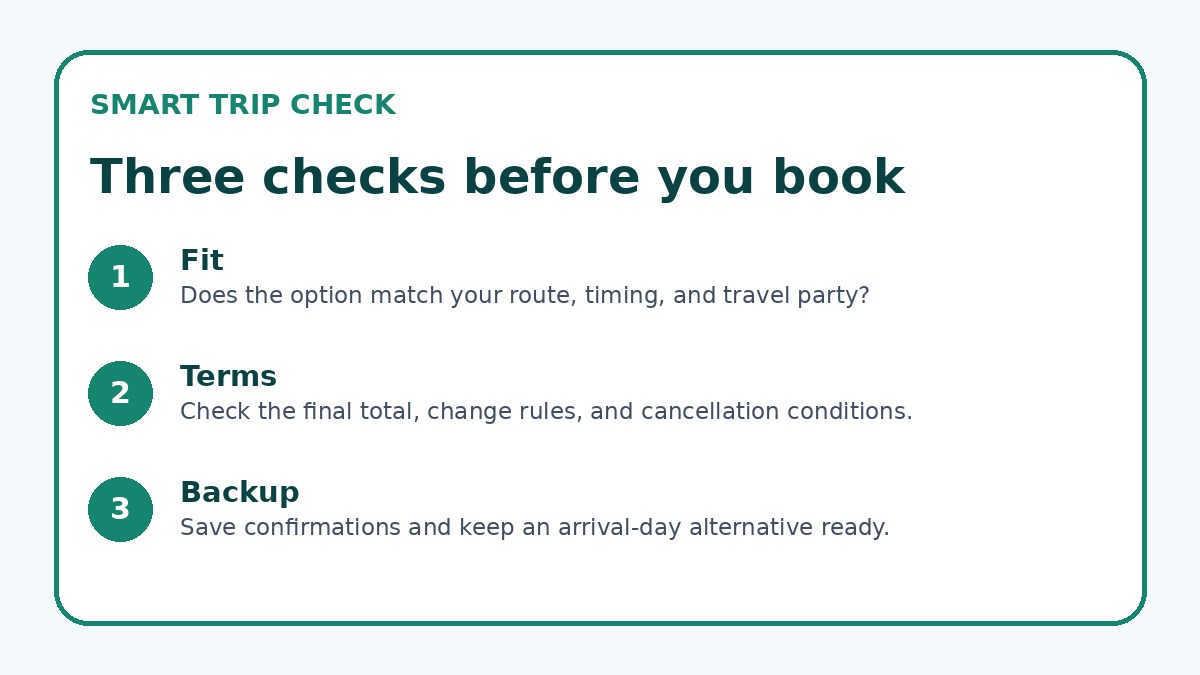
Build time buffers around the riskiest moments: leaving your accommodation, clearing security (if applicable), and transferring between terminals, stations, or platforms. For Prague to Vienna transport, that means planning conservative arrival times at the departure point and allowing extra minutes for taxi or public transit delays. If your option involves rail connections, check platform change procedures and the distance between connecting platforms in the stations you’ll use. For flights, verify recommended check-in and bag-drop windows on the provider’s final booking page and add extra time if you’re traveling with checked luggage or unusual items.
At each end of the journey, plan the local transfer to your meeting location. Identify the fastest taxi or ride-hail pickup points and note whether hotel shuttles or trams are better suited for punctual arrivals. If you’ll use public transit on arrival, have a backup route or taxi number saved. Keep an eye on live local transit alerts the morning of travel and be ready to swap to the more dependable option if disruptions appear. A small extra buffer at the end of the trip protects against late arrivals that cascade into missed meetings.
Before you book
- Confirm boarding, check-in, and ticket change rules on the provider’s booking page and screenshot the relevant policy screens.
- Charge devices fully and pack a high-capacity power bank plus the correct international power adapter for Vienna.
- Prepare offline copies of any presentation or documents and save them in two different formats (PDF and original file).
- Arrange and confirm the first and last-mile transfer options and note alternative pickup points or taxi ranks.
- Set calendar alerts for departure, last call, and arrival with buffer time adjusted to your tolerance for risk.
- Share your travel plan and a live arrival window with at least one meeting contact and a colleague who can step in if needed.
Communication and contingency plans to protect your meeting
Prepare a communication plan before departure: tell meeting participants your expected arrival window and the most reliable way they can reach you en route. If you use messaging apps that rely on roaming data, have a secondary option that functions on basic cellular service or offline material. Share a quick contingency plan with colleagues — for example, who will present if you arrive late, or whether the meeting can shift to a short remote start while you finish transit — so everyone knows what to expect if the travel day goes off script.
Also create contingencies for document access and presentation technology. Carry an offline copy of slides, a PDF version of handouts, and an adapter for local display standards if you plan to present in person soon after arrival. If the trip is mission-critical, buy a flexible ticket class or confirm change policies on the booking page so you can swap to another connection at short notice without losing the whole fare. Knowing the named contact at the meeting location and having local cab or car service options pre-saved reduces stress if you need to improvise on arrival.
Frequently asked questions
Should I choose train or flight for a business trip from Prague to Vienna?
Choose based on what you most need to protect on the travel day. Trains often reduce the number of security steps and allow you to work with a laptop more easily, while flights can shorten pure travel time but add check-in and security. Compare total door-to-door time, number of transfers, and likely on-board work conditions for the specific connections you’re considering. Always verify baggage rules, boarding windows, and transfer distances on the provider’s final booking page before deciding.
How early should I leave my hotel in Prague for a morning departure to Vienna?
Leave enough time to handle the riskiest parts of the journey: getting a taxi or transit to the departure point, any required check-in or security, and walking between platforms or terminals with luggage. The ideal buffer varies by mode and time of day; build extra margin if you need to present immediately after arrival. Check local transit schedules and the exact station or terminal layout in advance, and set staged alarms so you depart the hotel with time to spare rather than rushing at the last minute.
What should I do if my train or flight to Vienna looks likely to be delayed on travel day?
First, notify your meeting contacts with an updated arrival window and the best way to reach you. Review your ticket’s change or rebooking terms on the booking page to see if you can move to a later connection without excessive penalty. If you have a critical meeting, explore alternate connections and local taxi options that could recover lost time, and ask the provider at the station or airport about standby or rebooking options. Keep offline copies of materials and a contingency presenter identified if you risk missing your slot.
Final planning note
For business travelers, Prague to Vienna transport is a planning problem with three levers: protecting your meeting schedule, securing productive on-board time, and reducing travel-day friction. Decide which of those is non-negotiable, then compare options for how many transfers they require, how much private or powered workspace they provide, and how flexible the ticket rules are. Stage your luggage and devices for quick transitions, confirm provider-specific check-in and change policies on the booking page, and leave conservative buffers for the riskiest legs of the journey. With those steps, you’ll reduce last-minute stress and arrive ready for business.
Continue planning
Check current options and final conditions
Use the provider page to confirm live availability, the final total, cancellation terms, and every condition that matters to your trip.
This evergreen planning guide was created with AI-assisted drafting and a structured quality review. It does not display live prices, schedules, availability, visa guidance, or provider rankings. Verify current details before booking. Some links are affiliate links; we may earn a commission at no additional cost to you.