Practical answer first: set targeted price alerts for flights and hotels to capture good timing signals, but never click “buy” until you’ve checked three decision filters: schedule fit, cancellation/refund terms, and total trip cost including transfer time. Business travel needs mobility and reliability, not bargains that force schedule compromises. Use alerts as information, not obligation. When an alert triggers, compare the flagged option against a shortlist of vetted flights and hotels you keep updated for your usual routes and contacts. If that flagged fare or rate clears your three filters and matches your company’s travel policy, book it. If it fails any filter, either wait for a better alert or arrange a short negotiation window with procurement or your travel manager to revisit.
See current options before you compare the details
Availability and final conditions change. Open Trip.com now or keep reading for the practical comparison.
Design alerts that work for business travel
Set up price alerts specifically tuned to how you travel for work. Instead of broad alerts for “Phuket,” pick the airports you actually use, your most common departure days, and a realistic time window. Include preferred cabin class and minimum connection times, and add hotel alert filters for proximity to meeting venues or the airport. Use separate alerts for weekend or extended-stay options versus short midweek trips, because different demand patterns produce different deals.
Keep your alerts practical and few: too many alerts create noise and push you toward impulsive decisions. Limit active alerts to the top two to four itineraries you actually consider, and funnel all alerts into one email folder or app tag for quick review. Periodically prune alerts that rarely trigger or produce irrelevant results so you stay focused on actionable signals that match your company policy and personal travel habits.
Decision filters to stop impulse bookings
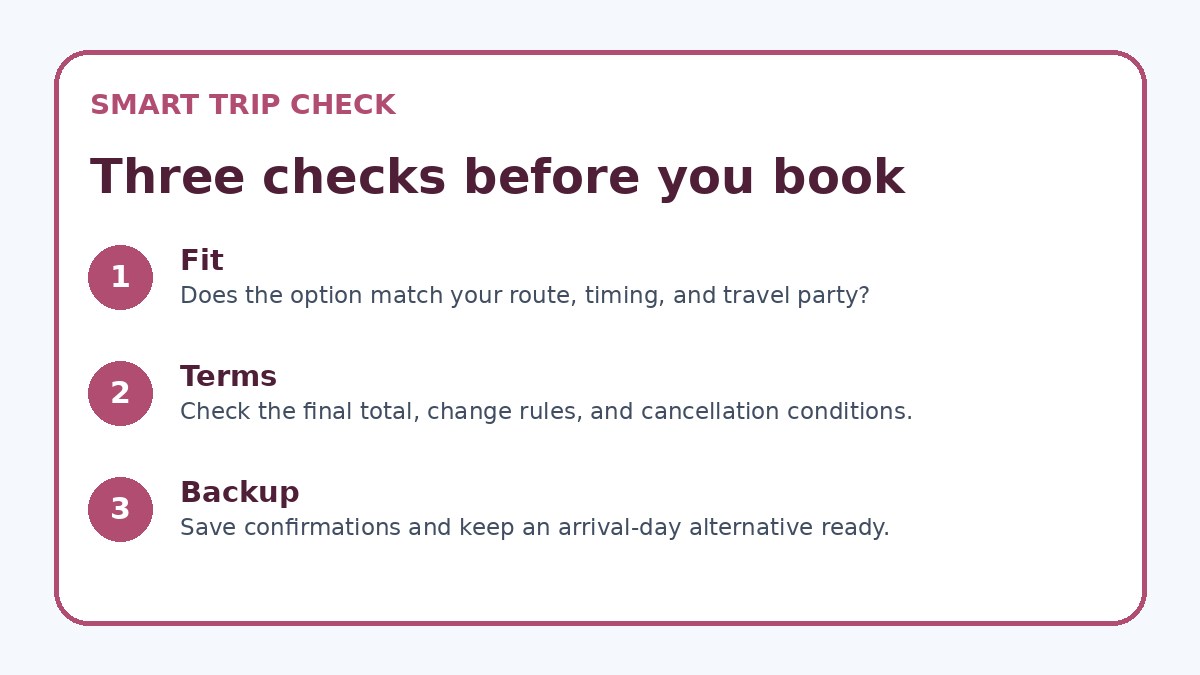
When an alert arrives, run it through three non-negotiable checks: schedule fit, price transparency, and booking flexibility. Schedule fit covers departure/arrival times, total door-to-door travel time including connections, and whether the timing affects meetings. Price transparency means verifying the final total on the provider’s booking page: taxes, baggage, seat selection, and local transfer costs. Booking flexibility requires checking cancellation or change fees and whether corporate booking tools or your travel manager can later change the reservation.
Use a short checklist to force a pause: does it match your meeting schedule; can you cancel or change within company policy; and is the total trip cost—after transfers and incidentals—still better than your vetted alternatives? If any check returns a red flag, archive the alert and continue monitoring. A cooling-off rule—wait at least four hours or until you finish a quick alternatives check—reduces impulse purchases and often reveals equal or better options.
| Approach | Best for | Tradeoff to check |
|---|---|---|
| Instant purchase on alert | Travelers with very tight budgets and flexible schedules | Higher risk of schedule mismatch, limited flexibility, and potential hidden ancillary costs |
| Alert + quick 30-minute comparison | Frequent travelers balancing time savings and reliability | Requires a reliable shortlist and fast verification of terms before the cooling-off window ends |
| Forward alert to travel manager | Company travelers needing policy approval or consolidated booking control | Slower response might lose the flagged fare; needs clear approval SLA from manager |
| Hold and wait for a second alert | Those prioritizing flexibility over marginal savings | May miss a good price that won't return; needs discipline to avoid indefinite delays |
Ready to check the option that fits your plan?
Use your exact dates and traveler details so the provider page can show the current total and conditions.
Compare alternatives before you buy
Don’t treat an alert as a final offer until you compare a few things: alternative flight times, refundable versus non-refundable hotel rates, and whether a slightly higher fare gives you meaningful flexibility. On routes to Phuket, look at routing differences such as fewer connections or better arrival times that reduce risk of missing meetings. Compare hotels by the time and cost to travel from the airport or your meeting locations rather than only nightly rate; the cheapest room can become expensive once taxi time and lost productivity are included.
When comparing, verify provider pages for final terms: baggage rules, seat selection policies, exact cancellation windows, and any corporate or loyalty benefits. If you use a company travel portal or a managed travel supplier, cross-check the alert against those tools; Trip.com can be used as an optional comparison point to see availability and provider terms, but always rely on the actual booking page for contract details before purchasing.
Before you book
- Create alerts limited to your departure airports, travel class, and preferred check-in windows.
- When an alert triggers, verify the total price on the booking page including taxes and baggage.
- Confirm arrival and connection times match your meeting schedule and provide sufficient buffer.
- Check cancellation and change fees; ensure they comply with company travel policy or are approved.
- Compare the alert against two vetted alternatives for routing, door-to-door time, and hotel transfer cost.
- If unsure, forward the alert to your travel manager and wait for approval or a short decision window.
Operational habits to keep alerts useful long-term
Turn alerts into a repeatable routine: a twice-daily review at set times, a short comparison template, and an archive system for false positives. Keep a short list of trusted carriers, connection patterns, and hotels near your most common meeting venues so you can quickly filter an alert. Share your alert criteria with your travel manager or assistant so approvals are faster when a valid option appears.
Track outcomes to refine alert settings: note which alerts led to purchases you later adjusted or canceled, and tighten your filters accordingly. Use calendar buffer rules—avoid bookings that arrive with less than three hours before important meetings—to preserve time for transfers and check-in. Over time this discipline will make price alerts a strategic tool that saves money and time without luring you into risky impulse buys.
Frequently asked questions
How narrowly should I set price alerts for Phuket travel deals?
Set alerts narrowly enough to reduce irrelevant triggers but broadly enough to capture useful opportunities. For business trips to Phuket, specify your common departure airports, preferred cabin class, and a realistic date window. If you have fixed meeting dates, use exact dates; otherwise choose a short rolling window. Include preferred arrival times and a minimum connection time so flagged options fit your itinerary constraints. Narrow alerts that match your routine will surface fewer but more actionable deals, reducing the urge to book without checking logistics.
What are the non-monetary costs to check before booking an alerted deal?
Non-monetary costs include added travel time, inconvenient arrival slots that eat into meetings, risk of missed connections, and the stress of rebooking if plans change. Consider the quality of connections—longer layovers may be cheaper but reduce productivity. Hotel location relative to meeting sites or the airport affects taxi time and reliability. Also weigh the administrative cost: will this booking require extra approvals or manual expense justification? These factors can turn a marginal monetary saving into a net loss for a business trip.
How can I keep alerts from causing policy or reporting problems for my company?
Integrate alerts into your company’s booking process by sharing criteria and response times with procurement or your travel manager. Use pre-approved vendor lists and preferred rate classes when creating alerts so options conform to policy. If a flagged option falls outside policy, forward it for approval before booking and document the rationale. Keep records of alerts that led to bookings and any subsequent changes so expense reports and audits show the decision trail. When possible, use the company’s travel portal or a managed agent to finalize bookings once an alert checks out.
Final planning note
Price alerts can be a smart signal in your business travel toolkit for Phuket, but they must be managed with rules and routines that prioritize schedule reliability and policy compliance. Design narrow alerts, run every trigger through quick but firm decision filters, and compare alerts against vetted alternatives for total door-to-door cost and flexibility. Use a cooling-off rule or an approval workflow to prevent impulse buys, and track outcomes to refine your alert settings. With disciplined use, alerts help you save time and money without compromising the professionalism and predictability your business trips require.
Continue planning
Check current options and final conditions
Use the provider page to confirm live availability, the final total, cancellation terms, and every condition that matters to your trip.
This evergreen planning guide was created with AI-assisted drafting and a structured quality review. It does not display live prices, schedules, availability, visa guidance, or provider rankings. Verify current details before booking. Some links are affiliate links; we may earn a commission at no additional cost to you.