If you need to travel from Paris to Amsterdam for business while carrying a suitcase and work gear, the practical choice comes down to three factors: door-to-door time, luggage handling friction, and reliability. For many business travelers, high-speed train corridors and well-timed flights both work, but each imposes different hassles for coats, carry-ons, and fragile equipment. This guide explains how to weigh those tradeoffs, plan transfers and station choices, and pack so you can arrive ready for meetings. I’ll also highlight what to verify before you book—baggage allowances, transfer options at stations and airports, and how to judge connection risk—so you can make the quickest, safest, and least stressful choice for your trip.
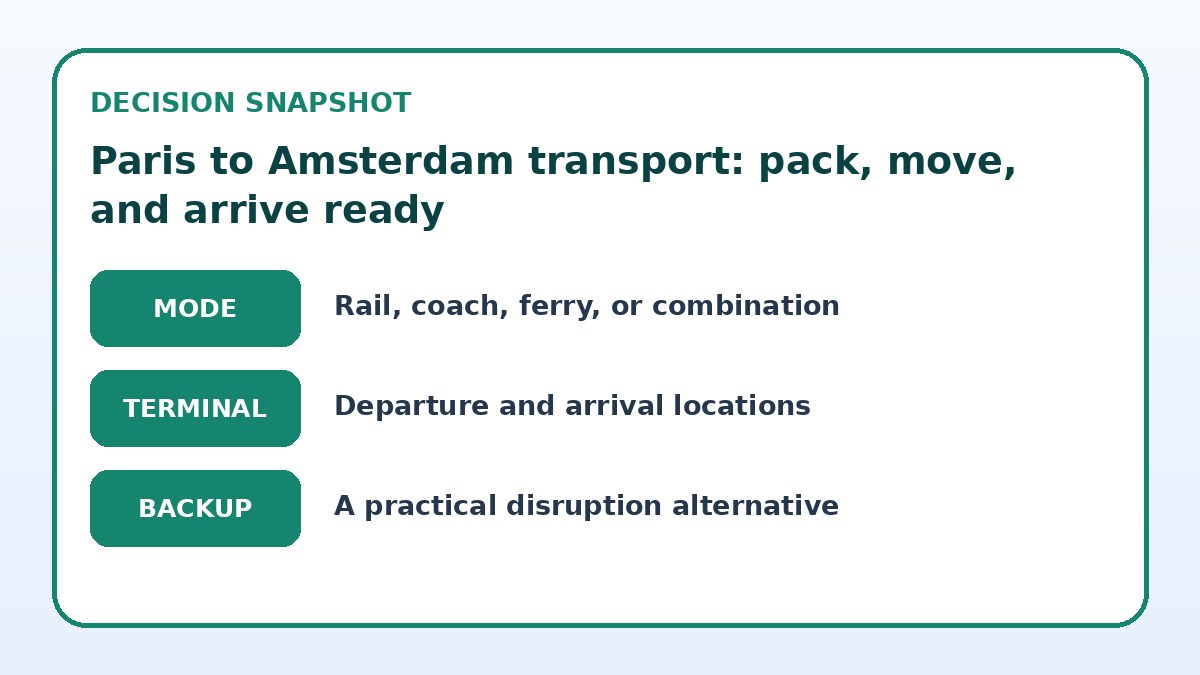
See current options before you compare the details
Availability and final conditions change. Open Trip.com now or keep reading for the practical comparison.
Choosing the transport mode: practical criteria
Start by ranking what matters for your trip: total travel time, luggage convenience, predictability, or cost. Total travel time should include the commute to and from stations or airports, time needed to check or tag baggage, and buffer time for unexpected delays. For a short trip with one small suitcase and a laptop, a direct high-speed train that deposits you in city centers often minimizes walking with luggage and eliminates taxi queues. If you are carrying oversized equipment, or leaving for a tight international connection, an airport transfer with checked baggage might be necessary despite the extra steps.
Luggage convenience means different things: being able to keep a bag with you, finding easy luggage racks, and avoiding multiple lifts and escalators. Look at station layouts, whether step-free access is available between platforms and entrances, and whether luggage storage or porter services exist (verify current availability on provider pages). If moving multiple pieces, private transfer or driving can remove repeated handling, but you should factor in traffic variability and the effort of urban drop-off near offices or hotels.
Trains: what to expect when you bring luggage
High-speed trains between Paris and Amsterdam typically run between major city stations. Trains generally allow passengers to bring carry-on bags and suitcases onto the platform, and you’ll usually find overhead racks and open luggage spaces. However, space is not unlimited: during peak hours compartments can fill, so reserve space in quieter cars if available and position large suitcases near doors for easier boarding and alighting. Also check whether station platforms connect by lifts or require stairs—accessibility can determine whether bringing heavy wheels is realistic for your itinerary.
When comparing train options, confirm whether your ticket includes a reserved seat (recommended with luggage) and whether the operator enforces baggage rules beyond normal carry-on allowances. Verify on the operator’s booking page whether wheeled suitcases, bike boxes, or musical instruments need advance notice or a supplement. Finally, consider luggage storage facilities at stations if you have a long layover; those are convenient for late meetings but policies and opening hours change, so always check live provider information before committing.
| Approach | Best for | Tradeoff to check |
|---|---|---|
| High-speed train (city-center to city-center) | Short transfers, minimal baggage checks, steady schedules | Limited dedicated storage and potential crowding at peak times |
| Flight plus airport transfers | When air time cuts overall door-to-door travel for distant connections | Extra time and steps for check-in, security, and baggage retrieval |
| Private car or rideshare | Control over handling multiple or heavy bags and direct door-to-door drop-off | Exposure to traffic variability and urban parking or drop-off constraints |
| Mixed multimodal (train + taxi/ride-hail) | Balancing speed and luggage convenience when stations aren’t near final destination | Requires coordination of connections and short-transfer handling |
Ready to check the option that fits your plan?
Use your exact dates and traveler details so the provider page can show the current total and conditions.
Flights and airport transfers: balancing speed versus handling
Flights shave flight time but usually add check-in, security, and airport commute. If you plan to check a bag, factor the additional check-in time and the risk of delays in baggage delivery—these can disrupt tight meeting schedules. For carry-on-only travelers, flying becomes more competitive; however, verify carry-on size and weight rules on the airline’s booking page and think about how much buffer you need to reach the city center from the airport. Also compare the availability and reliability of express train or shuttle services that connect airports to central stations.
Airport transfers also change the luggage equation: a pre-booked private transfer provides door-to-door handling and reduces the need to lift bags on public transport, but you should confirm vehicle capacity and whether drivers will help with luggage. If using taxis or ride-hailing, check local drop-off points at airport terminals and potential surcharges for oversized items. Remember to plan for arrival procedures in both cities—customs, if any, and possible security checks—by verifying the airline and airport instructions on their final booking pages.
Before you book
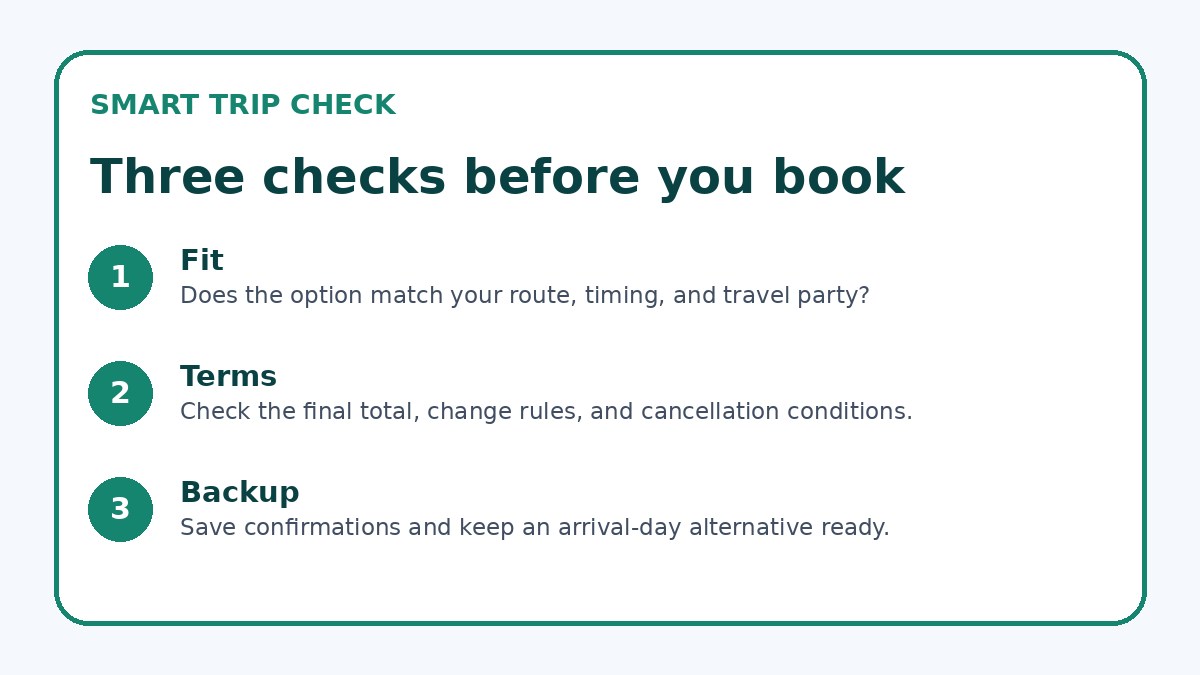
- Verify baggage size, weight limits, and any fees on the transport provider’s final booking page before booking.
- Reserve a seat or car with extra luggage space if the operator offers that option.
- Map station and airport entrances, exits, and step-free routes to plan door-to-door transfers.
- Pre-book a taxi or private transfer if you need assisted luggage handling at either end.
- Pack a compact day bag with essentials (chargers, documents, a shirt) for immediate meeting readiness.
- Label luggage externally and add a tracker or visible ID for quick recovery if items are misplaced.
Packing and gear: set up for efficient business travel
Aim for a primary carry-on-sized suitcase and a professional day bag for devices and documents. Select luggage with smooth-rolling wheels and a top or front grab handle so you can lift it onto racks or into taxis without twisting. Protective cases or padded sleeves are important for electronics; keep chargers and adaptors in the day bag for immediate access at the gate or station. If you travel with formal clothing, use a compact garment folder or quick-pressing techniques so you can freshen your outfit in hotel rooms or airport lounges.
Organize to reduce friction at every transfer: pack liquids within airline limits if you’ll fly, ensure that important documents and staff passes are easily reachable, and keep a small travel umbrella and a lightweight foldable tote for last-mile shopping or extra paperwork. Also consider a luggage tracker for expensive equipment and a simple cable lock for short unmonitored waits. Before booking any transport, confirm the baggage policies on the provider’s final booking page so you won’t be surprised by size, weight, or carry-on restrictions.
Frequently asked questions
Is the train from Paris to Amsterdam better for carrying a suit and a suitcase?
Trains can be more convenient when carrying a suit and a single suitcase because you avoid checked-baggage waits and usually walk directly into the city center. To reduce wrinkles, use a garment folder in your carry-on or hang a suit in a front-access garment compartment if available. Confirm whether your chosen train offers reserved seating and space for larger bags on the operator’s booking page, and plan to board early to secure overhead or platform-area storage without blocking aisles.
When should I choose a flight over a train for business travel between the two cities?
Choose a flight if the total door-to-door time (including commutes, check-in, and transfers) is clearly shorter than the train option, or if you need to connect onward from an airport where flights link better to your final destination. Flying may also make sense if you are transporting oversized equipment that requires checked baggage services provided by airlines. Always compare schedules, transfer logistics, and baggage handling policies on airline and airport booking pages before you commit.
How do I minimize delays and stress when traveling with heavy luggage?
Minimize stress by booking a seat or car that offers convenient luggage space, choosing step-free routes wherever possible, and pre-arranging a meet-and-greet or private transfer if you expect assistance. Travel light where feasible: consolidate equipment into one strong suitcase and a day bag, and carry copies of essential documents in multiple places. Check live station and provider information for accessibility, luggage services, and any last-mile restrictions before departure to avoid surprises.
Final planning note
Choosing how to travel from Paris to Amsterdam with luggage comes down to realistic tradeoffs: trains simplify city-center access and reduce baggage waits, flights can win on pure travel time for certain connections, and private cars give the most control over handling. For business travelers, focus on door-to-door time, luggage handling needs, and reliability. Before you lock in any option, verify baggage rules, seat reservations, transfer services, and station or airport access on the provider’s final booking page. If you want to compare current schedules and options quickly, Trip.com can be one place to check availability and conditions, but always confirm details with the carrier.
Continue planning
Check current options and final conditions
Use the provider page to confirm live availability, the final total, cancellation terms, and every condition that matters to your trip.
This evergreen planning guide was created with AI-assisted drafting and a structured quality review. It does not display live prices, schedules, availability, visa guidance, or provider rankings. Verify current details before booking. Some links are affiliate links; we may earn a commission at no additional cost to you.