Practical answer first: before you book any Osaka travel deals, add up every likely expense—flight or train fare, the hotel or guesthouse nightly cost with taxes, local transport, a daily food and drink allowance, attraction fees, and a buffer for small purchases and emergencies. As a solo traveler, per-person fixed costs and convenience tradeoffs matter more than for groups, so decide which areas to compromise on: time versus money, central location versus lower nightly rates, and flexible fares versus nonrefundable discounts. This guide walks you through the items to total, how to compare direct versus connecting options, where to verify provider details, and a checklist to avoid last-minute surprises. Use it to make a confident booking decision rather than reacting to an enticing headline price.
See current options before you compare the details
Availability and final conditions change. Open Trip.com now or keep reading for the practical comparison.
Build a realistic trip-cost spreadsheet
Start with a single spreadsheet row for the entire trip and break costs into categories: transportation to Osaka, in-destination transport, accommodation with taxes and service charges, meals, attractions and activities, communications (SIM or pocket Wi‑Fi), and a 10–20% contingency. For solo travelers, fixed costs matter because there’s no cost-splitting; this makes it easier to see where a higher upfront expense (a direct flight, central hotel) might reduce daily spending or transit costs.
Don’t rely on headline fares alone. Add baggage, seat selection, or platform transfer fees that appear toward the end of many booking flows. For accommodation, check the provider’s final booking page for taxes, mandatory fees, and whether breakfast is included. For trains and ferries, note whether reserved seats are extra. If you plan multiple day trips from Osaka, estimate round-trip transport for each and treat passes or city cards as bundle offers—compare the pass price against buying single tickets for each intended journey.
Direct vs connecting transport: time, cost, and risk
When comparing flights or long-distance trains to Osaka, list both ticket price and the value of your time. Direct options save time and reduce transfer stress, which can be worth a higher fare to a solo traveler prioritizing convenience. Connecting routes can lower upfront costs but add complexity: transfers, extra baggage handlings, and a greater chance of missed connections that could require buying a last-minute replacement segment.
To compare objectively, add transfer-related costs—ground transport between terminals or stations, potential overnight stays if a connection is impractical, and the cost of missed-connection insurance or higher flex fares. Verify connection durations, minimum connection time, and whether the provider protects through‑ticket connections. For rail, don’t assume a direct service exists—check timetables and whether seat reservations are required. When you find options on aggregator sites, click through to the carrier’s page to confirm baggage rules and change/cancellation terms.
| Approach | Best for | Tradeoff to check |
|---|---|---|
| Pay more for direct travel | Solo travelers valuing time, low transfer stress, and predictable arrival times | Higher upfront fare; less flexible if plans change |
| Choose connecting routes to save money | Budget-focused travelers willing to accept longer travel and transfer risks | Increased chance of delays and extra transfer costs |
| Stay centrally for convenience | Travelers prioritizing short commutes and safety for late returns | Higher nightly rate but potential savings on local transport |
| Book peripheral accommodation to cut lodging costs | Those who prioritize lower nightly bills and don’t mind commuting | More daily transit time and potentially higher local fares |
Ready to check the option that fits your plan?
Use your exact dates and traveler details so the provider page can show the current total and conditions.
Choosing where to stay: neighborhood costs and conveniences
Compare nightly rates with neighborhood convenience. Staying central—Umeda, Namba, or near major stations—often costs more per night but cuts local transit time and expense, making early-morning or late-night outings easier and safer for solo travelers. Staying farther out can deliver lower nightly costs, but you’ll pay more in transit and should factor in the time cost: longer commutes shorten sightseeing days and can reduce what you’ll realistically do.
When you evaluate a specific property, check the booking page for additional charges like city taxes, cleaning fees, and deposit policies. Confirm public transport options nearby and late-night safety/lighting if you plan late returns. Consider small tradeoffs: a slightly pricier room with a kitchenette can lower meal costs, while a hostel with a social common room could offer free or low-cost group activities that reduce entertainment spending.
Before you book
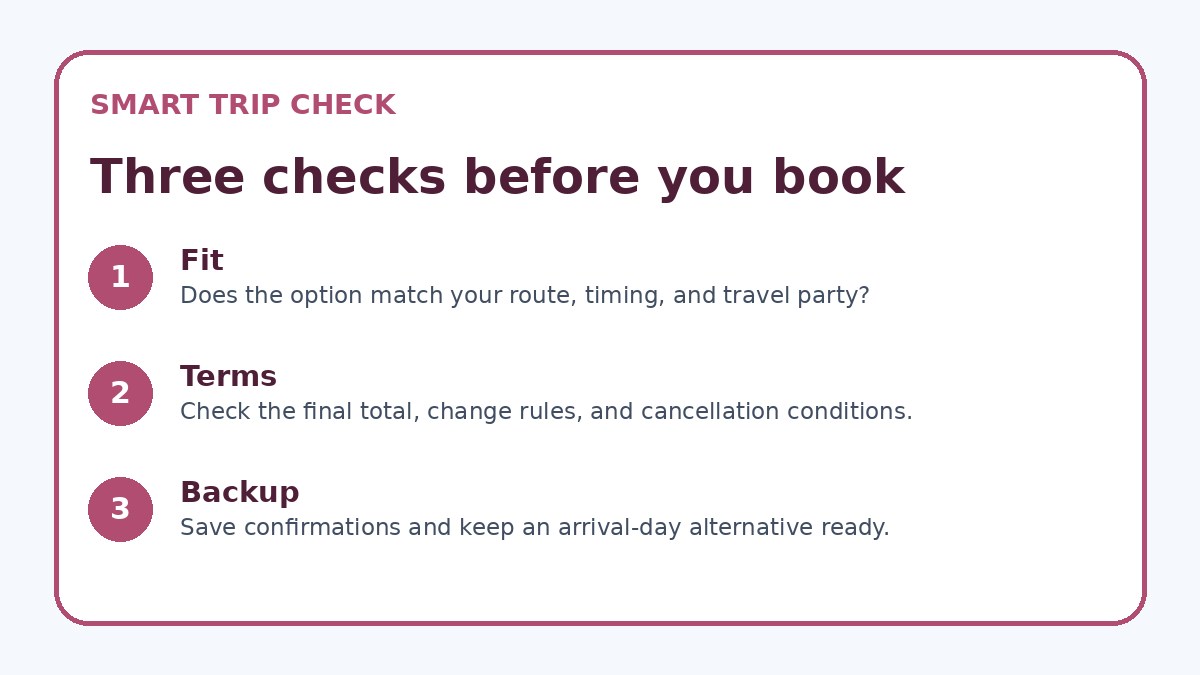
- Add flight or rail base fares plus all mandatory fees (baggage, seat selection, station/airport transfers) to the trip total.
- Confirm accommodation total price on the final booking page, including taxes, service fees, cleaning charges, and whether breakfast is included.
- Estimate local transport by listing needed trips and comparing single-ticket costs vs. passes; check activation rules for passes.
- Factor daily meal and drink allowances and adjust by neighborhood prices and self-catering options if relevant.
- Read cancellation and change policies on the provider’s booking page and note refund timelines and penalties.
- Set a contingency buffer (at least 10%) for unexpected costs, exchange-rate swings, or emergency purchases.
Hidden extras and verification steps before you finalize
Before hitting confirm, run through a verification checklist: final fare with all fees, exact cancellation penalties and refund windows, baggage and seat selection costs, and whether tickets or vouchers require printing or timed entry. If you plan to rely on passes (rail, metro, or attraction bundles), confirm activation rules, validity windows, and whether IDs or passport numbers are needed. For bookings found on comparison sites, always click through to the provider’s official booking page to verify live conditions.
Remember non-price factors that affect your budget: expected gratuities, tipping habits, ATM or card fees abroad, and whether your cards are widely accepted. Look into free or low-cost alternatives—city tourist maps, free museum days, or walking routes—that can reduce spending. If you want an extra safety net, compare refundable fares versus nonrefundable deals and decide whether the savings are worth reduced flexibility for your solo trip.
Frequently asked questions
How do I estimate local transport costs around Osaka before booking?
List the specific trips you expect to make—airport transfer, daily commutes between your lodging and main sights, and any day trips. Check current single-ride fares and compare the cost of a multi-day metro pass or regional rail pass by summing probable single fares. Remember to include late-night taxis or rideshares for safety if you’ll return late. For accuracy, verify pass activation rules and route coverage on provider pages; sometimes a pass excludes certain private lines or requires seat reservations that add cost.
Should I choose refundable tickets for a solo Osaka trip?
Refundable tickets give flexibility if your plans may change, which can be valuable for solo travelers who prefer minimizing risk. Compare the refundable fare premium to the potential cost of rebooking a missed or canceled segment. If your dates are fixed and you can accept some loss, a nonrefundable deal might save money, but verify exact change and cancellation terms before booking. Consider buying travel insurance that covers cancellations for specific reasons to balance savings and protection.
How can I avoid surprise fees when a deal looks cheap?
When you find a low headline price, click through to the carrier or accommodation’s official booking page and read the final price breakdown. Look for baggage, seat selection, cleaning, or city tax line items; note whether free cancellations end early in the booking flow. For accommodations, confirm whether payable fees appear at check-in instead of in the booking total. Use the booking page to confirm what’s included and what isn’t, and check reviews or forums for recent traveler reports on extra charges if you need further reassurance.
Final planning note
For solo travelers planning Osaka travel deals, the key decision is whether you value time and convenience more than the absolute lowest headline fare. Build a straightforward cost spreadsheet that includes all travel, lodging, daily, and contingency items. Compare direct and connecting transport by adding time value and transfer-related costs, and verify final fees and cancellation rules on the provider’s booking page. Use neighborhood tradeoffs to decide if a central room justifies an extra nightly cost, and apply the checklist before you commit. If you want to cross-check availability and current terms, Trip.com can be one place to compare offers, but always confirm crucial terms with the carrier or property directly.
Continue planning
Check current options and final conditions
Use the provider page to confirm live availability, the final total, cancellation terms, and every condition that matters to your trip.
This evergreen planning guide was created with AI-assisted drafting and a structured quality review. It does not display live prices, schedules, availability, visa guidance, or provider rankings. Verify current details before booking. Some links are affiliate links; we may earn a commission at no additional cost to you.