If you want straightforward advice: choose a Gyeongju car rental when you value flexibility, scenic detours and easy access to dispersed sites; choose public transport when you prefer relaxed driving-free days, lower planning stress, and budget-friendly travel between central sights. For most couples staying inside central Gyeongju (the historic core and Bomun area), buses and taxis cover the main temples, museums, and tombs without a car. Conversely, if your plan includes rural spots, sunrise drives, or a side trip to quieter coastal or inland temples, a car rental will save time and let you personalize the itinerary.
This article explains the decision criteria couples actually use—time flexibility, comfort, cost considerations, navigation and parking, romance and privacy—and then lays out realistic tradeoffs. You’ll get a compact comparison table, a checklist of what to verify before booking, and clear suggestions for combining options (mixing a rental day with transit days). Use these points to pick what fits your pace, not a generic “best” answer.
See current options before you compare the details
Availability and final conditions change. Open Trip.com now or keep reading for the practical comparison.
When driving makes sense for couples
Driving in and around Gyeongju suits couples who prize spontaneity and want to reach dispersed cultural sites on their own schedule. Many of the most photogenic or peaceful spots—smaller mountain temples, coastal overlooks, and countryside tumuli—are easier to access by car than by routed buses. A rental gives you the freedom to leave early for sunrise views, linger for a picnic, or shift plans mid-day without waiting for the next scheduled bus. For couples who enjoy road trips together, the drive itself can be part of the experience.
The private space a car provides is also a practical advantage: you can store jackets, cameras, snacks and any purchases securely, change outfits between locations, and retreat from crowds. Driving reduces transfers and walking between stops when your route includes multiple outlying sites in a single day. However, this advantage only pays off when you’re comfortable navigating local roads, dealing with parking, and accepting the additional planning work that comes with choosing routes and drop-off points.
When public transport is the better choice
Public transport in Gyeongju covers the historic core and many popular attractions with regular buses and easy taxi connections. Couples who value relaxed sightseeing, fewer logistics, and time spent together without one partner driving often prefer this approach. Riding the bus or hopping a short taxi between dense clusters of temples and museums keeps you present—no navigation stress, no parking hunts, and no fuel or insurance decisions to manage. It also leaves more time to enjoy cafés, museums, and evening walks.
If you’ll stay mostly in central neighborhoods, public transport tends to be the most efficient choice because many of the city’s main sites lie along connected routes. For evenings, taxis fill gaps where night buses are sparse, and short rides are usually straightforward. If you want to day-trip to places with limited service, check bus frequencies in advance; for those occasional gaps, a single rented car day or booking a guided transfer can be an elegant workaround.
| Approach | Best for | Tradeoff to check |
|---|---|---|
| Renting a car | Couples seeking flexibility, private time, and access to dispersed rural or coastal sites. | Higher planning load and additional costs for fuel, parking, and insurance; requires comfortable driving. |
| Public transport | Couples staying in the city core who prefer low-stress sightseeing and lower per-trip costs. | Less flexibility for remote sites; requires planning around schedules and potentially more walking. |
| Hybrid approach | Couples who want a mix of car-free days plus one or two flexible excursion days. | Requires coordinating rental logistics and transit days; you pay rental fees for fewer days. |
| Taxis and guided transfers | Couples who want door-to-door convenience without self-driving responsibilities. | Can be costlier than buses for multiple trips and depends on availability for remote locations. |
Ready to check the option that fits your plan?
Use your exact dates and traveler details so the provider page can show the current total and conditions.
Practical tradeoffs: cost, convenience, and comfort
Cost comparison depends on your itinerary: base car rental fees, fuel, tolls, parking, and insurance add up, while public transport costs are per trip and often lower for central sightseeing. Couples should add the mental cost of driving—navigating unfamiliar rules, reading signs, and finding parking—into the convenience equation. A car reduces transit transfers but increases planning steps like selecting a vehicle size, checking parking near sites, and understanding fuel and insurance policies before pickup.
Comfort is also personal. Some couples find driving together enhances shared control of a trip, while others prefer to relax and let local drivers handle traffic. If one partner is uncomfortable driving, public transport preserves harmony and lets both enjoy the route equally. Also factor luggage and mobility needs: a car simplifies moving larger suitcases and offers door-to-door access for those with limited walking endurance, whereas buses and trains may require extra transfers and walking between stops.
Before you book
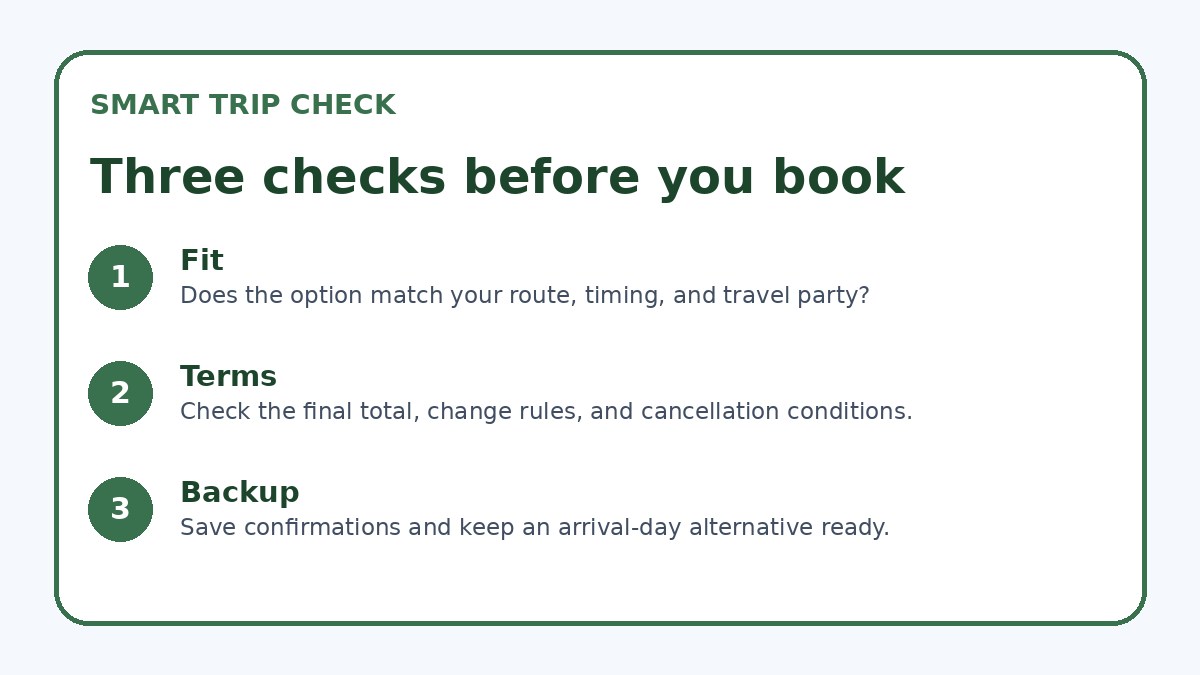
- List the specific sites you want to visit and mark which are centrally clustered versus outlying to estimate transit needs.
- Check current bus routes and frequencies for your travel dates and note where taxis will be the simplest last-mile option.
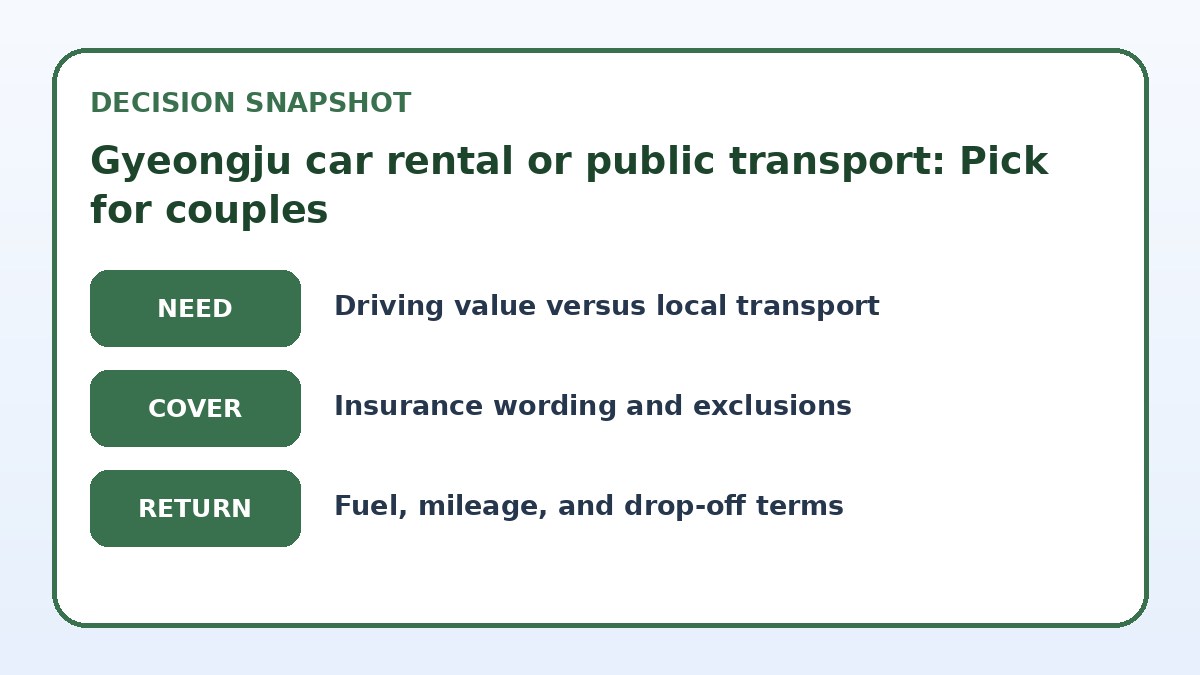
- If renting, confirm pick-up/drop-off locations, required documents (license, ID), insurance options, and fuel policy on the provider page.
- Estimate parking availability near your planned stops and look up whether parking is metered, limited, or available at attractions.
- Decide who will drive and confirm that person is comfortable with local signage, left/right rules, and potential mountain or coastal roads.
- Compare total door-to-door travel time and cost for a sample day by adding rental day fees, fuel, and parking versus public transport and taxi fares.
Combining options and what to verify before booking
You don’t have to choose exclusively. Many couples adopt a hybrid approach: use buses and taxis for central days and rent a car for specific excursions—early-morning coastal drives, small-town visits, or mountainous temple runs. This reduces overall rental days yet preserves last-mile flexibility when you need it. When combining options, arrange pick-up and drop-off logistics so the rental day begins and ends near your accommodation or a transit hub to minimize wasted time.
Before confirming any booking, verify key, changeable details on provider pages: exact vehicle pick-up/drop-off locations, insurance coverage specifics, fuel policy, parking options near your planned stops, and cancellation/ amendment terms. For public transport, check current bus routes and frequencies for your planned dates because schedules can vary. Trip.com can be a helpful place to compare availability, but always confirm the final terms on the provider’s official booking page.
Frequently asked questions
Is driving in Gyeongju difficult for foreign drivers?
Driving difficulty depends on your experience and confidence. City center traffic can be busy but slower-paced than larger Korean cities, while rural roads may be narrow and winding. If you are comfortable with unfamiliar signage and basic Korean road rules, a rental is manageable; if not, choose public transport or a guided transfer. Always verify whether your international license or an official translation is required for the rental company and check insurance details on the provider’s booking page before confirming.
Can a couple rely only on buses and taxis to see the main Gyeongju highlights?
Yes—many couples who stay in central Gyeongju can see the primary archeological sites, museums, and Bomun Lake area using buses and short taxi rides. This approach minimizes logistics and allows relaxed exploration on foot between nearby attractions. For a few outlying temples or scenic coastal spots with limited bus service, consider a single rental day or arrange a taxi or guided transfer. Check current route maps and taxi accessibility for your specific destinations before finalizing plans.
How should couples decide between a compact car and a larger vehicle?
Choose based on luggage, comfort, and parking considerations. A compact car is typically easier to park on narrow streets and consumes less fuel, making it ideal for two people with light luggage. If you plan longer drives, have bulky gear, or want more space for changing outfits and comfort, opt for a larger vehicle. Confirm vehicle dimensions, luggage capacity, and parking suitability on the rental provider’s page, and check whether additional driver fees or coverage options apply.
Final planning note
For most couples, the decision between a Gyeongju car rental and public transport comes down to where you want to go and how you like to travel together. If your trip centers on the historic core and the Bomun area, public transport plus taxis keeps planning simple and sightseeing relaxed. If you want to explore rural temples, coastal viewpoints, or create a personalized rhythm with early starts and unscheduled stops, a rental car delivers freedom and privacy. A hybrid approach often offers the best of both worlds: pick one or two rental days for outlying adventures, and spend the rest of the stay enjoying car-free exploration. Use the checklist above to verify schedules, parking, and rental terms before booking so your choice matches the pace you both want for the trip.
Continue planning
Check current options and final conditions
Use the provider page to confirm live availability, the final total, cancellation terms, and every condition that matters to your trip.
This evergreen planning guide was created with AI-assisted drafting and a structured quality review. It does not display live prices, schedules, availability, visa guidance, or provider rankings. Verify current details before booking. Some links are affiliate links; we may earn a commission at no additional cost to you.