If you and your partner want a straightforward answer: take a scheduled train connection between central Osaka and Kyoto unless you need unusually large luggage, flexible timing, or a private itinerary. Trains offer frequent departures, easy stations, and minimal transfer hassle—qualities couples value when maximizing sightseeing time and minimizing stress. That said, the smartest choice depends on priorities: do you want door-to-door privacy, the cheapest standing option, or the most scenic route? This guide lays out the practical tradeoffs and decision criteria couples should use when comparing trains, intercity buses, and driving or private transfer. Read the quick summary, then use the longer sections to weigh comfort, logistics, and what to verify before booking.
Why trains are the practical default for couples
Trains between Osaka and Kyoto are usually the practical default for couples because they combine predictable station access, frequent departures, and a relaxed onboard experience. For two people sharing a day bag and a small suitcase, trains eliminate the need to find parking or contend with urban driving. Stations in both cities open into neighborhoods full of hotels, restaurants, and attractions, which makes stepping off a train and walking straight to your next stop straightforward. The social ease of sitting together, reading, or chatting without driving responsibilities often makes the journey part of the day rather than just transit time.
When choosing a train service, prioritize which station pair puts you closest to the activities you plan. If one station drops you in the heart of your sightseeing area or next hotel, that convenience can outweigh a slightly longer journey time. Also consider luggage handling—if you have bulky luggage, look for trains and stations with elevators or luggage space. For final scheduling, verify departure options, seat reservation policies, and platform information on the provider’s official page before you buy tickets.
When driving or private transfer makes sense
Choose a rental car or private transfer if privacy, door-to-door pickup, or an itinerary with multiple stops matters more than simplicity. Couples who plan to explore rural sites, carry large sports equipment, or travel on an unusual schedule often find that a car provides unmatched flexibility. Driving lets you leave when you like, detour to viewpoints, and manage luggage without transfers. That said, urban navigation, tolls, parking availability, and possible congestion are real tradeoffs. Think through where you will park and whether your accommodation charges for parking—those logistics can add time and cost to the convenience of a private vehicle.
If you opt for a private transfer, confirm exactly what is included on the provider’s booking page: vehicle size, luggage limits, pickup and drop-off points, and cancellation rules. For rentals, check local driving rules, insurance coverage specifics, and whether your license and payment methods are accepted. Both choices require more hands-on logistics than public transport, so factor in rest stops, potential traffic, and the comfort level you and your partner have with driving in Japan’s urban and suburban environments.
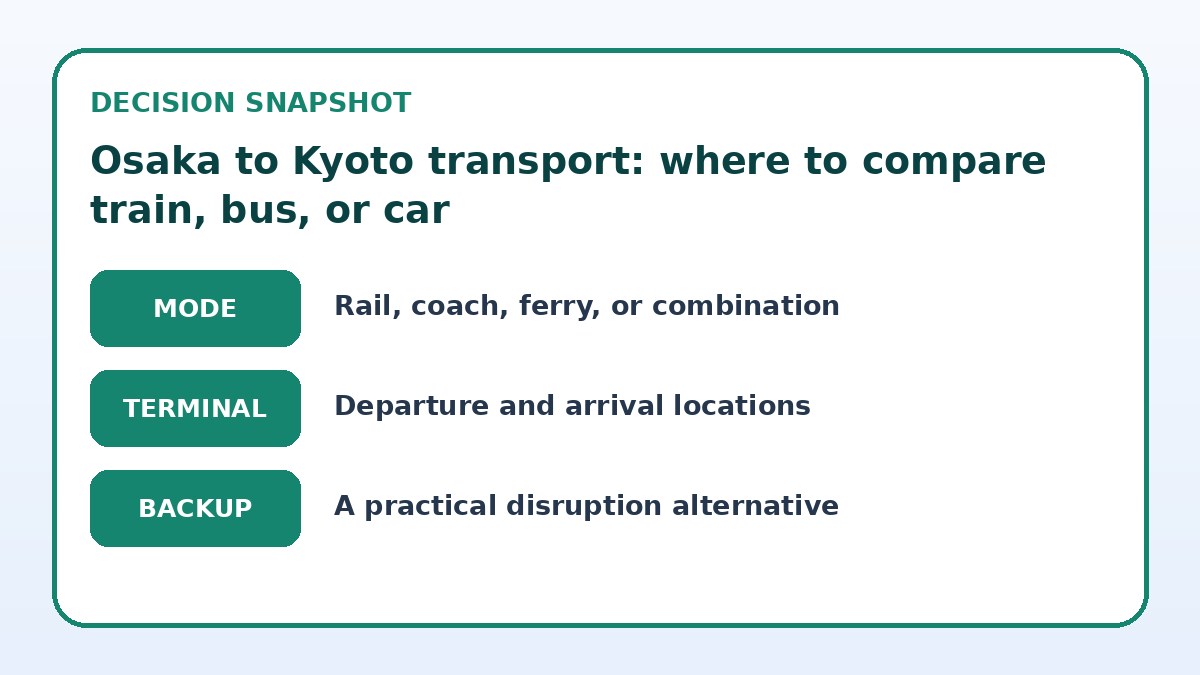
| Approach | Best for | Tradeoff to check |
|---|---|---|
| Regular intercity train | Couples wanting predictability, easy station access, and low coordination stress | Less flexibility for door-to-door stops and luggage handling compared with a car |
| Private transfer or rental car | Pairs valuing privacy, customizable schedules, and off-route detours | Requires parking, navigation, and extra planning for traffic and fees |
| Intercity bus | Budget-conscious couples or late-night travelers willing to accept potential delays | Longer, traffic-dependent trips and often more rigid boarding locations |
| Mixed approach (train plus local taxi) | Couples balancing speed with last-mile convenience without renting a car | Adds small taxi costs and coordination but keeps most benefits of trains |
When buses are the smart alternative
Intercity buses can be the smart alternative for couples prioritizing lower fares or late-night departures when trains are less frequent. Buses sometimes serve locations that are convenient for certain hotels or budget stays, and overnight routes can save a night’s accommodation for some travelers. However, buses are more exposed to traffic variability and often require boarding at specific terminals rather than central stations. If you have motion sensitivity or prefer guaranteed window views and walking room, check the type of bus and average on-board amenities before committing.
Before booking a bus, confirm luggage allowances, boarding instructions, and where the bus actually stops relative to your final destination. Some services use suburban terminals that add a local transfer or taxi cost. For couples, a bus can be a fine choice if it aligns with your schedule and you are comfortable with the boarding and luggage rules. Always review the provider’s latest boarding policies and arrival terminal details on their official booking page—or compare availability on Trip.com as one of several sources.
Before you book
- Decide which neighborhood or station in Osaka and Kyoto puts you closest to your main activities before comparing options.
- Check luggage size rules and onboard storage details on the provider’s booking page if you have large or irregular baggage.
- Confirm pickup and drop-off addresses, and verify how close they are to your hotel entrance or main attraction.
- Compare departure windows for your travel day and mark alternatives to handle delays or cancellations.
- Review cancellation and change terms so you understand fees and flexibility before you finalize booking.
- If considering car rental, confirm parking options at your Kyoto accommodation and any city parking restrictions.
How to choose: decision criteria for couples
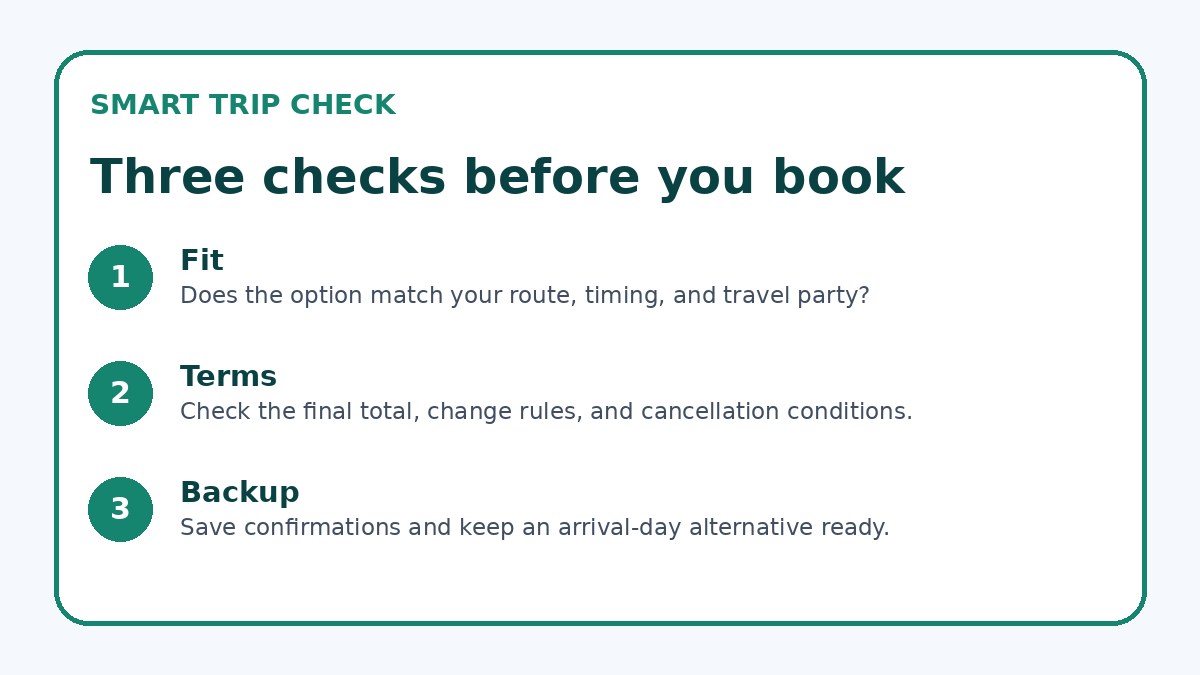
Narrow your decision with three simple criteria: timing, proximity, and luggage. Timing asks whether you need the earliest departure, late arrival, or flexible windows; proximity focuses on which station or terminal places you closest to activities or your accommodation; luggage covers whether you are traveling light or with bulky items. Use those factors to eliminate options quickly—if timing and proximity both favor trains, they are likely the right pick. If luggage and private stops win, then car or transfer looks better.
Also factor in personal comfort and energy levels. Couples who prefer to relax together and keep movement simple often choose direct train services for their predictable experience. Those who enjoy control and privacy might accept the extra logistics of driving. Finally, check cancellation and change policies before booking: life happens, and a slightly more flexible option can be worth a small premium. Verify seat-reservation needs, pickup details, and any hidden boarding requirements on the provider’s final booking page.
Frequently asked questions
Should couples always reserve seats in advance for trains between Osaka and Kyoto?
Reserving seats can be helpful when traveling during peak holiday periods or if you prefer guaranteed adjacent seats, but it is not always required. For many regular daytime services, trains run frequently and empty seats are often available, allowing couples to choose together on the day. If you have a fixed schedule, large luggage, or want a specific type of seat (window or together), check the provider’s reservation policy and reserve in advance. Always verify seat-reservation options, procedures, and any extra fees on the operator’s official booking page before purchasing.
How should couples handle luggage when using public transport between the cities?
Pack to minimize handling: soft-sided bags and luggage with wheels are easier on platforms and taxis. For larger suitcases, choose services and stations with elevators or ask your accommodation about luggage storage or hotel delivery services. If you plan to use buses, confirm the baggage allowance and where the carrier stores luggage. For trains, check onboard luggage space and whether seat reservations guarantee extra room. When in doubt, review luggage policies on the carrier’s site or ask customer service before you book to avoid surprises at the station.
Is it worth using a private transfer for a short Osaka–Kyoto hop?
A private transfer can be worth it when convenience, privacy, or multiple stops justify the extra logistics and cost, especially if you’re traveling with someone who needs special assistance or you have heavy baggage. For short daytime hops between central districts, trains typically offer faster and simpler access. Consider travel time variability due to traffic, the value you place on door-to-door service, and whether parking or drop-off regulations at your Kyoto accommodation add complexity. If you choose a private transfer, verify vehicle size, pickup point, and any wait-time or cancellation policies on the provider’s booking page.
Final planning note
For most couples traveling between Osaka and Kyoto, regular intercity trains provide the best blend of predictability, central access, and low coordination burden. But practicality depends on your situation: couples who need door-to-door privacy, extra luggage capacity, or the freedom to detour should consider a private transfer or rental car, while budget-minded or late-night travelers may find buses acceptable. Use timing, proximity, and luggage as decision filters, then confirm seat-reservation rules, pickup/drop-off locations, and cancellation terms on the provider’s official booking page before finalizing. For a quick comparison of current options you can also check Trip.com alongside operators’ sites, but always verify details with the carrier.
Continue planning
Check current options and final conditions
Use the provider page to confirm live availability, the final total, cancellation terms, and every condition that matters to your trip.
This evergreen planning guide was created with AI-assisted drafting and a structured quality review. It does not display live prices, schedules, availability, visa guidance, or provider rankings. Verify current details before booking. Some links are affiliate links; we may earn a commission at no additional cost to you.