
If you’re traveling from Osaka to Kyoto for the first time, the practical choice is to pick the departure and arrival stations that save walking, transfers, and taxi time while fitting your schedule. Most visitors compare Shin-Osaka and Osaka (Umeda) departures, and Kyoto Station versus smaller stops such as Gion-Shijo or Sanjo for arrivals. Your main decisions are: how much you value direct high-speed versus local services, whether you’re carrying luggage that makes station transfers awkward, and whether you want to arrive near hotels or sights. Read the quick decision points below, then use the sections to weigh tradeoffs, check transfer methods, and prepare a short checklist for the day of travel.
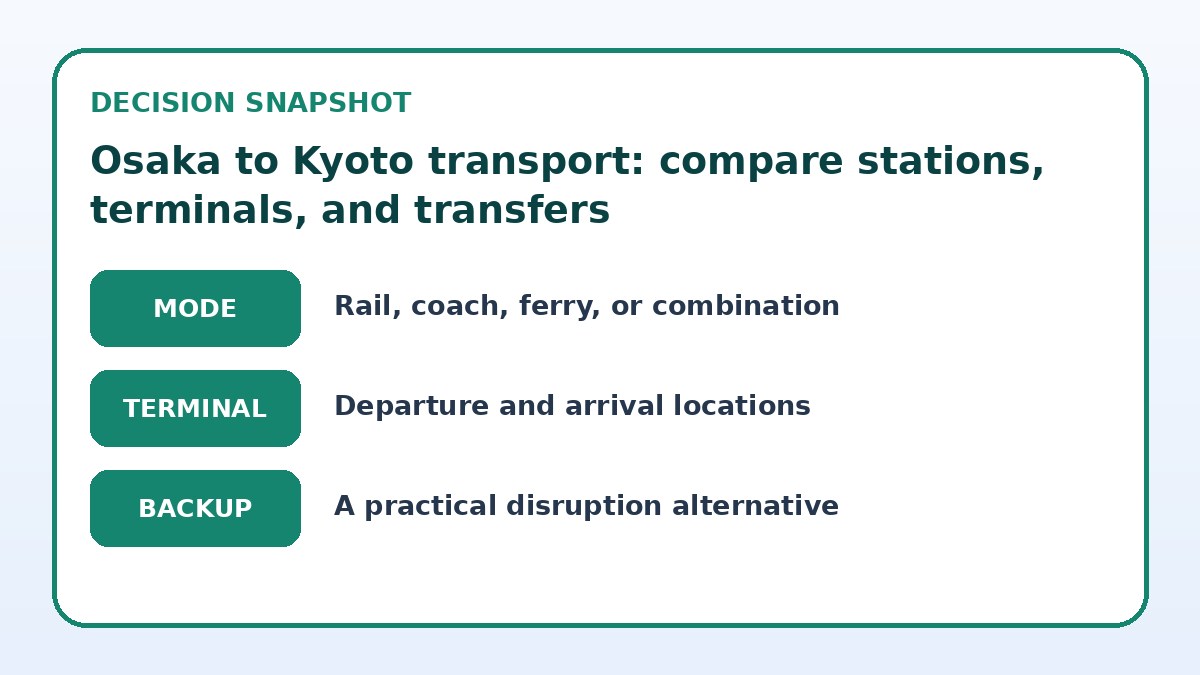
See current options before you compare the details
Availability and final conditions change. Open Trip.com now or keep reading for the practical comparison.
Which Osaka departure fits your trip: Shin-Osaka or Osaka (Umeda)?
Shin-Osaka is the station served by Shinkansen (bullet trains) and is a clear choice when you prioritize a fast, direct ride to Kyoto on limited-stop services. If speed and a single-seat journey are your priorities, Shin-Osaka minimizes intermediate platform hops. But Shin-Osaka sits a short distance from central neighborhoods like Umeda; reaching it can require a local subway, an express commuter train, or a short taxi ride. For travelers staying near Umeda or Namba, the extra step to reach Shin-Osaka can offset time saved on the train itself, especially with luggage.
Osaka (Umeda) stations are a cluster of terminals—JR Osaka Station, plus nearby private-rail and subway stations—offering many more local departure options toward Kyoto on regional JR and private lines. Leaving from Umeda means easier subway or walking connections if you’re already in central Osaka, and more frequent departures throughout the day. The tradeoff is that local trains are slower than Shinkansen and sometimes require a transfer at intermediate stations. Decide based on where your accommodation is and whether you value fewer transfers or a faster in-vehicle time.
Choosing your Kyoto arrival: Kyoto Station or closer-to-center stops
Kyoto Station is the main transport hub with the widest selection of onward buses, local JR and private-rail services, and most hotel shuttles. It’s the most convenient arrival if you have heavy luggage, need a luggage service, or want straightforward connections to other regions. The station complex also contains tourist information and large taxi ranks. However, Kyoto Station is slightly farther from the historic neighborhoods of Gion, Higashiyama, and the Philosopher’s Path; reaching them usually requires a short bus, taxi, or local train ride.
If your itinerary is focused tightly on central historic areas, consider arriving at smaller stations such as Gion-Shijo, Sanjo, or Kawaramachi on private lines that drop you within easy walking distance of temples, museums, and restaurants. These options reduce walking time with luggage and let you step directly into neighborhoods, but they may not accept some types of reserved intercity services and can require transfers from JR lines. Evaluate where you’ll spend most of your time and whether a short taxi or bus from Kyoto Station is worth the broader connection options there.
| Approach | Best for | Tradeoff to check |
|---|---|---|
| Shin-Osaka departure + Kyoto Station arrival | Travelers prioritizing fastest, single-seat journey and straightforward onward connections | May require extra transit to reach Shin-Osaka from central Osaka hotels |
| Osaka (Umeda) departure + Gion-Shijo or Kawaramachi arrival | Visitors wanting direct access to historic districts with minimal walking after arrival | Slower trains and possibly more transfers compared with Shinkansen options |
| Osaka (Umeda) departure + Kyoto Station arrival | Balanced choice for central departures and broad onward connections at arrival hub | May involve at least one transfer and extra walking if your hotel is in a historic district |
| Shin-Osaka departure + private-line arrival at Sanjo/Gion area (transfer at intermediate station) | Travelers who want speed initially but prefer to finish close to attractions | Requires an intermediate transfer and handling luggage during the change |
Ready to check the option that fits your plan?
Use your exact dates and traveler details so the provider page can show the current total and conditions.
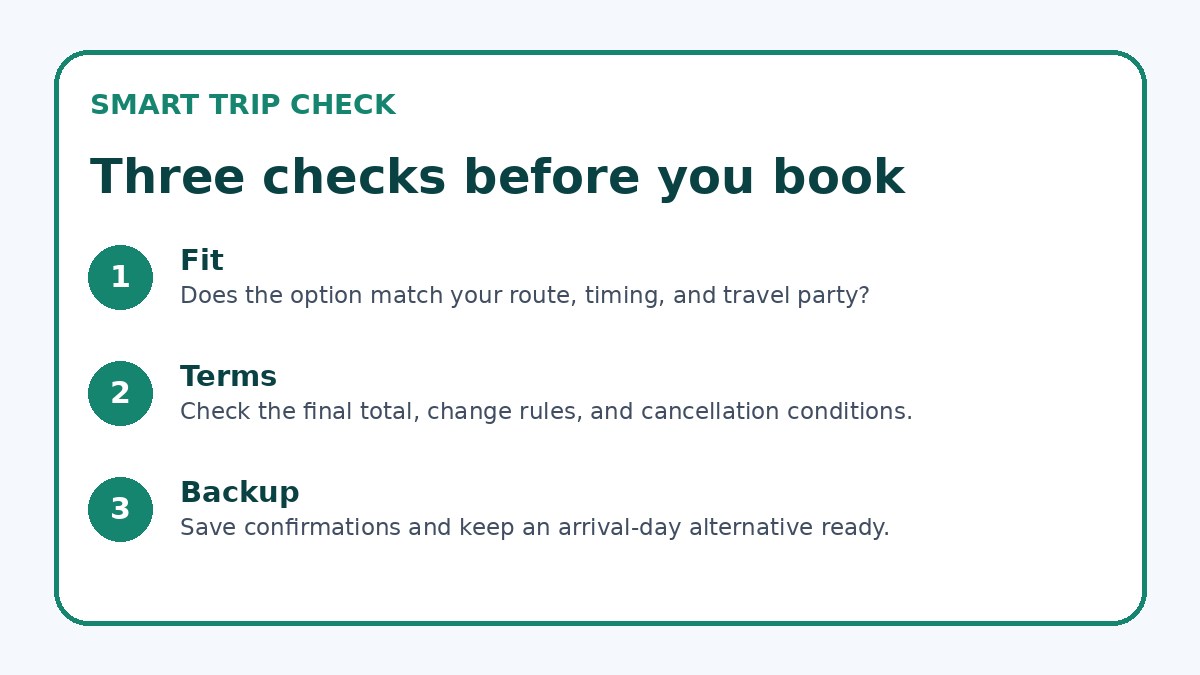
How to plan the terminal transfer: subway, local train, bus or taxi
Terminal transfers between stations or to hotels are best planned by matching luggage and mobility needs to the transfer mode. Lightweight travelers often prefer local JR or private-rail lines because they run frequently and drop you near city-center stops; check which operator serves your chosen arrival. Buses are useful for direct routes but can be slower during peak traffic and require navigating bus stops and schedules. Subways offer reliable, traffic-free connections between major hubs but sometimes involve stairs or long platform corridors, so consider elevator locations if you have a lot of luggage.
Taxis are the simplest door-to-door option when time is tight or when you have heavy bags or a group, but they are costlier than public transit. If you plan to take a taxi, confirm where the taxi stands are at the arrival station and allow extra time during busy periods for queues. For families or travelers with accessibility needs, research elevator locations, accessible routes, and station maps in advance. Where provider schedules or services matter, verify final timetables and any seat reservation requirements on the operator’s official booking pages or a current aggregator such as Trip.com.
Before you book
- Check which Osaka station (Shin-Osaka or Umeda/Osaka) is closest to your accommodation before choosing departure times.
- Confirm whether your chosen train requires seat reservations and verify that on the operator’s official booking page before you buy tickets.
- Locate elevator access and luggage storage options on station maps for both departure and arrival stations if you have heavy bags.
- Plan the terminal transfer method (subway, local train, bus, or taxi) and estimate door-to-door travel time for the scheduled arrival.
- If arriving near the historic districts, map walking routes from the smaller station platforms to your hotel to avoid unexpected stairs or long corridors.
- Save backup options: note the next few departures and a taxi rank location in case your planned train is delayed or full.
Deciding factors: speed, convenience, cost, and luggage
Start by ranking what matters: fastest in-vehicle time, fewest platform changes, minimal walking with luggage, or lowest out-of-station cost. If speed tops your list, prioritize departures from Shin-Osaka using reserved high-speed services and arrive at Kyoto Station for easy transfers onward. If convenience in central Osaka or Kyoto trumps speed, choose departures from Osaka (Umeda) and arrivals at Gion-Shijo or Kawaramachi to avoid extra taxi or bus legs. Always weigh the total door-to-door time rather than just the ride time on the train.
Luggage changes influence choices strongly. Large suitcases make additional stairs and long corridor walks painful; in that case favor stations with elevators, luggage storage, or baggage forwarding services. If budget is the signal, local trains and buses generally cost less than taxis and some express services, but slower options could consume valuable touring time. Before booking, inspect station maps and transfer routes on official railway sites, and confirm any reserved-seat policies on the operator’s final booking page.
Frequently asked questions
Can I use a Japan rail pass or regional pass for Osaka to Kyoto transport?
Many rail passes cover certain services between Osaka and Kyoto, but coverage depends on the specific pass and the operator. Shinkansen services are included in some national rail passes but may exclude the fastest Nozomi trains; private railway lines and some express services have different rules. Always check the terms of your particular pass and whether reservations are required or recommended. Verify permitted routes and reservation procedures on the pass issuer’s official documentation or at staffed ticket counters before travel to avoid surprises.
How should I handle luggage if I want a quick transfer between Osaka and Kyoto?
If minimizing hassle is the priority, consider forward luggage services that collect suitcases from hotels and deliver them to your Kyoto accommodation; many hotels offer or can arrange this. Alternatively, choose stations with clear elevator access and luggage storage lockers at either end so you can stow bags temporarily. For those carrying everything with them, book trains with reserved seats near boarding gates to reduce rushing on platforms. Always verify baggage policies directly with the operator and confirm locker sizes at stations if you plan to use them.
What is the best way to arrive in Kyoto if my hotel is in Gion or Higashiyama?
Arriving at a smaller station like Gion-Shijo or Sanjo on private lines places you within easy walking distance of Gion and Higashiyama, saving time and taxi fare. If you use a Shinkansen from Shin-Osaka, plan an intermediate transfer to a private line or a short taxi from Kyoto Station. Weigh the convenience of a direct drop-off against the potential luggage handling involved in transfers, and check platform layouts and transfer corridors beforehand so you can choose the option that keeps your arrival simple and comfortable.
Final planning note
Choosing the right Osaka to Kyoto transport plan boils down to matching departure and arrival stations with your priorities: speed, convenience, luggage handling, and where you want to begin exploring. Shin-Osaka plus Kyoto Station is efficient for fast travel and broad connections. Umeda departures and smaller Kyoto arrivals suit travelers who want immediate access to city-center neighborhoods and historic districts. Before you book, confirm reservation and baggage policies on operator pages, study station maps, and plan at least one backup option. For current schedules and ticket availability you can compare offers on sites such as Trip.com, but always finalize details on the railway operator’s official booking site.
Continue planning
Check current options and final conditions
Use the provider page to confirm live availability, the final total, cancellation terms, and every condition that matters to your trip.
This evergreen planning guide was created with AI-assisted drafting and a structured quality review. It does not display live prices, schedules, availability, visa guidance, or provider rankings. Verify current details before booking. Some links are affiliate links; we may earn a commission at no additional cost to you.