Practical answer up front: if you have extra luggage, prefer a rail-based plan (Shinkansen plus local transfer) only if you can handle station steps and platform transfers; choose coach or trunked luggage services when you want fewer hand-carries and simpler door-to-door connections. The right choice depends on where in Osaka you start, where in Hiroshima you need to arrive, and how many pieces you must physically move between vehicle and terminal. This article walks through how to compare rail, coach, ferry, or mixed options with an eye toward terminal fit, transfer friction, timing flexibility, and a simple disruption backup. Expect tradeoffs: faster trains often mean more stairs and platform juggling, while coaches reduce handling but may have limited departure points. Verify luggage size rules, reservation requirements, and last-mile pickups on each provider’s official booking page before you buy. Trip.com can show current availability but always confirm provider baggage rules at booking.
How to choose between rail, coach, ferry, or a mixed approach
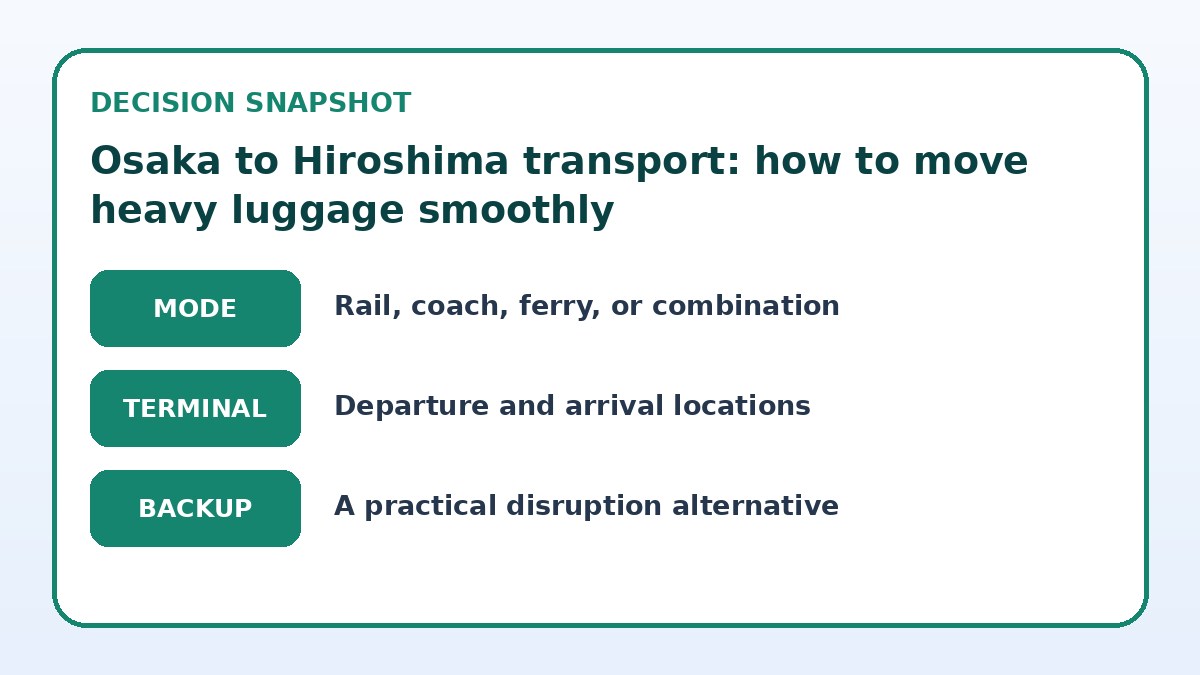
Begin by mapping door-to-door time and handoffs, not just in-vehicle travel time. List your origin address in Osaka and your final Hiroshima destination, then identify the nearest stations or coach terminals for each mode and how you will reach them with bulky bags. Rail (including high-speed options) often has frequent departures but requires negotiating station entry, stairs, and platform transfers—tasks that become harder with oversized cases. Coaches and intercity buses typically load at curbside and use luggage bays, offering simpler boarding but fewer departure points and less schedule frequency.
Ferry services can be comfortable for oversized luggage because vehicles load at dock level, but ferries are constrained by port locations and sailings. A mixed approach—such as taking a coach to a rail hub or forwarding luggage to your Hiroshima hotel while you travel light—may combine speed and convenience. For each option, estimate total time from your door to the final door, count how many times you must lift or move your luggage, and factor in the physical layout of terminals and transfer distances.
Choose the end-to-end journey plan
| Journey approach | Best for | Friction to check |
|---|---|---|
| Rail-focused plan (Shinkansen/local trains) | Travelers prioritizing speed and frequent departures who can manage station transfers. | More platform and elevator juggling with bulky bags; requires careful terminal navigation and extra boarding time. |
| Coach/express bus plan | Those wanting curb-to-curb simplicity and fewer transfers with large suitcases. | Fewer departure points and less frequency; may add road delay risk and longer in-vehicle time. |
| Luggage-forwarding plus light personal travel | Travelers who prefer to move freely without dragging bags through stations. | Requires lead time and coordination; you rely on accurate pickup and delivery windows at both ends. |
| Mixed approach (coach to hub, then rail) | People balancing cost, simplicity, and speed when direct options don’t align with origin/destination locations. | Combines benefits but increases the number of handoffs and the need for precise timing coordination. |
Check live intercity options
Look beyond the ride itself and compare terminals, transfers, luggage, and arrival fit.
Terminal fit and luggage handling friction
Assess each terminal’s layout before you commit: is the station a large multi-level hub with elevators and long corridors, or a smaller curbside coach stop? Large train stations may have elevators and escalators but using them with oversized bags can add minutes and require queuing. If elevators are limited, expect increased friction during peak times. Coaches and ferry terminals usually provide staff assistance for loading bays; confirm whether help with baggage is standard or if you must lift heavier items yourself.
Also check where ticket counters, waiting areas, and taxi ranks sit relative to platforms and bus bays—shorter walks reduce physical strain and late-transfer risk. If your route forces a platform change or a station transfer in Osaka or Hiroshima, plan extra time and scout elevator locations on station maps. When in doubt, call the terminal or provider to ask about luggage dimensions, assistance availability, and the practical steps to board with large bags; ask them to confirm what assistance is covered at both origin and destination.
Timing flexibility and the effect of extra baggage
Having extra luggage often increases the buffer you should build into your schedule. Allow more time for check-in or receipt of forwarded luggage, longer boarding windows, and slower transfers between modes. If your only priority is arrival time, faster trains can still make sense, but plan to arrive earlier at the station to secure elevator access or assistance and to stow luggage in designated storage spots on the train. For coaches and ferries, arrive at least 20–30 minutes early to queue for luggage loading—these vehicles sometimes close their bays prior to departure.
Consider departure frequency: if trains run often, you can accept tighter arrival windows because another departure is likely soon. If coaches or ferries are infrequent, missing one could mean a long wait; that increases the value of luggage forwarding or booking a later departure with a confirmed luggage allowance. Create a time cushion for every handoff—arrival at the terminal, luggage check or loading, boarding, and final pickup in Hiroshima—so a small delay doesn’t cascade into missed connections.
Compare the practical alternatives
Use the final page to confirm what is actually offered on your dates and save a workable fallback.
Intercity travel checklist
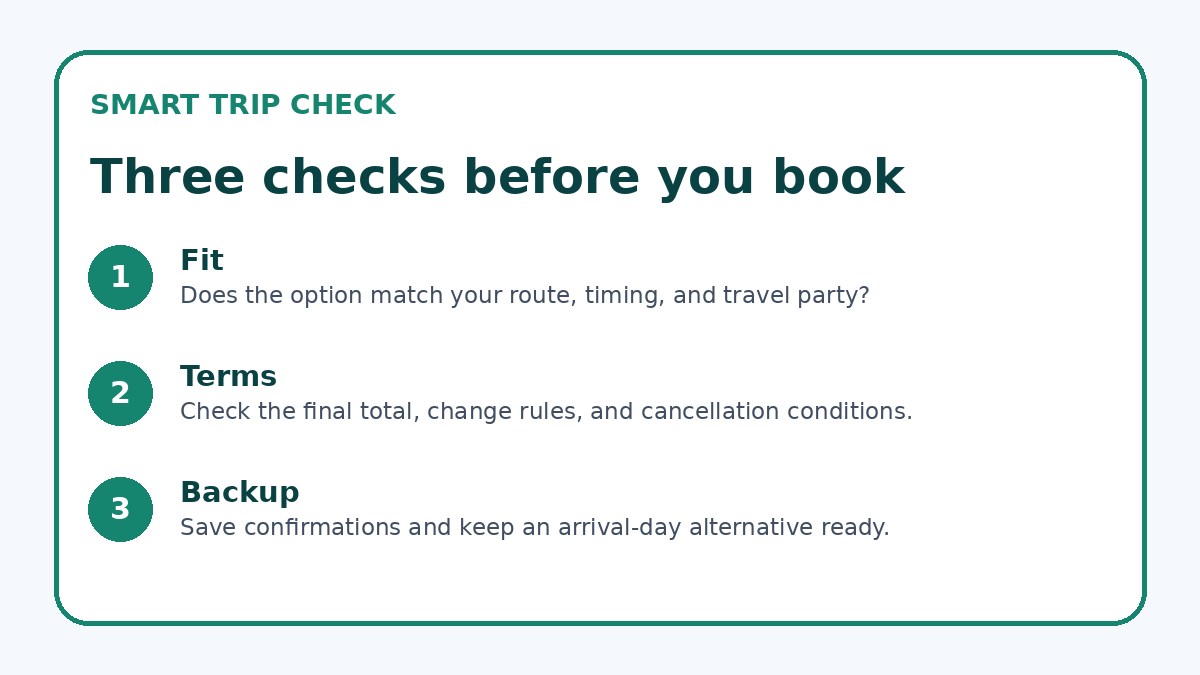
- Measure and photograph every suitcase and confirm dimensions against the carrier’s published limits before booking.
- Map door-to-door routes and estimate time for each transfer, including elevator waits and walking with bags between terminals.
- Reserve seats or book luggage reservations where available; document confirmation numbers and pick-up instructions.
- Locate station elevator and locker information online and note at least one nearby alternative terminal for backups.
- Arrange luggage forwarding if needed and confirm pickup and delivery windows with both origin and Hiroshima addresses.
- Pack a small overnight bag with essentials to carry-on in case of delayed or partial luggage delivery.
Disruption backup: practical, door-to-door alternatives
Prepare at least two realistic backup plans: one that preserves speed (alternative rail departure or route via a nearby hub) and one that preserves simplicity (coach, taxi, or scheduled luggage forwarding). Identify the nearest alternate stations or coach terminals you could use if your initial option faces a delay and check their access from your origin. If you plan to forward luggage, confirm the provider’s latest pickup window and the hotel or address reception times in Hiroshima to ensure a smooth handoff.
Also know where to store luggage temporarily at stations or service counters if a connection slips; short-term station lockers or manned storage desks can be lifesavers, but size limits vary. When weather or strikes affect services, local taxis or ride-hail with roof space may be an expensive but practical last resort for short distances. Keep digital and printed copies of booking references, photos of your luggage for claims, and contact numbers for providers so you can act fast when plans change.
Rail & Intercity Transport questions travelers ask
Can I take oversized suitcases on the Shinkansen from Osaka to Hiroshima?
You can travel with large suitcases on high-speed trains, but rules and practicalities differ. Some trains have limited onboard storage areas and strict size rules for floor baggage; others offer designated oversized luggage services or require reservations for spaces. Before booking, check the rail provider’s baggage policy for permitted dimensions, any reservation requirement for large items, and where to store them on the train. Also verify station elevator access and how staff handle bulky items at your origin and destination to avoid a problematic boarding experience.
Is an express coach better when I have many bags?
Coaches can be more convenient because luggage bays load at curb level, reducing the need to carry heavy cases through stations. They often allow larger items in the underfloor compartment, and boarding is typically simpler. However, coach schedules may be less frequent and drop-off/pickup points in Osaka or Hiroshima might be further from your actual door than a train station. Confirm the carrier’s luggage allowances, whether assistance is provided at both ends, and the coach terminal’s distance to your final address before choosing this option.
How far in advance should I arrange luggage forwarding or hotel delivery?
Arrange forwarding with enough lead time to match the provider’s pickup windows and the hotel’s acceptance policy. Many services require at least one full day’s notice and specify morning or afternoon collection windows; delivery in Hiroshima may be scheduled for a particular time band. Contact the forwarding company to confirm pickup day and drop-off estimates, and tell your Hiroshima hotel or recipient when to expect the luggage, including any handling fees or reception hours. Keep the shipment tracking number and a local contact to resolve timing issues quickly.
Final decision note
When traveling from Osaka to Hiroshima with extra luggage, make decisions based on door-to-door practicality rather than single-leg speed. Compare total handoffs, terminal layouts, and the real effort of moving bags between vehicle and final address. Prepare two backup plans—a faster option and a simpler option—so you can pivot if services are delayed. Use luggage forwarding when you want minimal handling, book reserved luggage spaces if available, and always verify baggage rules and terminal facilities on the provider’s final booking page. A little extra planning before travel day turns heavy bags from a burden into a manageable part of the trip.
Continue planning
Check current options and final conditions
Use the provider page to confirm live availability, the final total, cancellation terms, and every condition that matters to your trip.
This evergreen planning guide was created with AI-assisted drafting and a structured quality review. It does not display live prices, schedules, availability, visa guidance, or provider rankings. Verify current details before booking. Some links are affiliate links; we may earn a commission at no additional cost to you.