
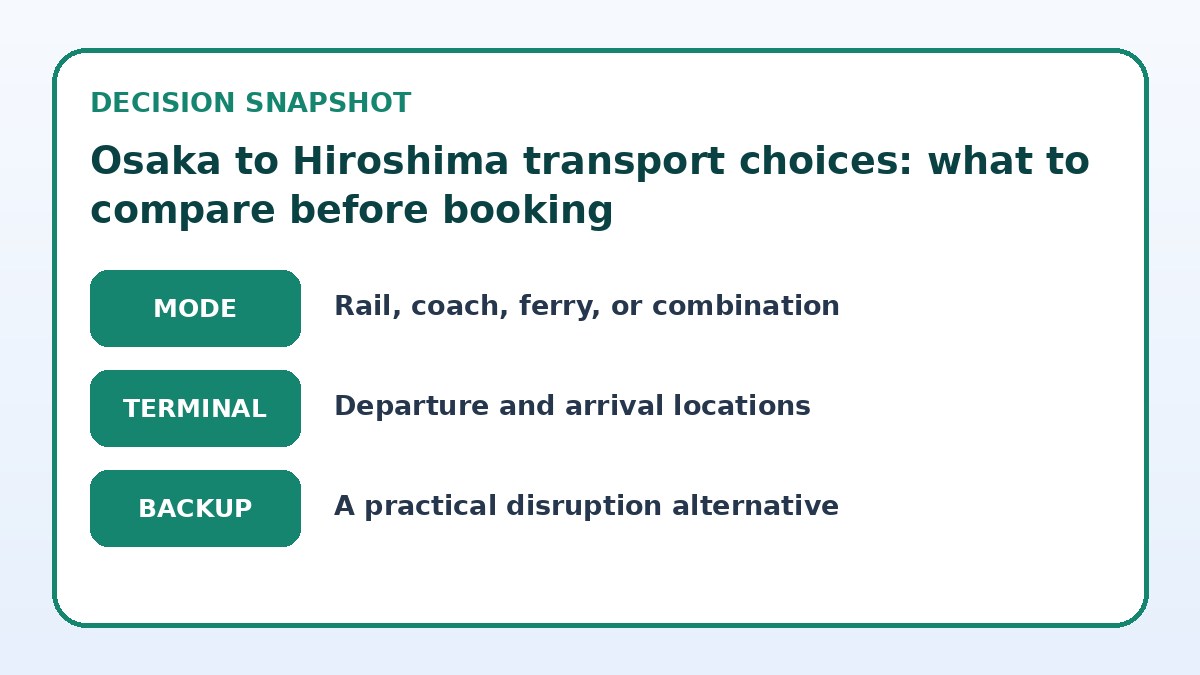
Practical answer up front: for most first-time visitors the train is the easiest way to travel from Osaka to Hiroshima if you want speed, predictable connections, and simple station transfers; coaches are the lower-cost, slower option; ferries and driving suit travelers with specific sightseeing or luggage needs. Start by deciding whether you prioritize journey time, cost, scenery, or flexibility. Trains reduce city-to-city friction; coaches are wallet-friendly but slower; ferries add sea travel and require port transfers; driving gives door-to-door control but adds navigation and parking variables. Below you'll find clear tradeoffs, decision criteria, and what to verify before you buy tickets so you can pick the right mode for your trip.
Trains — speed, reliability, and how to compare services
Trains are the straightforward choice for many visitors because they link city centers and minimize transfers. When comparing train options, look at whether a route is direct or requires a transfer, total journey time including transfer windows, seat reservation policies, and whether local or long-distance trains serve the route. Consider how ticket types affect flexibility: some tickets allow reserved seats, some are unreserved, and regional rail passes may cover certain services. Think about station locations in Osaka and Hiroshima so you avoid added transit time between your accommodation and the station.
Before booking, verify departure and arrival stations, whether you must change trains, and how long transfers take—especially if you have luggage or a tight onward connection. If you’re using a rail pass or taking a high-speed option, check whether reservations are recommended and whether they are permitted on the specific service you plan to use. Also confirm final boarding gates and platform numbers on the operator’s booking page, because platform information and service names can change and affect transfer planning.
Coaches — budget travel and what to expect
Coaches generally offer lower fares than trains and run overnight and daytime services. When weighing a coach, consider total door-to-door time including travel to and from coach terminals, which can be farther from city centers than train stations. Coaches vary widely in comfort: some have reclining seats and onboard restrooms, while others are basic. Decide if you can tolerate longer travel time to save money. Buses are often a good fit for late-night arrivals or departures when trains are less frequent.
Always check boarding points, luggage allowances, and whether the service includes scheduled rest stops. Look at cancellation and change policies on the carrier’s final booking page before buying, since coach providers may have different rules compared with rail. If you’re traveling overnight, verify whether the coach offers reclining or sleeper options and whether a night bus will affect how rested you are for sightseeing on arrival. Plan extra time for possible road delays during peak travel days or weather events.
| Approach | Best for | Tradeoff to check |
|---|---|---|
| Train | Travelers prioritizing speed, predictable schedules, and central station access | Often higher cost than coach and less scenic than ferries; check reservation rules for specific services |
| Coach | Budget-conscious travelers with flexible timing who accept longer journey times | Longer door-to-door time and possible farther terminals; comfort varies by operator and service |
| Ferry | Those seeking scenery, a relaxed pace, or island connections and vehicle transport | Less frequent service, longer travel times, and extra port transfers; weather can affect schedules |
| Driving / mixed modes | Itineraries needing flexibility, multi-stop days, or heavy luggage and remote destinations | Added navigation, tolls, parking, and rental rules; may be slower through congested areas |
Ferries and sea routes — scenic, slower, and situational
Ferries are the most scenic and relaxed option when available, but they rarely compete with rail for speed or frequency on a simple point-to-point Osaka to Hiroshima itinerary. Consider ferries if you want a maritime experience, plan to visit islands en route, or need to move a vehicle by sea. Sea travel can be more comfortable for travelers carrying large or awkward luggage and offers a different perspective on the region’s geography. Timetables and port locations matter a lot—port transfers typically add time and transit complexity.
Before choosing a ferry, verify port addresses, boarding procedures, and how passenger and vehicle reservations are handled on the operator’s booking page. Check whether any weather conditions typically disrupt the service during your planned dates, and plan buffer time for port check-in. Ferry facilities vary: some have simple waiting areas, others provide lounges and cafes. Factor in local transport from the arrival port to central Hiroshima when comparing total journey time and convenience.
Before you book
- Decide your priority: fastest travel time, lowest cost, scenic experience, or itinerary flexibility.
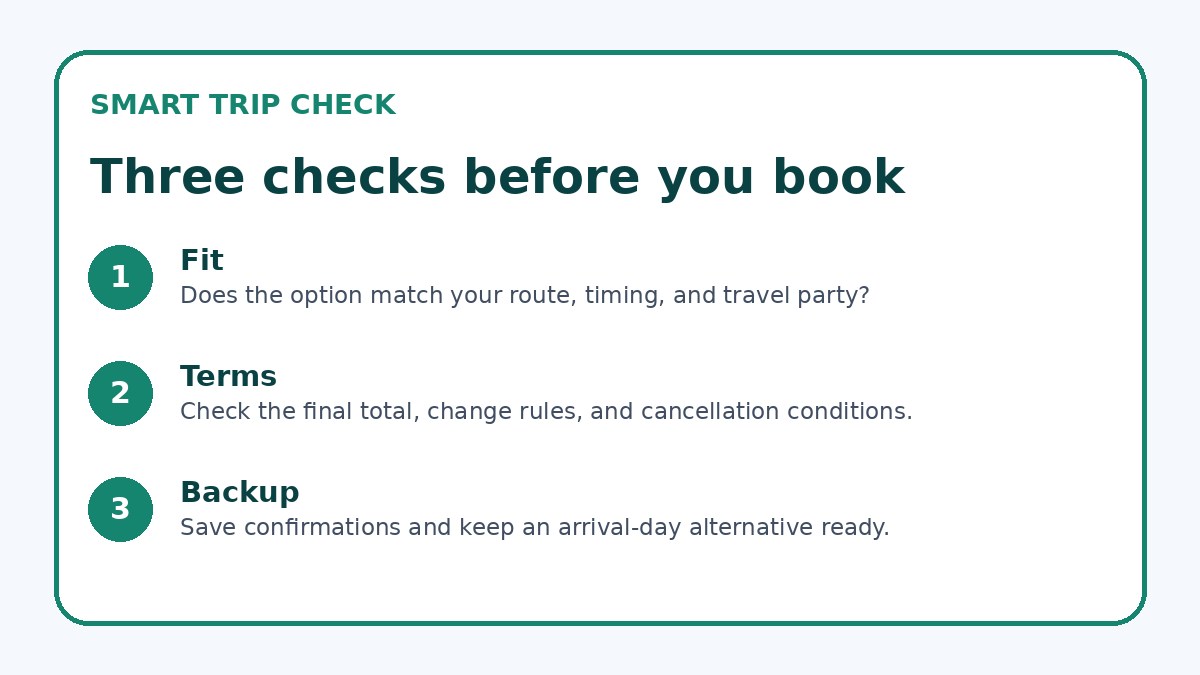
- Confirm exact departure and arrival locations (station names or port terminals) and how to reach them from your accommodation.
- Compare total door-to-door travel time, not just scheduled in-transit minutes, including transfers and local transit.
- Verify luggage allowances, seat reservation requirements, and how changes or cancellations are handled on the provider’s booking page.
- If driving, check rental terms for one-way fees, insured drivers, parking availability, and local traffic rules.
- For ferries and coaches, confirm boarding procedures, check-in windows, and whether services run on your travel dates.
Driving and mixed modes — flexibility with tradeoffs
Driving gives you maximum flexibility to detour, explore rural areas, and manage luggage, especially if your itinerary includes remote sights not well served by public transport. When comparing driving to public options, include tolls, fuel, parking costs, and the potential stress of navigating unfamiliar roads. Also consider whether your accommodation offers parking and whether you’ll be comfortable driving in Japanese traffic patterns and signage. If you plan to drop a vehicle at a different location, confirm one-way rental policies in advance.
Another practical choice is mixing modes—take a train partway and rent a car locally, or combine a ferry and a coach for a scenic leg. When planning mixed trips, build comfortable transfer windows and reconfirm the exact pick-up and drop-off points for rentals and terminals. Always check rental company requirements for drivers, fuel policies, and cross-prefecture rules on the provider’s booking page. Mixing modes can balance speed and exploration but needs careful timing to avoid missed connections or extra fees.
Frequently asked questions
Is taking the train the quickest way between Osaka and Hiroshima?
Trains are generally the quickest and most schedule-reliable way to travel between city centers, but you should compare direct versus connecting services. A direct train saves transfer time, while a connection might be cheaper or necessary outside peak hours. Always check the final operator’s booking page to confirm whether a particular service is direct, whether seat reservations are required, and which stations are used in both Osaka and Hiroshima so you can estimate door-to-door travel time accurately.
Can I take my car on a ferry between Osaka and Hiroshima?
Some ferry services allow vehicles, but policies vary by route and operator. If you plan to transport a car, verify vehicle reservation requirements, size and weight limits, check-in deadlines, and any documentation the operator requires on their booking page. Also factor in how long the port transfers and loading take and whether the ferry schedule aligns with your driving itinerary. If vehicle transport isn’t available, consider a mixed plan: ferry for passengers and a separate vehicle rental at your destination.
How do I choose between a night coach and an early train?
Weigh comfort and schedule needs: a night coach can save a night's accommodation and depart outside busy hours, but it increases fatigue on arrival. An early train may be faster and more comfortable but might cost more and require you to buy reservations. Compare actual arrival times, the time you’ll need to reach your first activity, and how rested you want to be. Confirm coach amenities and seat types on the carrier’s booking page, and check train reservation rules if you need a guaranteed seat.
Final planning note
Choosing Osaka to Hiroshima transport depends on what you value most: speed and convenience (train), lower fares (coach), scenic sea travel or vehicle transfer (ferry), or flexibility for side trips (driving or mixed modes). Start by mapping your priorities against total door-to-door time, luggage needs, and how many stops you want. Once you narrow the type of service, check the operator’s booking page for up-to-date timetable details, reservation policies, and terminal locations. For current availability and to compare multiple providers, you can check a comparison site such as Trip.com, but always confirm the final details with the carrier before you book.
Continue planning
Check current options and final conditions
Use the provider page to confirm live availability, the final total, cancellation terms, and every condition that matters to your trip.
This evergreen planning guide was created with AI-assisted drafting and a structured quality review. It does not display live prices, schedules, availability, visa guidance, or provider rankings. Verify current details before booking. Some links are affiliate links; we may earn a commission at no additional cost to you.