If you arrive in Osaka late and are carrying more bags than usual, choose a hotel area that minimizes transfer friction and gives flexible luggage options. The quickest practical choice is to pick hotels near a major transport hub (Shin-Osaka, Namba, or Tennoji) or near a station served by late-night taxis and shuttle services; this reduces night transfers and provides more hotel options that accept late check-in and luggage drop. If you must move across the city after midnight, prioritize hotels that advertise 24-hour reception, luggage storage, and rooms with space for large suitcases. Read the hotel’s final booking page to confirm the exact check-in window, late-arrival policy, available luggage storage (duration and any fees), and whether the property will accept oversized items. Below I explain neighborhood fits, daily-route tradeoffs, room and party needs, and final booking terms so you can shortlist an area and book with confidence.
Check live stays in the areas that fit
Use your dates and party size to compare current rooms after you narrow the neighborhood fit.
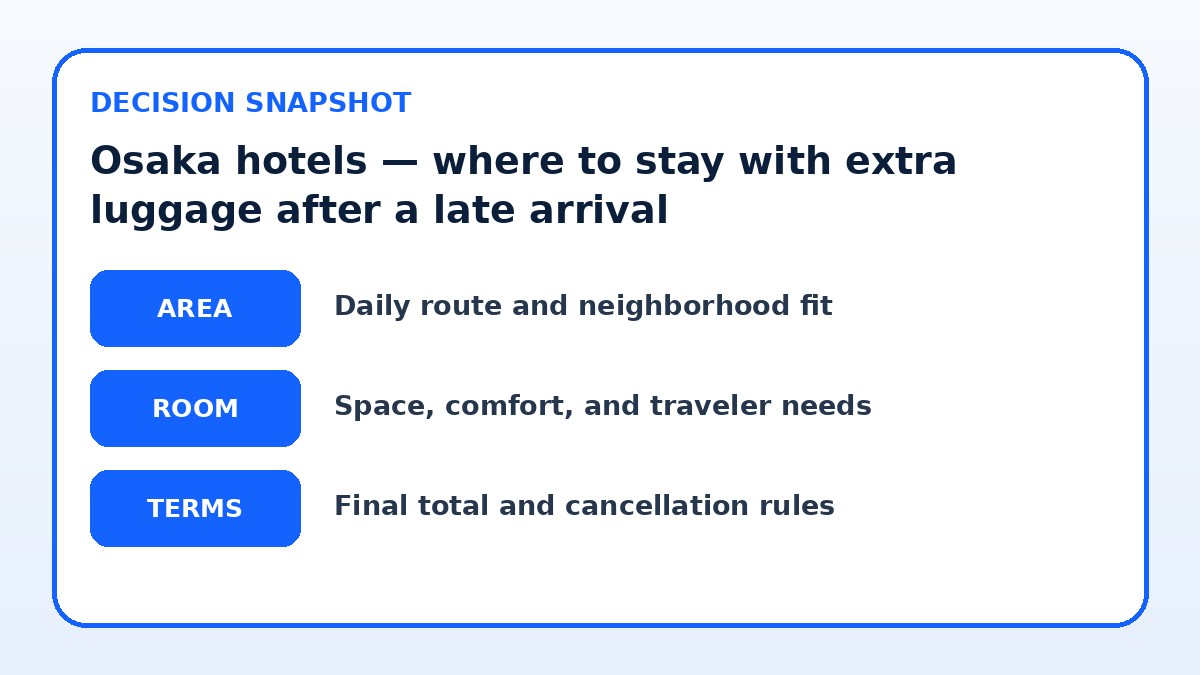
Neighborhood fit: pick by arrival station and onward plan
Start by matching your arrival point and onward plan. If your flight or long-haul train deposits you near Kansai Airport, a hotel near Namba makes sense because it connects to multiple subway and private lines; if you arrive at Shin-Osaka by Shinkansen, stay near Shin-Osaka or Umeda to avoid moving across town late. Tennoji works well if you expect to head south next day. Pick an area that minimizes the number of late-night transfers—each transfer increases the chance of handling luggage multiple times or facing limited transport options after midnight.
Balance immediate convenience with where you’ll spend most daytime hours. If your itinerary centers on central Osaka attractions and restaurants, Namba or Umeda give the shortest daytime transit times; if you’ll head to Kyoto or Kobe early next morning, Shin-Osaka or Umeda reduces morning transfers. Consider whether you’ll need quick access to long-term luggage storage services or coin lockers near stations; neighborhoods with larger stations usually offer more infrastructure for oversized baggage and private luggage storage services.
Choose an area-selection strategy
| Area approach | Best for | Tradeoff to check |
|---|---|---|
| Stay near Shin-Osaka station | Travelers connecting by Shinkansen or leaving early for Kyoto and needing minimal morning transfers. | Fewer evening dining options within immediate walking distance compared with Namba or Umeda. |
| Stay near Namba (central south Osaka) | Arrivals who want lively evening food and easy access to local subway lines and night bus options. | More crowded streets and slightly longer transfers to Shinkansen services at Shin-Osaka. |
| Stay near Umeda (Kita area) | Those who want major station facilities, department stores, and multiple taxi and late-train options. | Large stations can mean longer walks from platform to hotel entrance, which complicates luggage handling. |
| Stay near Tennoji | Visitors heading south or using regional lines with easier night transfer options than some smaller stations. | Fewer international-service hotels in the immediate area compared with Umeda or Namba. |
Daily-route friction: how extra luggage changes movement
Extra luggage makes every short connection more onerous. Narrow subway stairs, crowded station corridors, and busy sidewalks matter more after a late arrival. Look for hotels with elevator access between street and lobby and a short, step-free route from the nearest station exit. If you plan to use a taxi for the transfer, confirm there’s street access for drop-off and that the hotel can help with porter service; if you’ll rely on public transport, choose stations with well-marked exits and luggage-friendly elevators.
Consider time-of-day patterns: late-night trains and metros run less frequently, and some lines stop before midnight. If you arrive after last trains, your practical options narrow to taxis, night buses, or hotel-arranged shuttles. Factor in the walking distance between a likely drop-off point and the hotel. A slightly more expensive journey direct to a hotel door can be worth avoiding multiple lug-and-wait cycles. Finally, check the walking route in daylight beforehand using maps so you aren’t negotiating unfamiliar alleys with heavy bags at night.
Now compare like with like
Keep the same dates, guests, room needs, and cancellation preferences while you compare the final choices.
Room and party needs: choose a room layout that tolerates extra baggage
Room layout plays a big role when you carry excess items. For two or more people, book a larger twin or double with extra floor space or a room type that lists a seating area—these allow you to keep bags organized without blocking access. If you travel solo but have oversized sports gear or several suitcases, request a room with a closet, luggage rack, or an extra storage area; some hotels allow porters to store large items in a secure backroom before you check in, but you must confirm that on the booking page.
Communicate party needs at booking: mention oversized suitcases, baby equipment, or mobility aids. Ask whether housekeeping can rearrange furniture to create temporary luggage space and whether the property provides luggage tags, locks, or temporary storage beyond checkout. If you’re splitting the group—some arriving early, others late—pick a room that can receive one party and accept luggage on behalf of the rest, and confirm the hotel’s policy about holding items for guests arriving later or leaving earlier.
Hotel booking check before payment
- Confirm the hotel’s official late check-in time and required arrival procedure on the booking page and save any confirmation instructions.
- Ask the hotel in writing whether they offer luggage storage for oversized bags, how many days they will store items, and any size limits.
- Map the street-level route from your arrival drop-off point to the hotel door, noting elevators, stairs, and accessibility features.
- Reserve a room type with extra floor space or request an additional luggage rack or rollaway when you book.
- Check local transport schedules for your arrival time and identify taxi stands, hotel shuttles, or night-bus options as backups.
- If sending luggage ahead or using a third-party locker, verify exact collection hours and address relative to the hotel before sending items.
Final booking terms: what to verify before you commit
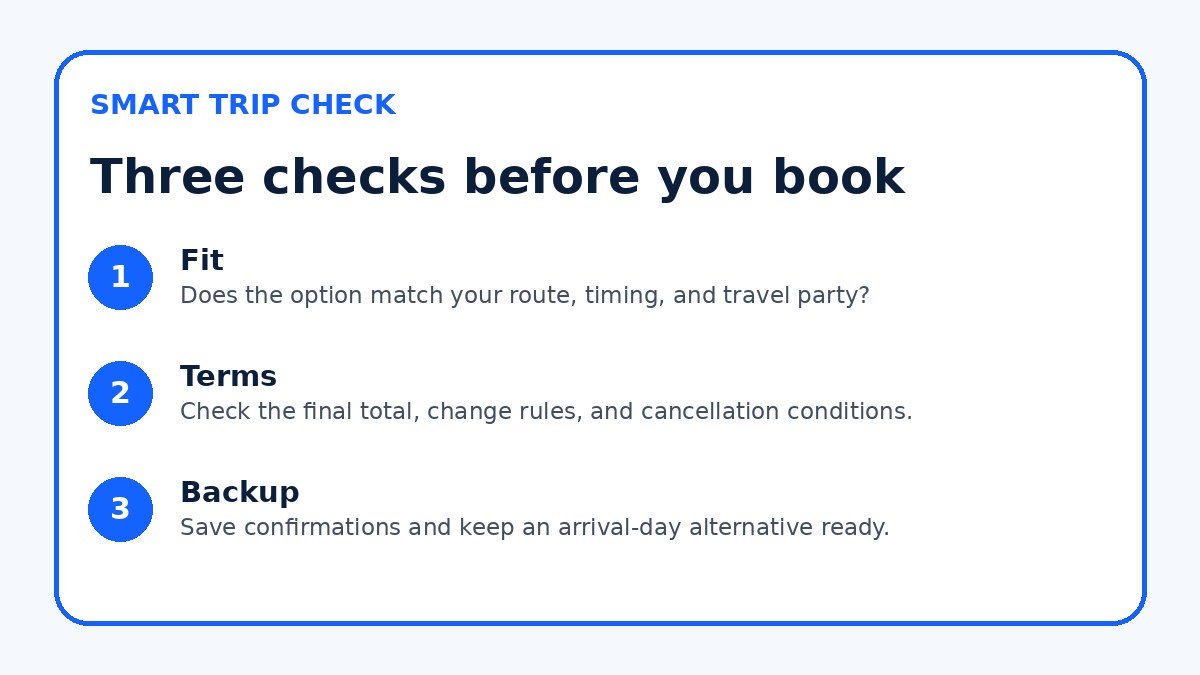
The single most important step before booking is verifying the hotel’s official policies on its final booking page. Confirm the exact check-in hours, late-arrival procedures, any fees associated with late check-in or out-of-hours reception, and the availability and limits of luggage storage (maximum days, size limits, and whether oversized items are accepted). If the property mentions 24-hour reception, ask how late arrivals are handled—do they require a PIN code, a late check-in form, or prior notice? Don’t assume staff will hold oversized baggage without explicit confirmation.
Also ask about accessible drop-off points, porter service, and whether the property will accept deliveries or luggage sent ahead of your arrival. If you plan to use a third-party luggage storage service or station lockers, verify opening hours and exact locations relative to your hotel. For up-to-date availability and policies, you can compare listings on Trip.com or the hotel’s own website, then contact the hotel by email or phone to get written confirmation of any special arrangements you need.
Hotel Guide questions travelers ask
Can hotels in Osaka hold oversized luggage if I arrive late at night?
Many Osaka hotels offer luggage storage, but policies vary widely on oversized items and duration. Always verify the hotel’s storage policy on the final booking page and ask the property directly about maximum dimensions, weight limits, and any fees. If you’ll arrive after reception hours, confirm whether staff will accept items left with security, require a written release, or request prior notice. For high-value or bulky items, get written confirmation and ask for a receipt or storage tag so you can track retrieval later.
Should I book a hotel near the station I arrive at, or closer to attractions?
Prioritize where you’ll be at your most luggage-sensitive moments. If you arrive very late, booking near your arrival station reduces handling and the need for night transfers. If you arrive earlier or plan to head straight into sightseeing, staying near central attractions like Namba or Umeda can be more convenient for daytime movement. Consider the timing of your arrival and the first activity the next morning: minimize the number of times you must move your bags between modes of transport and choose the area that reduces those repetitions.
Are taxis the best option for late transfers when carrying extra bags?
Taxis offer door-to-door service and reduce the physical strain of moving between platforms and exits, making them a strong option after late arrivals. However, evaluate whether the hotel has a suitable drop-off point and confirm whether the driver can access restricted streets or hotel entrances. For very large or multiple items, check if the hotel provides porter assistance before booking a taxi. Also compare estimated taxi availability from your arrival time—if few taxis operate late in the neighborhood, arrange a hotel shuttle or book a ride in advance when possible.
Final decision note
When managing a late arrival to Osaka with extra luggage, the smartest first decision is selecting the area that minimizes transfers and matches your next-day plans. Shin-Osaka, Namba, Umeda, and Tennoji each offer different tradeoffs between late-night convenience, daytime access, and luggage infrastructure. Once you’ve shortlisted an area, pick a room with extra floor space, confirm late-arrival and oversized-luggage policies on the hotel’s final booking page, and secure written confirmation for any special handling. These steps reduce surprises, keep your bags secure, and let you focus on enjoying Osaka rather than wrestling with logistics the moment you arrive.
Continue planning
Check current options and final conditions
Use the provider page to confirm live availability, the final total, cancellation terms, and every condition that matters to your trip.
This evergreen planning guide was created with AI-assisted drafting and a structured quality review. It does not display live prices, schedules, availability, visa guidance, or provider rankings. Verify current details before booking. Some links are affiliate links; we may earn a commission at no additional cost to you.