Practical answer up front: for most solo travelers moving between Mexico City and Puebla with luggage, a direct coach or private shared transfer usually gives the best balance of cost, luggage convenience, and door-to-door practicality. Coaches have roomy luggage bays and recognizable terminals; shared or private transfers remove the terminal step entirely but demand advance booking and clear pickup details. Train service is not currently a primary option on this corridor for typical tourists, so focus your planning on coach versus road transfer combinations. When deciding, weigh terminal fit (how far your stop sits from where you need to be), luggage friction (how much you’ll carry and whether there are porters), timing flexibility (fixed schedules versus on-demand pickup), and a disruption backup—alternative departure slots, an app-based taxi, or a secondary terminal. Read provider pages for baggage size rules, pickup/meeting-point instructions, and cancellation terms before you book.

Terminal fit: pick the option that suits your start and end points
Terminal fit matters more when you travel solo with luggage than it does when you travel light. Coaches usually run from established bus terminals in Mexico City and Puebla, which means predictable luggage handling but also an extra transfer if your lodging or arrival point isn’t within walking distance. A terminal-based coach is practical when you can reach the station by taxi or metro without juggling many bags, or when your lodging has pickup service near the terminal. Check exact terminal addresses and where the bus unloads in Puebla so you can plan that last-mile leg—some terminals sit a short taxi ride from historic center hotels, while others put you nearer suburbs.
By contrast, private or shared road transfers aim to deliver you closer to your door and reduce the physical hassle of carrying bags across terminals. That’s especially useful if you’re carrying heavy luggage, a musical instrument, or equipment that isn’t easy to lift. However, pickups can involve waiting in busy traffic or meeting at a major road rather than directly at your hotel entrance, so confirm the driver’s meeting point, vehicle type, and how they identify themselves. If the terminal-to-hotel leg is short and you’re comfortable carrying bags, a coach can still be the simpler, often cheaper choice.
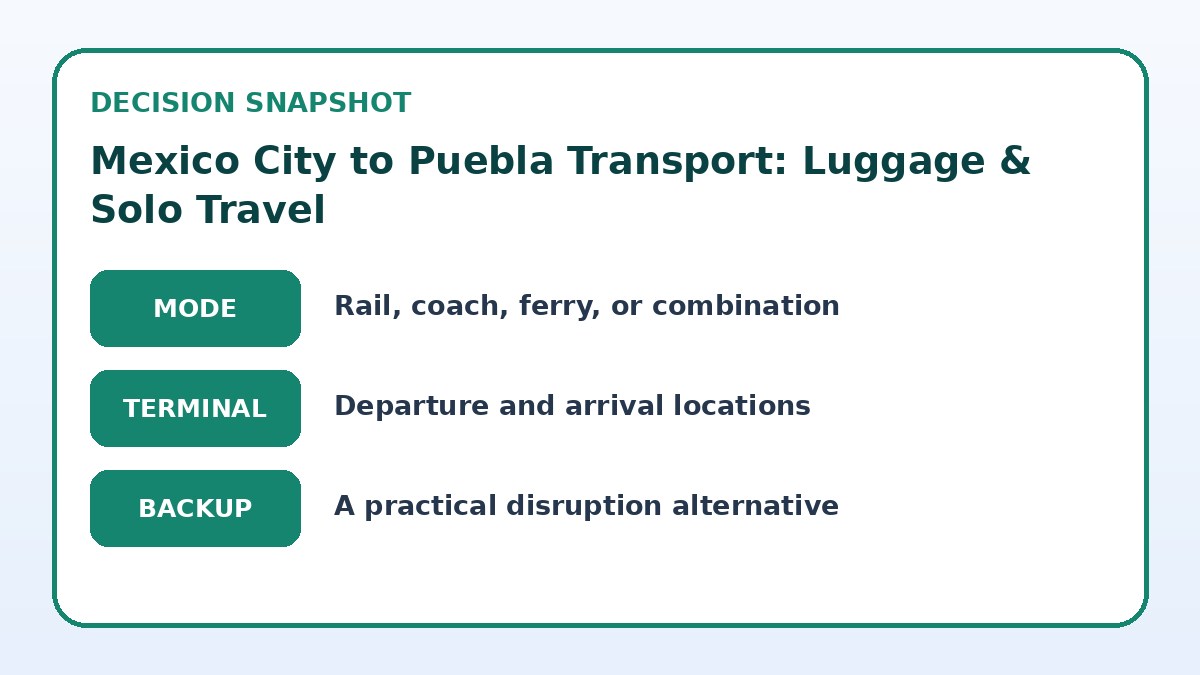
Choose the end-to-end journey plan
| Journey approach | Best for | Friction to check |
|---|---|---|
| Scheduled coach from terminal to terminal | Travelers who prefer predictable timetables and substantial checked luggage space | Requires an extra taxi or transfer to reach final door if your accommodation isn’t near the terminals |
| Private door-to-door transfer | Solo travelers prioritizing minimal handling of bags and direct pickup/drop-off | Less flexible on short notice and often requires advance confirmation of pickup logistics |
| Shared transfer or shuttle | Budget-conscious solos who want fewer handoffs than a coach but don’t need full private vehicle | May include intermediate stops and limited trunk space for oversized luggage |
| Hybrid: coach to a nearby hub plus short taxi | Travelers balancing lower cost with reduced luggage carrying by minimizing long walks | Introduces an extra handoff and requires coordination between coach arrival time and taxi pickup |
Check live intercity options
Look beyond the ride itself and compare terminals, transfers, luggage, and arrival fit.
Luggage and transfer friction: what to expect with each mode
Coaches typically have underfloor luggage bays and allow one or more checked bags handled by staff at loading time. That reduces the carrying burden during the ride, but you’ll need to lift your bag into the compartment or get help from staff at loading—use luggage with wheels and a durable handle. Keep essentials, documents, and valuables in a small daypack you bring on board. Inspect baggage policies on the operator’s booking page because allowed dimensions and the number of free pieces vary and may require pre-declaration for oversized items.
Private and shared transfers remove the terminal check-in step and usually place bags directly into the vehicle’s trunk, which is helpful when your itinerary demands fewer handoffs. The tradeoff: vehicle trunks have size limits and may not fit very large or numerous suitcases. If your luggage is bulky, request a larger vehicle or confirm that the provider can accommodate extras. For fragile items, ask whether the driver can secure them inside the cabin or provide padding. Always photograph items before handing them over, and get a written confirmation of what was accepted for transport.
Timing flexibility and scheduling decisions for solo travelers
If your schedule is fixed—arriving on a particular day or catching a night event—choose a coach with several daily departures so you can switch to another bus if one is delayed. Coaches are often scheduled and leave at set times, which helps when you want backup departures without rebooking a different service. For greater control over timing, private transfers can be arranged for specific pickup windows, though last-minute changes may carry fees or require new arrangements. Balance your tolerance for schedule risk with how much you value minimizing handling of luggage.
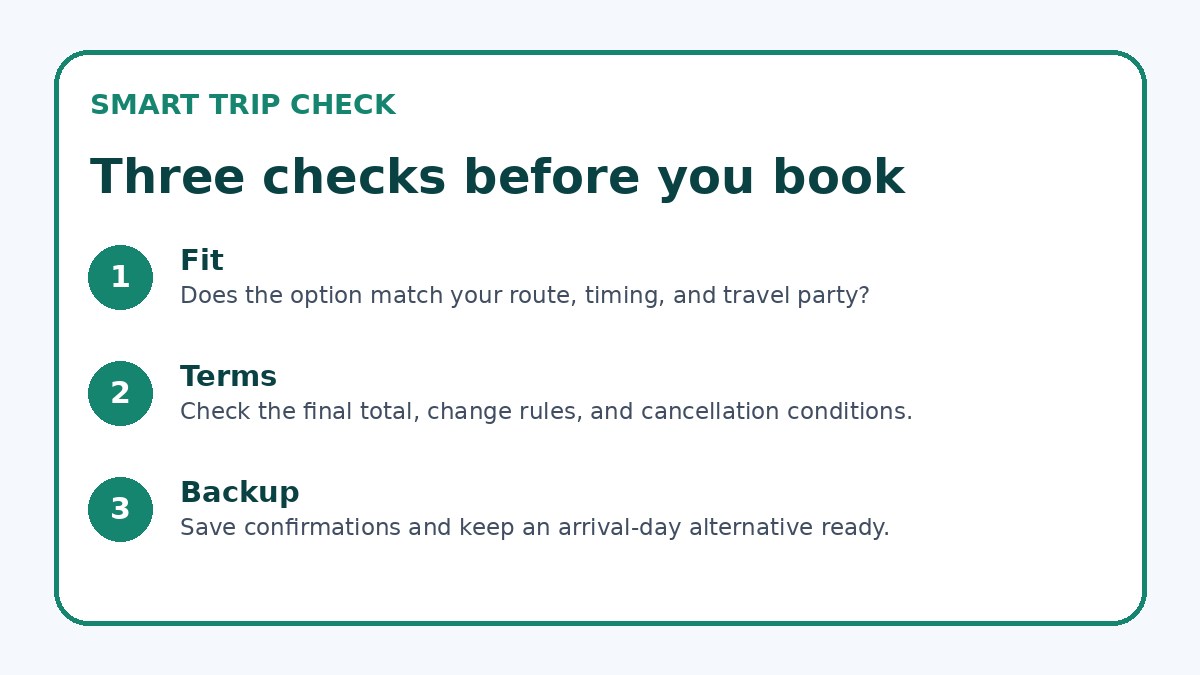
Consider journey length and traffic patterns between cities when selecting departure windows. Peak traffic times leaving Mexico City can extend road journeys, affecting both coaches and transfers; if your arrival appointment is time-sensitive, allow a generous margin. Book services that clearly state their cancellation and change policies, and verify those terms on the provider’s final booking page. If you need to remain flexible, opt for coaches with multiple daily runs or transfers with explicit change windows, and carry digital confirmations to expedite any rescheduling.
Compare the practical alternatives
Use the final page to confirm what is actually offered on your dates and save a workable fallback.
Intercity travel checklist
- Confirm terminal addresses, platform details, and the exact drop-off location on the provider’s final booking page before you leave your lodging.
- Measure and photograph each piece of luggage and check declared baggage size and weight limits on the operator’s terms.
- Reserve a transfer or bus seat that matches your pickup window and note change/cancellation rules and contact numbers.
- Plan your last-mile from the terminal: pre-book a taxi, note ride-hailing coverage in the area, and estimate taxi costs.
- Pack a compact daybag with essentials—documents, charger, medications, and a fresh shirt—in case luggage is delayed.
- Identify two disruption backups: an alternate departure option and a nearby hotel or luggage-storage location.
Disruption backup: concrete alternatives if things go wrong
Before you travel, identify realistic backups. If your bus is canceled or delayed, know the address of an alternative terminal and the approximate cost and availability of taxis or ride-hailing for your luggage. Have contact details for the operator’s customer service and a screenshot of your booking confirmation. For private transfers, insist on a telephone contact for the driver and a secondary meeting point—heavy traffic or closed streets can force drivers to adjust where they meet you. Keep a local SIM or portable Wi‑Fi so you can coordinate changes without relying on public Wi‑Fi.
Always budget a contingency for luggage storage if something goes seriously wrong: check short-term left luggage options at major terminals or book a hotel room for a few hours near the terminal until the next reliable departure. If you rely on app-based services as a backup, know the luggage limits and availability in your pickup zone. Finally, prepare a small kit with essentials—charger, medications, a change of clothes—so that an unexpected overnight or long delay won’t leave you stranded without necessities.
Rail & Intercity Transport questions travelers ask
Can I bring large suitcases on coach services between Mexico City and Puebla?
Most intercity coaches allow one or more large checked suitcases in underfloor bays, but exact size and piece limits vary by operator. Before you book, read the operator’s baggage policy on their official booking page to confirm permitted dimensions, number of free pieces, and fees for oversized items. If your bag exceeds standard limits, contact the provider to arrange space or consider a private transfer that can accommodate larger items. Always label luggage clearly and carry valuables and essential documents in a separate daypack you keep with you.
Is a private transfer worth it for a solo traveler with heavy luggage?
A private transfer is often worth the extra cost for a solo traveler when heavy or fragile luggage is involved because it reduces handling and usually delivers you closer to your door. It removes the need to navigate busy terminals and carry bags long distances. However, you should confirm pickup and drop-off instructions, vehicle trunk capacity, and what happens if the driver is delayed. Make these verifications on the provider’s booking page or in writing, and keep a phone contact for the driver to avoid confusion on arrival.
What should I verify on booking pages to avoid surprises with luggage?
On any booking page, check baggage allowances (pieces, dimensions, and weight), rules for oversized or fragile items, loading/unloading procedures, and whether porters are available. Confirm meeting-point details for transfers, driver contact numbers, and change or cancellation windows. Look for information about where the vehicle will drop you off in Puebla—some services stop at central terminals while others go to street addresses. If any detail is missing or unclear, contact customer service and get confirmations in writing or screenshots before you travel.
Final decision note
Choosing how to travel from Mexico City to Puebla with luggage as a solo traveler comes down to balancing terminal convenience, how much you want to haul, timetable flexibility, and contingency planning. Coaches are practical when you can reach terminals without struggle and want predictable schedules and generous luggage bays; private or shared transfers reduce handling and simplify door-to-door logistics but require clearer pickup arrangements. Before you commit, verify baggage rules, pickup details, and change policies on the provider’s final booking page and save contact numbers. With a backup plan and essentials in a carry-on, you’ll reduce stress and keep options open if schedules or traffic shift unexpectedly.
Continue planning
Check current options and final conditions
Use the provider page to confirm live availability, the final total, cancellation terms, and every condition that matters to your trip.
This evergreen planning guide was created with AI-assisted drafting and a structured quality review. It does not display live prices, schedules, availability, visa guidance, or provider rankings. Verify current details before booking. Some links are affiliate links; we may earn a commission at no additional cost to you.