
If you’re traveling to New York City alone, the practical first question is not which hotel looks nicest but how much the whole trip will actually cost when you arrive. Before you click Reserve, add airfare or train fares, the room rate with taxes and fees, how you’ll move around the city, food, entertainment, and a realistic contingency buffer. This lets you compare a “cheap” flight plus a pricey neighborhood taxi tab against a slightly more expensive flight that drops you near transit and saves you time and extra spending. The rest of this article walks through what to include, how to compare options, and the tradeoffs—so your final booking decision fits your budget, schedule, and comfort level without surprises.
See current options before you compare the details
Availability and final conditions change. Open Trip.com now or keep reading for the practical comparison.
Build an accurate baseline budget
Start with a single, simple spreadsheet or note where you list every expected cost line by line. Include round‑trip transportation to New York City from your departure city, then add the published nightly room rate multiplied by nights, and a realistic occupancy tax and resort or service fees if listed. Don’t forget extras that hotels charge at checkout—wifi, minibar, early check‑in, or late checkout fees. For solo travelers, single‑occupancy charges matter: some properties add per‑person fees or only publish double occupancy rates, so verify the final per‑person total on the provider’s booking page before committing.
Next build daily living costs: estimate conservative and liberal scenarios for food, local mobility, and small purchases. Add planned activity tickets and a buffer for unexpected items like medicine, extra laundry, or an occasional ride‑hail when transit isn’t convenient. If your plan includes theatre, a special dinner, or tours, note cancellation and change policies, and whether tickets are refundable or transferable. Having both a modest and a comfortable daily budget shows whether a cheaper lodging or saving on the flight actually helps or just shaves off convenience.
Compare travel routes and airport tradeoffs
New York City has multiple major airports and many rail options; each changes your door‑to‑door time and cost. When comparing air versus train, ask how many connections are required, what the likely taxi or transit cost is from arrival to your accommodation, and whether those arrivals are at peak times that add surge pricing. For flights, include baggage fees, seat selection charges, and any carry‑on restrictions that could push you to check luggage—those fees add quickly for a solo traveler. For train travel, check if a direct service or an onward local transfer is necessary and what that adds in time and expense.
When weighing airport options, consider the value of time and fatigue as cost elements. A cheaper flight arriving late at night might save money but force you to take a pricier private transfer or a long, unfamiliar subway ride; a slightly higher fare that lands during the day could save both money and stress. Verify ground transfer options on the carrier or airport transfer provider pages: shared shuttles, express rail links, public transit maps and schedules, and authorized taxi fares should all be confirmed on the provider’s booking or official airport pages before you finalize anything.
| Approach | Best for | Tradeoff to check |
|---|---|---|
| Cheapest upfront fare and cheapest hotel | Travelers prioritizing lowest initial outlay | Often higher local transport and convenience costs, plus less flexible change policies |
| Higher fare with better airport timing, cheaper central hotel | Those valuing time savings and easier arrival | Higher transport ticket cost but lower taxi or transfer expense and less fatigue |
| Mid‑range flight and centrally located hotel | Solo travelers balancing time, safety, and cost | Moderate nightly rate but lower daily commuting expenses and more flexibility |
| Flexible fares and refundable hotel rate | Travelers who may need to change plans | Higher upfront cost but lower risk of losing money if plans shift |
Ready to check the option that fits your plan?
Use your exact dates and traveler details so the provider page can show the current total and conditions.
Choose lodging based on total stay cost, not nightly rate
A low nightly rate in an outlying neighborhood may be attractive, but add commuting time, transit fares, and the cost of eating away from tourist hubs to the equation. For solo travelers, conveniences like late check‑in, safe neighborhood lighting, and proximity to 24‑hour transit lines can be worth a premium. If you’re using the room primarily to sleep and plan long days, a budget room near a major subway line might be ideal. If you expect downtime or remote work, factor in the quality of wifi, workspace, and cancellation flexibility—features that can save money if plans change.
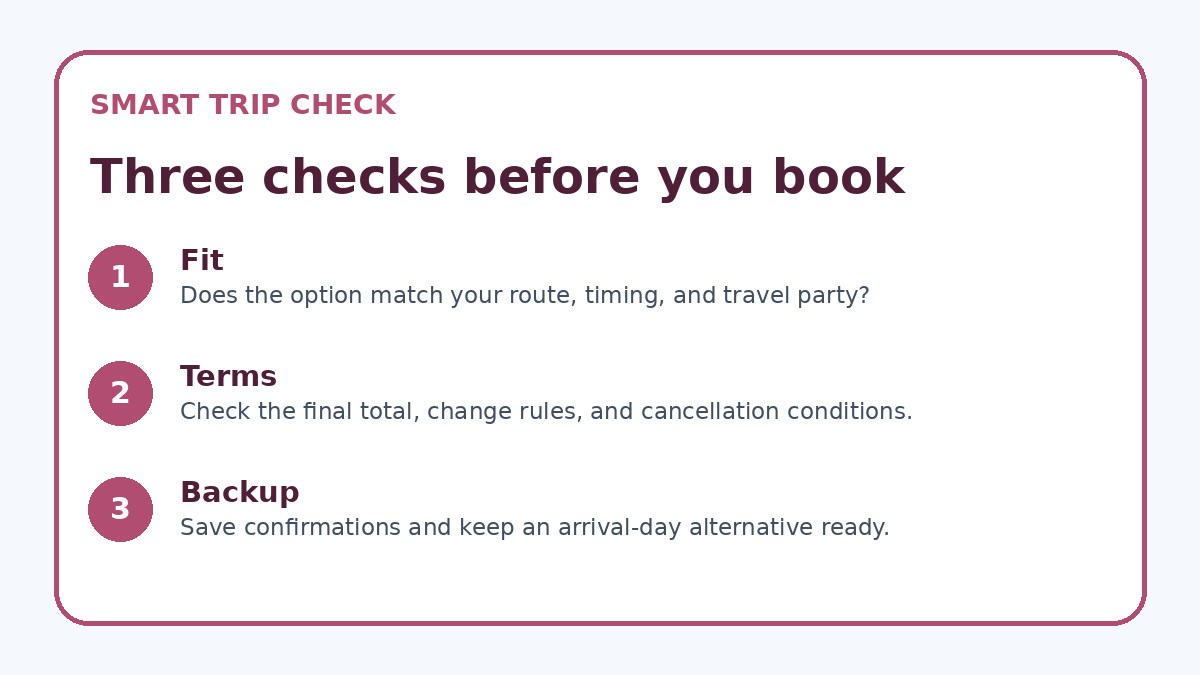
Always check the provider’s final booking page to confirm the final total, including all taxes and mandatory fees, smoking or cleaning surcharges, and deposit policies. If you book through a third‑party site, verify who handles changes or refunds and what contact information you’ll need if an issue arises. Trip.com can be a place to compare availability and provider totals, but confirm the final billed amount and policies on the hotel’s or airline’s official page before you finalize payment.
Before you book
- Open a single spreadsheet and list every expected cost line by line: travel, lodging with taxes, transfers, food, activities, and contingency.
- On the airline or rail booking page, verify baggage rules, seat fees, change/refund policies, and the final total before payment.
- Confirm the hotel’s total price on its booking page including occupancy taxes, resort or service fees, and any mandatory deposits.
- Compare door‑to‑door transit cost and time for each arrival airport or station and factor that into your route choice.
- Prebook timed‑entry tickets for key attractions when possible and check each ticket’s refund and transfer rules.
- Set aside a contingency equal to 10–20% of your planned spend for unexpected expenses or inexpensive upgrades.
Plan mobility and ticketing to avoid last‑minute premiums
Decide whether you’ll rely on public transit, rideshares, bike share, or a mix. A weekly or multi‑day transit pass can be cost‑effective if you plan many short trips; calculate the break‑even point by comparing per‑ride fares and the number of rides you expect. Rideshares are convenient late at night or when you’re carrying luggage, but surge pricing and tip expectations can significantly raise costs. Check whether attractions offer timed entry or advance booking discounts and whether skipping lines is worth the extra fee for the days you have limited time.
When booking attraction tickets, read the provider’s cancellation and rescheduling terms carefully: some discounted bundles are nonrefundable. For museums, performances, and observation decks, factor in the time saved with a prebooked slot—time in New York can translate into money if you value seeing more in one day. Also account for weather‑dependent activities and include a small contingency fund for rescheduling fees or a last‑minute indoor alternative.
Frequently asked questions
How do I compare airfare plus local transfers to find the real cheapest option?
Add the airline fare to realistic ground transfer costs to your accommodation and any time value lost. For each flight option, note arrival time, likely ground transport (express rail, shuttle, rideshare), and add baggage fees and seat charges. Estimate transfer cost using airport or transit provider pages and allow for potential surge pricing late at night. Comparing door‑to‑door travel time helps too: a slightly more expensive flight that lands during the day may save on transfers and reduce fatigue, making it effectively cheaper in convenience and incidental spending.
Should I prioritize a central Manhattan hotel or cheaper outer borough lodging?
It depends on your priorities. Central Manhattan reduces daily commuting time and transit costs and gives quick access to many attractions, which is valuable if you have a short trip. Outer boroughs or nearby neighborhoods often offer lower nightly rates but can add transit time and fares; factor in those costs plus the value of convenience and safety at night. If your plan includes extensive neighbourhood exploration, a cheaper outlying base can work; if you prefer seeing many sights in limited days, pay more for proximity to reduce transit time.
How much contingency should a solo traveler set aside when booking for NYC?
A sensible contingency is typically 10–20% of your planned trip spend, sized to your comfort with risk. This covers minor medical needs, extra transit or ride‑hail fares, last‑minute ticket changes, or a surprise event or restaurant reservation. If you’re visiting during busy periods or relying on multiple nonrefundable options, err toward the higher end of the range. Keep contingency accessible—on a credit card with available limit or a small cash buffer—so you can use it without disrupting your plans.
Final planning note
When booking solo travel to New York City, the decision should hinge on total trip cost and how much time, convenience, and flexibility are worth to you. Build a straightforward budget that includes tickets, final hotel totals, transfers, daily spending, and contingency. Compare options by door‑to‑door time and cost, not just headline fares or nightly rates, and double‑check cancellation and baggage rules on provider booking pages before you pay. Doing this short work up front prevents surprises, helps you choose the right tradeoffs for your travel style, and makes the trip feel like a planned investment rather than a series of last‑minute expenses.
Continue planning
Check current options and final conditions
Use the provider page to confirm live availability, the final total, cancellation terms, and every condition that matters to your trip.
This evergreen planning guide was created with AI-assisted drafting and a structured quality review. It does not display live prices, schedules, availability, visa guidance, or provider rankings. Verify current details before booking. Some links are affiliate links; we may earn a commission at no additional cost to you.