If you need to get from New York City to Washington, DC by ground and want to include one or more stops along the way, start by choosing your main travel mode—train, intercity bus, or car—and set two booking priorities: a firm travel date and a flexible segment plan. For many first-time visitors, a direct rail trip or a non‑driving coach ride is the simplest backbone; driving opens the most multi-city options but requires more time management. Immediately decide whether you prefer fewer transfers (comfort, simple logistics) or more stops (sightseeing, smaller towns). Gather where you want to stop, how long to stay, and whether you need luggage access during stopovers. Once you have those basics, compare transfer complexity, total door-to-door time, and luggage handling to make a final route plan.
See current options before you compare the details
Availability and final conditions change. Open Trip.com now or keep reading for the practical comparison.
Choose a backbone: train, bus, or car
Pick the primary transport mode that matches your priorities: comfort and fewer transfers point to train travel; tight budgets and flexible stops lean toward buses; sightseeing freedom and remote detours suggest driving. Trains generally operate between major hubs and make it straightforward to include city-center stopovers. Buses can serve more intermediate towns and sometimes depart from more neighborhood-friendly terminals. Driving allows off-grid exploration, including historic towns and roadside attractions that public transport doesn't reach, but you must plan for parking, local traffic patterns, and longer travel times.
When deciding, list three nonnegotiables—examples: quick arrival, visit a specific small town, or avoid night driving—and eliminate options that can’t meet them. If you favor comfort and predictability, prioritize rail and verify transfer points at stations. If cost and schedule availability are essential, consider buses but plan extra time for delays. If you want scenic detours, map realistic driving leg distances to avoid overreaching. This backbone choice shapes lodging locations, luggage strategy, and how many stops are practical for your trip length.
Designing multi-city stopovers
Start with a core route: NYC to DC, then pick up to two intermediate stops that lie on or near your chosen corridor to avoid backtracking. Think in terms of travel legs—how long you want to spend in transit versus at the stop. For train or bus backbones, choose towns or cities served by those services to reduce transfers. For driving, measure realistic driving hours per day and include buffer time for serendipitous sightseeing. Place overnight stays where evening activity, dining, or convenient lodging options exist so you’re not stuck in a location with nothing open.
Sequence stops by geography and interest: cluster near the main route for efficiency, then add a single detour if a must-see destination sits off the corridor. Calculate total door-to-door time, including local transit to stations or parking locations. If a stop involves leaving large luggage behind, confirm safe storage or choose accommodations that accept early check-in or luggage drop-off. Finally, keep a day with minimal moving to recover from transit fatigue and enjoy the place you traveled to visit.
| Approach | Best for | Tradeoff to check |
|---|---|---|
| Train backbone with short local detours | Travelers who want comfort, easy luggage access, and central-city stopovers | Fewer off-corridor options and fixed station locations can limit remote sightseeing |
| Intercity bus with flexible schedules | Budget-conscious travelers and those visiting smaller towns served by coaches | Less personal space, variable traffic delays, and limited onboard facilities |
| Self-drive road trip | Travelers prioritizing complete route control and remote detours | Must manage driving fatigue, parking, tolls, and potentially higher logistics overhead |
| Hybrid: train or bus plus a short rental | Visitors who want the comfort of rail or bus but need a car for a single detour | Adds rental pick-up/drop-off steps and extra cost compared with a single-mode trip |
Ready to check the option that fits your plan?
Use your exact dates and traveler details so the provider page can show the current total and conditions.
Luggage, comfort, and transfer logistics
Your luggage plan directly influences which transport mode makes sense. Trains often have racks and storage spaces and allow you to sit near your bags; buses have hold space but limited onboard access; cars give full access to all luggage but require secure storage at stops. If you expect frequent short stopovers, pack smaller and use a daypack for sightseeing. Confirm baggage policies, station locker availability, or hotel luggage holds before you travel. For multi-leg public transport journeys, plan how you’ll move your luggage between platforms, terminals, or drop-off points to avoid last-minute scrambling.
Consider personal comfort beyond bags: if you value legroom, onboard power, and the ability to walk, trains usually perform better. If Wi-Fi or power is sporadic on buses, prepare offline entertainment. For driving, include comfort breaks and driver swaps if several people are sharing the route. Always add contingency time between connections—enough to find the right platform, clear security if required, and handle unexpected delays without jeopardizing the next leg of your trip.
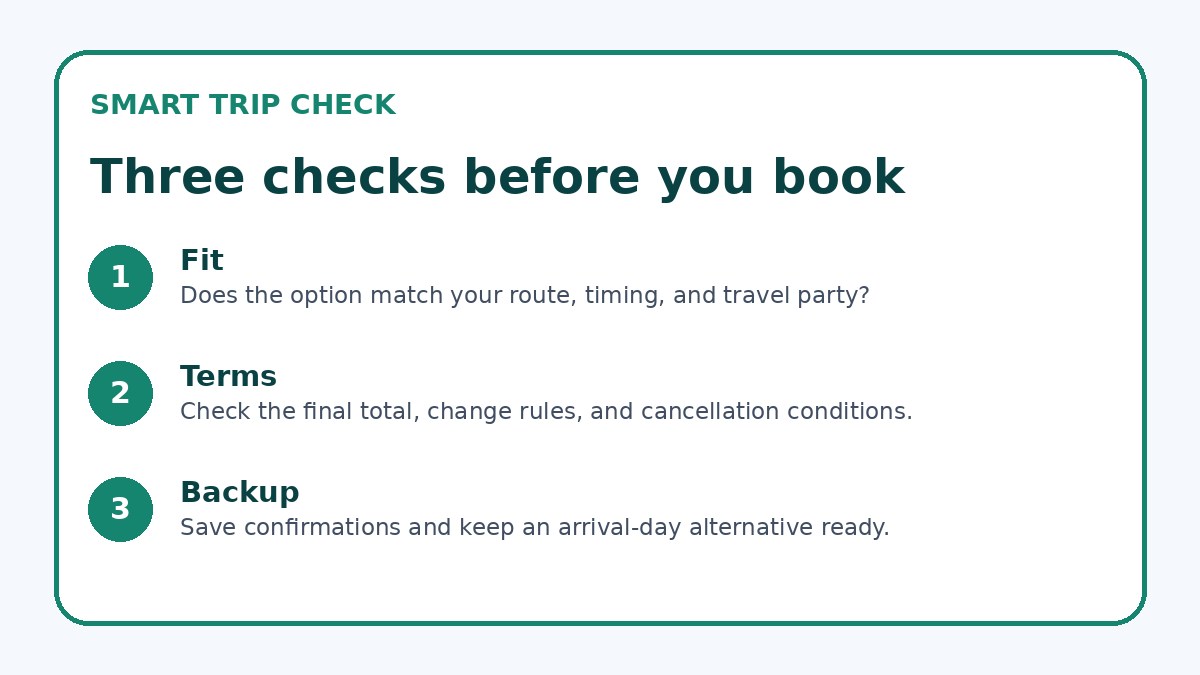
Before you book
- List your desired stopovers in order and map them against the main travel corridor to avoid backtracking.
- Decide on a primary mode (train, bus, car) and identify two alternate options in case of scheduling conflicts.
- Confirm station or terminal addresses and how you will get to them from your lodgings before booking.
- Check baggage allowances, storage options, and whether seat reservations are required for each leg.
- Allow at least 45–90 minutes between public-transport connections to cover walking and platform changes.
- Save booking confirmations, print directions to stations, and note local emergency contacts or rental return details.
Practical booking and what to verify before you buy
When you’re ready to book, compare total travel time and the door-to-door experience, not just the headline journey time. Check station or terminal locations relative to your accommodation in each city, the frequency of services on your chosen travel dates, and any extra fees for baggage or seat reservations. For driving, verify parking options and potential toll routes along your planned corridor. If booking multi-leg public transport, verify transfer times, terminal names, and whether you need separate tickets for each leg; some providers require seat reservations that are only shown at final booking.
Always confirm the provider’s final booking page for up-to-date schedule specifics, baggage rules, and cancellation terms because these details can change. If you use third-party aggregators to compare options—Trip.com or similar—use the provider’s site for final verification and to see any mandatory service notes. Print or save confirmations, note station addresses, and keep emergency contact details handy. A little verification before purchase avoids last-minute surprises at stations, rental centers, or roadside stops.
Frequently asked questions
How do I pick the best stopovers between New York City and Washington, DC?
Start by identifying what you want from a stop—history, small-town charm, or nature—and then choose places that lie close to the main corridor to minimize detours. Use a map to draw the direct route and mark towns within a reasonable driving radius or served by trains and buses. Prioritize two or three stops you can realistically enjoy without rushing: pick one with an evening scene for dining, one with daytime attractions, and a flexible slot for an unexpected find. Confirm transit links and lodging options at each stop before finalizing the plan.
Is it practical to rely on intercity buses for multiple stopovers?
Intercity buses can be very practical for multi-stop itineraries if the towns you want are served by scheduled coach lines; they often provide straightforward links between towns that trains skip. However, buses are subject to traffic and usually offer less onboard space, so plan extra time for transfers and expect longer door-to-door durations. For frequent short stops, evaluate whether bus station locations are central and whether baggage access is manageable. If a particular stop lacks convenient bus service, consider combining bus travel with a short rental car leg.
What are the top safety and comfort tips for a first-time land trip on this route?
Choose daytime travel where possible, especially for unfamiliar roads or bus transfers, and keep valuables in a small daypack while larger luggage stays locked or monitored. Bring layers for changing temperatures on trains and buses, plus a portable charger and snacks for longer legs. If driving, rotate drivers on long days and use rest stops regularly; plan parking in advance for overnight stays. Always verify the provider’s baggage rules and station addresses on the booking page, and share your itinerary with someone at home for added safety.
Final planning note
Planning a ground route from New York City to Washington, DC as a first-time visitor becomes manageable when you lock in a primary travel backbone, limit the number of stopovers, and verify the logistics that affect door-to-door time. Trains simplify logistics and comfort, buses expand options and flexibility, and driving puts you in full control at the cost of extra planning. Build your itinerary around realistic travel legs, confirm baggage and transfer requirements on provider pages, and add buffer time for connections. With those small steps—mapping stops, choosing the backbone, and double-checking booking details—you’ll create a travel plan that balances sightseeing with smooth movement between cities.
Continue planning
Check current options and final conditions
Use the provider page to confirm live availability, the final total, cancellation terms, and every condition that matters to your trip.
This evergreen planning guide was created with AI-assisted drafting and a structured quality review. It does not display live prices, schedules, availability, visa guidance, or provider rankings. Verify current details before booking. Some links are affiliate links; we may earn a commission at no additional cost to you.