
Practical answer up front: for a couple traveling from New York City to Washington, DC, pick a departure and arrival station that match your timings and ground-transfer tolerance, allow a buffer for terminal-to-terminal moves, and coordinate luggage and mobility needs before you leave. Prioritize stations with straightforward onward connections if you both prefer a single transfer, or choose more central terminals if you want an easier entry into neighborhoods at either end. If one partner handles baggage or a stroller, factor an extra 15–30 minutes for boarding and disembarking. Finally, verify schedules and platform or concourse transfer details on the operator’s booking page before you finalize tickets; those pages are the authoritative source for platform assignments, seat maps, and any last-minute routing changes.
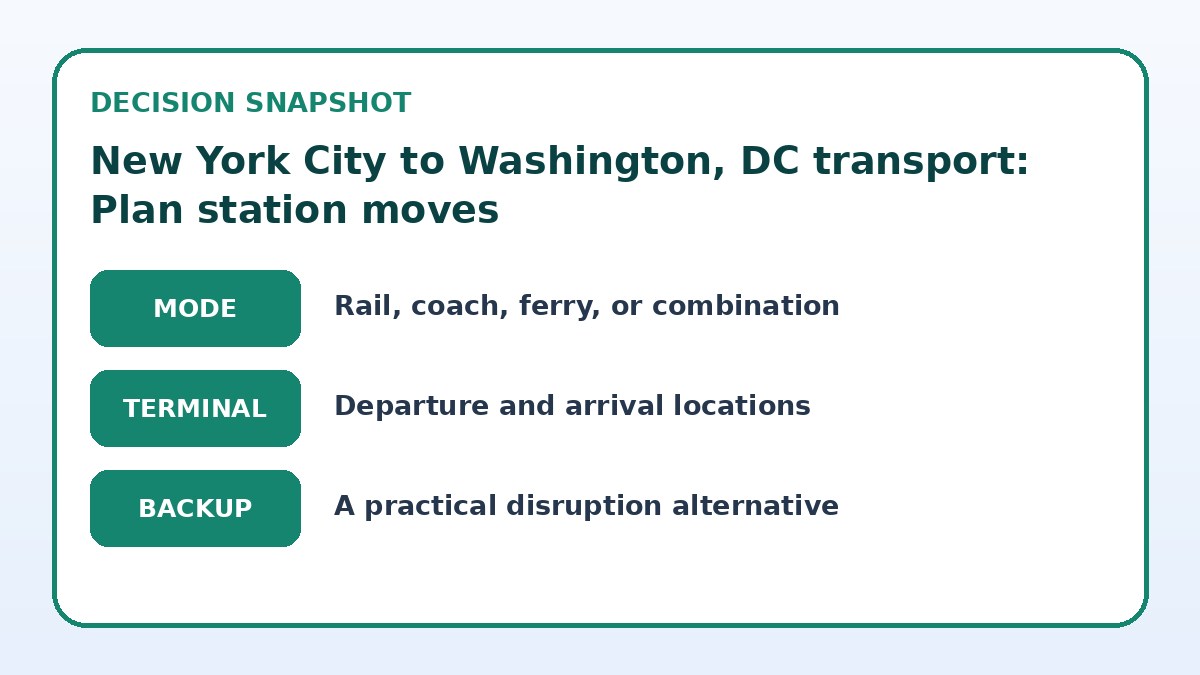
See current options before you compare the details
Availability and final conditions change. Open Trip.com now or keep reading for the practical comparison.
Choosing the best departure and arrival stations
When deciding where to leave New York City and arrive in Washington, DC, couples should weigh convenience versus neighborhood access. In New York, major rail departures typically leave from large stations that offer frequent services but vary by terminal layout. Choose a station near your lodging or one with direct transit options if you want to minimize pre-departure transfers. In Washington, consider arrival stations that place you closest to your planned neighborhood or onward transit line—this reduces taxi or ride-share time and helps both partners relax quickly after travel.
Think about the type of arrival experience you want together. If you enjoy a scenic stroll, a station slightly further from downtown may be fine; if you prefer a fast exit, select the arrival terminal with the most direct connection to your hotel or local transit. Also consider station amenities that matter to you as a couple—restrooms, waiting areas, luggage storage, and food options—so you’re prepared for any delay or quick refresh on arrival.
Planning terminal and platform transfers as a pair
Terminal and platform transfers can be the most stressful part of a paired trip, especially during peak travel times. Map the transfer route in advance: identify concourses, elevator and escalator locations, and likely choke points. Agree on roles—who watches tickets, who carries bags—so you can move efficiently through crowds. If one partner has mobility needs, pre-book assistance or set aside extra time. Carrying two small bags is easier than one large suitcase for moving between platforms; consider consolidating to one shared bag if that suits your travel style.
On travel day, use real-time station maps and alerts on the operator’s app to confirm platform changes; these details should be verified on the booking page before you leave. If platforms change, communicate quickly and keep physical meeting points in mind in case you get separated. For couples who prefer a relaxed pace, plan for a 25–45 minute buffer for terminal transfers; for experienced, agile travelers comfortable with stairs and crowds, a 10–20 minute buffer may be adequate depending on station size.
| Approach | Best for | Tradeoff to check |
|---|---|---|
| Depart from the most central station | Couples who value neighborhood access and short arrival walks | May involve more crowded terminals and longer pre-departure transfers |
| Choose the fastest scheduled connection | Couples on a tight schedule or with timed reservations | Might mean arriving at a less convenient station for onward travel |
| Pick a station with simpler terminal layout | Couples who prefer minimal walking and easy transfers | Could require additional local transit to reach your final destination |
| Prioritize private last-mile options (taxi/ride-share) | Couples who want privacy and door-to-door service | Subject to traffic and variable pickup points at busy terminals |
Ready to check the option that fits your plan?
Use your exact dates and traveler details so the provider page can show the current total and conditions.
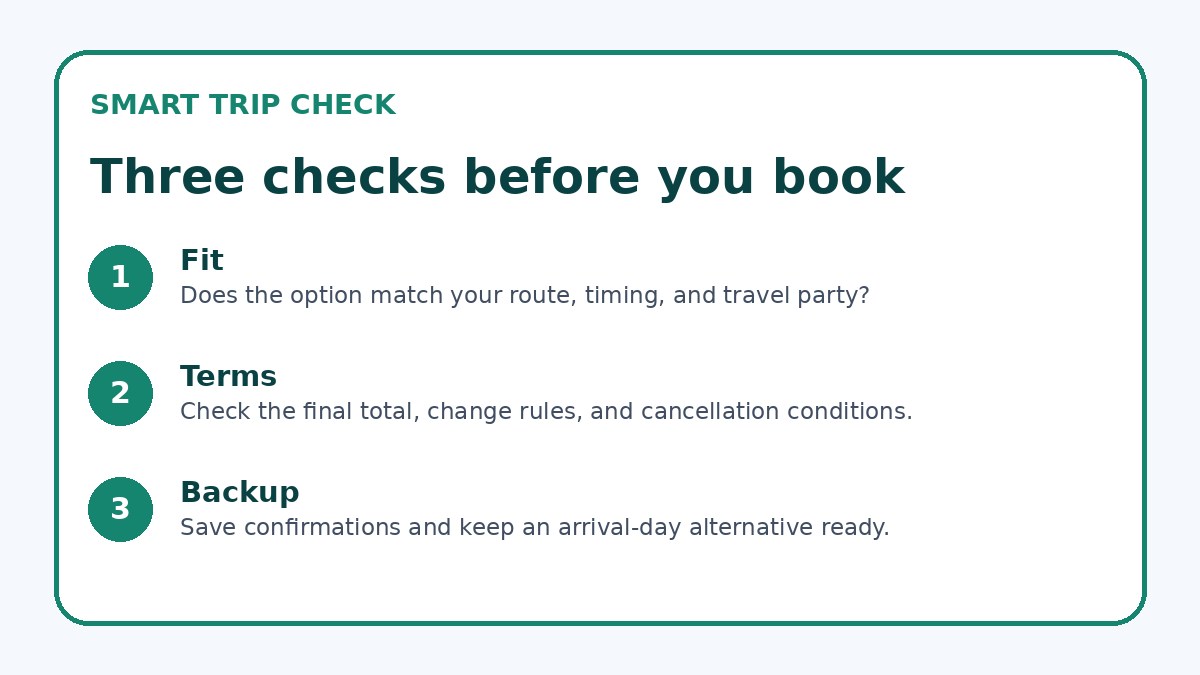
Coordinating luggage, seats, and onboard comfort
Decide ahead how you’ll handle luggage—who lifts, who stores, and where items will be kept during the trip. If you have two smaller bags, keep them at your feet or overhead together so you can access essentials without unpacking in cramped spaces. If reservable seats are offered, book seats together and check the coach layout on the provider’s booking page to confirm seat numbers and whether a table or window preference matters. Bringing a small shared daypack with water, chargers, and a light sweater makes the trip more comfortable for both partners.
Onboard needs differ by couple: some want quiet and space, others prefer to talk and move between cars. If privacy matters, pick a pair of forward-facing seats or a section with fewer families and groups. For those who expect to work or read, verify onboard power availability and Wi-Fi details on the final booking page. If one partner needs to move around frequently, choose seats with easier aisle access to avoid disturbing your companion repeatedly.
Before you book
- Compare station locations on a map and choose departure and arrival stations closest to your lodging or planned activities.
- Verify platform, coach, and seat assignments on the provider’s final booking page before you leave for the station.
- Agree who will handle luggage and tickets, and pack a shared daypack with essentials for both travelers.
- Build a buffer of at least 20–30 minutes for terminal transfers and double that if either partner needs mobility assistance.
- Confirm last-mile pickup spots and agree on a meeting point in the station concourse in case you get separated.
- Check accessibility options, elevators, and escalators on station maps and request assistance in advance if needed.
Transit options and last-mile planning in both cities
Compare last-mile options before you book: metro, bus, taxi, ride-share, and walking routes all have tradeoffs for couples. Metro or light rail can be faster and cheaper but may involve stairs and crowding; taxis or ride-shares are door-to-door and more private but vary with traffic and pickup points. Decide whether you want the privacy of a single ride-share or prefer to split last-mile logistics—one partner can secure transport while the other collects luggage. Agreeing on a backup plan for adverse weather or delays reduces stress on arrival.
If you have tight connections, prioritize stations with direct transit links to your final destination. When staying near tourist areas in either city, check which station or terminal drops you closest to your hotel on the map; that small distance can be the difference between a quick walk together or an expensive cab. Always verify pickup and drop-off locations on the operator or ride-share app’s final page—those can change and will dictate where you meet if you separate briefly during transfers.
Frequently asked questions
How much time should couples allow for transfers between terminals or platforms?
Allowing time depends on station size and mobility. For compact stations, a 10–20 minute buffer is often sufficient for two coordinated travelers. In large hubs or if you need elevators, luggage assistance, or to move between separate buildings, plan 25–45 minutes. If you’re unfamiliar with the station, traveling with heavy bags, or during peak hours, add more time. Verify platform and concourse details on the operator’s booking page to refine your buffer on travel day.
Should couples split tasks like buying tickets and handling luggage?
Yes—splitting tasks reduces stress and speeds movement through stations. One partner can buy or display tickets while the other manages bags and finds seating or a restroom. For digital tickets, both should have a copy accessible on their phones. For larger luggage, consider one person handling the bag while the other keeps travel documents and checks platform announcements. Discuss roles before leaving so you both know who does what if plans change or delays occur.
What should couples check on the operator’s final booking page before departure?
On the final booking page verify platform or boarding gate information, coach and seat numbers, any required coach change, and accessibility or assistance options. Also check whether checked or carry-on luggage rules or cabin access notes apply to your tickets. Look for service alerts that affect platforms or terminals and any instructions for meeting points at arrival. If you plan to combine rail with ride-share pick-ups, confirm designated pickup locations shown on the operator or ride-share app.
Final planning note
Planning station and terminal transfers together makes a New York City to Washington, DC trip far smoother for couples. Choose stations that match your tolerance for transfers and neighborhood access, agree on luggage and ticket roles, and allow realistic buffer time for moving through busy concourses. Use the operator’s booking page to confirm platform, coach, and accessibility details before you head to the station. With a simple shared checklist and a clear last-mile plan, you’ll reduce stress and enjoy more of the journey together.
Continue planning
Check current options and final conditions
Use the provider page to confirm live availability, the final total, cancellation terms, and every condition that matters to your trip.
This evergreen planning guide was created with AI-assisted drafting and a structured quality review. It does not display live prices, schedules, availability, visa guidance, or provider rankings. Verify current details before booking. Some links are affiliate links; we may earn a commission at no additional cost to you.