If you’re traveling solo in Hong Kong the practical decision is simple: prioritize location when your itinerary packs short daytime hops and late-night convenience, and prioritize room comfort when you need rest, workspace, or longer recovery between activities. Both approaches work in Hong Kong’s compact, transit-rich environment, but they lead to different neighborhoods, price brackets, and daily rhythms. This guide helps you choose by matching typical solo travel priorities—sightseeing, nightlife, business, or relaxed exploration—to hotel tradeoffs. I’ll outline decision criteria, how to compare listings, what to verify before booking, and realistic compromises that preserve comfort without stranding you in transit. Use these points to pick a room you’ll actually enjoy returning to after a full Hong Kong day.
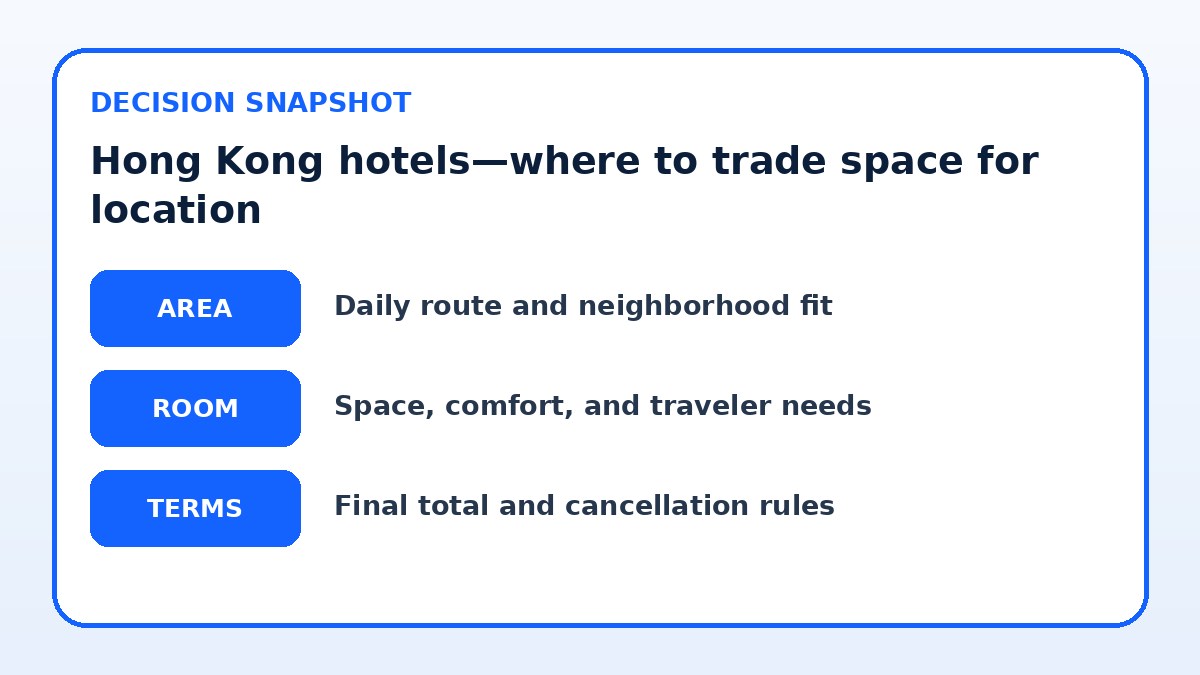
See current options before you compare the details
Availability and final conditions change. Open Trip.com now or keep reading for the practical comparison.
Decide by daily rhythm: what your day looks like
Start by writing a one-day plan that represents most of your trip: how many places do you visit, what time you return to the hotel, and whether you need a comfortable workspace or quiet to rest. If your days are packed with short museum hops, markets, and evening dining, staying near a major transit node (Central, Tsim Sha Tsui, Mong Kok, or Causeway Bay) shaves transit time and gives you more hours on the street. On the other hand, if your pace includes long naps, remote work blocks, or slow discovery, a room with more square footage and better soundproofing will improve your quality of stay even if it means a 15–25 minute commute to the main attractions.
Think beyond sightseeing: consider baggage needs, early departures, or late-night returns. Solo travelers who carry only a backpack can tolerate smaller rooms and walk more; those with a suitcase, camera gear, or business materials often need storage and a desk. Also factor in how much you value privacy and noise control—rooms above busy streets and near transport hubs may be convenient but can be noisy. Use your typical day to guide a clear priority: maximize outside time with a central base, or maximize in-room comfort when rest and work matter most.
Transit tradeoffs: saving time versus saving money
Hong Kong’s MTR network and dense ferry connections make many sights reachable quickly, so a hotel one or two stops from the center can offer a better room for the same money. Compare total door-to-door time—not just distance—by checking walking time to the nearest MTR station and the number of transfers required. If you value mornings and want to be at peak attractions early, being closer (even with smaller rooms) can beat a larger, cheaper room that requires extra commuting. Use transit mapping tools to simulate morning and evening journeys from potential hotels to your priority sites.
Cost tradeoffs also matter: central neighborhoods often command a premium for small rooms; peripheral neighborhoods may offer larger rooms but require taxis late at night or longer waits. For solo travelers on a modest budget, a hybrid approach—stay in a mid-MTR stop like Admiralty or Jordan—can reduce transit time while improving room comfort. Always check the provider’s final booking page for exact room size, bed type, and whether a refundable rate, breakfast, or late-check-in is included before finalizing a reservation.
| Approach | Best for | Tradeoff to check |
|---|---|---|
| Central hub, tiny room | Solo explorers prioritizing maximum street time and short transit | Less sleeping space, limited storage, more street noise |
| Periphery, larger room | Travelers needing rest, workspace, or longer stays | More commuting time to main attractions, potential taxi costs |
| Midline station, balanced room | Those who want a compromise between commute and comfort | Moderate price and moderate room size—neither extreme excels |
| Boutique/independent hotel | Solo travelers wanting personality and quieter streets | Variable amenities and inconsistent room sizes; verify details |
Ready to check the option that fits your plan?
Use your exact dates and traveler details so the provider page can show the current total and conditions.

Neighborhood choices: what each area gives you
Central and Sheung Wan concentrate business, nightlife, and quick ferries to outlying islands—ideal if you want to be in the thick of things and minimize intra-city travel. Causeway Bay and Tsim Sha Tsui give you shopping, restaurants, and views with immediate access to the MTR and Star Ferry, but rooms here tend to be compact. Kowloon neighborhoods like Mong Kok or Jordan offer intense market life and often slightly better value for solo travelers who can tolerate livelier streets and smaller footprints in exchange for lower nightly rates and more local dining options.
If you prioritize calmer nights and larger rooms, consider Wan Chai, Sai Ying Pun, or parts of Kowloon East where newer hotels sometimes offer roomier layouts for the price. For island escapes and quieter mornings, check hotels near the Peak or quieter parts of the Mid-Levels, but verify how many steps, lifts, or shuttles are required—what feels short on a map can be inconvenient with luggage. Again, confirm exact location and last-mile details on the booking page and factor in walking routes, station exits, and nearby convenience stores when comparing neighborhoods.
Before you book
- List your top three daily priorities and rank them (sightseeing, nightlife, rest, work) to guide location versus room choices.
- On each hotel page, check and note the exact room dimensions, bed type, and whether a desk or seating area is listed.
- Map walking time from the hotel to the nearest MTR exit and to two must-see sites during both day and evening.
- Read recent guest comments specifically about noise, elevator reliability, and Wi-Fi stability before committing.
- Verify check-in/check-out hours, luggage storage policies, and whether breakfast or city taxes are included on the final booking page.
- If you need accessibility or late arrival support, contact the hotel directly and confirm the room allocation and staff assistance.
Room features to compare before booking
When comfort matters, don’t rely solely on star ratings. Look for explicit room dimensions, bed size, and photos that show real proportions rather than staged angles. Check whether the room has a desk, adequate lighting, and reliable Wi-Fi if you plan to work; also pay attention to bathroom layout—some compact rooms place showers directly over the floor with limited counter space. If noise sensitivity is important, search descriptions for terms like “soundproof,” request a room away from the street, and read recent guest comments focused on noise and sleep quality.
Other practical details: verify whether breakfast is included, what the cancellation policy is, and whether the listed rate covers taxes and service charges. Confirm check-in and check-out times if you have late-night travel or early flights. If mobility or luggage is a factor, check elevator availability and mention accessibility needs to the property. Finally, before you book, open the hotel’s final booking page or call the property to verify the exact room type you selected, bedding arrangement, and whether any renovation work or amenities are temporarily unavailable.
Frequently asked questions
Should I always book the smallest central room to save time in Hong Kong?
Not necessarily. Small central rooms save transit time but can undermine rest and productivity if you need space to work, unpack, or sleep. Consider trip length and daily schedule: for short stays focused on sightseeing and nightlife, compact rooms near MTR hubs can be efficient. For longer stays, work-related trips, or if you value quiet evenings, a larger room slightly farther from the center will usually improve overall comfort and satisfaction. Always compare room photos, listed dimensions, and noise reports before booking.
How much of a commute is reasonable in Hong Kong when balancing comfort and cost?
A reasonable commute depends on your tolerance for transit time and the nature of your days. For solo travelers who expect long active days, a 10–20 minute MTR trip to major hubs is often acceptable and can unlock better rooms or lower rates. If you plan early starts or late returns, aim to be within one MTR transfer of your primary area to minimize door-to-door time. Use transit maps to simulate peak-hour travel times and decide whether the saved money for a larger room offsets daily commuting minutes.
What room features should solo travelers prioritize in Hong Kong hotels?
Prioritize features that affect daily comfort: bed size and firmness for sleep quality, a desk or flat surface and reliable Wi-Fi for work, and sufficient luggage space for easy access to belongings. Check bathroom layout and ventilation if hygiene comfort matters, and verify window type if natural light or fresh air is important. For safety and convenience, confirm 24-hour front desk service, secure key access, and proximity to a well-lit street or MTR station, especially if you arrive late or travel solo at night.
Final planning note
Balancing location and room comfort in Hong Kong is a personal tradeoff: choose central and compact if you want to maximize time exploring and minimize intra-city travel, or opt for a larger, quieter room a little farther out when rest and workspace matter. Use the decision criteria in this guide—daily rhythm, transit impact, neighborhood character, and concrete room features—to compare listings objectively. Before you commit, verify room dimensions, bedding, check-in policies, and any temporary hotel notices directly on the booking page or with the property. If you want a quick availability check from a booking marketplace, you can compare options on Trip.com, but always confirm details with the hotel itself.
Continue planning
Check current options and final conditions
Use the provider page to confirm live availability, the final total, cancellation terms, and every condition that matters to your trip.
This evergreen planning guide was created with AI-assisted drafting and a structured quality review. It does not display live prices, schedules, availability, visa guidance, or provider rankings. Verify current details before booking. Some links are affiliate links; we may earn a commission at no additional cost to you.