
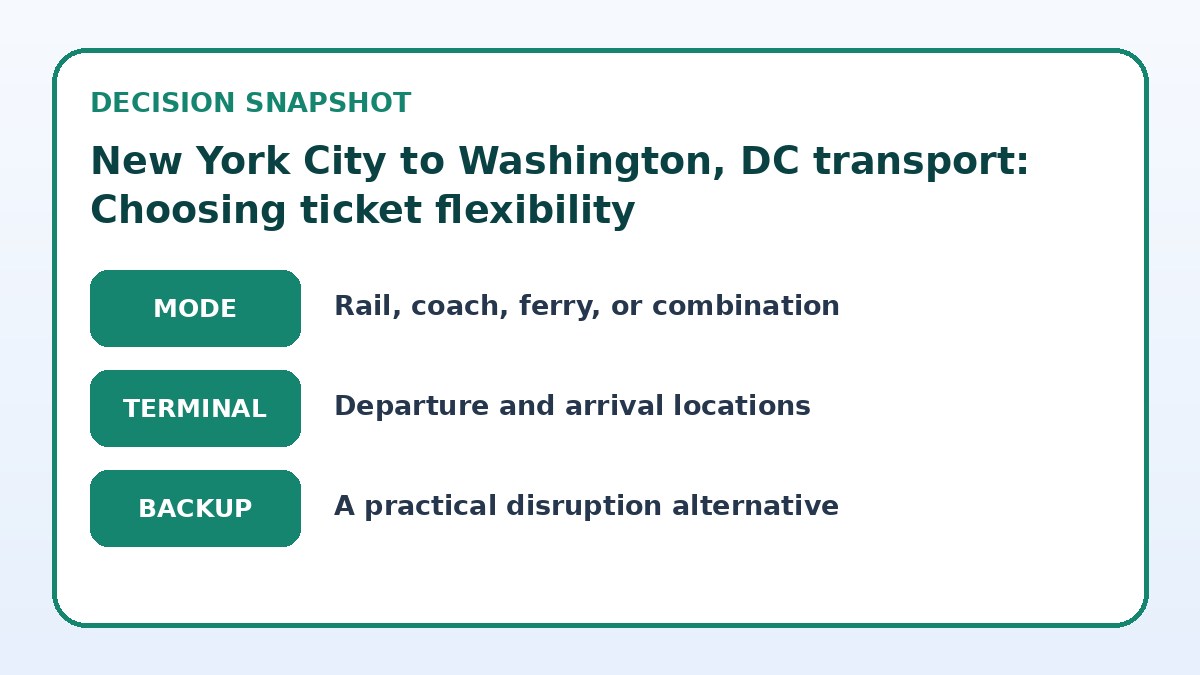
If your trip from New York City to Washington, DC is work-driven, the practical question isn’t only how to travel but which ticket rules will save you time and stress when plans change. For many business travelers the right choice balances the ability to change or cancel, simple boarding processes, and reasonable cost. This article gives a clear short answer up front, then walks through tradeoffs — change fees vs refundable fares, advance purchase restrictions, seating and baggage policies, and how to decide when a flexible ticket is worth the premium. I’ll explain the decision criteria you can use at booking, what to verify on the operator’s final booking page, and how to manage last-minute schedule shifts without guessing about current prices or schedules.
Quick practical answer: when to buy flexible versus restricted
If your schedule could change within days of travel — a meeting postponed, a client call running late, or an overnight emergency — choose a fare that allows free or low-cost same-day changes, or a fully refundable ticket. The convenience of being able to change trains or get an immediate refund without customer-service delays is the main reason business travelers pay a premium. Conversely, if your travel dates are set and you’ve confirmed meetings months in advance, a restricted advance-purchase ticket often makes sense; you save money but accept stricter change and cancellation rules.
Also consider how you value time versus cash. Flexible fares reduce the administrative overhead of dealing with changes: fewer calls, faster online exchanges, and less time at ticket counters. If missing a meeting would cost more than the fare difference, flexibility is a rational business expense. If your company enforces low-cost travel policies, you may need to justify or seek pre-approval for flexible fares — keep receipts and document the change rules at booking to make that approval process smoother.
How to compare rules that matter at booking
Compare the concrete rules shown on the booking page: change fees, whether changes are allowed at all, refundability conditions, how refunds are issued (credit, original form of payment, voucher), and any time windows that limit changes. Don’t rely on marketing terms like “flexible” without reading details — some fares allow free date changes but charge for time changes or reissuing a ticket. For rail and other surface operators, check whether you can hop between scheduled departures on the same day and whether seat reservations come with the fare or cost extra.
Confirm whether the fare includes guarantees you need: reserved seat, business-class amenities, or baggage allowances. If a transfer or connection is possible on your route, find out whether the operator protects connecting itineraries in a single ticket or treats each leg separately. When a provider-specific fact could have operational impact — for example, whether a change is allowed at an agent desk only or online — verify that exact policy on the final booking page before you pay.
| Approach | Best for | Tradeoff to check |
|---|---|---|
| Fully refundable ticket | Unpredictable schedules and travel paid by the traveler who values time over fare savings. | Higher upfront cost but straightforward refunds and minimal administrative hassle. |
| Ticket with free same-day changes | Day trips or meetings that might shift within the same day. | Mid-range price; limited flexibility outside the same travel day. |
| Advance-purchase restricted fare | Fixed, planned itineraries where cost savings outweigh change risk. | Lowest price but stricter penalties or non-refundable conditions. |
| Semi-flexible fare (limited changes or credits) | Travelers wanting some protection without full refundability. | Lower penalty than strict fares but conditions and credit expiry can be restrictive. |
Tradeoffs: cost, convenience, and corporate policy
Flexible fares cost more, but they reduce uncertainty and administrative time. If your employer reimburses travel, a higher upfront fare that lets you change or cancel quickly can be cheaper in indirect costs: fewer staff hours, less risk of missed client revenue, and a simpler expense report. However, frequent travelers on predictable schedules often prefer low-cost fares with penalties, and they manage risk through internal travel approval workflows or travel-management company (TMC) support.
Corporate policy can tip the balance. Some companies mandate the lowest logical fare and require justification for flexibility; others allow a premium for time-sensitive work. Before booking, check your company rules and, when necessary, collect the booking-page screenshots that show change and refund terms. If your employer uses a TMC or centralized booking tool, compare their flexible options and check whether those tickets are refundable through corporate channels or require direct provider contact.
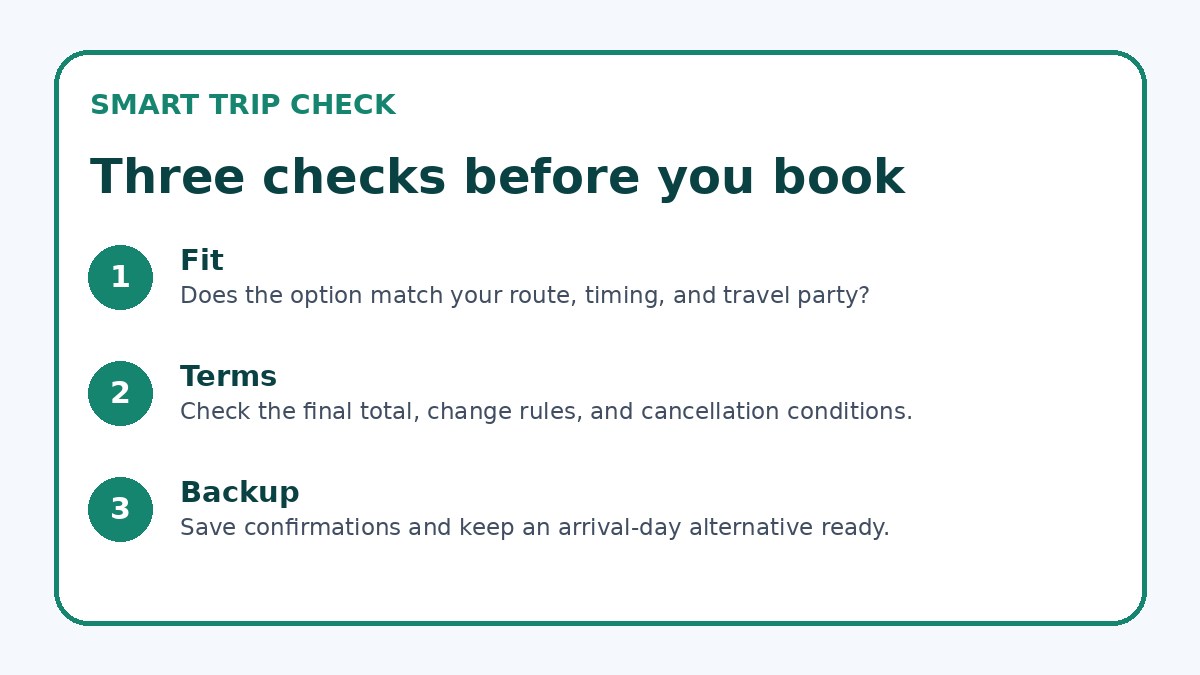
Before you book
- Prior to booking, note your meeting schedule and estimate the likelihood you’ll change dates or times to decide acceptable flexibility.
- On the booking page, read the full fare conditions: change windows, exact fees, refund method, and any blackout or transfer rules.
- Confirm whether seat reservations, lounge access, and luggage are included in the fare or require costly add-ons.
- If traveling on a single ticket with connections, verify the operator protects the entire itinerary or else book separate legs only with caution.
- Save and archive the booking confirmation and fare rules PDF; screenshot the final purchase page showing the rules and total paid.
- If your company requires pre-approval for flexible fares, attach the fare rules and reason for flexibility when requesting authorization.
Booking tactics and what to verify after purchase
When you’re ready to buy, open multiple provider pages and compare total landed cost and rules side-by-side. Check the final booking page for exact wording about change windows, fee amounts, refund processing time, and whether changes require phone support. If you want optional protection, look for refundable add-ons or commercial travel insurance that covers cancellations and schedule changes; confirm what triggers a refund and where refunds are issued. Trip.com can be used to check availability and conditions, but always verify policy details on the operator’s official booking page before relying on them.
After purchase, save the confirmation email and the full fare rules or ticket conditions PDF. Note the deadline for free changes, how to request a refund, and the expected timeframe for receiving it. Also verify the name on the ticket matches your ID and check for seat assignments or reservation codes you may need at boarding. If you anticipate last-minute shifts, confirm whether customer service offers a business-line or priority channel for urgent changes, and store that contact information in your calendar entry for the trip.
Frequently asked questions
Is it better to buy a refundable ticket for a same-day business meeting between NYC and DC?
If the meeting time or date is uncertain on the day of travel, a refundable ticket or one with free same-day changes is usually better. That option avoids last-minute rebooking fees and gives you the freedom to switch to a later or earlier departure if a meeting runs over. It also simplifies expense reporting because you’re less likely to need credit vouchers or to chase partial refunds. Compare the added fare against the cost of a missed meeting or the time lost handling changes to decide.
How do I evaluate change penalties versus refundable fares when booking through my company’s travel policy?
Start by comparing the direct cost difference between the refundable and restricted fares, then estimate likely change events: how often you’ve changed trips historically, the financial impact of missed meetings, and administrative time for rebooking. If corporate policy enforces the lowest fare, prepare a short business justification documenting why flexibility is needed and include the fare rules screenshot. If your employer uses a travel-management company, check whether they can book a refundable fare at negotiated terms or offer corporate credit protection.
What should I verify on the operator’s final booking page before paying?
Check the exact wording for change and cancellation rules, the fee amounts and whether they vary by when you change, and how refunds are issued (card refund, travel credit, or voucher). Look for limitations like same-day-only changes, blackout periods, or requirements to call customer service. Verify baggage and seat-reservation inclusions, and note any deadlines for free changes. If a connection is involved, confirm whether the ticket covers missed connections or if you’re responsible for separate bookings.
Final planning note
Choosing the right ticket flexibility for travel between New York City and Washington, DC comes down to assessing how often your schedule changes, what your employer will reimburse, and how much administrative time you want to avoid. Flexible fares reduce stress and provide straightforward remedies when plans shift, while advance-purchase fares can save money for predictable trips. At booking, compare concrete rules — change fees, refund methods, and what’s included — and save the fare conditions for later reference. When in doubt, weigh the business cost of a missed or disrupted meeting against the incremental fare premium for flexibility.
Continue planning
Check current options and final conditions
Use the provider page to confirm live availability, the final total, cancellation terms, and every condition that matters to your trip.
This evergreen planning guide was created with AI-assisted drafting and a structured quality review. It does not display live prices, schedules, availability, visa guidance, or provider rankings. Verify current details before booking. Some links are affiliate links; we may earn a commission at no additional cost to you.