The practical choice for couples traveling from New York City to Washington, DC comes down to what you value most: time, comfort, flexibility, or cost predictability. For most pairs, an intercity train balances comfort and city-center-to-city-center convenience; coaches can be cheaper and sometimes faster door-to-door if one partner prefers a direct hotel pickup; ferries are niche and usually require combining with land transport; and driving gives total control but adds parking and traffic stress. This article lays out how to compare these modes end-to-end—terminal fit, luggage friction, transfer complexity, and sensible backups when plans go sideways. Read this if you want to pick the right approach for a weekday business trip, a relaxed weekend escape, or anything in between, and get the checklist and questions to ask before you book.
Terminal fit: where you start and where you end
Terminal fit matters most for couples planning short trips or late arrivals. New York’s main rail and coach terminals are centrally located; arriving by train or coach often means a short taxi, rideshare, or subway ride to a hotel. Washington’s major terminals likewise put you close to central neighborhoods and transit lines. When comparing options, map the exact entrances and where luggage is handled — some coach stops are curbside while train stations have elevators, luggage storage, and clear ticket halls. Couples should decide whether ease of walking or a single short transfer is worth a slightly higher fare.
If one partner prefers minimal transfers, prioritize modes that start and finish closest to your actual door-to-door endpoints. Ferry piers rarely align perfectly with downtown hotels and almost always need a bus, taxi, or rideshare at one end. For driving, check likely drop-off or parking locations near your accommodations; long-term parking and loading zones change by neighborhood. Always plot your final short transfer—whether it’s a ten-minute walk, a rideshare, or a subway ride—before selecting a mode.
Choose the end-to-end journey plan
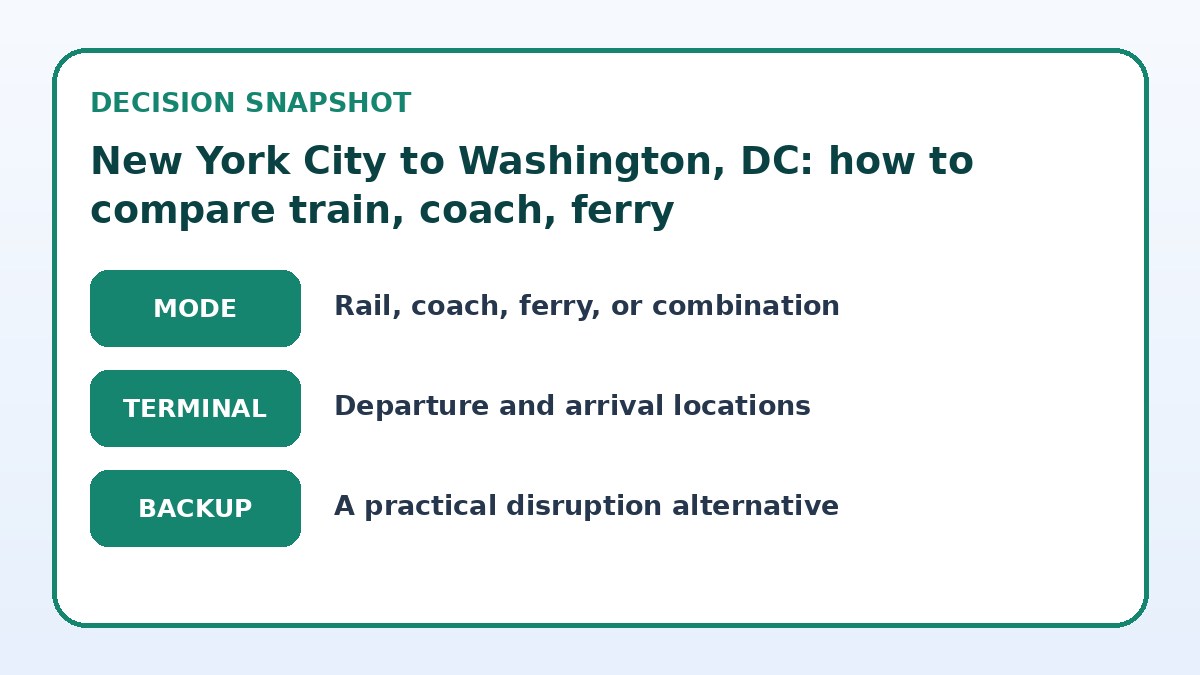
| Journey approach | Best for | Friction to check |
|---|---|---|
| Train-first (city center to city center) | Couples wanting comfort, space, and straightforward transfers to downtown hotels. | May cost more than coaches and depends on station access for your specific hotel. |
| Coach-only (cheaper curbside option) | Budget-conscious couples prioritizing a single-ticket journey with a fixed seat. | Curbside stops and stricter luggage rules increase last-mile friction and transfer stress. |
| Ferry-plus-land (scenic or hybrid route) | Couples looking for a leisurely, scenic leg combined with trains or coaches. | Requires careful timing and extra transfers; not ideal for tight schedules or heavy luggage. |
| Drive or rental (door-to-door control) | Couples with flexible schedules, multiple stops, or heavy luggage/equipment. | Adds parking, tolls, and urban driving stress; arrival times can be unpredictable in traffic. |
Check live intercity options
Look beyond the ride itself and compare terminals, transfers, luggage, and arrival fit.
Luggage and transfer friction for couples
Luggage rules and the number of handoffs can turn a smooth journey into a hassle for two people. Trains usually allow larger carry-ons without strict size limits, and stations have staffed platforms and sometimes luggage storage; that reduces strain when one person manages bags while the other handles directions. Coaches often limit carry-on counts or weigh checked bags, and curbside drops can mean juggling luggage across streets. Ferry boarding may require stairs or ramps and extra distance between terminal and vessel, adding friction if you have bulky or many bags.
When packing and sharing tasks, plan who handles which bag and where you’ll store larger items during stops. Consider compact luggage and cross-body daypacks to keep hands free. If you anticipate needing frequent restrooms or snack breaks, check whether the chosen service has onboard facilities and how long intermediate waits or transfers will be. For couples traveling with baby gear, bicycles, or sports equipment, confirm carrier policies on the provider’s booking page before you buy—these details change frequently and are decisive for door-to-door convenience.
Timing flexibility and how it affects your itinerary
Timing flexibility is about departure frequency, ticket change rules, and how delays ripple into your plans. Trains between the two cities often run many times per day, which helps if you need to shift plans; coaches can also have frequent departures but sometimes fewer afternoon/evening options. Driving or renting gives the most schedule control but removes predictability because traffic varies. Ferries are typically less frequent and more weather-dependent, so treat them as a planned scenic option rather than a flexible backbone for tight schedules.
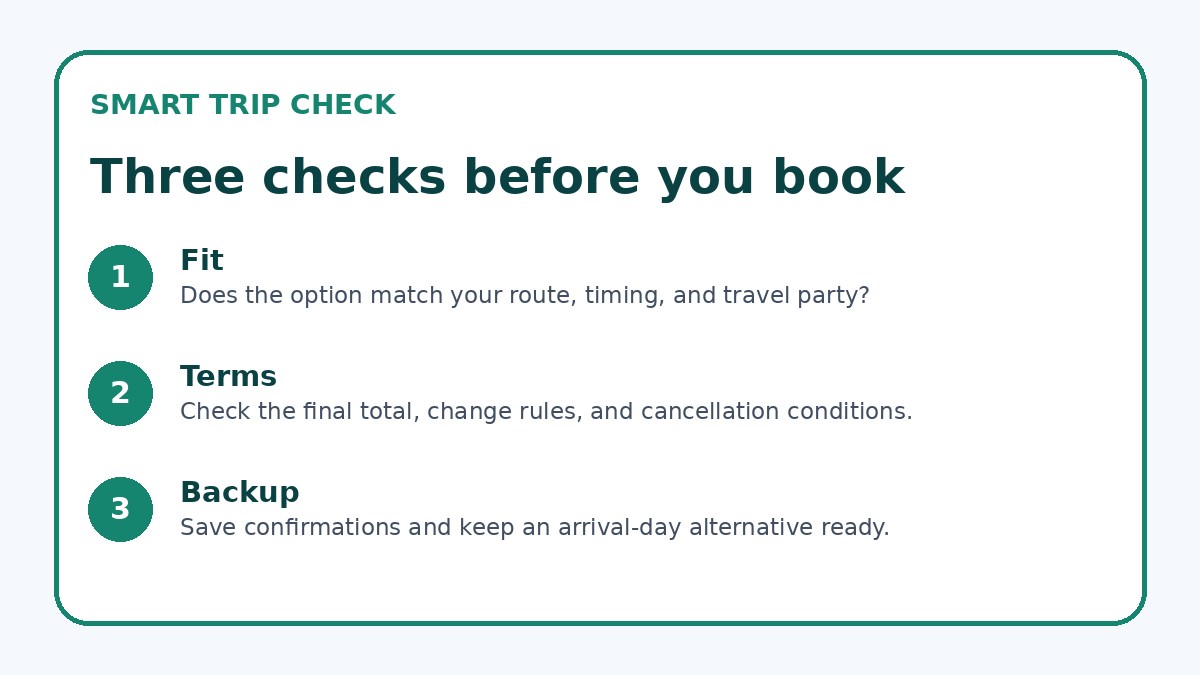
For couples coordinating meetings, dinners, or a show, factor in buffer time for unexpected hold-ups. Look up change and cancellation policies before booking—are open tickets allowed, can you move to a different service without penalty, or must you rebook? If you have fixed arrival or departure constraints, prefer modes with multiple departures and easy rebooking. When in doubt, choose a slightly earlier service and enjoy a relaxed arrival rather than a rushed dash between modes.
Compare the practical alternatives
Use the final page to confirm what is actually offered on your dates and save a workable fallback.
Intercity travel checklist
- Map exact pickup and drop-off points for each mode and measure walking or transfer times to your accommodation.
- Verify luggage allowances and any extra fees on the provider’s official booking page before purchasing tickets.
- Check change and cancellation policies so you know your options if plans shift or services are delayed.
- Plan for at least one realistic alternate departure and save its booking reference or phone contact.
- Pack a compact daybag with essentials to avoid unloading large suitcases during a mid-route transfer.
- If combining modes, allow at least 45–90 minutes between connections to cover delays and boarding procedures.
Disruption backups and sensible backup plans
Have a clear backup plan before you leave: identify the nearest alternative terminal, the number for local taxi or rideshare services, and a secondary train or coach departure that fits your schedule. If one partner is dealing with unexpected mobility or health needs, prioritize modes that provide seat assignments and staff assistance. Keep digital copies of reservations and the provider’s real-time alerts turned on. For trains and coaches, check whether refunds or rebookings are offered when services are canceled; for driving, know local traffic apps to reroute around incidents.
Couples should also think about accommodation flexibility: if a delay forces an overnight stay, have a shortlist of nearby hotels and a plan for transferring luggage. When using hybrid routes—say, ferry plus coach—confirm the minimum connection times you’re willing to accept and whether the second leg will wait for missed connections. Finally, if you need to change plans quickly, Trip.com or a similar comparison site can show current availability, but always verify details on the provider’s official booking page before assuming rebooking options.
Rail & Intercity Transport questions travelers ask
Is the train usually the fastest way between New York City and Washington for couples?
Speed depends on departure point, time of day, and terminal locations. Trains commonly offer competitive door-to-door times because they travel city-center to city-center without traffic, but coaches can sometimes be faster door-to-door if they provide a convenient curbside drop near your accommodation or a direct hotel transfer. Driving may match or beat transit during off-peak hours but is less predictable. When you need a reliable arrival time for an evening reservation, prioritize services with frequent departures and clear rebooking policies.
How should couples handle luggage and equipment like strollers or bikes?
Check each carrier’s current policy before booking: trains often allow larger carry-ons and may have bike spaces with advance notice; coaches usually limit checked items and have stricter handling rules; ferries and local shuttles may place restrictions or require reservations for bulky items. Consider traveling with one rolling suitcase each plus a compact daypack to minimize transfers. If you need to transport special gear, confirm availability, fees, and boarding procedures on the provider’s official page so there are no surprises at departure.
What’s a practical disruption backup for a couple on a tight itinerary?
Identify the next two departures on your chosen route and keep their booking or phone info handy; know where the nearest alternative terminal or pickup point is, and save a local taxi or rideshare contact. If an important appointment is at a fixed time, book an earlier service or allow an overnight contingency. For combined routes, make sure the second leg has a flexible rebooking policy. Keep digital and paper copies of reservations, and enable real-time alerts from the provider to get updates fast—then confirm options on the provider’s official site before making a change.
Final decision note
For couples deciding how to travel between New York City and Washington, DC, the right choice depends on priorities: prioritize trains for comfort and center-to-center convenience, coaches for a budget-minded single-ticket trip, ferries for a scenic addition when time allows, and driving for complete itinerary control. Assess the entire door-to-door experience—terminal locations, luggage handling, transfer counts, and rebooking options—rather than focusing only on ride time. Use the checklist and questions here to confirm specifics on provider booking pages, and keep at least one backup plan ready so a delay or cancellation doesn’t derail your plans.
Continue planning
Check current options and final conditions
Use the provider page to confirm live availability, the final total, cancellation terms, and every condition that matters to your trip.
This evergreen planning guide was created with AI-assisted drafting and a structured quality review. It does not display live prices, schedules, availability, visa guidance, or provider rankings. Verify current details before booking. Some links are affiliate links; we may earn a commission at no additional cost to you.