Short answer: there’s no single right choice—families should compare the same dates, traveler counts, and inclusions before deciding whether a package deal or separate bookings saves time or money. Start by listing the exact flights, room configuration, ground transfers, attraction passes, and cancellation rules you want. Packages often bundle convenience—one checkout, combined itinerary, and a single policy to manage. Booking separately can let you match seat and room types to each traveler and hunt targeted promotions. For families, the decisive factors are who needs flexibility, how picky you are about seat and bed arrangements, and whether you value time saved on booking over potential customization.
Test package value fairly
| Booking approach | Best for | Tradeoff to check |
|---|---|---|
| All-in-one package (flight + hotel + transfers) | Families wanting one-stop booking and an easy single itinerary. | Less ability to customize seats, rooms, or handle individual cancellations cheaply. |
| Flight + hotel bundled, activities separate | Families who want convenience for major bookings but flexibility for activities. | May still inherit bundled change fees while retaining flexibility on tours and attractions. |
| Book flights, hotel, and activities separately | Families needing tailored seating, room types, and activity timing. | More time-consuming to book and manage multiple policies and confirmations. |
| Hotel + attraction pass bundle, flights separate | Families prioritizing on-ground convenience and curated attraction access. | Flight disruptions are handled separately and could complicate bundled ground services. |
Check current package and separate options
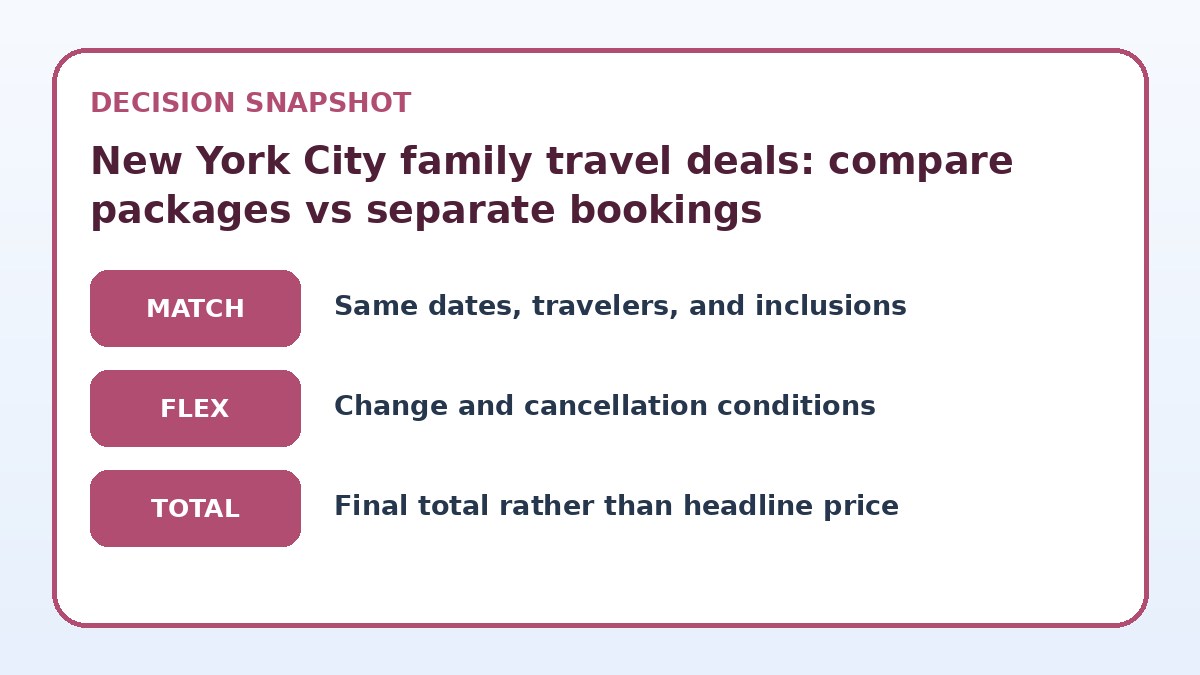
Use identical dates, travelers, room needs, baggage, and flexibility so the comparison stays meaningful.
Inclusions: what should be on your comparison checklist
When evaluating package offers versus separate bookings, treat inclusions as the baseline of any meaningful comparison. Don’t accept general phrases like “airfare and hotel included” without drilling into specifics: which fare class, how many checked bags, whether meals or transfers are included, and the hotel room type and bedding configuration. Families should confirm child rates, rollaway or crib availability, and whether attraction passes cover kids’ admissions or just adults. Write down every line item you care about and match them across package and a la carte quotes—only then will you be comparing equivalent products.
Pay special attention to the fine print for items that matter most to family comfort and budget. Airport transfers can be shared shuttles with wait times or private cars; that difference affects arrival times and patience levels with kids. Meal credits might exclude children’s menus or specific restaurants. Attraction vouchers sometimes require advance reservations and have blackout dates. For each potential package or separate booking, note redemption windows, reservation requirements, and any age-based pricing that could change your total cost.
Flexibility: who needs it and how to measure it
Families often value flexibility for unpredictable schedules, changing traveler numbers, or illness. Compare cancellation and change policies side-by-side using the same cancellation date and scenario for both package and separate quotes. A package may offer a single cancellation fee that applies to the entire trip; that’s simpler but could be costlier if only one person changes plans. With separate bookings, you might only lose a flight or a hotel night rather than the whole package—assuming those suppliers’ terms are friendlier. Create realistic ‘what if’ scenarios for each booking approach and estimate potential penalties.
Also evaluate day-of travel flexibility: can you change seat assignments, upgrade a room, or reschedule an attraction easily? Check whether airline fees for seat selection or baggage are included in the package price—these add up for families. Confirm the hotel’s policy on early check-in, late check-out, and extra guest fees. For activities, see if vouchers can be rebooked or refunded. Finally, verify whether any changes must be processed through the package seller or directly with each supplier; third-party mediation can add time and uncertainty.
Look past the headline total
Compare inclusions and change conditions before deciding whether a package is genuinely useful for this trip.
Deal comparison checklist
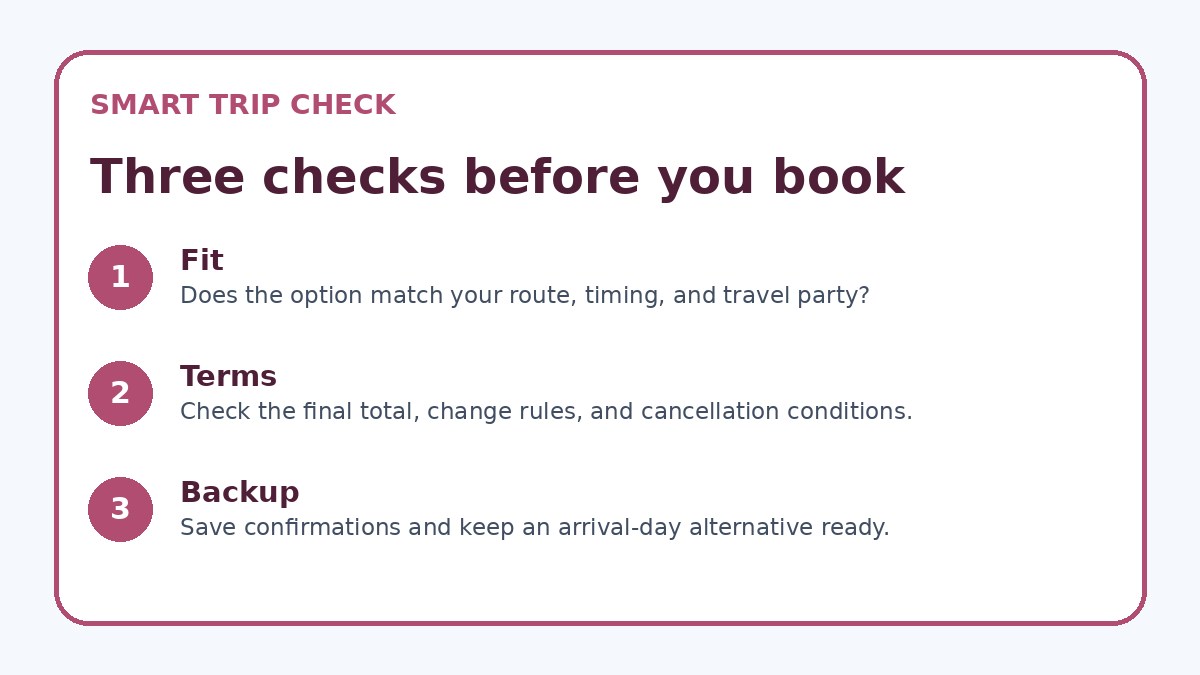
- List exact travel dates, total travelers and ages, room bedding needs, and desired flight times before you compare quotes.
- Match inclusions line-by-line: fare class, baggage allowance, airport transfers, meals, attraction vouchers, and room type.
- Simulate cancellation: note the penalty if you cancel one traveler, one component, or the entire booking for both package and separate options.
- Confirm seat selection fees, crib or rollaway availability, and child pricing directly on the airline and hotel booking pages.
- Ask how changes and refunds are processed—through the package seller or directly with each supplier—and note contact methods.
- Save PDF copies of all final terms and confirmations and record supplier phone numbers for day-of travel support.
Traveler-specific value: tailoring bookings for family needs
Value isn’t only dollars; it’s how well the trip fits your family’s age mix and needs. Parents with infants may prioritize crib availability and quiet rooms, while teens might care about Wi-Fi quality and proximity to specific attractions. When comparing package deals to separate bookings, itemize needs per traveler—seat pitch and adjacency on flights, accessible room types, meal plans, and stroller storage. Packages that claim ‘family-friendly’ can vary widely in what they include; verify the exact services and whether those services are appropriate for your children’s ages.
For families who need special accommodations—medical devices, dietary restrictions, or mobility assistance—booking separately can let you communicate directly with each supplier to confirm arrangements. Conversely, if you prefer one point of contact for all needs, a package with a clear on-trip support line may provide peace of mind. Weigh how much individualized attention your family requires against the administrative convenience of a bundled itinerary.
Final terms: the clauses you must check before you pay
Before committing, read the final booking terms carefully. For packages check whether the supplier issues a single contract that overrides the underlying airline or hotel terms; if so, note where to find baggage allowances, seating policies, and hotel check-in rules. For separate bookings, verify each supplier’s cancellation windows, refund processing times, and whether you need to rebook through a portal or by phone. Look for blackout dates, minimum-stay rules, and any conditional credits that might appear as vouchers rather than cash refunds.
Double-check how changes are handled and who processes refunds. If a flight is delayed and you booked a package, determine whether the package seller will rebook connecting services or if you must coordinate with each supplier independently. Confirm the documentation you’ll receive—one combined itinerary versus separate confirmations—and where to find emergency contact numbers. Finally, if you’re comparing offers on third-party sites, open the airline and hotel’s official booking pages as a final verification step; Trip.com can be used to compare current availability but verify terms on the provider’s own site before paying.
Travel Deals & Booking Strategy questions travelers ask
Are package deals usually better value for families visiting New York City?
Packages can be better value when they include services your family will definitely use—like private transfers, prepaid attraction passes, or meals—because those items can be harder to coordinate separately. However, ‘better value’ depends on matching identical inclusions, dates, and traveler counts. Always compare a package to a separate booking that lists the same flight fare class, baggage, room type, and attraction access. If any key family need—such as specific seat assignments or special hotel room configurations—is missing from the package, separately booking those items may offer more true value despite the extra time required.
What are the main pitfalls families should watch for when booking packages?
Common pitfalls include assuming child policies, baggage allowances, or seat selections are included when they are not; overlooking blackout dates for attractions; and not realizing that the package seller’s cancellation policy may differ from the underlying carriers or hotels. Families also sometimes miss age-based pricing that changes total costs once children reach certain ages. To avoid surprises, read the final terms, verify critical details on the airline and hotel pages, and test a worst-case cancellation scenario to see the financial exposure before purchasing.
How can we test whether a package or separate bookings will be easier to manage on the trip?
Run two parallel comparisons for your exact itinerary: one quote that matches a package’s inclusions and one built from separate supplier prices with the same services. Then simulate common disruptions—flight delay, one traveler cancelling, or a hotel needing to change rooms—and note how each booking handles those events, including who you would contact. Consider whether having a single support line from a package seller outweighs the flexibility of direct supplier relationships. The option that reduces stress under realistic scenarios is often the better choice for families.
Final decision note
Families planning New York City travel deals should start by defining must-have inclusions, then compare identical services across package and separate booking options. Packages can save time and centralize support, which benefits families who prefer one point of contact and simpler paperwork. Separate bookings give more control: you can pick specific seats, room configurations, and age-appropriate tickets, and you might limit losses to a single component if plans change. The right choice depends on how much customization you need, how tolerant you are of shared policies, and how much time you want to spend managing bookings. Verify final terms on supplier pages and run realistic change scenarios before you commit.
Continue planning
Check current options and final conditions
Use the provider page to confirm live availability, the final total, cancellation terms, and every condition that matters to your trip.
This evergreen planning guide was created with AI-assisted drafting and a structured quality review. It does not display live prices, schedules, availability, visa guidance, or provider rankings. Verify current details before booking. Some links are affiliate links; we may earn a commission at no additional cost to you.