If you need to book New York City to Toronto flights for business, start with three immediate checks: schedule fit for your meeting windows, passport and entry documentation alignment, and how airport transfers affect your total door-to-door time. Make these checks before you compare fares—an inexpensive overnight arrival or a long taxi from an inconvenient airport can eat time and productivity. After you confirm those basics, weigh direct versus connecting options, loyalty and change policies, and corporate travel approvals. Use this article as a pre-booking checklist so you can quickly eliminate unsuitable itineraries and focus on options that actually work with your calendar and company rules.
See current options before you compare the details
Availability and final conditions change. Open Trip.com now or keep reading for the practical comparison.
Decide which New York airport fits your schedule
New York City has multiple commercial airports; pick the one that minimizes risk for your specific meeting times. Think beyond flight time: which airport gives you the shortest commute to your office or hotel before departure, and which has more frequent flights to Toronto during your preferred time window? Factor in morning rush-hour traffic or evening transit delays that could make a seemingly early flight impractical. For tight business schedules, more frequent departures often beat a slightly cheaper one-off flight because they reduce the chance of missing a meeting.
When comparing itineraries, verify the final booking page for exact airport codes and terminals and any recommended arrival times from the carrier. If you rely on public transit, check current schedules for trains or shuttles to that airport; if you use ride-hailing or a car service, estimate variable travel time and add buffer. Also consider where loyalty benefits or airport lounges are available—access can be valuable during delays—but confirm lounge access rules on the airline’s booking page before assuming it’s included.
Compare direct versus connecting itineraries by total travel time
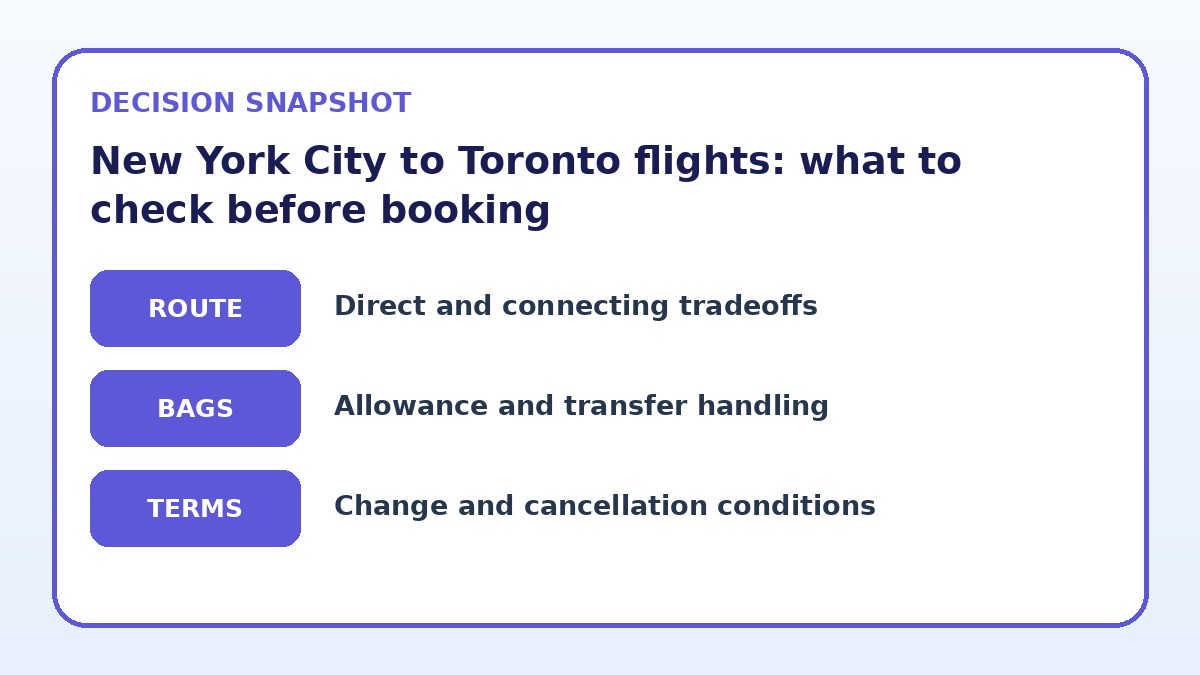
A direct flight may save airborne time, but a connection can still be competitive if it uses a convenient airport or leaves at better times. For business travelers, prioritize itineraries that maximize productivity: overnight flights that let you work on the ground, mid-day flights that avoid red-eye fatigue, or arrivals that give you time to prepare before meetings. When comparing options, calculate total door-to-door time: add transit to and from airports, recommended check-in or curbside timing, and a realistic estimate for customs and immigration on arrival.
Never assume all flights are direct—verify the itinerary details on the carrier or booking platform where you will purchase. If a connection is required, check minimum connection times and the likelihood of missed connections given typical delays at each airport. For critical meetings, prefer an itinerary with built-in slack or a later backup flight the same day. If you have a loyalty status that speeds connections or rebookings, factor that advantage into whether a connection is acceptable.
| Approach | Best for | Tradeoff to check |
|---|---|---|
| Direct daytime flight | Travelers needing minimal transfer risk and predictable arrival times for meetings | Often higher fare and fewer schedule choices; may depart from a less convenient airport |
| Connecting flight with short layover | Business travelers prioritizing lower fares while keeping total travel time reasonable | Increased risk of missed connections and more stress during tight itineraries |
| Overnight (red-eye) option | Those maximizing daytime meetings with potential to work on the ground or rest in transit | Potential fatigue on arrival and fewer ground transport options depending on arrival hour |
| Flexible/refundable fare | Uncertain schedules or trips requiring last-minute changes | Higher upfront cost but reduced rebooking hassle and potential expense later |
Ready to check the option that fits your plan?
Use your exact dates and traveler details so the provider page can show the current total and conditions.
Document, visa, and entry checks that affect booking choices
Before you commit payment, confirm your passport validity and any entry requirements for Canada that apply to your nationality and trip purpose. Some travelers need an Electronic Travel Authorization (eTA) or other documentation even for short business visits. Check whether your passport requires extra validity beyond your stay and whether your company needs to carry invitation letters, vaccination proof, or other paperwork. If you’re booking on behalf of a colleague, make sure their documents meet the requirements before finalizing nonrefundable fares.
When provider-specific facts affect eligibility—such as whether a ticket class allows smooth processing through trusted-traveler lanes or includes automated passport control—verify those features on the airline’s final booking page. Some fares or codeshare segments can complicate entry processing. If any uncertainty remains about documentation, delay booking until you have confirmation from consular sources or your company’s travel manager to avoid disruptions at the border.
Before you book
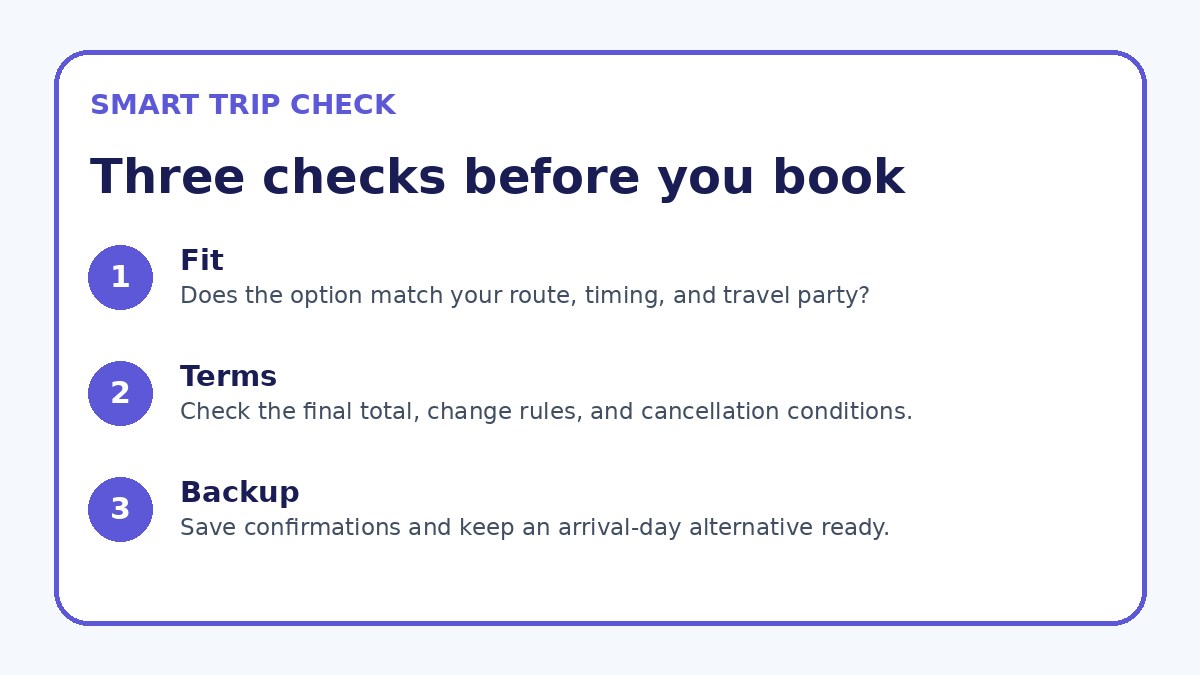
- Confirm which New York City airport (JFK, LGA, EWR, or other) aligns with your departure logistics and estimate transit times to it.
- Verify passport validity and any entry authorization requirements for Canada for every traveler before booking.
- Calculate total door-to-door travel time including transit to the airport, recommended check-in, flight time, and customs processing on arrival.
- Check the fare’s change and cancellation terms on the airline’s final booking page; note any fees and rebooking policies your company requires.
- If loyalty benefits matter, confirm the fare class and that it earns status points or allows upgrades per the airline’s published rules.
- Obtain corporate approval where required and shortlist only itineraries that meet company travel policy and expense limits.
Corporate policy, flexibility, and cost tradeoffs to weigh
Review your company’s travel rules before selecting a fare: allowed cabin classes, preferred carriers, advance approval requirements, and expense caps can all disqualify otherwise suitable itineraries. If your policy requires pre-trip approval, present only options that meet those rules to avoid time-consuming rebookings. For trips where schedules are uncertain, prioritize fares with flexible change policies; these often cost more at purchase but can save time and expense if plans shift. Confirm the exact change and refund terms on the carrier or booking page before committing.
Balance price against reliability and flexibility rather than chasing the lowest fare. Consider how much schedule flexibility you need for a multi-meeting day—sometimes a slightly higher fare with free same-day changes or refundable options is the smarter corporate expense. Also factor loyalty program benefits like upgrades or rebooking priority, but verify how those benefits apply to the specific fare bucket on the airline’s booking page. If you use a third-party site such as Trip.com to compare availability, cross-check the carrier site for final terms and seat maps.
Frequently asked questions
Should I prioritize direct flights from New York City to Toronto for a morning meeting?
Prioritizing direct flights makes sense if you need maximum schedule certainty and shortest in-air time, but it’s not the only factor. For a morning meeting, consider the total commute to the departure airport and the typical customs wait on arrival; a direct flight from a far airport could still make you late. Compare early direct departures with later options that offer more reliable ground transfer times or buffer in-case delays. Always verify airport and terminal information on the booking page and allow extra time for morning traffic when scheduling ground transport.
What documents should I verify before booking business travel to Toronto?
Before you book, confirm passport validity for all travelers and whether an Electronic Travel Authorization (eTA) or other entry clearance is required for your nationality. If traveling on a different passport than usual or carrying business materials, check whether additional letters or supporting documents are advisable for border officers. Also ensure any required visas or authorizations are in place and match your travel dates. For the most current, authoritative guidance, consult official government resources and confirm that the carrier’s booking page does not list additional requirements tied to specific fare types.
How can I minimize the risk of missing meetings when booking flights between New York City and Toronto?
Minimize risk by building buffer time into your schedule and choosing flights that offer recovery options—later flights the same day or flexible change rules. Favor itineraries with multiple daily departures so you can rebook quickly if the first option is delayed or canceled. Account for ground transit variability: avoid planning tight transfers across town during rush hour. If your company allows paid flexibility, consider fares that permit same-day changes or refundable options; always verify the exact rebooking process and fees on the airline’s final booking page before purchase.
Final planning note
Booking New York City to Toronto flights for business is a practical exercise in reducing risk and aligning travel with meeting priorities. Start by confirming the departure airport that works for your schedule, then verify passport and entry requirements before you stare at fares. Compare total door-to-door time, not just flight duration, and weigh direct versus connecting options against your company policy and tolerance for last-minute changes. When in doubt, opt for itineraries with built-in slack or flexible change terms and always check the carrier’s final booking page for exact fare rules and airport details. Use this checklist to quickly eliminate unsuitable options and book with confidence.
Continue planning
Check current options and final conditions
Use the provider page to confirm live availability, the final total, cancellation terms, and every condition that matters to your trip.
This evergreen planning guide was created with AI-assisted drafting and a structured quality review. It does not display live prices, schedules, availability, visa guidance, or provider rankings. Verify current details before booking. Some links are affiliate links; we may earn a commission at no additional cost to you.