If you’re moving between New York City and Boston with more baggage than usual, focus first on which transport mode makes your door-to-door day simplest: rail, intercity coach, or a multimode mix (including ferries where practical). For most travelers with bulky suitcases or multiple checked bags, priorities are terminal access, luggage handling policies, transfer friction, and timing flexibility. Decide whether you want fewer transfers and more curb-to-seat help (often easier on trains) or lower base fares and tolerable handling tradeoffs (coaches can be economical but add lift-and-lower baggage handling). This article gives a quick recommendation up front, then explains the tradeoffs and decision checklist so you can pick the option that minimizes heavy lifting, reduces stress, and keeps your schedule resilient against delays.
Choosing rail, coach, ferry, or a combination
Start by comparing end-to-end practicality rather than just seat comfort or ride time. Trains typically offer the smoothest door-to-door experience for heavy luggage: larger baggage areas, level boarding at certain stations, and staff accustomed to handling suitcases. Coaches often require lifting into luggage bays under the bus, which is fine if you have help, but can be awkward for solo travelers with multiple heavy items. Ferries are less common for NYC–Boston overland routing, but if you plan a multimode trip that includes a ferry segment, check how luggage is stowed on board and whether you must carry bags across docks or through terminals.
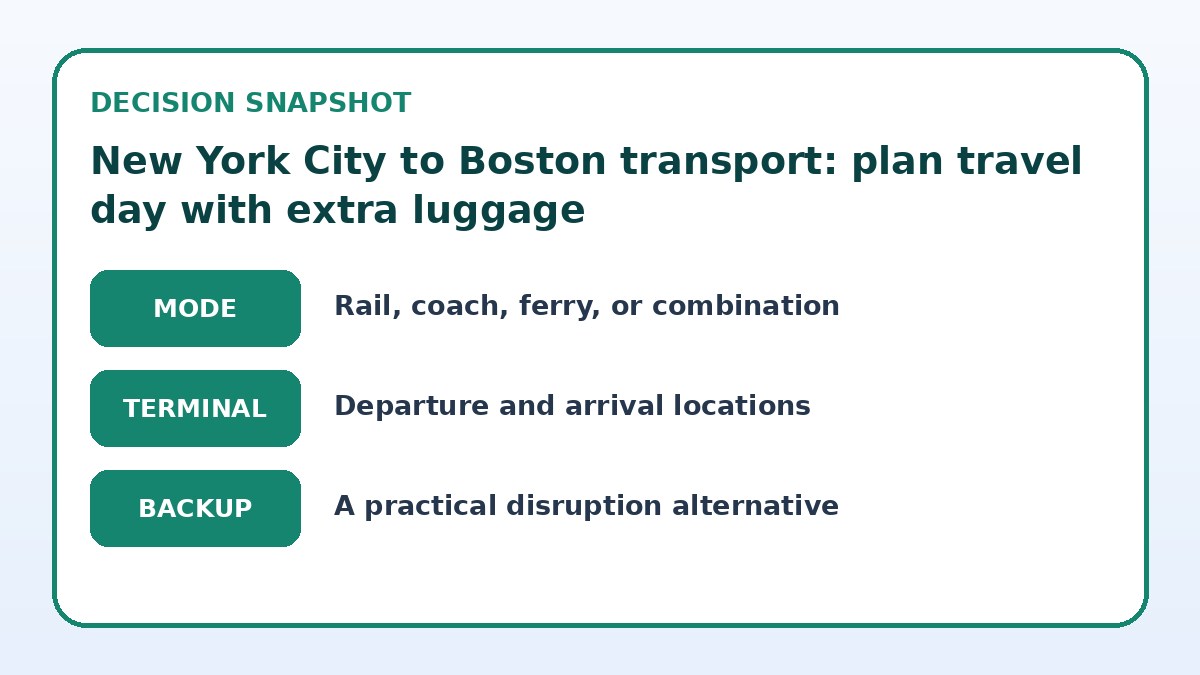
When weighing a mixed itinerary (for example, short rail into a ferry or a coach to a suburban rail hub), map the transfer points precisely. Look at walking distances, elevator/escalator availability, and whether ride-hailing or local transit will be needed to bridge terminals. Each transfer multiplies the number of times you lift or wheel your bags; if you have bulky or fragile items, favor routes with fewer handoffs. If a single direct option is unavailable at your preferred time, consider whether an extra cost for luggage assistance or curbside help offsets the inconvenience of transfers.
Choose the end-to-end journey plan
| Journey approach | Best for | Friction to check |
|---|---|---|
| Direct intercity train | Travelers prioritizing fewer transfers and larger onboard luggage space | May have limited departure times and require booking in advance for preferred seats |
| Direct intercity coach | Budget-conscious travelers who can lift bags into underfloor bays | Requires physical loading/unloading; less room to access bags during transit |
| Mixed-mode (coach or rail + short taxi/rideshare) | Those balancing cost and door-to-door access from neighborhood pick-up points | Adds a transfer and potential handling; good coordination needed for luggage rules |
| Split trip with short-term luggage storage on arrival | Travelers with an urgent appointment after arrival who prefer light mobility | Extra cost and an extra stop to reclaim bags, but reduces immediate carrying needs |
Check live intercity options
Look beyond the ride itself and compare terminals, transfers, luggage, and arrival fit.
Terminal fit and luggage/transfer friction
Assess the departure and arrival terminals for elevators, wide ramps, luggage carts, and staffed service desks. Major train stations often provide level platforms or ramps and more space to maneuver, while some bus terminals involve stairs or limited sheltered areas. If you’re starting from a neighborhood without easy public transit to a big terminal, factor a local taxi or rideshare that can drop you at the terminal entrance into your plan rather than walking with heavy bags. Confirm pickup/drop-off rules so you aren’t forced to haul luggage long distances.
Check luggage policies carefully on the operator’s booking page: known limits, whether oversized items require advance notice, and whether there are fees or required check-in times. If an operator offers baggage assistance or curbside check, verify hours and how to request it. For mixed-mode trips, make sure each leg’s policy is compatible — for instance, a coach might accept larger items than a connecting commuter train. When policies are unclear, call the provider listed on the booking page to confirm so you avoid last-minute refusals or extra handling at the terminal.
Timing flexibility and minimizing on-the-day stress
Pad your schedule well beyond the advertised departure time when you’re traveling with extra luggage. Allow time to load and secure bags, travel to the terminal, and handle unexpected hold-ups like elevator outages or long security lines. If you’re traveling on a weekend or a holiday, traffic to terminals can be unpredictable; choose departures with comfortable buffers on each end so you don’t have to rush awkward lifts or abandon items at the curb. Consider arriving early enough to use luggage carts, gate areas and restroom breaks without squeezing into a crowded boarding process.
If possible, book services with flexible ticketing or same-day exchange options; they let you move to a later direct connection instead of managing multiple transfers with heavy bags. Also consider time-of-day: off-peak departures often have fewer crowds and more room to stage luggage, whereas peak trains or buses can fill aisles and make stowing a chore. If you have time-sensitive plans after arrival (meetings, check-in at a hotel), plan for a contingency buffer or reserve a short-term luggage storage solution near your arrival point so you can arrive without hauling every bag.
Compare the practical alternatives
Use the final page to confirm what is actually offered on your dates and save a workable fallback.
Intercity travel checklist
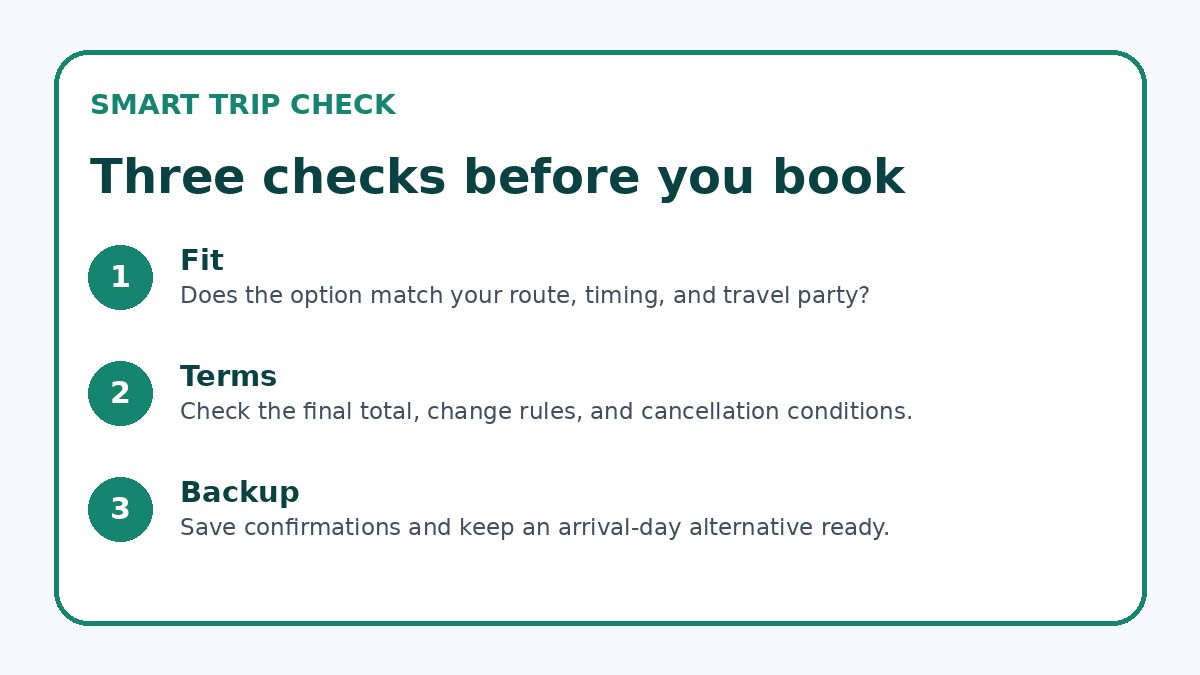
- Confirm baggage size, weight limits, and any oversized-item rules on the provider’s official booking page before you buy.
- Measure and weigh your largest items; reserve an itinerary with fewer transfers if any bag is hard to lift.
- Plan door-to-door pickup/drop locations that allow curbside assistance or short walking distances to terminals.
- Pack an essentials carry-on with medication, documents, and a change of clothes in case checked bags are delayed.
- Identify one realistic alternate departure (same-day) and the exact steps to switch to it if your booked service is disrupted.
- Locate short-term luggage storage or hotel early check options at your arrival area as a contingency to avoid hauling bags across the city.
Disruption backup and door-to-door practicality
Every plan should include a practical disruption backup that avoids dragging bags across town. Decide in advance whether you’ll (a) catch the next direct service, (b) split into a shorter hop plus a last-mile taxi, or (c) use a paid luggage storage/drop service near the arrival terminal. Note precisely where you’d pick up a rideshare or taxi if a scheduled service is canceled; some terminals have designated zones that make loading heavy suitcases easier and safer than streetside pickups.
If your backup involves different operators, check luggage policies again so you aren’t forced to repack mid-journey. Keep essential items — chargers, documents, medication, a toothbrush — in a small carry-on you won’t check or stow, so a missed connection doesn’t derail immediate needs. Finally, save contact details and key booking references on your phone (screenshot if connection is uncertain) and consider travel insurance or protection that covers missed connections for peace of mind when you’re moving several large items.
Rail & Intercity Transport questions travelers ask
Can I bring oversized suitcases on trains and coaches between New York City and Boston?
Policies vary by operator. Many intercity trains and coaches allow standard checked suitcases but set limits on dimensions and weight; some require advance notice for oversized items. Before booking, read the provider’s baggage policy on their official booking page, and if limits aren’t clear, contact the operator to confirm. Also check whether stations or terminals offer luggage assistance or carts; that information is often listed separately from the vehicle’s baggage rules and can affect how practical a particular service is for oversized luggage.
How should I plan transfers if I can’t lift heavy bags alone?
If you travel solo with heavy luggage, prioritize direct services that avoid transfers. When a transfer is unavoidable, arrange a taxi or rideshare for the transfer segment so you can be dropped and picked up at curbside entrances with minimal walking. Check terminals for elevators and staff assistance; some stations provide porter or accessibility services by request. If none of those are available, consider using a short-term porter service or luggage forwarding for the heaviest items so you only manage one light carry-on during transfers.
What’s the simplest disruption backup if my scheduled service is canceled?
A practical backup is to move to the next direct service on the same route or to take a short taxi/rideshare to a nearby operating terminal that has later departures. Before travel day, identify the next two plausible departure times and the exact booking or exchange policy so you can change without guesswork. If direct alternatives are fully booked, pre-identified short-term storage at the arrival area can let you retrieve essentials and travel light. Always save provider contact details and screenshots of your tickets to speed the change process.
Final decision note
Traveling from New York City to Boston with extra luggage is manageable when you plan the travel day around door-to-door practicality. Choose a route that minimizes transfers, check luggage rules on the provider’s final booking page, and allow generous buffer time for loading, station access, and unexpected delays. Have a clear backup — a later direct service, a short taxi ride, or temporary storage — and keep essentials with you in a small carry-on. These steps reduce heavy lifting and last-minute stress so you can focus on the arrival logistics rather than the journey’s physical burden.
Continue planning
Check current options and final conditions
Use the provider page to confirm live availability, the final total, cancellation terms, and every condition that matters to your trip.
This evergreen planning guide was created with AI-assisted drafting and a structured quality review. It does not display live prices, schedules, availability, visa guidance, or provider rankings. Verify current details before booking. Some links are affiliate links; we may earn a commission at no additional cost to you.