
If you’re traveling from New York City to Boston with extra luggage, start by prioritizing ticket rules that explicitly allow larger or additional bags and flexible change or refund options. Practical choices differ: some train and bus fares include a liberal luggage policy but tightly restrict refunds, while some airlines impose per-bag fees yet offer easier rebooking. Decide first whether you need guaranteed checked luggage space, the option to change travel time without heavy fees, or both — then compare fares that match those needs. This article walks through the tradeoffs between luggage allowance, fare flexibility, and on-trip convenience so you can book with confidence. Check the chosen provider’s final booking page for exact baggage dimensions, weight limits, carry-on allowances, and change or cancellation terms before purchase.
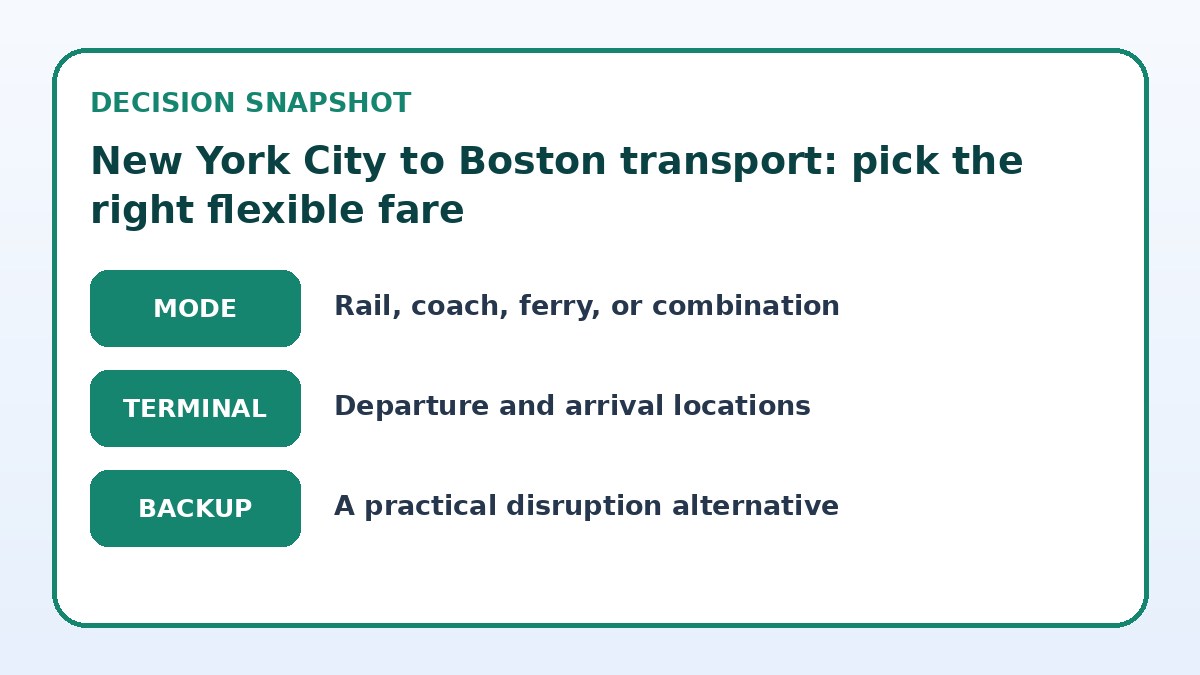
See current options before you compare the details
Availability and final conditions change. Open Trip.com now or keep reading for the practical comparison.
Start by identifying your luggage and change needs
Before comparing tickets, inventory every item you plan to bring: count suitcases, measure dimensions, note loose items, and decide whether anything requires special handling (sports gear, instruments, or fragile boxes). Knowing whether you need guaranteed checked space, a single oversized allowance, or simply more carry-on room determines which transport mode and fare family will likely suit you. Also note how flexible your itinerary must be: are you likely to change days or times? Combining that flexibility requirement with your luggage profile narrows the options you should actually compare.
Once you know your luggage and schedule flexibility needs, create a short checklist of non-negotiables to use while comparing fares: maximum suitcase size, total number of pieces, weight per piece, allowed carry-on quantity, and permitted schedule changes or refunds. Keep that checklist handy when you reach booking pages; many providers publish baggage rules and fare conditions in the fine print. If the provider’s baggage or change policies are unclear on the booking page, contact customer service or consult a live comparison site like Trip.com for current availability and written policy links before you finalize anything.
Compare transport modes by how they handle extra luggage
Trains typically offer generous carry-on allowances and more flexible space for bags in vestibules and luggage racks, but specifics vary by operator and car type; commuter trains differ from intercity services. If your bags are large or oddly shaped, trains can be more forgiving than buses or planes, especially if you can place items in larger storage areas. However, some train fares—especially promotional or restricted classes—may limit refunds or changes, so a comfortable baggage policy does not always mean flexible timetable changes.
Buses and budget carriers often split fares from luggage allowances: a low headline price might not include checked baggage, and space in undercarriage bays is sometimes limited or charged by size and weight. Airlines generally have the strictest formal baggage rules with clear weight and size limits and per-piece fees for checked luggage on many fare types. But airlines often let you pay for added flexibility—such as refundable or changeable fares—which can be useful if you want both luggage certainty and the freedom to rebook. Always compare the combined cost of ticket plus bags and any change fees rather than focusing on the base fare alone.
| Approach | Best for | Tradeoff to check |
|---|---|---|
| Flexible fare with baggage included | Travelers who need guaranteed checked baggage and the ability to change plans | Higher upfront cost but fewer surprises at check-in or when rebooking |
| Low-cost base fare plus add-on baggage | Price-sensitive travelers who know their schedule is unlikely to change | Lower initial price but potential higher total cost if changes or extra bags become necessary |
| Mid-level fare with generous carry-on rules | Those traveling with multiple carry-on-sized items and who prioritize onboard convenience | May not cover oversized checked items and change rules can still be restrictive |
| Split-mode booking (e.g., train plus flight) | Travelers balancing speed, comfort, and luggage needs across different legs | Requires checking each provider’s baggage and change rules separately; coordination risk on missed connections |
Ready to check the option that fits your plan?
Use your exact dates and traveler details so the provider page can show the current total and conditions.
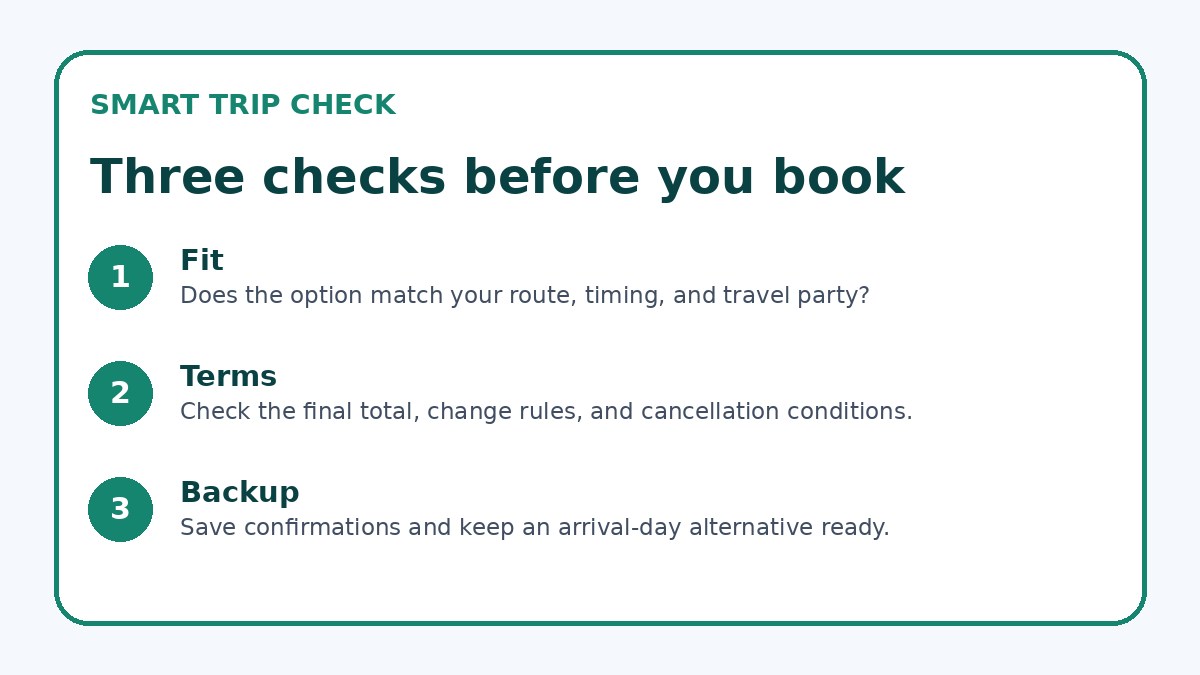
How to read and compare fare rules on booking pages
When you reach a booking page, locate the baggage allowance section and the fare conditions or terms and conditions link; these are the two details that most affect travelers with extra luggage. Look for explicit mentions of the number of pieces, allowed dimensions and weight per piece, and whether the provider requires pre-purchased baggage reservations or charges for oversized items. Also check whether a fare guarantees space for checked luggage or simply permits it on a first-come basis—this makes a difference if vehicle bays or compartments can fill.
Next, compare the fare’s change and cancellation language: is the fare refundable? Does it allow free date changes, and if so, under what notice requirements? Does the provider charge a fixed change fee plus any fare difference, or a percentage of the ticket? For complicated itineraries that mix modes (for example, train to airport plus flight) confirm whether each leg’s flexibility aligns with your needs. If a provider’s final booking page doesn’t clearly list exact baggage size, weight limits, or rebooking fees, contact them before paying; otherwise, assume you must accept their posted fees at check-in.
Before you book
- Measure and weigh every suitcase and bag you plan to bring before booking.
- Read the provider’s baggage allowance and fare conditions on the final booking page; screenshot them for reference.
- Add the exact baggage option during initial booking rather than waiting for check-in to avoid higher fees.
- Compare the total cost (ticket plus required baggage fees and likely change fees) across modes before choosing.
- If your journey mixes modes or tickets, allow buffer time for transfers and buy a transferable or flexible leg where possible.
- Contact customer service to confirm oversized, fragile, or special-handling items are accepted and how they must be labeled.
Practical booking strategies to balance cost and assurance
If luggage certainty is critical, prioritize fares that explicitly include the number and size of bags you need rather than hoping for lenient boarding agents. For trains, choose fares or classes that list checked-bag or oversized-item policies when available; for flights, compare the total price including any required checked-bag purchase. Consider paying a little more for a flexible fare if you value the option to change times without losing your baggage allowance or paying steep change fees. The extra upfront cost can be worth it if plans are uncertain or baggage could push you into higher fees later.
If you want to save money but still reduce risk, use a two-step approach: reserve a lower-cost ticket and immediately add the necessary baggage allowance or travel protection during booking, when the provider’s site often offers the same products more cheaply than at check-in. Keep copies or screenshots of the baggage allowance and fare rules. Finally, plan how you’ll move luggage within stations or between modes—book taxis or transfer services that can handle the number and size of bags if connections are tight. Small logistical choices at each end of the trip often matter as much as the ticket flexibility itself.
Frequently asked questions
Can I rely on train luggage racks for large suitcases between New York City and Boston?
Many intercity trains offer luggage racks and vestibule space that accommodate large suitcases, but configurations vary by train type and car class. Some trains have designated baggage or bike areas requiring reservations or separate checked-baggage handling; others rely on overhead racks and space at carriage ends. Before assuming a particular storage option, check the specific operator’s baggage page and look for mentions of reserved luggage space, maximum dimensions for checked items, and any instructions about where large bags must be stored. If in doubt, contact the operator or verify at booking so you’re not surprised by limited space during boarding.
Is it cheaper to buy baggage allowance when booking or later at check-in?
Prices for baggage allowances often increase as departure approaches and can be highest at airport or station check-in, but policies differ by carrier and ticket type. Buying baggage during initial booking usually locks in the allowance and the price offered at that moment; waiting can risk sold-out cargo space or higher fees. If you’re on a tight budget but certain about your luggage, adding bags during booking is generally safer. Always review the booking page for explicit statements about when prices change, and keep screenshots or confirmation emails showing your purchased allowance.
Should I book a flexible fare if I’m unsure of my return date?
If your return date is genuinely uncertain, a flexible fare that permits free or low-cost date changes reduces stress and can be cost-effective when compared to repeated rebooking or cancellation fees. Flexible fares often combine clearer baggage allowances with more forgiving change policies, which is especially important when traveling with extra luggage that you do not want to risk paying extra for later. Weigh the premium for flexibility against the likelihood you will change plans: if a change is very likely, the flexible option often saves time and unexpected fees. Verify the exact change window and any fare difference policies on the final booking page before completing purchase.
Final planning note
For travelers moving between New York City and Boston with extra luggage, the key decision is whether you prioritize guaranteed baggage allowance, low upfront cost, or the freedom to change plans. Trains tend to be the most forgiving for larger or multiple bags, buses and budget carriers split fare from baggage, and airlines make rules explicit but often charge per checked item. The best practical approach is to define your luggage and flexibility needs, compare the total cost including required baggage and likely change fees, and confirm detailed baggage and fare rules on the final booking page. If you mix modes, coordinate allowances and leave transfer buffers. Small prep steps—measuring bags, adding allowances during booking, and saving confirmations—remove most surprises and make your trip smoother.
Continue planning
Check current options and final conditions
Use the provider page to confirm live availability, the final total, cancellation terms, and every condition that matters to your trip.
This evergreen planning guide was created with AI-assisted drafting and a structured quality review. It does not display live prices, schedules, availability, visa guidance, or provider rankings. Verify current details before booking. Some links are affiliate links; we may earn a commission at no additional cost to you.