Short answer: many first-time visitors do fine without a Montreal car rental if they stay in central neighbourhoods and plan mostly city activities; rent a car if you want flexible day trips, carry heavy luggage, or are traveling with family. Montreal’s compact downtown, extensive metro and bus network, plentiful ride-hailing and walkable neighbourhoods make getting around straightforward for tourists based in the core. But if your itinerary includes the Laurentians, Eastern Townships, long winery routes, or outlying nature areas, a car adds freedom and time savings. Before you book a vehicle, compare door-to-door convenience, parking availability and likely costs at your chosen neighbourhood, and the driving conditions you’ll face in the season you visit. The rest of this guide lays out the tradeoffs, practical checks to make before booking, and how to decide based on where you’ll stay and what you want to do.
How Montreal’s layout and transport shape the need for a car
Montreal is an island city with a dense core and a grid of neighbourhoods that are highly walkable and well-served by Metro lines and bus routes. If most of your plans are museums, markets, cafes, Old Port, Notre-Dame and nearby neighbourhoods like Mile End or the Plateau, you’ll likely find public transit and short rideshares faster and cheaper than dealing with parking. The city’s street pattern and one-way systems are easy to navigate on foot or by transit, and many popular visitor streets are congested at peak times, making driving through the core more about complication than convenience.
On the other hand, a car matters when your schedule includes destinations beyond the island — the Laurentians, Eastern Townships, Montérégie wine regions, or day trips that start early or end late. Driving gives you routes and timing that public transport cannot match outside urban zones. Also factor luggage and group size: family groups, people with mobility needs or travelers with ski or bike gear will value trunk space and the ability to load once and go. Weigh how much time you’d spend moving between dispersed points; if many sites are scattered, a rental often pays back in saved travel time and flexibility.
Cost and convenience tradeoffs to consider before booking
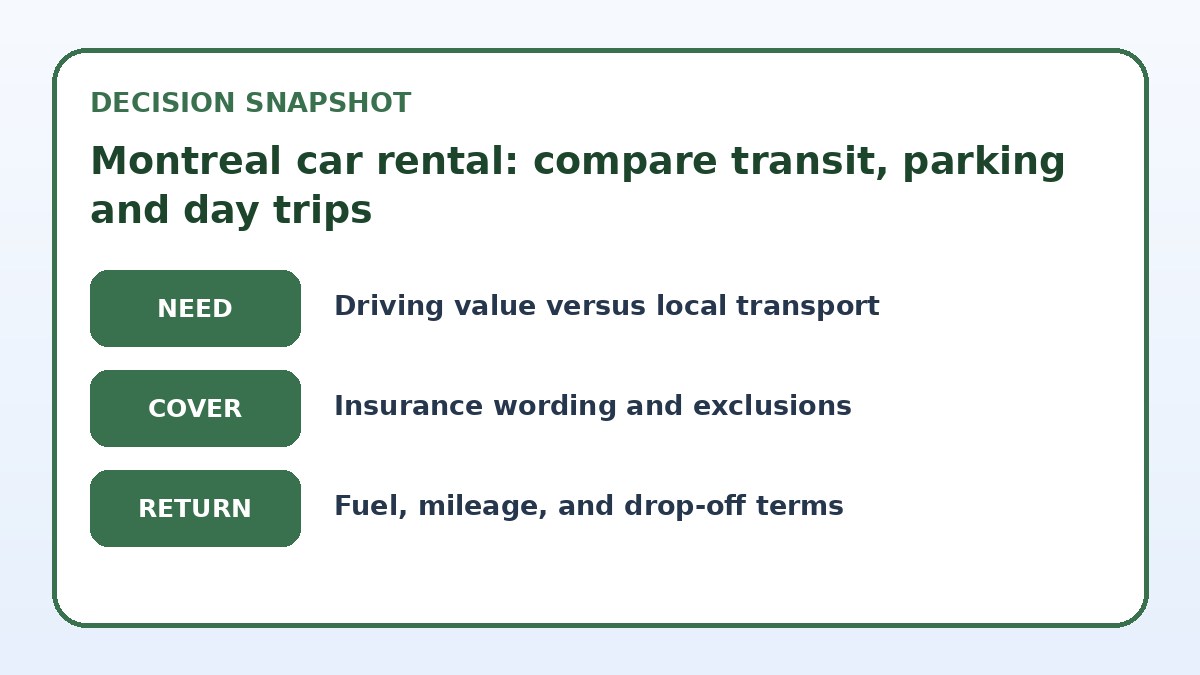
A Montreal car rental involves more than the headline daily rate. Add fuel, insurance, parking fees, and potential extra charges for GPS, child seats, or additional drivers. Urban parking can be metered, limited by street cleaning or overnight rules, and hotel garage rates vary widely; ask your accommodation about on-site parking and restrictions before assuming you’ll have a cheap spot. Also compare the convenience of ride-hail trips for short hops: multiple short rides may be cheaper and less stressful than finding and paying for parking downtown.
Convenience factors include pickup and drop-off logistics: airport counters may be on-site or require a shuttle, and some downtown locations place return instructions on the provider’s booking page. Verify fuel policy (full-to-full is usually simplest), mileage limits, winter equipment rules if you travel in cold months, and whether the rental includes 24/7 roadside assistance. Small differences in policies change the real cost and hassle of renting, so gather these facts from the rental company’s final booking page and your hotel’s front desk before you decide.
| Approach | Best for | Tradeoff to check |
|---|---|---|
| No car—use transit, walking and ride-hail | Visitors staying centrally with compact plans and minimal luggage | Less flexibility for out-of-town day trips and limited access to rural areas |
| Rent a car for the entire stay | Travelers planning multiple day trips or carrying lots of gear | Higher total cost and hassle of parking and urban driving |
| Rent only for specific day trips | City stays that include one or two long excursions | Extra coordination for pickup/drop-off and possible one-way fees |
| Use car-share or hourly rentals | Short errands or brief escapes without full-day rental overhead | Limited vehicle choice and potential availability gaps at busy times |
Driving in Montreal: what to expect behind the wheel
Driving in Montreal is generally straightforward but has local quirks. There are many one-way streets in the older parts of the city, and during rush hours arteries can be congested. Approach navigation with a plan for parking at your destination rather than driving around hunting spaces. Be prepared for busy intersections, bike lanes and multiple-use lanes in neighbourhoods like the Plateau; cyclists are common and deserve careful attention when turning or opening doors, especially on narrow streets.
Season affects driving conditions considerably. Winter brings snow-clearing operations, narrowed lanes and mandatory winter tires for some rental policies; summer can bring heavy tourist and festival traffic. If you’re not comfortable driving in wintry conditions, factor that into your decision. Also note signage is bilingual but mostly French; basic route numbers and symbols are familiar, but allow time to interpret signs, especially when exiting highways or navigating ramp systems near bridges that connect the island to the mainland.
Before you book
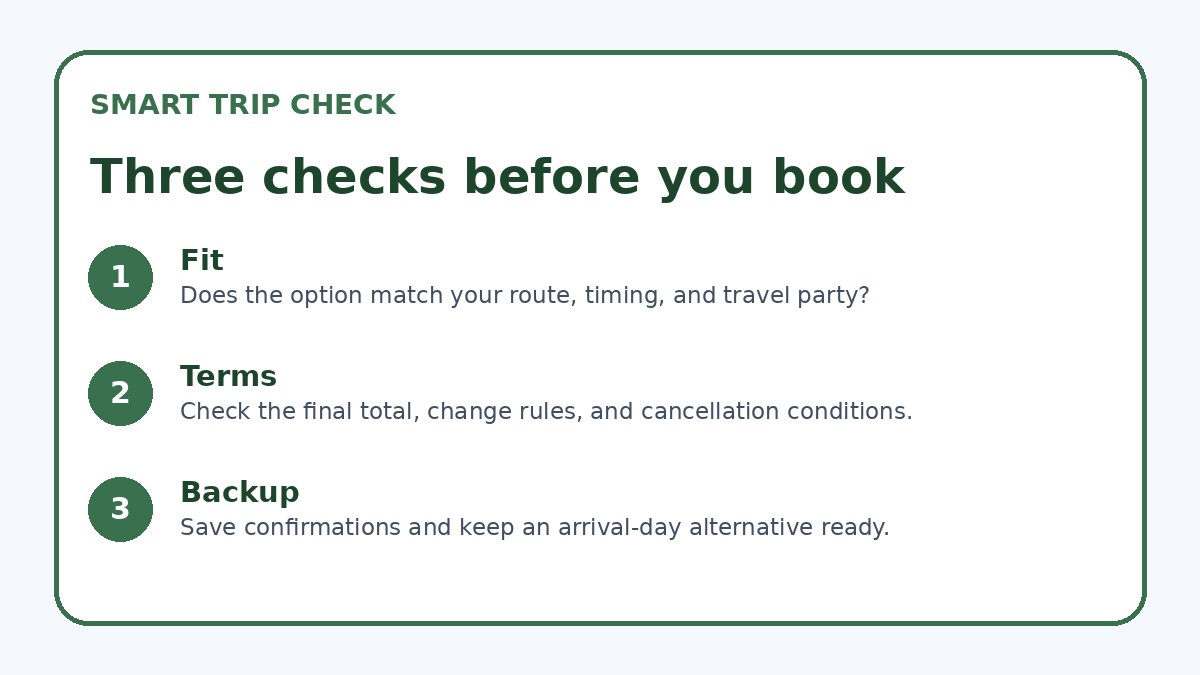
- Map each accommodation and attraction: note public transit stops, estimated transit times, and walking distances.
- Ask your hotel or rental host about on-site parking, garage access, overnight restrictions, and daily rates.
- On the rental provider’s booking page, confirm fuel policy, mileage limits, insurance options, and 24/7 roadside assistance details.
- If visiting outside summer, check whether the rental requires or includes winter tires or seasonal equipment.
- Compare the estimated total of rental daily rate plus likely parking, fuel and insurance to the cost of transit passes and ride-hails.
- Plan pickup and drop logistics: verify airport vs downtown counter locations, shuttle needs, and any after-hours return instructions.
Practical decision criteria and alternatives to renting
Start by mapping your itinerary: mark each overnight, the neighbourhood it’s in, and each major attraction you plan to visit. If most points fall within the downtown/Plateau/Old Montreal cluster and you have 1–2 day trips nearby, you can likely rely on Metro, buses, cycling and occasional ride-hailing. If your route includes several destinations more than 40–60 minutes from the island or you need door-to-door flexibility, a car is more useful. Also weigh group composition, luggage, and mobility needs: they can change the calculus even for short stays.
Consider hybrid approaches: keep public transit for in-city days and rent a car only for specific day trips or for part of the trip. Short-term car-sharing or hourly rentals can be useful for a few hours of errands or an afternoon escape without the overhead of a full-day rental. If you compare deals, Trip.com is one place to check current availability, but always confirm the final terms, fees, and pickup/drop details on the rental company’s own booking page before you book.
Frequently asked questions
Can I rely on public transit instead of a Montreal car rental for a 4–5 day trip?
Yes—many first-time visitors find public transit suits a 4–5 day stay if they focus on downtown, Old Montreal, Plateau and nearby museums or food markets. The Metro covers major tourist hubs and buses fill in gaps; walkable neighbourhoods mean you can enjoy much of the city without driving. If you plan one long day trip or carry bulky sports equipment, consider a short-term rental for that part of the trip. Always check transit maps, schedules and connections for your exact itinerary before deciding, and factor in convenience versus the cost and hassle of parking.
How hard is it to find parking in Montreal and what should I expect?
Parking varies by neighbourhood: downtown and Old Montreal have many paid garages and metered street spots but demand is high at peak times and hotel garages can be expensive. Residential neighbourhoods such as Mile End or the Plateau may have limited street parking and local restrictions like permit-only blocks or street-cleaning hours. If parking is critical to your choice, contact your accommodation for specific guidance, ask about daily rates or validated parking, and plan to reserve a garage spot if that option is available through your hotel or a private lot.
Are there driving permits, tolls or special rules I should know before renting?
There are no city-wide driving permits or central congestion charges for Montreal, but specific bridges and highways have tolls or electronic payment systems elsewhere in Quebec; these apply mainly outside the island for some routes. The city enforces parking regulations, time limits and winter parking rules during snow clearing. Rental contract terms and local regulations may require certain equipment seasonally; check the provider’s booking page for fees related to toll transponders, additional drivers, or cross-border travel if you plan to drive into nearby provinces or the United States.
Final planning note
Deciding on a Montreal car rental for your first visit comes down to where you’ll stay and what you plan to do. If your itinerary is concentrated in central neighbourhoods and you prefer walking, transit and occasional ride-hails, skip the car and enjoy simpler logistics and less parking stress. If your plans include multiple day trips, heavy luggage, or off-island exploration, a car adds flexibility and often saves time. Use the checklist to gather facts about parking, rental policies and seasonal driving conditions, then compare total costs and convenience. Confirm all rental terms on the provider’s final booking page before committing, and consider a hybrid approach—public transport in the city plus a short rental for specific excursions—to get the best of both worlds.
Continue planning
Check current options and final conditions
Use the provider page to confirm live availability, the final total, cancellation terms, and every condition that matters to your trip.
This evergreen planning guide was created with AI-assisted drafting and a structured quality review. It does not display live prices, schedules, availability, visa guidance, or provider rankings. Verify current details before booking. Some links are affiliate links; we may earn a commission at no additional cost to you.