
If you’re planning travel from Mexico City to Puebla with children, the single most useful decision is whether to buy flexible (refundable or changeable) tickets or cheaper, restrictive fares. For families the right choice depends on how likely plans will shift, whether you need seats kept together, and how much hassle you’ll tolerate at stations if you must change or cancel. Start by listing your priorities: flexibility to change dates, guaranteed adjacent seats, protection against illness or missed connections, and a straightforward refunds policy. Use that list to compare ticket types from trains, buses, and other operators: flexible fares usually cost more up front but save time and stress when plans change, while restrictive fares are cheaper but may impose fees or limited options for exchanges. Below I walk through the decision criteria families use most, the tradeoffs for different ticket approaches, and a practical checklist of what to verify before you book.
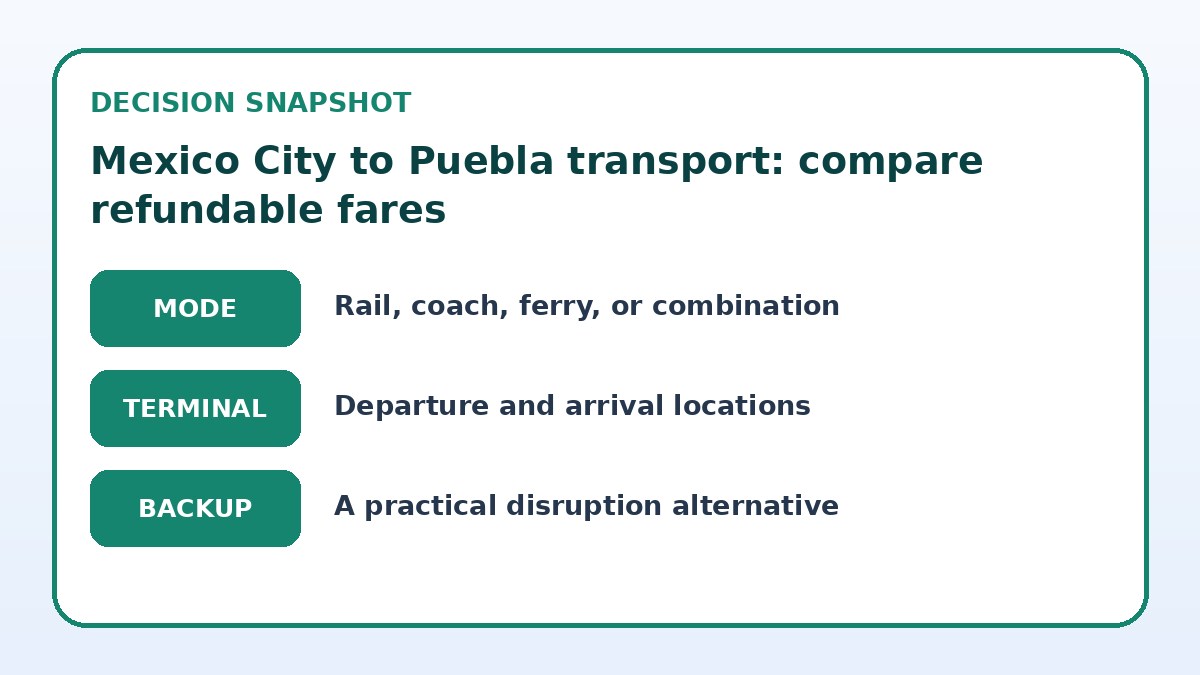
See current options before you compare the details
Availability and final conditions change. Open Trip.com now or keep reading for the practical comparison.
What “flexible” really means for families
Flexible tickets can cover different features: full refunds, fee-free date or time changes, seat reassignment guarantees, or an ability to convert a ticket to credit. For families, the most valuable aspects are often fee-free changes and the ability to rearrange travel without losing the entire fare. Some flexible fares still require a small administration fee for changes; others let you change the day and time with no charge up to a certain cutoff. When assessing options, write down which flexibility matters most for your family and rank it: refundability, free rebooking, seat adjacency, or simple customer-service contact options.
Remember that flexibility is a policy bundle rather than a single feature, and the details vary by operator. A ticket class labeled “flexible” on one operator’s site could simply mean more convenient exchanges, while another label might mean refundable within strict time windows. For trips that might include an overnight in Puebla or a return the same day, check whether flexible rules apply in both directions and whether family discounts or child fares are handled the same way for changes or refunds.
How to compare options across trains, intercity buses, and shared services
Start by filtering options by the type of service: trains or buses. Each operator will present fare classes with different change and cancellation rules. For each candidate option, compare the change fee, refund amount (full, partial, or credit), and the time window for making changes. Also look for seat reservation policies: does the fare guarantee adjacent seats for children, or are seats first-come, first-served at boarding? Write those parameters side-by-side so you can weigh a higher upfront cost against lower potential change fees or faster customer service if plans change.
When comparing across service types, consider the practical family tradeoffs: buses sometimes offer large luggage allowances and frequent departures, while trains can provide easier boarding and more space to move with small children. A flexible bus ticket with free changes might be better than a nonrefundable train ticket, or vice versa, depending on your tolerance for time savings versus the cost and convenience of swapping tickets. Always check the operator’s final booking page for exact baggage rules, seat assignment options, and how changes are processed — online, by phone, or at a station counter.
| Approach | Best for | Tradeoff to check |
|---|---|---|
| Buy fully refundable or fee-free change tickets | Families with high uncertainty or young children who may require last-minute changes | Higher upfront cost but much less stress and fewer fees when plans shift |
| Buy restricted, low-cost tickets | Families with fixed plans and minimal risk of change | Cheaper up front but you may face steep fees or lose the ticket if you change plans |
| Hybrid: restrictive outward leg, flexible return | Families testing a one-way plan or who only need flexibility for part of the trip | Balances price and protection but requires careful calendar management |
| Buy restrictive fares and purchase separate travel insurance | Families looking to protect against illness or major disruptions without paying full flexible fares | Insurance can cover broader risks but may not reimburse small rebooking fees or guarantee seat adjacency |
Ready to check the option that fits your plan?
Use your exact dates and traveler details so the provider page can show the current total and conditions.
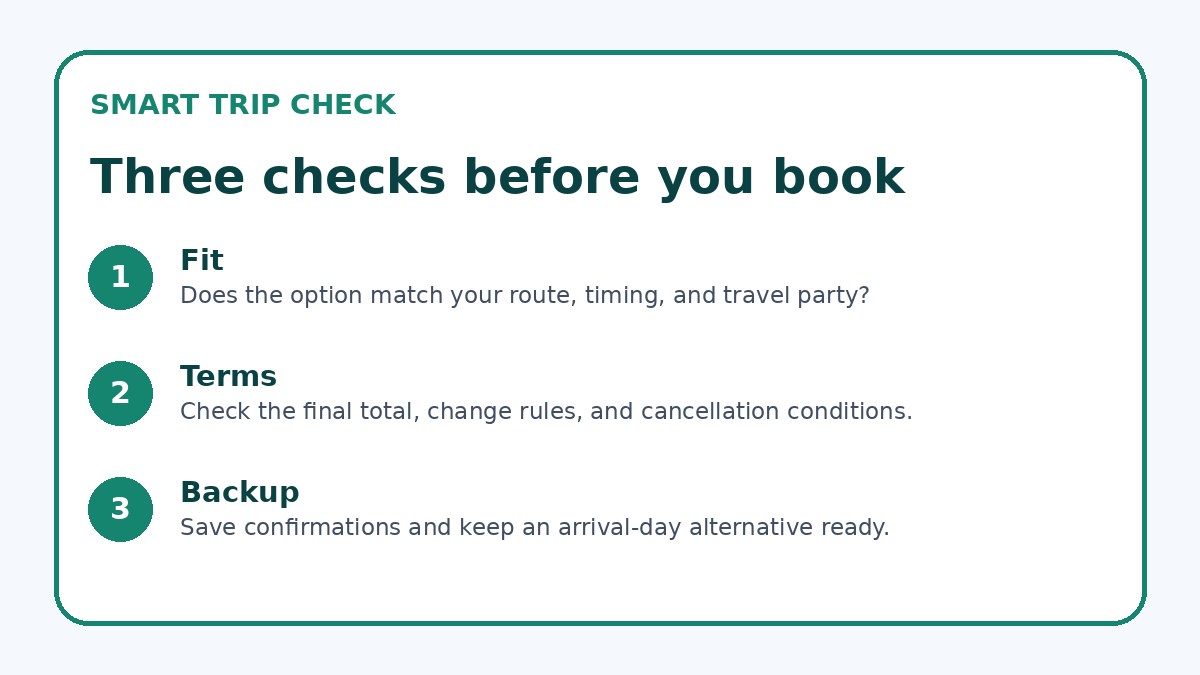
Decision criteria: who in the family benefits most from flexibility
Identify family-specific risk factors before booking: infants who need naps on schedule, medical needs, travel companions with variable availability, or connecting plans that depend on other transport. If any of these apply, lean toward fares with free or low-cost changes so you don’t face a full-price rebooking. Also consider the age and behavior of children: toddlers who nap or feed on a timetable can make a slightly pricier flexible fare worthwhile for a smoother day of travel. Conversely, older children with set schedules and no special requirements can usually travel on restrictive fares if you are confident plans won’t change.
Another practical criterion is how easy it is to make changes: if the operator’s website offers simple online rebooking and instant refunds, flexibility is more useful than if refunds require lengthy phone calls or in-person visits. For families traveling internationally or who might need refunds processed in a different currency, read the refund method carefully — some operators issue travel credit rather than returning money to the original payment method.
Before you book
- Confirm whether the fare allows free date or time changes and note any cutoff times for free modifications.
- Verify seat selection rules and whether adjacent seats can be reserved for children at booking.
- Find the operator’s exact refund policy and whether refunds are to card, bank transfer, or travel credit.
- Check baggage and stroller rules so you won’t face surprises when boarding with child gear.
- Identify the quickest way to request changes or refunds (app, website, phone, or station counter).
- Compare a restrictive fare plus travel insurance against a flexible fare to see which yields better overall protection.
Practical booking steps and what to verify before you pay
Before confirming a family booking, check these details on the provider’s final booking page: the exact change and cancellation terms, whether seat selection is included or extra, how child fares are applied, luggage allowances, and the timeline for refunds or credits. Also confirm how modifications are made (online, app, phone, or at the counter) and whether there are blackout dates or cutoffs for free changes. If you’ll need a refund or exchange, find the customer-service contact policy so you know whether you can resolve problems locally in Puebla or will need to call a central office possibly outside business hours.
If you’re comparing multiple operators, note the booking deadlines and any family-specific add-ons like infant seats or stroller policies. Where possible, create a simple spreadsheet listing fares, change fees, refund percentages, seat adjacency guarantees, and how long the operator holds a reservation for unpaid tickets. If you find it useful, consult an aggregator such as Trip.com to compare live availability and terms, but always verify the full ticket conditions on the operator’s own booking page before finalizing the purchase.
Frequently asked questions
If I pick a restrictive ticket, how can I protect my family against the common risks of travel?
If you choose a restrictive fare, protecting the family usually means two things: buying travel insurance that covers cancellations for illness or emergency, and keeping arrival and connection times comfortable to reduce missed connections. Carefully read insurance terms — look for cancellation for illness, trip interruption, and baggage coverage, and confirm whether insurance reimburses nonrefundable ticket costs or only covers emergency expenses. Also document any pre-existing conditions the insurer requires, and keep easy access to receipts and booking references in case you must file a claim.
Do flexible fares always guarantee adjacent seats for families?
Not always. Some flexible fares include complimentary seat selection, which makes it easier to secure adjacent seats, but other flexible tickets simply relax change rules while leaving seat assignment to availability or carry an extra fee. When seat adjacency is a priority, check the fare’s seat-selection policy explicitly and, if necessary, add seat reservations at booking. If the booking system doesn’t show adjacent seats, contact the operator’s customer service before travel to confirm what they can arrange for families at the time of purchase or during check-in.
Where should I confirm final ticket terms and avoid surprises at the station?
Always read the full fare conditions on the provider’s final booking page before you pay — that’s the definitive source for change fees, refund methods, and seat rules. Look for fine print about blackout dates, how refunds are calculated, and how long credits remain valid. If anything is unclear, call or message the operator to get a written answer you can save with your booking emails. For additional comparison of live availability and conditions, you may check an aggregator like Trip.com, but treat the operator’s own booking page as the final authority.
Final planning note
For families traveling between Mexico City and Puebla, ticket flexibility is a practical hedge against the small, inevitable disruptions that come with children and group travel. Decide first how likely your plans are to change and which protections you value most: fee-free changes, refundable money, or guaranteed adjacent seating. Compare the total expected cost — not just the headline fare — by factoring in change fees, the ease of making modifications, and whether travel insurance is a sensible complement. Finally, verify every important detail on the provider’s final booking page, and keep contact information handy so you can resolve any changes quickly and spend more time enjoying the trip than worrying about logistics.
Continue planning
Check current options and final conditions
Use the provider page to confirm live availability, the final total, cancellation terms, and every condition that matters to your trip.
This evergreen planning guide was created with AI-assisted drafting and a structured quality review. It does not display live prices, schedules, availability, visa guidance, or provider rankings. Verify current details before booking. Some links are affiliate links; we may earn a commission at no additional cost to you.