Decide the neighborhood first; everything about flexible booking—cancellation windows, refundable rates, and check-in latitude—becomes easier to compare once you narrow where you’ll spend most nights. For a solo traveler in Mexico City, the practical choice depends on whether you want walkable cafés and museums, quick airport access, nightlife within walking distance, or a quieter residential base with easy metro links. Start by identifying the area that minimizes your daily transit friction, then compare refundable vs. non-refundable offers and look at free amendment windows and deposit requirements. This article helps you shortlist an area before opening live inventory, explains how neighborhood fit affects the value of flexible terms, and lists exactly what to check on a hotel’s booking page so you don’t discover restrictive policies only after confirmation.

Check live stays in the areas that fit
Use your dates and party size to compare current rooms after you narrow the neighborhood fit.
Neighborhood fit: match how you like to spend your day
Decide how you want your typical day to flow before you examine flexible booking language. If your ideal day is cafés, galleries, and restaurants within a 10–20 minute walk, neighborhoods like Roma Norte and Condesa (central-west) provide that walkable urban fabric. If you prefer to center evenings around museums and historic architecture, Centro Histórico places many major sites within walking distance, reducing the need to rebook if your arrival time changes. For a quieter base with reliable metro connections for farther trips, Polanco or Narvarte can be better.
Once you pick the vibe, you can judge whether flexible booking is worth an upcharge. In walkable areas, paying slightly more for a fully refundable or free-amendment rate buys you peace of mind with minimal daily transit cost if plans shift. In poorly served areas, that flexibility may be less valuable because you’ll still spend extra time and money on taxis or longer transit, which could outweigh savings from a stricter cancellation policy.
Choose an area-selection strategy
| Area approach | Best for | Tradeoff to check |
|---|---|---|
| Choose a walkable central neighborhood (Roma/Condesa) | Solo explorers who want daytime cafés, short evening walks, and minimal transport. | Flexible rates cost more but reduce stress; moving hotels is easy thanks to many nearby options. |
| Stay in Centro Histórico | Sightseeing-first travelers who want many attractions within walking distance. | High tourist traffic can mean noisier nights; flexible rates help if arrival times shift but rooms vary widely. |
| Base in Polanco or Chapultepec area | Travelers prioritizing museums, higher-end dining, and reliable metro access. | Often more formal hotels with stricter booking classes; verify room class inclusion in any flexible offering. |
| Choose a quieter residential area (Narvarte/San Ángel) | Solo travelers wanting lower cost, calmer nights, and local markets. | Less central transit increases the cost of late changes despite flexible rates; check taxi and metro links. |
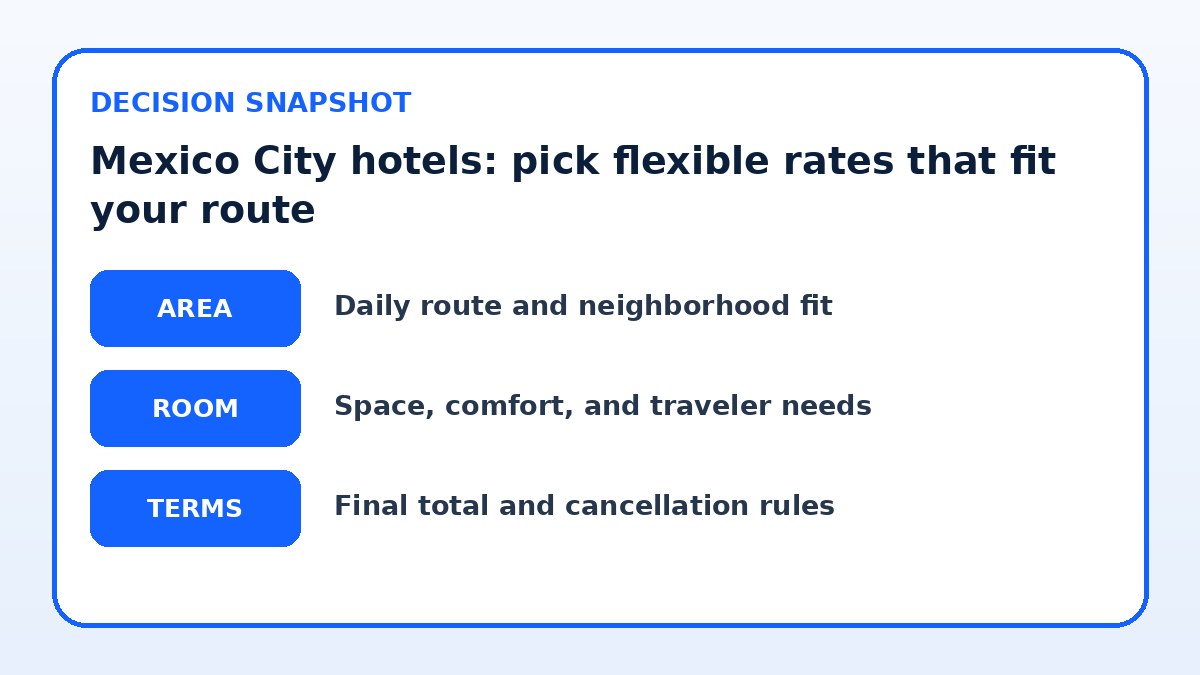
Daily-route friction: how transit affects the value of flexibility
Assess your likely daily routes—airport to hotel, hotel to daytime activities, and evening return—then judge how much a schedule change would cost beyond the rate itself. If your schedule might shift, staying near frequent metro lines (Lines 1, 2, or 9) or major bus corridors reduces the operational friction of changing plans. Hotels offering late check-in or 24-hour reception are especially valuable for late arrivals; confirm those amenities when comparing flexible terms because a refundable rate means little if check-in isn’t possible at your arrival hour.
Map typical trips and estimate door-to-door time rather than just distance. A refundable booking in a neighborhood with scarce transit or long taxi rides increases the penalty of moving hotels mid-trip. Conversely, in a well-connected neighborhood, you can accept a stricter rate and retain flexibility by switching to a different nearby property if unpredictable events force a change. Use this tradeoff to decide whether to prioritize cancellation flexibility, free amendments, or lower upfront cost.
Now compare like with like
Keep the same dates, guests, room needs, and cancellation preferences while you compare the final choices.
Room and party needs: single traveler priorities for flexible stays
Solo travelers often prioritize a safe, compact room, strong Wi-Fi, and easy luggage handling over larger suites. When comparing flexible bookings, check whether refundable rates also include preferential room types or are limited to the most basic category. Some hotels restrict flexible rates to specific room classes or offer flexible terms only as a non-refundable deposit with a later balance, so verify whether the same cancellation terms apply to the room you need—especially if you require a desk, accessible layout, or specific bedding.
Also consider ancillary policies that affect solo travelers: breakfast inclusion, luggage storage on early arrival or late departure days, and whether the property allows late check-out or early check-in for a fee. These operational details matter because they can convert a refundable rate into an inconvenient stay if you cannot access the room when you need it. On the booking page, look for explicit language about room upgrades, deposit timing, and whether amendments cover changes in party size or only dates.

Hotel booking check before payment
- Confirm the exact cancellation deadline in hours or days and save a screenshot of the policy.
- Verify whether your chosen room type is eligible for the flexible rate or only the base category is refundable.
- Check deposit and prepayment terms: note when your card will be charged and if holds are refundable.
- Confirm 24-hour reception or late check-in options if your arrival time is uncertain.
- Ask the hotel or booking platform whether amendments cover date shifts, guest count changes, or only cancellations.
- Compare the hotel’s own policy page with the booking platform summary and prioritize the hotel’s written confirmation.
Final booking terms: what to verify before you confirm
Once you’ve shortlisted an area and room type, read the booking page like a lawyer for the four essentials: cancellation window (how many hours or days before arrival), amendment conditions (allowed changes and any penalties), deposit and prepayment timing (when a card is charged), and check-in/out flexibility. Don’t assume ‘free cancellation’ means you can cancel the day of arrival—many hotels define a deadline 24–72 hours before check-in. If a policy is unclear, use the booking platform’s policy text or contact the hotel directly to request confirmation in writing.
Also check for exceptions like high-season blocks or event dates that may change policy terms. Verify whether the property requires a refundable security hold at arrival and whether that hold is separate from cancellation terms. When comparing platforms, note that some aggregator pages summarize policies—always click through to the hotel’s own policy or the booking confirmation text. If you want an extra comparison source, Trip.com can be used to view current availability and conditions, but treat it like one data point and verify details on the hotel’s final booking page.
Hotel Guide questions travelers ask
How much extra should I expect to pay for a flexible booking in Mexico City?
There’s no fixed premium for flexibility—rates vary by property, season, and room class—so compare price differences across multiple hotels after choosing a neighborhood. Instead of assuming a percentage, look at the absolute cost difference and decide whether the added fee covers likely risks: flight delays, schedule changes, or nights you might need to cancel. For solo travelers, pay particular attention to whether the flexible option requires an upfront prepayment or charges only on departure; those timing differences can affect your cashflow and willingness to keep flexibility.
If a hotel offers free cancellation but charges a hold at check-in, does that affect flexibility?
Yes—security holds and pre-authorizations are separate from cancellation policies and can tie up funds on your card even when a rate is refundable. Always read the fine print to see whether a hotel places a refundable hold and how long it may take to release after checkout. If you rely on a credit limit or prepaid travel card, such holds can restrict available credit; ask the hotel what amount they typically hold and the expected release timeframe so you won’t be surprised when the hold appears on your account.
Should I book directly with the hotel or through an OTA for flexible terms?
Both channels can offer flexible rates, but terms can differ slightly and the point of contact changes for amendments or disputes. Booking direct sometimes makes small changes easier, since the hotel manages your reservation; third-party platforms may centralize change requests but can add steps. Whichever route you choose, verify the full terms on the final confirmation—cancellation window, who refunds, and whether any third-party fees apply—and keep screenshots or confirmation emails. If you use a platform, be ready to contact the hotel directly if policy language is ambiguous.
Final decision note
For solo travelers in Mexico City, pick the neighborhood that best matches your daily rhythm before you compare flexible booking terms. Neighborhood fit determines how much a refundable rate matters: a flexible booking in a walkable district often reduces the cost of changing plans, while the same flexibility in a poorly connected area may not save time or money. After you shortlist an area, compare room eligibility, cancellation windows, deposit timing, and operational amenities like late check-in. Always verify the hotel’s own policy on the confirmation page and keep evidence of the terms. With the right neighborhood choice and careful policy checks, you’ll balance freedom to change plans with sensible cost control.
Continue planning
Check current options and final conditions
Use the provider page to confirm live availability, the final total, cancellation terms, and every condition that matters to your trip.
This evergreen planning guide was created with AI-assisted drafting and a structured quality review. It does not display live prices, schedules, availability, visa guidance, or provider rankings. Verify current details before booking. Some links are affiliate links; we may earn a commission at no additional cost to you.