If you’re traveling as a family between Melbourne and Queenstown, the practical choice is rarely just the lowest headline fare. A comfortable long‑haul connection depends on routing that minimizes extra transfers, baggage handling that avoids split‑ticket risk, and a schedule that matches children’s routines. Start by deciding whether you prefer fewer connections even if fares are higher, or more flexible dates with possible overnight layovers. Gather exact travel dates, ages of children, number of checked bags, and your preferred cabin (economy, premium, or business) before searching. That lets you compare total door‑to‑door time, connection minimums, and fare rules on booking pages. Use the rest of this guide to weigh those tradeoffs, plan contingencies, and prepare the documents and timing details you’ll need when you check live options on airline sites or a comparator such as Trip.com.
See live routes for your exact travel day
Compare direct and connecting choices with the same baggage and traveler details.
Routing: picking the connection that saves fuss, not just minutes
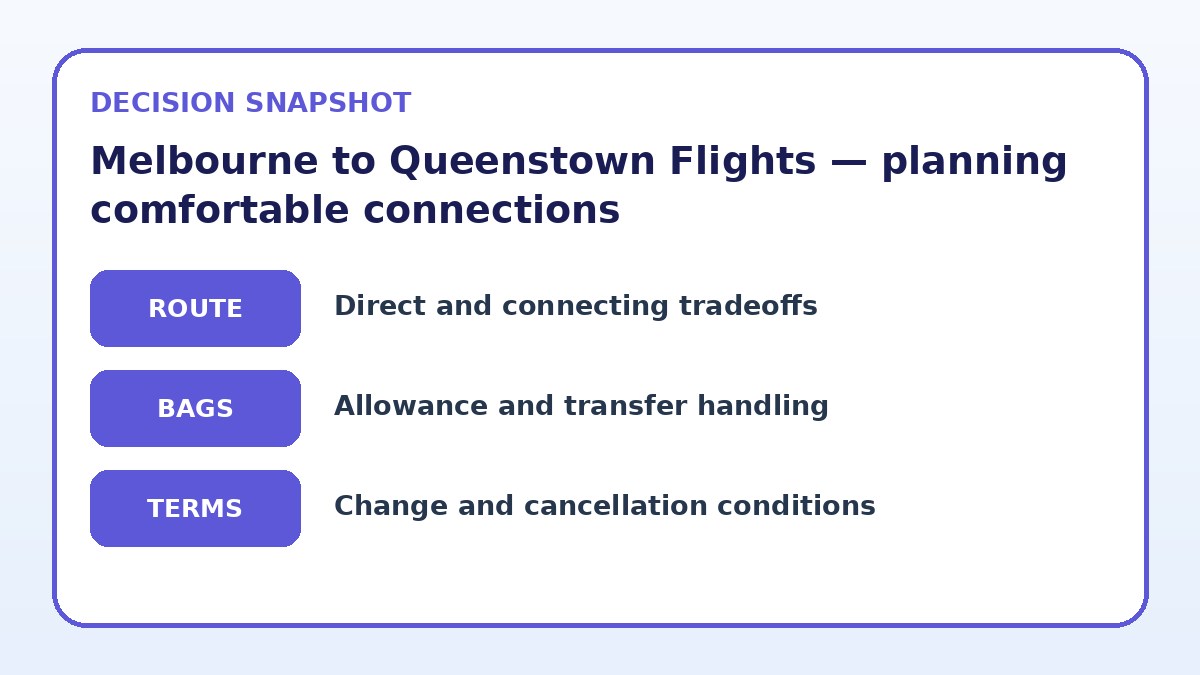
Start by comparing direct versus connecting routings in terms of connections, total travel time, and airport complexity. For families, a single well‑timed connection usually reduces the number of times you and your luggage change aircraft, minimizes the chance of missed transfers, and keeps routines intact. Compare itineraries that route through a single major hub against those that split through multiple airports or require a terminal transfer. Paying slightly more for a simpler routing can be worth it if it means fewer security lines, fewer gate changes, and a more predictable arrival time into Queenstown.
When you evaluate options, look beyond airborne time: include transit time between gates or terminals, the need to clear immigration and customs, and whether lounges or family facilities are available at the connecting airport. If an itinerary shows a short connection, verify on the airline’s booking page what minimum connection time they recommend and whether a single ticket covers both legs. For split tickets, plan for significantly longer layovers because you will likely need to collect and re‑check baggage and pass through security again.
Baggage and connection risk: preventing the tough morning after
Baggage rules and the responsibility for transfers should dictate how you book. On a single ticket, airlines typically transfer checked bags and handle missed connections according to their policies, but with separate tickets this protection can vanish. For families traveling with strollers, car seats, or extra gear, decide whether to buy through‑checked baggage allowances or to check items at origin and reclaim them at the middle airport. Wherever possible, confirm on the booking page whether checked items are tagged to the final destination and what size or weight rules apply for each passenger type.
If using multiple carriers, identify each carrier’s baggage allowance and whether their policy requires you to re‑check bags at the connection. Make a diagram of who collects baggage and where, and plan additional slack time in the connection. Also check whether your carrier provides assistance for transferring families or children traveling with adults and whether priority baggage or family boarding is available. Write down the transfer steps and keep essential items in a carry‑on for every family member to cover delays or mishandled bags.
Compare flight-selection strategies
| Flight strategy | Best for | Risk to check |
|---|---|---|
| Single‑ticket one‑connection itinerary | Families wanting minimal transfer stress and through‑checked baggage | Often higher fare, but the airline handles missed connection and baggage transfers |
| Split tickets to cut fares | Flexible families on a tighter budget who can plan long layovers | Higher risk for missed connections and you usually re‑check baggage yourself |
| Long overnight layover with hotel or lounge access | Families prioritizing sleep and comfort between flights | Adds travel time and logistics for overnight transfer and accommodation |
| Premium cabin or paid seat selection on connections | Families seeking more space and guaranteed adjacent seating | Higher cost but better comfort, priority boarding, and simpler transitions |
Recheck the complete itinerary
Confirm airports, connection handling, baggage, and change conditions before deciding.
Schedule fit and family routines: timing that preserves sleep and sanity
Evaluating schedule fit means aligning flight times and connection lengths with your children’s nap, meal, and bathroom patterns. For many families, an early morning departure from Melbourne avoids an extra night out but can be stressful with young children; an evening departure might let kids sleep on the plane but can create a disruptive overnight layover. When comparing itineraries, estimate local clock times for departures and arrivals and plan how transfers will affect on‑the‑ground bedtimes. Consider whether airport lounges or family rooms are available during layovers to give everyone a break.
Also factor in daylight, weather variability, and seasonal operations that may affect punctuality even if you can’t check current schedules here. Choose connection windows that provide buffer time for delays, security, and restroom breaks, particularly when terminals require walking or shuttle transfers. If you rely heavily on a child’s routine, prioritize options with fewer transfers and predictable arrival times into Queenstown so you can reserve accommodation check‑in or childcare services in advance.
Flight details to verify
- Confirm exact travel dates, full names as on passports, ages of each child, and whether infants travel on lap before searching fares.
- Note the number and size of checked items (strollers, car seats) and verify each airline’s baggage rules on their final booking page.
- Compare single‑ticket versus split‑ticket itineraries with a timing diagram showing transfer steps and minimum connection times.
- Check fare conditions on the checkout screen for change fees, refundability, seat selection, and infant/child pricing details.
- Plan a minimum buffer for connections (extra time if terminals require shuttle or immigration) and list emergency contact numbers.
- Pack a carry‑on with medicines, snacks, charging cables, spare clothes, and printed copies of booking confirmations and child IDs.
Fare conditions and booking strategy: what to verify before you commit
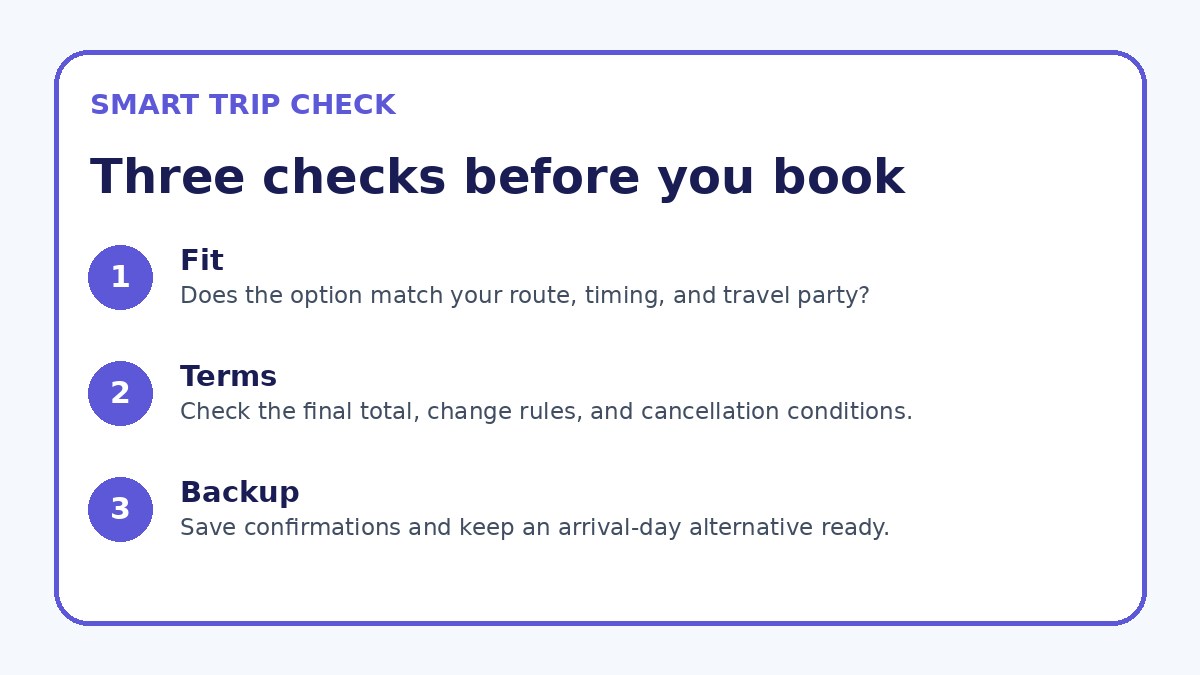
Fare conditions vary widely and determine your options if plans change. Before you book, collect the fare rules shown on the airline’s final checkout page: change and cancellation fees, whether name corrections are allowed, refundability, and baggage inclusions. For families, flexibility is often more valuable than a marginally lower fare—especially if illness or school schedules might require change. If you’re considering a fare with restrictions to save money, verify whether the fare allows free seat selection or family‑adjacent seating so you don’t end up separated at check‑in.
Also verify whether the carrier or booking platform allows infant fares, lap child rules, or reduced fares for children and how that appears at payment. If you plan to combine separate tickets to lower cost, read the transfer and delay policies carefully and build longer layovers. Finally, confirm on the booking page which airline is operating each segment, whether codeshares are involved, and which contact you’ll use if you need assistance en route.
Flight Guide questions travelers ask
Should I book a single ticket or separate tickets for a family flying from Melbourne to Queenstown?
A single ticket with a through connection usually reduces the risk associated with missed transfers and lost baggage because the airline accepts responsibility for re‑routing. That makes it a safer option for families who prefer fewer moving parts. Separate tickets can lower the fare but shift transfer responsibility to you, often requiring longer layovers and manual re‑checking of baggage. Before choosing, list the pros and cons for your family: budget flexibility versus operational protection, and confirm the baggage handling rules on the carriers’ booking pages.
How much connection time should I allow when traveling with young children?
Allow significantly more buffer than the minimum advertised connection time when traveling with children—enough for bathroom breaks, a quick meal, stroller folding, and walking between gates or terminals. If your connection requires immigration, customs, or terminal transfer, add extra time for queues and baggage handling. Consider doing a mock timing at home: estimate disembarkation to gate transfer, then add 30–90 minutes depending on airport complexity. Always check the airline’s recommended minimum connection time on the booking page and increase it according to your family’s needs.
What documents and preparations make a long‑haul family connection smoother?
Gather passports, any required child consent letters if applicable, booking confirmations for all flight legs, and printed baggage receipts. Pre‑select seats so children sit together, save digital boarding passes for all segments, and photograph luggage tags on check‑in. Pack a well‑organized carry‑on with snacks, medications, entertainment, and a change of clothes for each child. Finally, confirm on the airline or booking page whether family assistance, priority boarding, or a stroller check policy is available at each airport you’ll use.
Final decision note
Booking Melbourne to Queenstown flights for a family needs you to trade off fare savings against reliability and stress. Start with exact travel dates, passenger ages, and your baggage list, then compare single‑ticket and split‑ticket options while focusing on routing simplicity, who will handle bags, and connection timing that preserves family routines. Verify fare rules, change fees, and seat availability on the airline’s checkout pages before payment. If you want a quick comparison of current options, Trip.com can show available itineraries, but always reconfirm baggage and transfer responsibilities with the operating carriers. With the right checks and a little extra buffer time, you can turn a long‑haul connection into a manageable part of your family trip.
Continue planning
Check current options and final conditions
Use the provider page to confirm live availability, the final total, cancellation terms, and every condition that matters to your trip.
This evergreen planning guide was created with AI-assisted drafting and a structured quality review. It does not display live prices, schedules, availability, visa guidance, or provider rankings. Verify current details before booking. Some links are affiliate links; we may earn a commission at no additional cost to you.