If you value a simple journey and minimal fuss, a direct Melbourne to Queenstown flight (when offered) will usually be the fastest way to get to the Southern Alps. But connecting options can open up cheaper fares, different departure times and the chance to break a long travel day with a stopover — useful if schedules around your holiday plans are tight. For first-time visitors, the decision comes down to tradeoffs: total door-to-door time, likelihood of delays and missed connections, checked-baggage handling, and how comfortable you are managing transfers. Below I give a practical recommendation up front, then explain each factor so you can match options to your priorities and constraints.
How to evaluate direct flights for ease and speed
Direct flights simplify the travel day: you check in once, go through security and board a single aircraft that lands near Queenstown. For first-time visitors this reduces the stress of navigating unfamiliar airports and eliminates the need to re-clear security between sectors. A direct option usually shortens your total travel time and lowers the number of things that can go wrong, which matters if you have tight arrival plans such as a rental car pickup or hotel check-in window.
That convenience can come at a tradeoff: direct services are not always the cheapest and may depart at less convenient times. Before you book, check the airline’s final booking page for baggage allowances, seat selection rules, and any restrictions on changes or refunds. Also verify whether the flight truly operates non-stop on your travel dates — schedules can vary by season or day of week, and some advertised ‘direct’ flights can change to include a technical stop if demand shifts.
Why connecting flights can offer flexibility and savings
Connecting flights can expand your choices by combining carriers and different departure times, which may let you travel when direct flights don’t fit your itinerary. They can also enable lower fares or allow you to fly at preferred times by splitting the journey into two legs. If you’re planning to arrive in Queenstown late at night or want to leave Melbourne earlier in the morning, a well-timed connection can be a sensible solution.
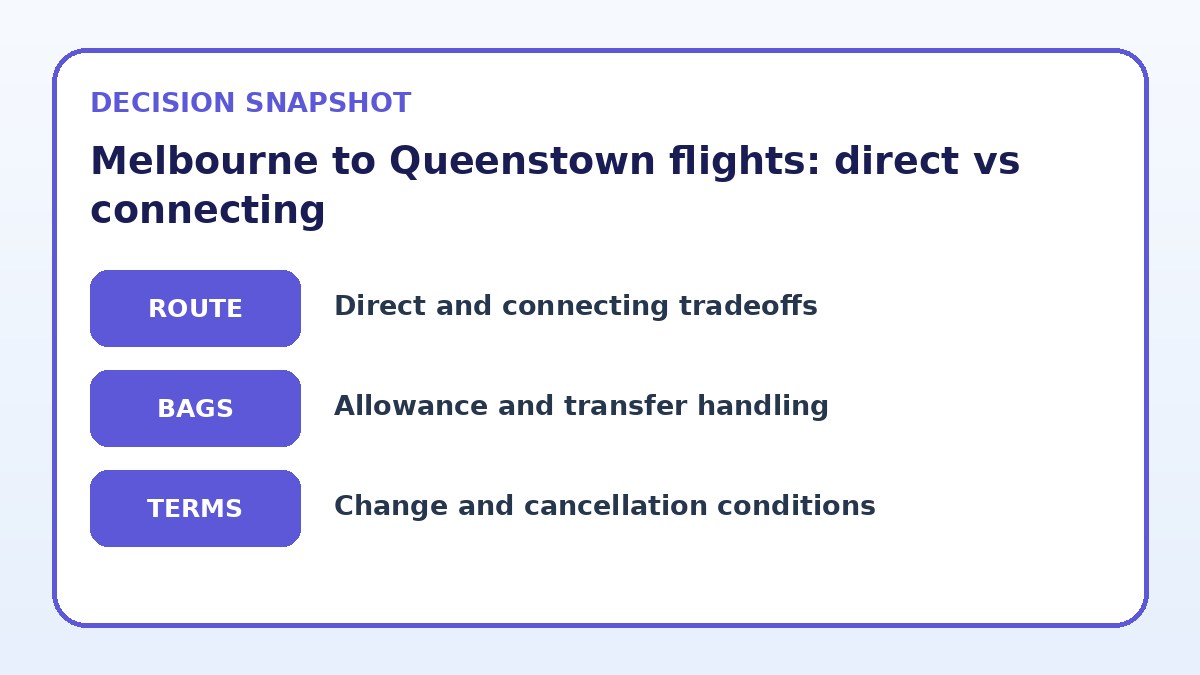
However, connections require more attention. When comparing itineraries, add up all segments to get the door-to-door travel time. Confirm whether the same ticket covers both legs and whether baggage transfers will be handled by the airline — if they aren’t, you’ll need to collect and recheck luggage, and that increases minimum connection time. Also check whether short connections require moving between terminals; the airline’s booking page and airport maps are the best places to verify those details.
| Approach | Best for | Tradeoff to check |
|---|---|---|
| Direct flight | Travelers prioritising speed, simplicity and minimum handling of bags | May cost more and have fewer schedule choices or less flexible fares |
| Short single connection | Travelers seeking cheaper fares with minimal added complexity | Adds risk of missed connections and requires attention to transfer logistics |
| Long stopover or overnight connection | Those who want to split the journey or add a brief stopover destination | Extends total travel time and may require extra accommodation and transit planning |
| Separate tickets on different carriers | Experienced travellers chasing specific seat availability or low-cost legs | Higher risk: you are responsible for missed connections and baggage recheck |
Practical criteria for comparing itineraries
Start with total travel time from your origin address in Melbourne to your final arrival in Queenstown, not just airborne time. Include transit to and from airports, minimum recommended check-in, visa or health form time (if any), and potential customs or baggage queues on arrival. For many travelers a single longer flight that lands early in the day beats a cheaper itinerary that arrives late and eats into your first day of sightseeing.
Next, compare reliability risk: more segments mean more points where delays can cascade. Look for reasonable connection windows (typically at least 60–90 minutes for domestic-to-domestic or domestic-to-international transfers, longer if you must change terminals or reclaim luggage). Check the airline’s published on-time performance or recent traveler reports, and read the carrier’s terms on rebooking and assistance if a missed connection is their responsibility.
Before you book
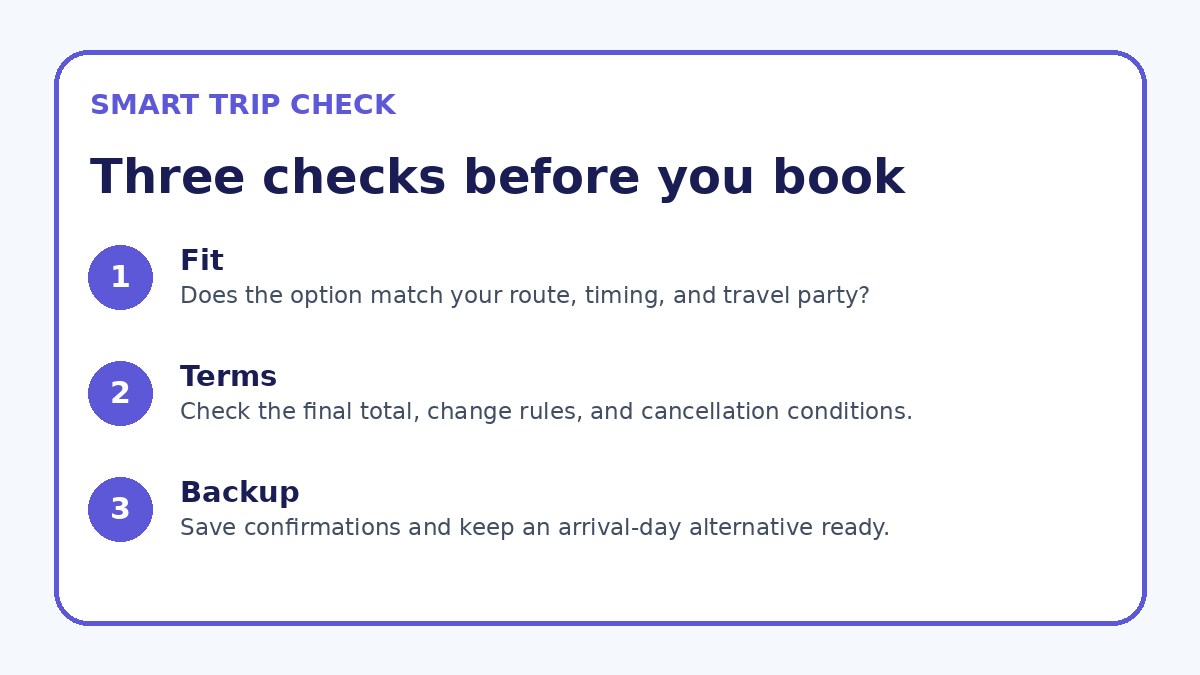
- Compare total door-to-door time, not just flight durations, including airport transfers and check-in buffers.
- Verify on the airline’s booking page whether checked baggage transfers automatically on connecting tickets.
- Confirm minimum connection times and whether terminal transfers are required at any stop.
- Look for same-ticket itineraries when possible to reduce the risk that the carrier won’t rebook you for missed connections.
- Factor in your arrival time in Queenstown relative to lodging and rental-car pickup hours.
- Consider travel insurance covering missed connections or delays, and read the policy’s specific coverage limits.
Personal factors that should drive your choice
Consider how comfortable you are with airport navigation and managing transfers. If you prefer fewer decisions in a travel day or are traveling with young children, bulky gear, or tight schedules, prioritise direct flights when available. Similarly, if you require specific seat types, extra baggage allowance or special assistance, a single-carrier direct booking typically simplifies arrangements.
On the other hand, if budget or flight times dominate your priorities, connecting itineraries can be attractive. If you choose connections to save money, budget a reasonable cushion in case of delays and consider travel insurance that covers missed connections. Also weigh whether a stopover offers a worthwhile break — sometimes an overnight in a city en route can turn a long haul into two comfortable travel days.
Frequently asked questions
Are direct Melbourne to Queenstown flights always faster than connecting ones?
Not always, but direct flights are generally faster in pure airtime because they remove layovers. The travel day also becomes simpler: no transfers, fewer check-ins and a reduced chance of missed connections. However, a connecting itinerary can sometimes match or beat a direct option on total door-to-door time if the connection schedules align with local transport and you avoid long waits at either airport. To decide, add airport transfer time and recommended check-in windows to the published flight durations for any itinerary you’re considering.
How much buffer should I allow for connections when flying from Melbourne to Queenstown?
Aim for a comfortable buffer that accounts for terminal changes, baggage reclaim if needed, and security queues. For same-ticket domestic-to-international connections, 60–90 minutes may be acceptable at busy airports, while inter-terminal transfers or separate-ticket itineraries call for at least two to three hours. If you’re unfamiliar with the airports involved or traveling in peak periods (public holidays, major events), add extra time. Always verify recommended minimum connection times on the airline’s booking page and consider traveler reports for that specific airport pair.
What should I check about baggage and connections before I finalize booking?
First, confirm whether your fare includes checked luggage and whether baggage will be automatically transferred on connecting itineraries. If your tickets are on different carriers or separate PNRs, you may be required to collect and recheck bags, which lengthens connection time. Review the airline’s baggage size and weight limits, fees for additional pieces, and the carrier’s policy on misrouted luggage. The final booking page and the airline’s baggage policy pages are the authoritative sources to verify those details before you complete payment.
Final planning note
For most first-time visitors the right choice balances simplicity, total travel time and budget. If you want the least stressful travel day and can align a direct flight with your plans, that’s often the prudent option. If cost, departure times or a desire for a stopover matter more, well-chosen connecting itineraries can meet those needs — but they require careful attention to connection windows, baggage rules and whether the legs are on one ticket. Before you book, compare total door-to-door time, confirm baggage transfer and minimum connection details on the carrier’s booking page, and weigh how much extra buffer you need for peace of mind.
Continue planning
Check current options and final conditions
Use the provider page to confirm live availability, the final total, cancellation terms, and every condition that matters to your trip.
This evergreen planning guide was created with AI-assisted drafting and a structured quality review. It does not display live prices, schedules, availability, visa guidance, or provider rankings. Verify current details before booking. Some links are affiliate links; we may earn a commission at no additional cost to you.