If your flight or meeting runs late and you touch down in Melbourne after normal business hours, your immediate priorities are clear: reach a secure hotel, complete check-in fast, and preserve enough rest and time for next-day commitments. The quickest, least stressful options are hotels near major arrival points (airport, Southern Cross, or a tram-access CBD) with late check-in policies and straightforward transport links. Before you book, confirm how the hotel handles late arrivals, what ID and payment are required on arrival, and whether staff or an automated system will be available to assist. This article lays out the practical choices, how to weigh them for business needs, and specific checks to make on the booking page or by phone so a late arrival doesn't derail your schedule.
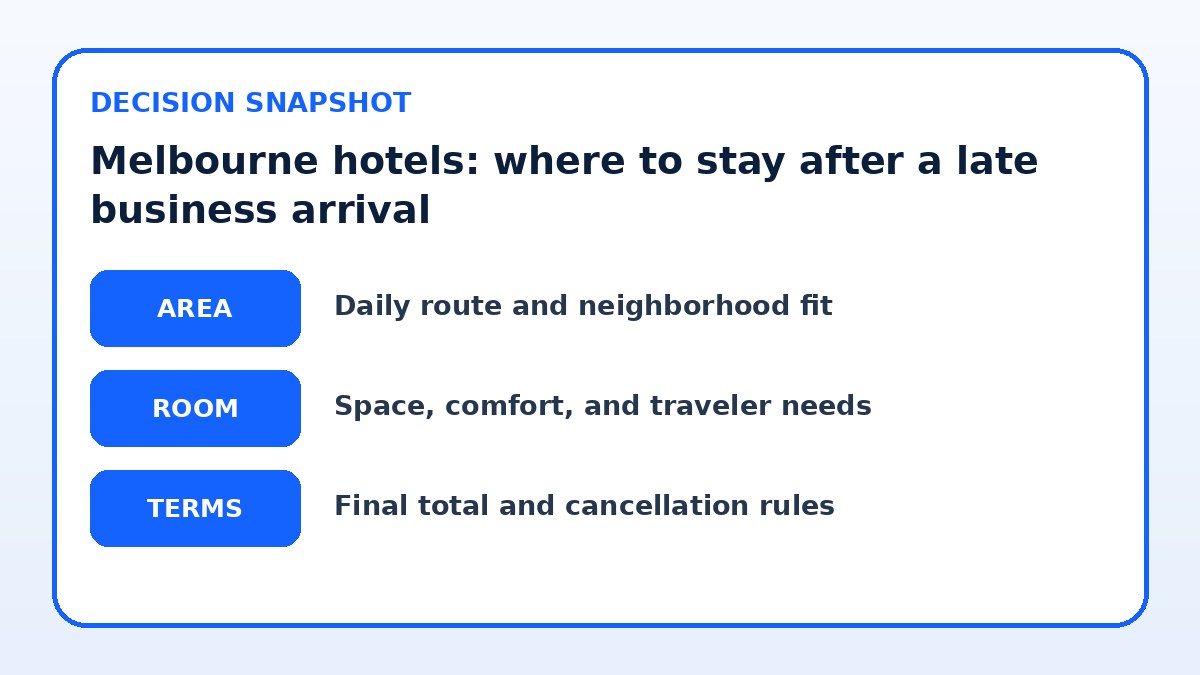
See current options before you compare the details
Availability and final conditions change. Open Trip.com now or keep reading for the practical comparison.
Decide by your arrival point and meeting location
Your best hotel choice depends on where you arrive and where you need to be the next morning. If arriving by air late at Melbourne’s airport, an airport-adjacent or well-connected hotel shortens the door-to-bed time and reduces the chance of transport delays. If your arrival is by train or coach at Southern Cross Station, a short walk or tram ride to a CBD hotel may be faster than heading out to the airport. For arrivals that are flexible, staying in the CBD concentrates you near restaurants, late-night services, and short routes to most business districts.
Balance travel-to-sleep time with morning convenience: a hotel near the airport may save a late-night transfer but cost extra morning travel if your meeting is in the CBD. Conversely, a centrally located hotel makes morning logistics simpler but can be noisier or harder to reach late at night depending on tram and taxi availability. Map the last-mile route from your arrival point to shortlisted hotels before booking, and check transport options late at night so the location advantage holds at off-peak hours.
Check-in logistics and what to verify before booking
Hotels vary widely in how they manage arrivals outside standard hours. Before you book, confirm on the provider’s final booking page or by phone whether reception is staffed 24 hours, whether the hotel offers an express or key-code check-in, and what identification or pre-authorization the property requires. Ask whether reception can hold a printed or digital boarding pass or itinerary, and whether they record a late arrival time. These details determine whether you will need to wait, present extra documents, or perform a self check-in sequence that requires a reliable mobile signal.
Also verify payment and incidental-hold policies—some hotels require a card at arrival for security holds or to pay directly, while others accept payment online. If you rely on rental cars or ride-shares, confirm safe, lit drop-off points and whether luggage trolleys are available. If the hotel offers luggage storage, confirm cut-off times for same-night access. Because policies change, always check the booking page and call if anything is unclear; Trip.com can be a place to compare current availability, but confirm specifics with the hotel.
| Approach | Best for | Tradeoff to check |
|---|---|---|
| Airport-adjacent hotel | Arrivals by late-night flight who want minimal transfer after landing | Longer morning commute to CBD meetings; fewer late-night dining options nearby |
| CBD hotel near Southern Cross | Travelers arriving by train or needing quick access to city meetings | Potentially noisier at night and longer travel if arriving by air |
| Hotel near major tram route | Those balancing 24-hour city access with central positioning for morning meetings | Trams may not run late; short taxi rides could still be necessary after hours |
| Budget chain with late check-in | Cost-conscious business travelers who only need a secure bed and fast check-in | Fewer in-room business amenities and less flexible early-bird services |
Ready to check the option that fits your plan?
Use your exact dates and traveler details so the provider page can show the current total and conditions.
Amenities and services that matter for tired business travelers
When you arrive late and must be sharp the next morning, certain amenities matter more than star ratings. Look for quiet rooms, blackout curtains, and offered in-room kettles or express coffee so you can have a swift wake-up routine. Fast, reliable Wi‑Fi and a readable bedside lamp help if you must respond to messages or print boarding passes before sleep. If you expect to arrive hungry, check whether the hotel provides late-night room service, a 24-hour cafe, or nearby late-open options; otherwise plan to bring a light snack or order a delivery that the hotel can accept.
For early meetings, services like express breakfast, packed breakfast boxes, or an early breakfast buffet are valuable. If you require a taxi or car arranged early, confirm the hotel’s wake-up and booking policies. Business centers or printing services may be limited late at night, so ask whether the hotel can print documents that arrive by email or provide a business printer with emergency access. These small conveniences reduce friction in the morning and let you focus on work rather than logistics.
Before you book
- Confirm 24-hour reception or late check-in process on the hotel’s official booking page or by phone before finalizing your booking.
- Verify accepted ID and payment methods and whether a credit-card hold is required at arrival.
- Map your late-night route from the arrival point to the hotel, noting safe drop-off locations and well-lit entrances.
- Ask the hotel about storage and access to luggage if you arrive before room availability or need quick early departure.
- Request an early or packed breakfast option and confirm the earliest time food service or grab-and-go items are available.
- Save contact details for the hotel front desk and preferred local taxi or transfer service in your phone and as a screenshot.
Transport, safety, and time-saving tradeoffs
Late arrivals change the balance between cost, convenience, and safety. Public transport in Melbourne has limited overnight services outside special event times; trams and trains may not run when you arrive. Weigh the predictability of a booked airport transfer or official taxi rank against the lower cost but possible unreliability of ride-share services at odd hours. If safety is a concern—heavy luggage, late-night walking—pick a hotel with a well-lit, staffed entrance and straightforward drop-off access to minimize walking in unfamiliar areas.
Also plan for morning travel: staying closer to your first meeting saves time but might mean a longer late-night journey from the airport. If time is tight the next day, prioritize proximity to your meeting over slightly lower nightly rates or extra amenities. For multi-stop schedules, consider hotels near key transport hubs so you can pivot quickly to other suburbs or the airport. Keep alternative transport contacts handy and confirm pick-up details in writing to avoid last-minute confusion.
Frequently asked questions
Can I rely on Melbourne public transport if I arrive late at night?
Melbourne’s public transport network has limited overnight coverage outside special event services. Trams and trains stop running at different times, and frequency drops overnight. If you land late, check the official public transport site or a transit app for service times on your specific route before booking. For predictable transfers after midnight, pre-book an airport transfer, use an authorised taxi rank, or arrange a ride-share pickup at a clear, safe point. Always confirm the hotel’s preferred drop-off spot to avoid confusion.
What should I do if the hotel’s booking page doesn’t mention late check-in?
If late check-in isn’t listed, call or email the hotel to confirm their after-hours arrival policy. Ask whether reception is staffed 24 hours, whether they use key safes or key codes, and what documents you must present on arrival. If the hotel cannot guarantee access, consider selecting a property that explicitly supports late arrivals. Document any instructions the hotel gives you and save the confirmation message or reference number to show on arrival. Relying solely on an unspecific booking page creates risk when reaching the property late at night.
How do I choose between comfort and proximity when arriving late for business?
Start by prioritising your schedule: if an early meeting is critical, choose a hotel closer to the meeting location to reduce morning risk. If you’ll be exhausted from travel or value uninterrupted sleep, prioritise quieter rooms and good soundproofing even if that means a longer morning commute. Consider how much time you need for grooming, reviewing materials, or calls before the meeting and select the hotel that reliably supports that routine. Where possible, confirm amenities like early breakfast and wake-up calls to bridge the tradeoff between comfort and proximity.
Final planning note
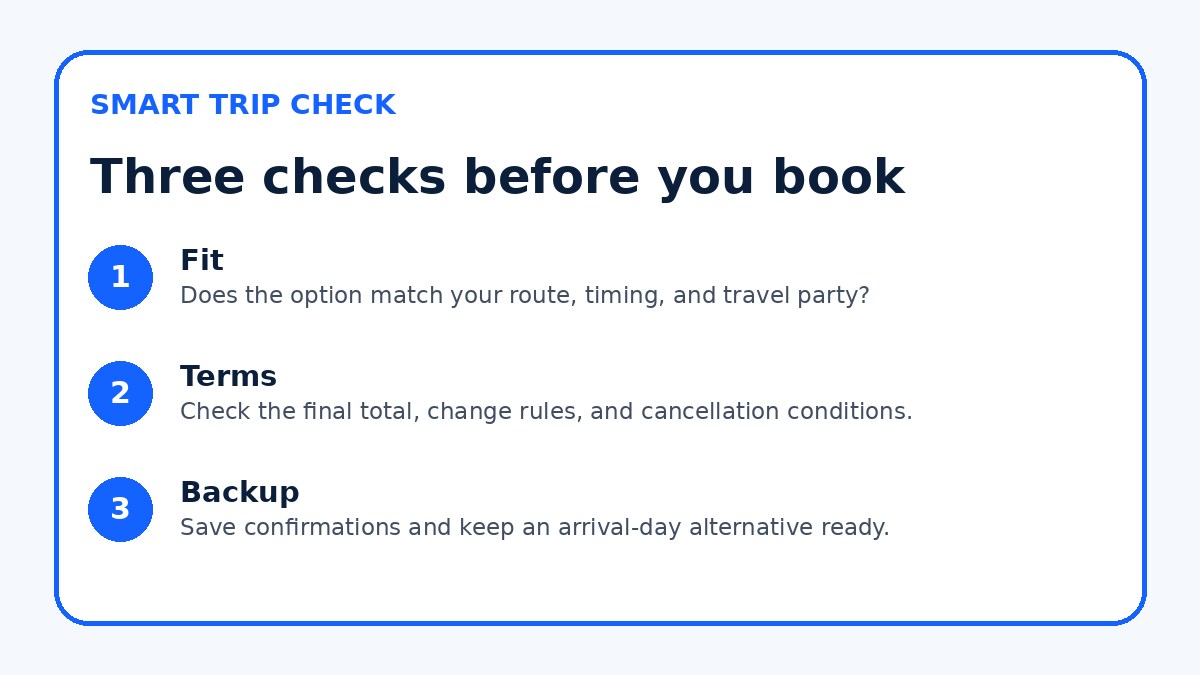
A late arrival in Melbourne doesn’t have to complicate a business trip if you plan the arrival and the first morning in advance. Focus on three practical checks before you book: clear late check-in procedures, a safe and simple arrival route, and the hotel services you need to perform the next morning. Choose a location that reduces the highest risk for your schedule—either the shortest late-night transfer or the shortest morning commute—and verify policies on the hotel’s booking page or by phone. With those choices made and a few contingency contacts saved, you’ll turn an off-hour arrival into a manageable part of your business trip.
Continue planning
Check current options and final conditions
Use the provider page to confirm live availability, the final total, cancellation terms, and every condition that matters to your trip.
This evergreen planning guide was created with AI-assisted drafting and a structured quality review. It does not display live prices, schedules, availability, visa guidance, or provider rankings. Verify current details before booking. Some links are affiliate links; we may earn a commission at no additional cost to you.