If you and your partner want to book Melbourne hotels, pick the area that matches what you’ll actually do most days: late-night dining and shows, relaxed riverside strolls and cafés, beach time with quieter nights, or a local residential feel with short tram rides into town. For couples who value atmosphere over a lowest price, the right neighbourhood often matters more than a specific hotel brand. This guide gives a short recommendation up front so you can shortlist an area, then explains the tradeoffs—daily routing, how room layout affects privacy or work needs, and the booking terms to verify before you confirm. Read the quick recommendation, then use the sections to match your trip rhythm and shortlist one area to open hotel inventory with confidence.

Check live stays in the areas that fit
Use your dates and party size to compare current rooms after you narrow the neighborhood fit.
Which area fits your couple style best
Decide first how you want to spend most of your time together. If you picture late dinners, rooftop bars and theatre, the central business district (CBD) and nearby laneway precincts will deliver the atmosphere and immediate access you want. If you imagine long riverside walks, gallery-hopping, and sitting at a waterside café with fewer taxis and more predictable foot traffic, Southbank and South Melbourne meet that need. Beach-oriented couples should prioritise St Kilda or Brighton for sea air and promenade strolls, accepting a longer transfer into the CBD for big-city evening events.
For partners who want to live like locals, inner-north or inner-south suburbs such as Carlton, Fitzroy, or Prahran offer tree-lined streets, boutique restaurants, and a quieter hotel rhythm after dark. These neighbourhoods typically require a short tram or rideshare into the core for some attractions, but reward you with authentic café culture and evening options that feel neighbourhood-scale rather than tourist-focused. Match the area to whether you prefer being in the centre of action or based somewhere that feels like a local home base.
Choose an area-selection strategy
| Area approach | Best for | Tradeoff to check |
|---|---|---|
| Central CBD stay | Couples focused on nightlife, theatre, and walkable dining. | Higher evening noise and typically smaller hotel rooms compared with suburban options. |
| Riverside (Southbank/South Melbourne) | Couples who want scenic walks and easy gallery access with quieter nights. | Short tram rides to some city attractions; fewer late-night local options than CBD. |
| Beachside (St Kilda/Brighton) | Couples prioritising sea views, relaxed days and coastal cafés. | Longer transfers into the CBD for theatre or late dinners; quieter evening transport options. |
| Neighbourhood base (Fitzroy/Carlton/Prahran) | Couples wanting local character, boutique dining and a residential atmosphere. | Requires short tram or rideshare trips to reach central attractions and major museums. |
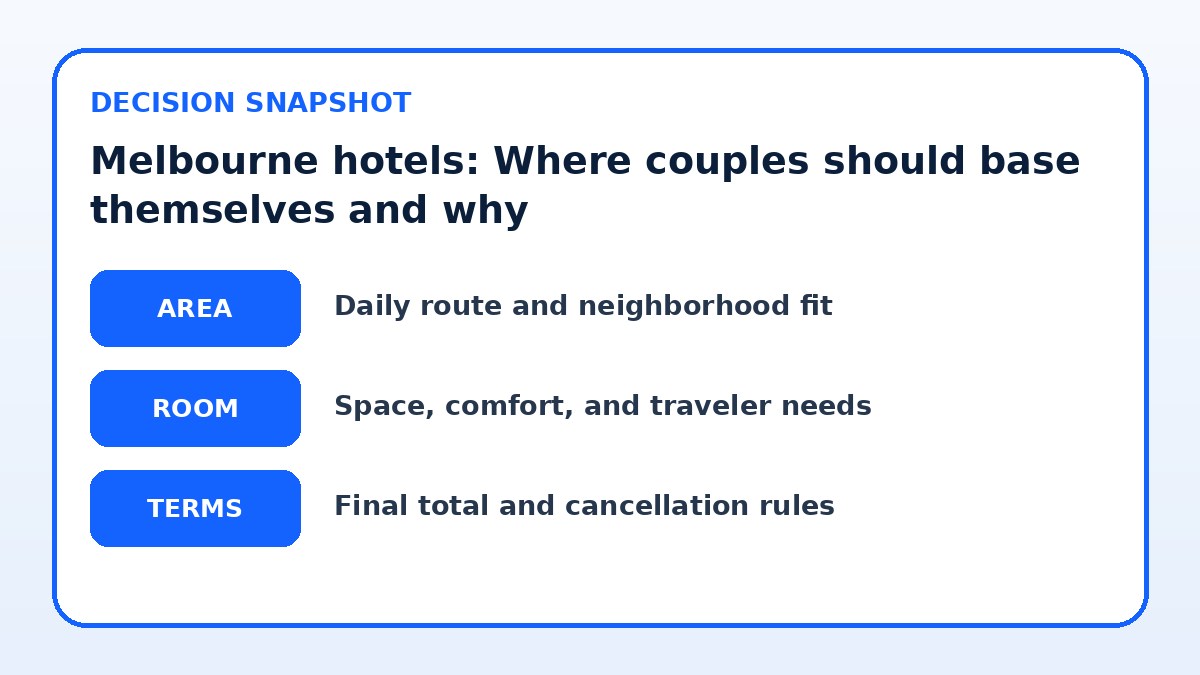
Daily-route friction: time and transport tradeoffs
Think about how you’ll move between your hotel and planned activities. Staying in the CBD minimizes walking or public-transport changes for theatres, laneway dining, and high-rise views, but you may face more street noise at night. Riverside areas like Southbank add scenic walking routes and usually a short tram ride to the CBD; that gives you balance but introduces small daily transit choices. Check whether your hotel is steps from a tram stop if you plan to use trams frequently, and verify walking routes after dark for safety and lighting if you’ll return late on foot.
Beachside stays reduce transfer stress when your plan is morning beach time and afternoon café relaxation, but they increase travel time for city-focused evening plans. If you and your partner plan to split days—beach mornings, theatre nights—factor in transfer time and how often you’re comfortable moving between areas. For neighbourhood bases, count on short tram rides or a single rideshare to reach major attractions; that tradeoff often gives a calmer evening and more authentic dining choices but means tolerating incremental transit coordination.
Now compare like with like
Keep the same dates, guests, room needs, and cancellation preferences while you compare the final choices.
Room and party needs: what to check before opening inventory
Couples’ room needs vary widely: do you want a large suite with a separate sitting area, a private balcony for morning coffee, or a compact room with a great view? When you open hotel inventory, filter for bed type (double/king), room layout, and whether the property advertises rooms with balconies or seating areas. If either of you needs workspace or reliable Wi‑Fi, check the hotel’s description for room desks and read recent guest notes on connectivity; confirm specifics on the hotel’s booking page since these details can change.
Noise and privacy are common dealmakers for couples. If a quiet night is important, examine whether rooms face a main road or a courtyard, and consider higher floors or properties advertised as boutique or residential-style. For early departures or flexible plans, verify the hotel's luggage-hold policy and whether late check-out is possible to avoid awkward time pressures. On the booking page, look for clear room photos and cancellation terms so you can compare options with confidence.

Hotel booking check before payment
- Shortlist one neighbourhood that matches your daily rhythm (evenings, beach, galleries, or local cafés) before searching hotels.
- Filter hotel inventory for bed type, room layout, and whether the room has a balcony or separate seating area.
- Confirm the property’s cancellation and prepayment terms on the hotel’s final booking page before you enter payment details.
- Verify proximity to a tram stop or train station and check walking routes from the hotel to planned evening venues.
- Read recent guest notes for comments about noise, Wi‑Fi reliability, and actual room sizes to avoid surprises.
- Compare a flexible-rate option with a non-refundable rate for the same hotel to decide which matches your trip certainty.
Final booking terms to verify before you confirm
Always verify cancellation and change policies on the hotel’s final booking page—these can differ between distribution channels. Look for the deadline to cancel without charge, whether prepayment is required, and if any deposits are refundable. If you have schedule uncertainty, prioritise flexible policies or compare two properties: one with a flexible rate and another with a slightly lower non-refundable rate to decide after you’re certain of travel plans.
Also check practical matters that affect couple comfort: whether breakfast is included or available on-site, the hotel’s policy on early check-in or late check-out, and any additional fees for parking, extra guests, or in-room extras. If you plan to use Trip.com to compare availability, use it as a convenience to view options but verify room details and final terms on the hotel or chain’s official booking page before confirming.
Hotel Guide questions travelers ask
Is the Melbourne CBD the best area for couples who want nightlife and dining?
The CBD is ideal if you prioritise immediate access to restaurants, bars, rooftop venues and theatres because many options are walkable from central hotels. However, central hotels can be busier and noisier at night; if a quieter sleep is important, consider a riverside hotel just across the Yarra or a boutique property in a nearby neighbourhood that still offers quick access to nightlife via a short tram or rideshare.
Should couples choose a beachside suburb like St Kilda over a city location?
Choose a beachside suburb if mornings on the sand, coastal walks and relaxed café culture are central to your plans—St Kilda and Brighton give that atmosphere. Expect longer transfers into the CBD for theatre nights or late dinners, and check hotel proximity to public transport if you don’t want frequent rideshares. If you plan to split beach days with city evenings, factor transfer time into your daily rhythm.
How can we judge whether a room is quiet and private before booking?
Look at room photos and descriptions for whether the room faces a courtyard or main road, and prefer higher floors when noise is a concern. Read recent guest comments on noise and privacy, and confirm whether the hotel offers rooms with soundproofing or interior-facing layouts. If this is critical, contact the hotel via their official page to request a quieter room and check the response before you book.
Final decision note
Choose the Melbourne neighbourhood that fits your couple rhythm rather than starting with a hotel brand. If evenings out, theatre and a wide range of dining matter most, shortlist the CBD or adjacent laneways. For scenic walking and gallery time with calmer nights, shortlist Southbank or South Melbourne. If the beach is the point of the trip, focus on St Kilda or Brighton and accept longer transfers into town. For a local, residential feel, pick Carlton, Fitzroy or Prahran and expect short tram rides to major attractions. With a neighbourhood selected, use filters for room layout, bed type and quiet-facing rooms, then confirm cancellation, prepayment and any extra fees on the hotel’s booking page before you pay.
Continue planning
Check current options and final conditions
Use the provider page to confirm live availability, the final total, cancellation terms, and every condition that matters to your trip.
This evergreen planning guide was created with AI-assisted drafting and a structured quality review. It does not display live prices, schedules, availability, visa guidance, or provider rankings. Verify current details before booking. Some links are affiliate links; we may earn a commission at no additional cost to you.