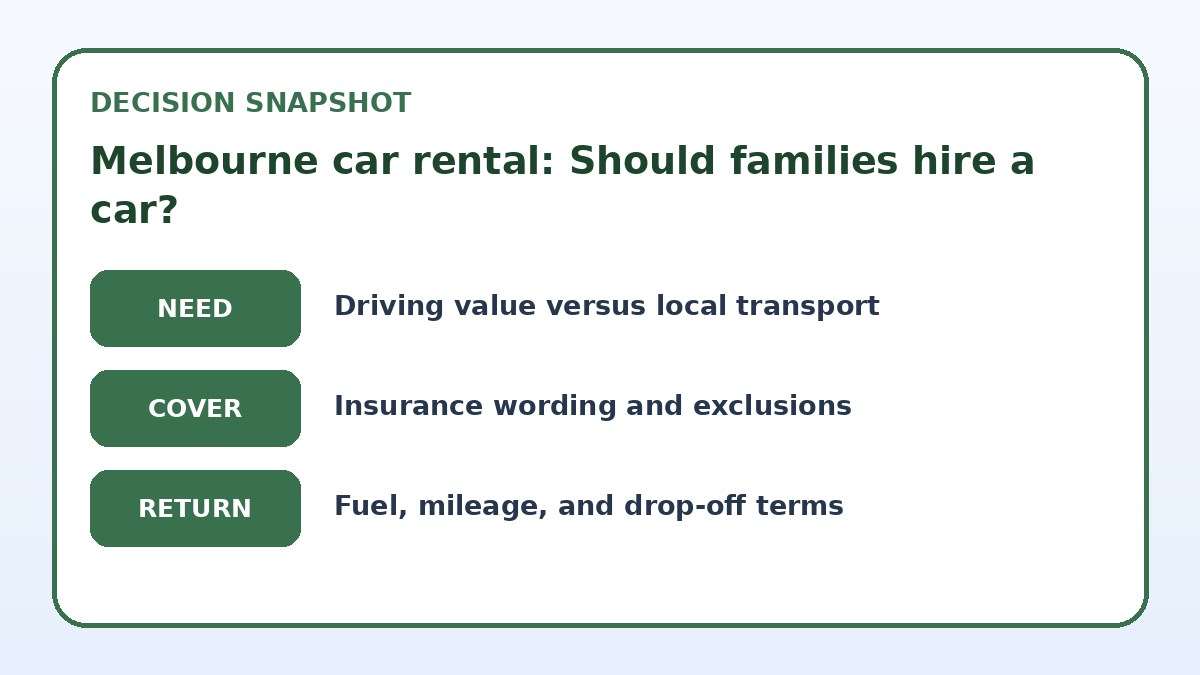
Practical answer up front: many families don’t need a rental car for central Melbourne stays, but a hire car makes sense if you plan sustained day trips outside the city, are travelling with bulky gear, or want flexible door-to-door schedules. Melbourne’s public transport—trams, trains and buses—covers the central grid and inner-suburbs well; parking, traffic and one-way trip logistics can reduce the convenience of a car inside the city. Before you book, list your main activities, lodgings and the ages of children, then compare travel time, convenience and running costs against the ease of public transport or private transfers. This article breaks down those tradeoffs, explains when a car is the better family choice, and gives a practical checklist so you can check the few details that actually change the decision.
See current options before you compare the details
Availability and final conditions change. Open Trip.com now or keep reading for the practical comparison.
How Melbourne’s transport layout affects family car needs
Melbourne’s transport network is concentrated around a compact downtown grid served extensively by free-tram zones, frequent trains and an approachable tram network for short trips. For families staying in the CBD, Southbank, Docklands or nearby inner suburbs, destinations such as Federation Square, the Melbourne Museum, the Royal Botanic Gardens and many child-friendly cafes are short tram or walking distances away. Using public transport avoids searching for parking, which can be stressful with toddlers and strollers, and it typically keeps transit time predictable during peak hours.
Outside the inner city the pattern changes: coastal towns, the Great Ocean Road, the Mornington and Bellarine Peninsulas, and the Dandenong Ranges are all easier to reach with a car. These trips usually involve rural roads, infrequent public transport, and small towns with limited taxi supply. If your family’s plan centers on nature, beaches or small-town exploring where public services are patchy, having a rental car often makes logistics simpler, reduces wait times, and lets you carry picnic gear, prams or sporting equipment without juggling multiple transfers.
Family comfort and safety considerations
Comfort factors—child seats, space for luggage, and climate control—matter more when travelling with infants and young children. Rental agencies provide booster and infant seats but policies, availability and installation rules vary; always verify exact seat types, installation instructions and extra charges on the supplier’s booking page before you book. Also consider how much time your family spends in transit: long drives between day-trip points can be tiring for little ones, so plan realistic driving legs with frequent stops and consider breaking larger drives into overnight stays.
Safety also includes local driving conditions and urban rules: Melbourne’s suburban and regional roads can feature narrow shoulders, winding coastal segments and different speed limits from what you might expect. If you prefer to avoid driving in unfamiliar conditions or at night, factor that into your decision. For families who don’t drive regularly, hiring a car introduces responsibility for route planning, parking and local road rules; balancing that against the convenience of direct door-to-door travel will shape the right choice.
| Approach | Best for | Tradeoff to check |
|---|---|---|
| Full-trip rental (car for entire stay) | Families doing multiple remote day trips or staying outside central Melbourne | Higher parking, fuel and urban driving stress; may be unnecessary for inner-city-focused itineraries |
| City-only public transport with occasional rideshare | Families staying in the CBD or inner suburbs who plan mostly short outings | Less flexibility for rural day trips and more logistics when carrying bulky gear |
| Mixed approach (rent only on specific days) | Families with a few planned long drives but mainly city activities | Requires extra planning to coordinate pickup/drop-off and luggage handling |
| Private transfers or guided day tours | Families wanting door-to-door convenience without driving responsibility | Higher per-trip cost but avoids parking, route planning and child-seat logistics |
Ready to check the option that fits your plan?
Use your exact dates and traveler details so the provider page can show the current total and conditions.
Cost tradeoffs: beyond the headline hire rate
The rental rate advertised is only one part of the cost picture. Add fuel, parking (especially at hotels and attractions), tolls, child-seat fees, insurance extras and potential one-way drop charges. For city-centred trips, pay-per-ride public transport, family-day passes and occasional rideshares often beat the combined cost of hire plus parking. If your lodging includes free or cheap parking, the economic advantage of a car improves for day trips, but verify whether parking is actually suitable for families—covered, secure and child-safe.
Consider time as a cost too. Driving can save time on door-to-door rural itineraries but lead to longer, slower trips within dense urban areas due to traffic and parking searches. If the schedule includes timed activities like children’s performances or museum entry slots, factor potential delays into both car and public-transport options. Calculate a realistic daily budget that includes incidental childcare comforts you’d buy on the road, and compare that to the aggregated convenience and flexibility a car provides for the days you’d need it.
Before you book
- List every planned destination and label each as ‘inner-city’ or ‘rural/coastal’ to see how many days truly need a car.
- Check whether your accommodation offers family parking, its size restrictions, and whether the cost is included in your rate.
- Confirm child-seat availability, exact model specifications and daily fees on the rental provider’s booking page before reserving.
- Estimate total fuel and parking costs for planned drives and compare this against public transport and tour prices for the same days.
- Decide on one primary driver and add additional drivers on the booking if someone else might need to drive.
- If renting for specific days, arrange pickup/drop-off times that match your family schedule and allow buffer time for delays.
Practical booking and on-trip checks
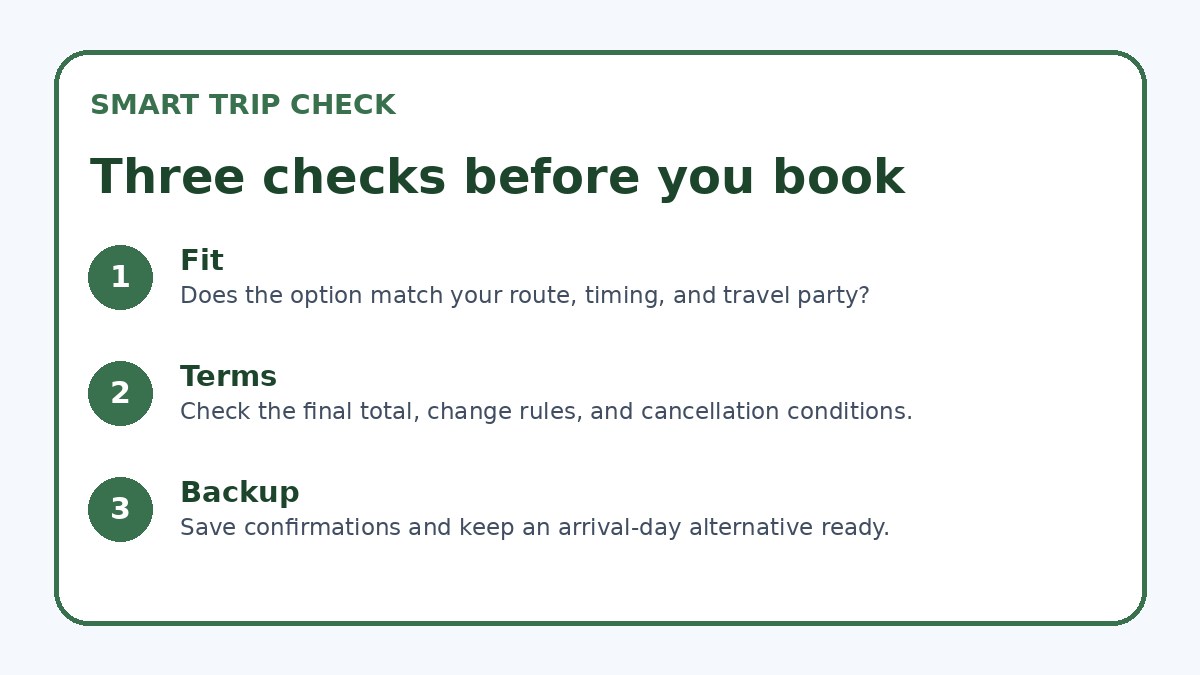
If you decide a rental fits your family, prepare before pickup: reserve the correct number and type of child seats, pick an appropriate vehicle size with easy rear access, and check allowed additional drivers. On the booking page verify fuel policy, insurance excess and what the supplier requires for deposit holds. If you plan to cross state lines—for example, heading to coastal regions or regional Victoria—confirm any restrictions with the rental company and whether additional coverage or permissions are needed.
For mixed plans, consider a hybrid approach: use public transport while in the city and book a car for specific day trips. When you reserve short-term hires, compare pickup and drop-off locations, opening hours and shuttle times—these factors affect travel time with children and luggage. Trip.com can be one place to compare current availability and conditions, but always confirm the exact vehicle, fees and policies on the provider’s final booking page before completing payment.
Frequently asked questions
Can I rely on Melbourne public transport with young children instead of renting a car?
Yes—Melbourne’s trams, trains and buses work well for many family activities within the CBD and inner suburbs. Strollers are commonly accommodated on trams and trains, though peak times can be crowded. For short museum visits, playgrounds and city dining, public transport is often simpler than parking. If your kids require midday naps or you’re carrying a lot of gear, consider the convenience tradeoffs: a short taxi or rideshare can bridge the gap for a single outing, while a rental becomes more practical for multiple full-day trips to regional areas.
How do I choose the right rental vehicle for a family in Melbourne?
Prioritise passenger comfort and easy access—five-door hatchbacks or compact SUVs work well for families. Check rear-door opening angles for installing car seats, and make sure boot space fits prams and luggage together. If you plan beach or mountain drives, a slightly larger vehicle with higher clearance may be more comfortable. Always verify the exact vehicle class and dimensions with the provider before booking and confirm whether extras like roof boxes or additional child seats are available and at what cost on the rental company’s final booking page.
Are there driving or permit restrictions families should know about when leaving Melbourne?
Most regional roads in Victoria don’t require special permits for hire cars, but rental companies may restrict travel in certain remote areas or on unsealed roads—always confirm permitted travel zones. If you cross state borders or plan an interstate drop-off, check for additional fees or paperwork. Also familiarise yourself with local road rules like speed limits, school zone hours and automated speed enforcement. For any specific route restrictions or additional coverage needs, verify details directly on the rental provider’s booking and terms pages before you travel.
Final planning note
Deciding whether a Melbourne car rental fits your family trip comes down to your mix of city and regional plans, how much luggage and equipment you’ll carry, and how comfortable you are with urban driving and parking. If most days are inner-city, public transport plus occasional rideshares usually keeps stress and expense down. If your itinerary includes multiple day trips to the coast, wineries or national parks, a rental provides flexibility and practicality. Use the checklist to tally real needs, verify child-seat and insurance details on the rental page, and consider renting only for the days that truly benefit from a car.
Continue planning
Check current options and final conditions
Use the provider page to confirm live availability, the final total, cancellation terms, and every condition that matters to your trip.
This evergreen planning guide was created with AI-assisted drafting and a structured quality review. It does not display live prices, schedules, availability, visa guidance, or provider rankings. Verify current details before booking. Some links are affiliate links; we may earn a commission at no additional cost to you.