If your Melbourne trip is mainly meetings in the CBD and inner suburbs, you may not need a car. But if you have multiple off-site calls, flexible meeting times, or overnight stays in outer suburbs or regional Victoria, driving can save time and keep you on your own schedule. For business travelers the critical details are pickup and return terms: collection windows, out-of-hours policies, authorised drivers, fuel and cleanliness expectations, airport or CBD location penalties, and where liability shifts at handover. This article gives the practical answer up front, then walks through route value, insurance phrasing to check, pickup/return friction points, and a robust non-driving fallback. Use it to decide whether to book a vehicle and exactly which contract clauses to read closely on the supplier’s final booking page — or to choose a mobility strategy that better matches tight schedules and expense rules.
Decide whether driving adds value to your Melbourne itinerary
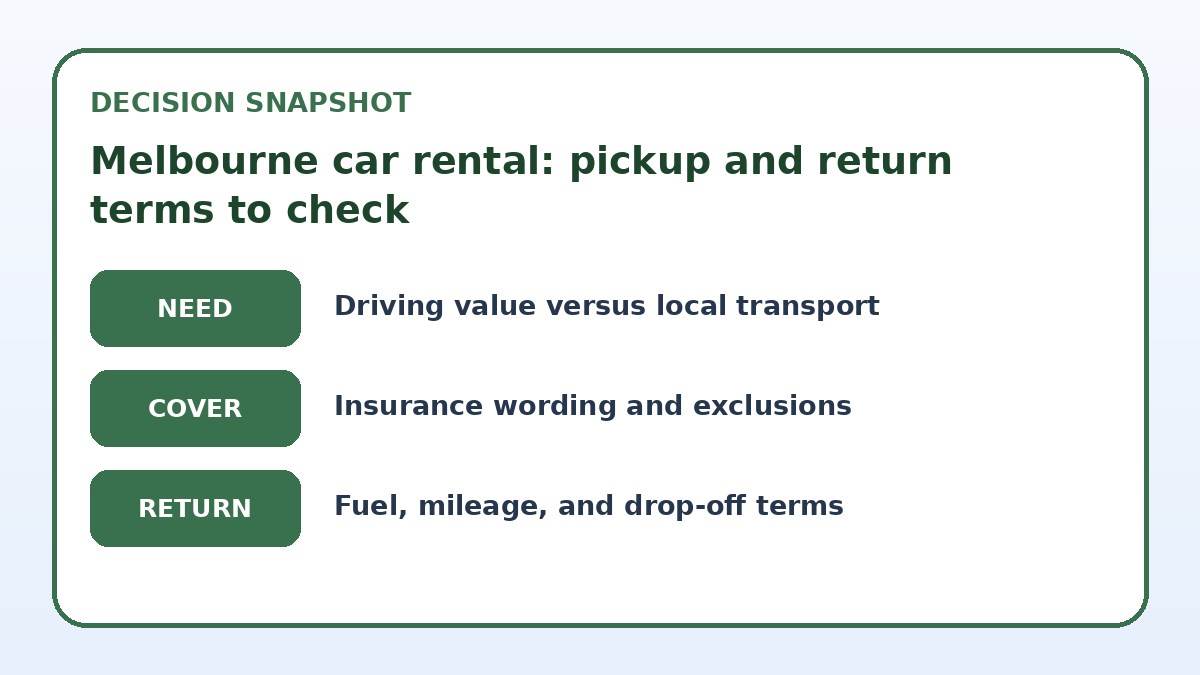
Start by mapping your appointments and their locations: CBD, inner suburbs (Fitzroy, Southbank, St Kilda), or outer suburbs and regional visits (Geelong, Mornington Peninsula). Driving is high-value if you have multiple meetings scattered across suburbs, if you must reach sites without direct rail or tram links, or if you carry equipment. Factor in typical CBD congestion and parking costs — sometimes a short rideshare saves time compared with hunting for parking. Also consider arrival and departure points: if you land at Tullamarine and need to travel north or west, a rental may be convenient; if you’re staying inside the free tram zone, a car may add friction.
Balance travel time against productivity: are you able to work between meetings on trains and trams, or does your schedule demand door-to-door control? Business travelers should also check corporate travel policies on mileage reimbursement, authorised drivers, and allowable upgrades. If your employer pays for taxis or reimbursements favour public transport, driving may be unnecessary. Use calendar clustering to group offsite meetings and compare total door-to-door times for driving versus public transport plus occasional rideshares.
Decide whether driving earns its place
| Mobility strategy | Best for | Cost or friction to check |
|---|---|---|
| Rent a car for the whole trip | Travelers with multiple suburban or regional meetings needing schedule control | Higher administrative work, parking and return rules to manage; must read insurance and pickup/return clauses closely |
| Use public transport plus occasional rideshares | CBD-focused schedules where parking would be more costly or slow | Longer travel times to outer suburbs and dependence on public transit schedules |
| Short-term single-day rental for regional visits | Business trips with one or two days of offsite regional obligations | Requires coordination for pickup and return, and potential extra fees for one-way or after-hours drops |
| Corporate car service or pre-booked chauffeur | High-reliability schedules, late-night travel, or when expenses include direct charging | Higher per-trip cost but fewer disputes about condition or fuel; less personal control over the vehicle |
Check live rental choices only after the route test
Use the exact driver, dates, pickup point, and return plan to compare current conditions.
Understand insurance wording and liability before you book
Insurance wording is where most misunderstandings occur. Look for exact wording about collision damage waivers (CDW), excess amounts, third-party liability limits, and any named exclusions such as tyres, windscreens, undercarriage, and theft. Confirm whether the quoted rate includes CDW and whether it is conditional on not breaching local road rules or off-road use. If you plan to pay with a corporate card or use a company account, verify whether the car supplier allows that payment method to carry insurance. On the supplier’s final booking page check the excess amount in your currency, what triggers a full insurer rejection, and whether you can buy a supplemental reduction.
Also ask whether additional drivers are included or charged, and what identification is required for them. Business trips often have colleagues sharing driving duties; an unlisted driver can void insurance if they are involved in an incident. Note any geographic restrictions — some contracts restrict travel outside Victoria or onto unsealed roads. Keep a copy of the insurance summary or policy reference and store emergency contact numbers locally on your phone and in a company expense note.
Compare the full rental conditions
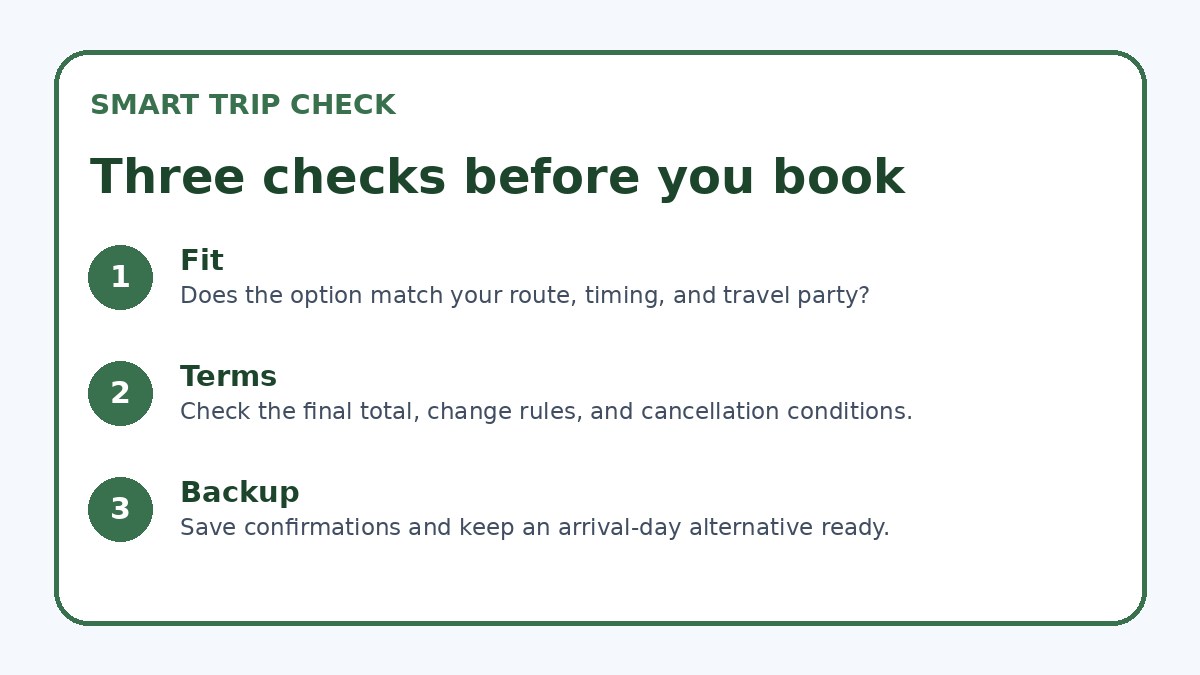
Confirm insurance wording, exclusions, deposit, fuel, mileage, and return terms on the final page.
Pickup and return friction: timings, locations, and hidden steps
Pickup friction starts with collection hours and whether the desk is staffed. Airport counters often have extended hours but can require long queues; off-airport branches may close earlier. Confirm the official pickup window and the procedure for late arrivals — many providers allow after-hours collection but only with prior arrangement and may impose a fee. Check whether the vehicle will be parked at a separate lot, needs a shuttle transfer, or has an automated kiosk check-in. For business travelers with tight schedules, ask about express pickup options or company accounts that speed the paperwork.
Return friction commonly triggers disputes: confirm the fuel policy (same-to-same vs. pre-purchase), where to park for drop-off, and whether after-hours returns require leaving keys in a secure drop-box plus photographic evidence. Take timestamped photos of the car at pickup and return, and record the odometer reading. If returning to a different location (one-way rental), confirm authorised drop-off points and any surcharges. On the booking page verify how final condition assessments are done and how to obtain a receipt showing the exact return time and fuel level to support expense claims.
Car rental terms to verify
- Confirm pickup window and after-hours collection policy on the provider’s final booking page and note any associated fees.
- Verify insurance details: CDW presence, excess amount, covered exclusions, and whether extras can reduce or waive excess.
- Check authorised driver list and required ID for additional drivers to ensure corporate sharers are permitted.
- Read the fuel policy precisely (same-to-same versus pre-purchase) and decide whether to refuel before return to avoid surcharges.
- Document vehicle condition with photos and odometer readings at pickup and return and keep timestamps for expense claims.
- If returning to a different location, confirm authorised drop-off sites, any one-way fees, and how the final return is acknowledged.
Non-driving fallback: efficient alternatives for business trips
If driving is marginal for your schedule, plan a non-driving strategy that meets reliability and time needs. Combine Melbourne’s public transport—trains into the CBD and trams for central movement—with scheduled rideshares or taxis for suburban endpoints. For early-morning or late-night transfers, pre-booked airport transfers or company car services can be more predictable than collecting and returning a rental outside staffed hours. Consider booking hotels near major meeting clusters to reduce transit time; a 10–15 minute local ride is often simpler than parking and returning a car.
Also examine corporate mobility accounts or car services that bill directly to the company; these remove the risk of fuel or condition disputes and simplify expense reconciliation. If you must visit regional sites, consider booking a single-day rental only for that day and using rail or a driver for the rest of the trip. Whatever you choose, ensure your itinerary includes buffer time for delays and verify cancellation and modification rules on the supplier’s booking page before committing.
Car Rental & Road Trip questions travelers ask
Can my corporate card automatically provide insurance for a Melbourne rental?
Some corporate cards offer rental insurance benefits, but coverage varies by card issuer and country. Before relying on card-provided insurance, request a written policy summary and check the exact terms on the rental supplier’s booking page. Important items to verify include whether the card’s insurance covers CDW and loss/theft, what excess remains, exclusions like tyres or windscreen damage, and whether the card’s coverage applies when the vehicle is used for business purposes. Also confirm whether the supplier requires the cardholder to be present at pickup; if not, the card coverage could be void.
What should I do if I arrive outside the supplier’s counter hours at Melbourne airport?
If arrival falls outside customer-service hours, contact the supplier ahead of travel to arrange after-hours collection; many companies offer key-drop or kiosk options but only with prior notice. On the supplier’s booking page check the exact after-hours procedure and any fees. If after-hours pickup isn’t available, consider booking a nearby branch with longer hours or reserving a short taxi to a staffed location. Always take timestamped photos of the vehicle and a record of any communication to avoid disputes about condition or late return charges.
How can I avoid disputes over vehicle condition at return?
Prevent disputes by photographing the car comprehensively at pickup and again at return, capturing close-ups of any marks, the odometer, fuel level, and the parking spot. Save emailed or in-app confirmations that record the return time and the staff member or drop-box receipt. Familiarise yourself with the supplier’s damage assessment process on the booking page, including the timeframe for damage claims and how to access evidence. If possible, request an immediate inspection and signed return receipt at drop-off; if that isn’t available, follow the provider’s photo and reporting instructions exactly.
Final decision note
For business travel in Melbourne, the practical choice depends on where your meetings are clustered and how much schedule control you need. Driving offers door-to-door flexibility for dispersed suburban or regional appointments, but it adds a layer of contract and return-management tasks you must handle precisely. Whether you rent for the full trip, for specific days, or avoid a car entirely, read the pickup and return terms, insurance wording, authorised-driver rules, and fuel policy on the supplier’s final booking page. If you prefer not to manage a vehicle, combine public transport with scheduled rideshares or corporate car services to keep your itinerary reliable and your expense reporting simple.
Continue planning
Check current options and final conditions
Use the provider page to confirm live availability, the final total, cancellation terms, and every condition that matters to your trip.
This evergreen planning guide was created with AI-assisted drafting and a structured quality review. It does not display live prices, schedules, availability, visa guidance, or provider rankings. Verify current details before booking. Some links are affiliate links; we may earn a commission at no additional cost to you.