If you’re traveling London to Paris with children, the practical choice is usually the option that reduces stress for the whole family: fewer transfers, predictable ground transport, and seats that let everyone rest. Start by comparing direct and single-connection itineraries, then layer in airport transfer times, baggage rules, and how the timing fits naptimes or bedtime. Don’t assume a single metric — price, total door-to-door time, and the number of handoffs each affect comfort differently. Decide what’s non-negotiable (one carry-on per child? a guaranteed window or aisle?) and use that to filter flights and trains. Below you’ll find how to weigh tradeoffs, what to verify on airline or train booking pages, and a checklist that keeps parents from scrambling at the gate.
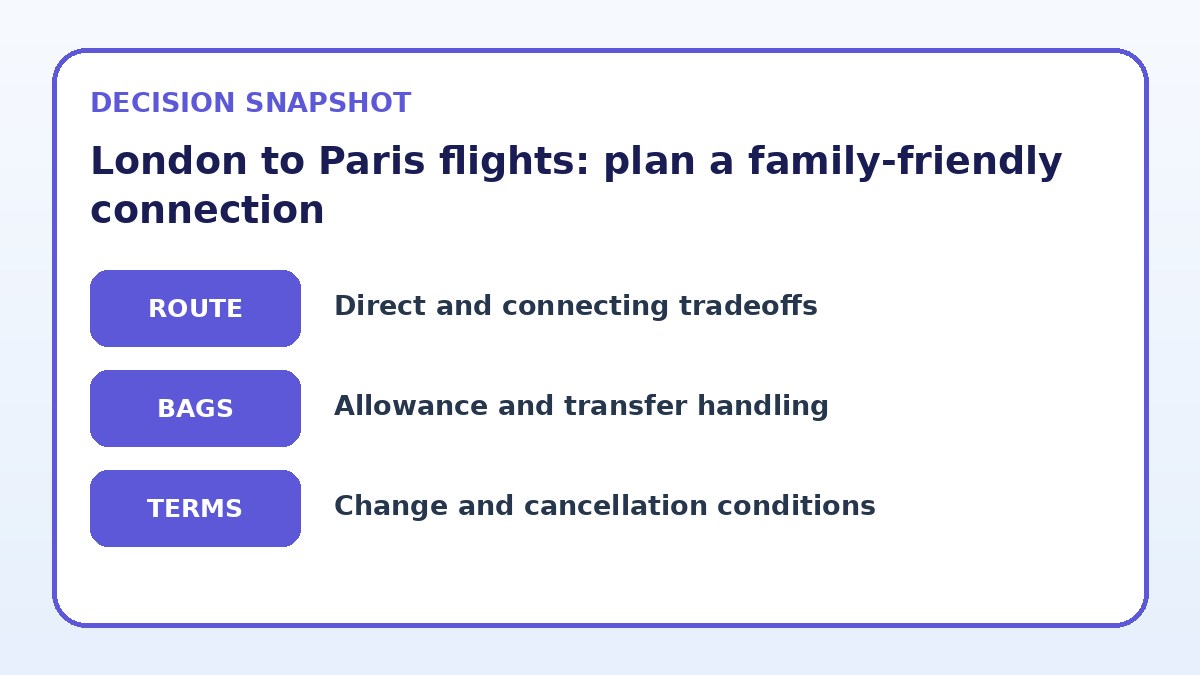
See current options before you compare the details
Availability and final conditions change. Open Trip.com now or keep reading for the practical comparison.
Compare direct flights and single-connection itineraries
Direct flights between London and Paris are usually the simplest family choice because they eliminate the hassle of rechecking luggage, navigating a new terminal, or calming children during a tight transfer. When assessing a direct option, look beyond airborne time: consider travel time to the departure airport, expected security and passport-control queues, and how the flight time fits your child’s sleep schedule. A slightly longer direct flight that departs or arrives at convenient times can be far less disruptive than a shorter itinerary with a stressful transfer.
Single-connection itineraries can make sense when direct options are expensive or unavailable, but they introduce new planning points. Check where the connection happens — changing airports or terminals is a significant inconvenience for families. Also learn whether you’ll need to collect and recheck bags or pass through border controls. If the connecting airport has family facilities (play areas, family queues), that can offset the added complexity, but never assume those services are available; confirm with the provider before booking.
Timing the trip: departures, naps, and avoiding busy periods
Choose flight times that align with your children’s routines whenever possible. Early morning departures can be quieter through security and may let kids sleep on the plane, while early evening flights risk overtired meltdowns if delays occur. Midday departures can be a compromise, but require planning for in-air meals or quiet activities. Factor in ground travel: an early flight from a distant London airport could mean waking children well before their normal time, which may outweigh potential in-flight sleep benefits.
Airport crowding and peak travel windows matter more for families than single travelers. Busy times mean longer queues at check-in, security, and passport control, and fewer quiet places to regroup between segments. If you must travel during a peak period, build extra buffer into your schedule and consider services like family lanes, Meet & Assist, or paid fast-track security if available. These options reduce stress but require verification and advance booking on the provider’s site.
| Approach | Best for | Tradeoff to check |
|---|---|---|
| Direct flights | Families prioritising simplicity and fewer handoffs | May depart/arrive at less convenient times or be pricier |
| Single-connection flights | Families needing cheaper options or broader schedule choices | Adds transfer complexity and potential delay risk |
| Train-first options (e.g., London to central Paris by rail) | Families who want minimal door-to-door transfer and city-centre arrival | Longer onboard time may be tiring for very young children |
| Mixed transport (flight + rail/taxi) | Families balancing airport choice with local ground-time needs | Requires careful scheduling and extra attention to baggage rules |
Ready to check the option that fits your plan?
Use your exact dates and traveler details so the provider page can show the current total and conditions.
Seat, baggage, and stroller strategies for smoother transfers
Reserve seats early so family members sit together and you can choose configurations that work for you — bulkhead rows for bassinets, aisle seats for quick bathroom access, or window seats to help children stay occupied. If the airline releases free seat maps only at check-in, consider paid seat selection for certainty. For connections, coordinate seat choices across both legs so your family isn’t split in the event of schedule changes; this is especially important on itineraries involving different carriers.
Baggage and stroller rules vary widely, and misunderstandings are a common source of stress. Confirm how many checked bags, cabin items, and car seats are allowed on each carrier or train operator on the final booking pages. Learn whether strollers are gate-checked or must be dropped at baggage claim after connections. When traveling through different providers, check whether baggage transfers are automatic or require manual recheck; if manual, pack essentials and a change of clothes in carry-ons so you’re ready if a bag is delayed.
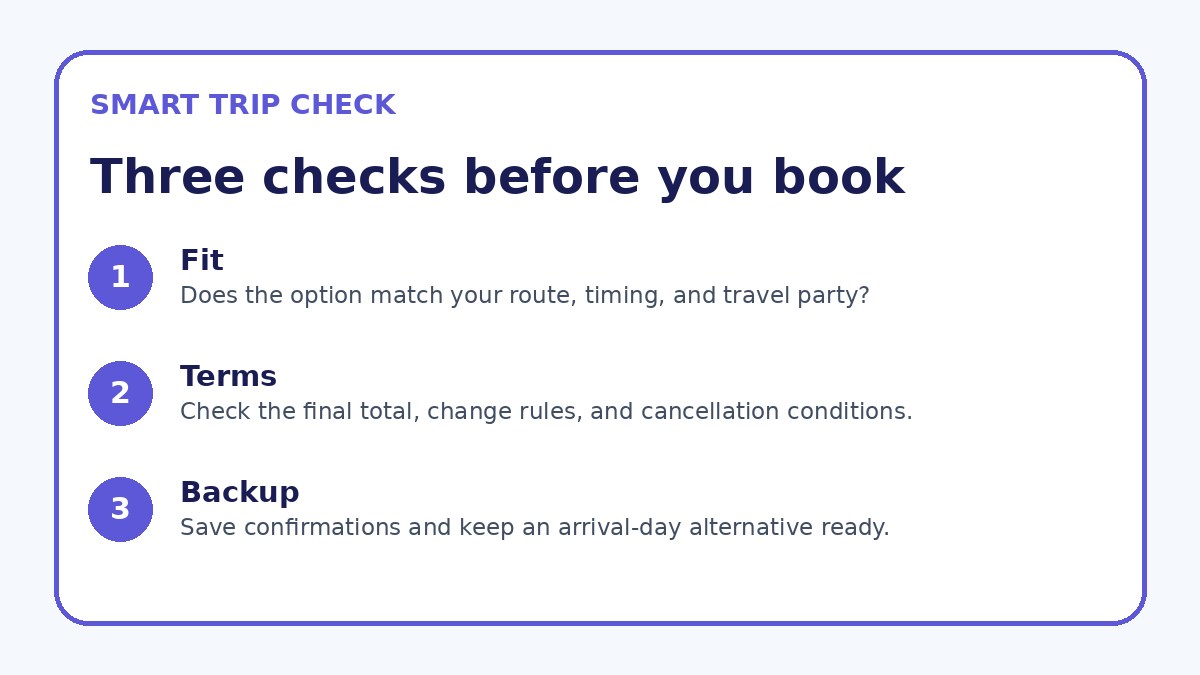
Before you book
- Check whether your chosen option is direct or requires a connection and note any terminal or airport changes.
- Verify seat assignment policies and reserve family-friendly seats early on the airline or train booking page.
- Confirm baggage, stroller, and car-seat rules for every carrier on the final booking pages; pack essentials in carry-ons.
- Plan transfers by mapping door-to-door time and pre-booking taxis or rail tickets when possible.
- Add at least 60–90 minutes buffer beyond minimum connection advice for family transfers, more during peak times.
- Prepare a compact emergency kit with snacks, medication, wipes, spare clothes, and quiet activities for each child.
Transfers and ground transport: door-to-door planning
Door-to-door time is often the most useful metric for families. Compare airport options in London and Paris by how long they take to reach hotels and attractions when factoring in peak traffic. Trains like Eurostar (verify schedules at booking) may arrive in central Paris, removing the need for long transfers and making them a strong alternative to flying for families who value simplicity. When using flights, check official ground-transfer times and reserve private or pre-booked taxis for late arrivals to avoid long waits.
If you have a connection, map out the transfer route between terminals or airports before travel. Note the required minimum connection time advised by the carrier, but add your own margin for stroller breakdowns bathroom visits and delays. If a tight connection is unavoidable, pack a small emergency kit with snacks, wipes, medication, spare layers, and entertainment to bridge any waits. Finally, always verify transportation options and routes on the provider’s final booking page and local airport websites, since ground connections and terminal layouts can change.
Frequently asked questions
Is flying or taking the train from London to Paris better for families?
Both can work well depending on your priorities. Trains that run between central London and central Paris typically avoid airport transfers and can be easier for children who need familiar space to move. Flying may be faster in pure travel time but usually requires extra time for check-in, security, and airport transfers. Compare door-to-door time, how each option fits your child’s schedule, and whether transfers add stress. Always check current schedules and baggage rules on the operator’s official booking pages before deciding.
How much connection time should families allow between flights?
Plan more time than minimum connection guidance when travelling with children. A practical rule is to allow at least 90–120 minutes between international flights to account for deplaning, walking between gates or terminals, security or passport control, and bathroom or snack breaks. If a connection requires changing airports, build in substantially more time and consider booking supervised transfers or private transport. Check the airline’s published minimums on the booking page and then add your own family buffer.
What essentials should I pack in carry-on luggage for kids on this route?
Pack items that solve immediate comfort and entertainment needs: snacks that aren’t messy, refillable water bottles, spare clothes, medication and a quick-first-aid item, wipes and hand sanitizer, and small quiet toys or devices with headphones. Include any travel documents, passports, and printed or digital tickets in an easy-to-reach pocket. If you’ll be connecting, add items that cover a short delay or stroller gate-checking—soothing items like a familiar blanket or a favourite book can make transitions smoother for children.
Final planning note
When planning London to Paris flights for a family, make comfort your measuring stick: fewer handoffs, predictable transfers, and seat choices that suit your children matter more than shaving minutes off airborne time. Compare direct flights, single-connection itineraries, and train options by computing door-to-door time and layering in baggage and stroller logistics. Verify all carrier rules on the final booking pages and allow generous buffer time for the unexpected. With the right priorities and a small emergency kit, you’ll reduce stress and turn travel time into an easier part of the trip.
Continue planning
Check current options and final conditions
Use the provider page to confirm live availability, the final total, cancellation terms, and every condition that matters to your trip.
This evergreen planning guide was created with AI-assisted drafting and a structured quality review. It does not display live prices, schedules, availability, visa guidance, or provider rankings. Verify current details before booking. Some links are affiliate links; we may earn a commission at no additional cost to you.