Choose the neighbourhood first, then the hotel. For a short London trip, couples should match energy level, sightseeing plans and nightly routine to a single area to avoid time lost on transit. If you want museums and leafy walks, base in South Kensington or Bloomsbury; if nightlife and theatre matter, Covent Garden or Soho; if calmer riverside views and quick Tube links appeal, South Bank or Bankside work well. Decide whether you’ll trade proximity to attractions for quieter evenings or cheaper rooms, then shortlist two blocks to compare actual hotels. This article explains how to weigh daily-route friction, room layout and the booking terms that matter to couples, so you can pick a practical base and then open live inventories with confidence.

Check live stays in the areas that fit
Use your dates and party size to compare current rooms after you narrow the neighborhood fit.
Neighbourhood fit: match vibe to couple plans
A neighbourhood determines most of your trip experience. Think in terms of typical day rhythms: museums and gentle walking days fit leafy Bloomsbury and South Kensington, where museums, cafes and quieter evenings are concentrated. If your dates include a West End show or late dinners, Soho and Covent Garden put you at theatre doors and restaurants, but expect more evening noise and higher foot traffic. For riverside strolls, Bankside and the South Bank combine views, galleries and a more relaxed after-dinner pace. Decide whether you want to be in the middle of activity or a short Tube ride away; that initial choice will narrow hotel options and reduce daily decision fatigue.
If you want a mix of local life and reasonable transit links, consider neighbourhoods like Paddington or Victoria that feel less central on foot but offer fast links to airports and rail hubs. These are sensible for couples who value straightforward arrivals and departures or have early trains. For boutique character and quiet streets, residential areas such as Marylebone or Notting Hill provide charming options with independent shops and cafes, though you might need a short Tube ride to many attractions. List the three activities you’ll do most and choose the area that minimizes travel time to all three.
Choose an area-selection strategy
| Area approach | Best for | Tradeoff to check |
|---|---|---|
| Base in a central tourist hub (Soho/Covent Garden) | Couples wanting walkable access to theatres and restaurants | Higher evening noise and busier streets than residential areas |
| Stay near transport hubs (Paddington/Victoria) | Couples prioritising easy arrival/departure and day trips | Less character on foot and often farther from central attractions |
| Residential boutique areas (Notting Hill/Marylebone) | Couples seeking quiet evenings and local shops | Requires short daily Tube rides to most major sights |
| Riverside or cultural districts (South Bank/Bankside) | Couples who want scenic walks and galleries close by | Fewer late-night dining options and variable public transport at night |
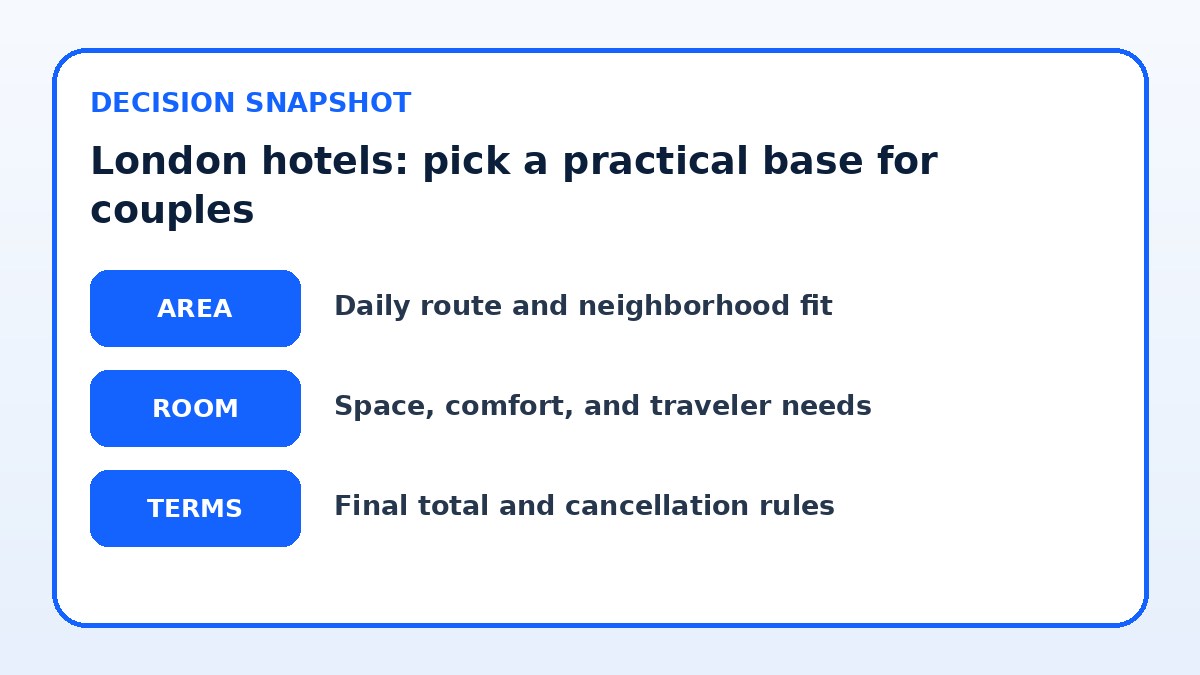
Daily-route friction: measure real travel, not just distance
Walking time, crossing busy streets, the number of Tube changes, and evening transport options shape each day. A hotel two Tube stops from a museum can still feel far if it requires a long walk to the station, a change, and a second walk; map end-to-end routes between the hotel and your top three sites to estimate actual door-to-door time. For evenings, check if the nearest stations run night services on your travel dates or if reliable taxis are easy to find; couples returning late after dinner or theatre appreciate straightforward late-night options. Consider whether you’ll want to walk between dinner and a show—some neighbourhoods are compact and pleasant for evening strolls, others are spread out or brightly lit.
Also think about luggage and short outings: a hotel with a lift and a clear entrance matters when you arrive or depart with bags. If you plan several day trips by rail, a base near a major station such as King’s Cross or Paddington cuts the friction of transfers. Conversely, basing in a pocket of the city for atmosphere may require an extra Tube ride each morning but reward you with quieter nights. Map a typical day itinerary and test it using public-transport planners or walking routes to know what your real daily friction will feel like.
Now compare like with like
Keep the same dates, guests, room needs, and cancellation preferences while you compare the final choices.
Room and party needs: what couples should prioritise
For short stays, room layout and comfort usually trump extras like gym access. Decide whether you need a king-size bed or two singles, a sofa area for reading together, and enough storage for a few days of shared items. A quiet-facing room is often worth a small premium; noise from street life or nightlife can cut into sleep, which is particularly important on short trips. If either of you works or wants to plan while travelling, request a stable table and a comfortable chair. For privacy and convenience, check whether the hotel offers late check-in and a luggage hold on departure day.
Consider bathroom setup: a roomy shower can be surprisingly important after long walking days, and some couples prefer separate bathtub options for relaxation. If you need breakfast included to get an early start, verify hours and whether it’s served a la carte or buffet, since breakfast logistics can affect how efficiently you leave for the day. Ask hotels about adjacent room availability if you’re booking for a party that needs separate sleeping spaces, and confirm bed types and view orientation before finalising reservations to avoid unwelcome surprises.

Hotel booking check before payment
- Map door-to-door travel times from shortlisted hotels to your three highest-priority activities.
- Confirm bed type, room orientation (street or courtyard) and whether a lift serves your room before booking.
- Compare refundable versus non-refundable rates and note the exact cancellation cutoff times on the provider’s final checkout page.
- Verify check-in window, late-arrival procedures and whether the hotel holds luggage after checkout.
- Ask the hotel or booking page whether breakfast, Wi‑Fi and any advertised amenities are included or charged separately.
- Read recent guest comments about noise, renovations and staff responsiveness, and follow up with the hotel if something specific matters.
Booking terms: reduce risk and make comparisons useful
Before you click reserve, check four booking components: cancellation policy, arrival and check-in windows, payment method and the hotel’s stated amenities. Short stays compress risk—missing a single day can feel like a big loss—so favour flexible cancellation if your plans might change. Verify whether the rate requires prepayment or allows pay-at-hotel; also check whether the listed amenities, like Wi‑Fi or breakfast, are included or offered for a fee. When provider-specific facts could change, confirm them on the hotel’s final booking page and in booking confirmation emails.
If a refundable rate is significantly more expensive, weigh the extra cost against your travel certainty rather than assuming one choice fits all. Also confirm ID and credit-card requirements for incidentals at check-in, and read recent guest notes about noise or renovation periods. For final comparison shopping, you can view options on Trip.com as one of several sources, but always cross-check the hotel’s own website and the booking terms presented on the final checkout screen before committing.
Hotel Guide questions travelers ask
How many neighbourhoods should a couple shortlist for a short London stay?
Shortlist two neighbourhoods and two hotels in each area. That gives you a practical set of options without overwhelming the decision. Compare door-to-door travel time to your top three activities, the typical evening vibe and availability of late transport. If one neighbourhood consistently reduces daily friction for your plans, prioritise it. Keeping the shortlist small makes it easier to compare room types, cancellation terms and exact arrival logistics on the hotel pages before booking.
Is staying near a major rail station worth it for a weekend trip?
It can be, especially if you have early arrivals or departures or plan regional day trips. Staying near King’s Cross, Paddington or Victoria simplifies luggage handling and reduces transfer stress. For a short couple’s break, factor whether the neighbourhood atmosphere suits you—stations can be convenient but less charming on foot. If most activities are central, weigh the time saved on rail connections against extra Tube trips into the city centre each day.
What room features should couples always confirm before reserving?
Confirm bed configuration (king, double or twins), exact mattress setup and whether the room faces a street or internal courtyard for noise concerns. Check bathroom type (shower, bath or both), availability of a lift to your floor and space for luggage. If either person needs to work or unwind, ensure there’s a usable table and stable Wi‑Fi. Finally, check the hotel’s policy on early/late check-in and luggage storage so your arrival and departure won’t be rushed.
Final decision note
For a short London stay as a couple, start by choosing the neighbourhood that cuts the most daily friction for your planned activities; that single decision will simplify every subsequent comparison. Focus on room layout—bed type, quiet aspect and a practical bathroom—then verify arrival logistics and the exact booking terms on the hotel’s final checkout page. Narrow to two hotels within one area, compare door-to-door travel times and cancellation terms, and confirm essential amenities directly with the property. With a clear neighbourhood choice and these checks done, you’ll be able to open live inventories and book confidently knowing the base suits your couple’s pace and priorities.
Continue planning
Check current options and final conditions
Use the provider page to confirm live availability, the final total, cancellation terms, and every condition that matters to your trip.
This evergreen planning guide was created with AI-assisted drafting and a structured quality review. It does not display live prices, schedules, availability, visa guidance, or provider rankings. Verify current details before booking. Some links are affiliate links; we may earn a commission at no additional cost to you.