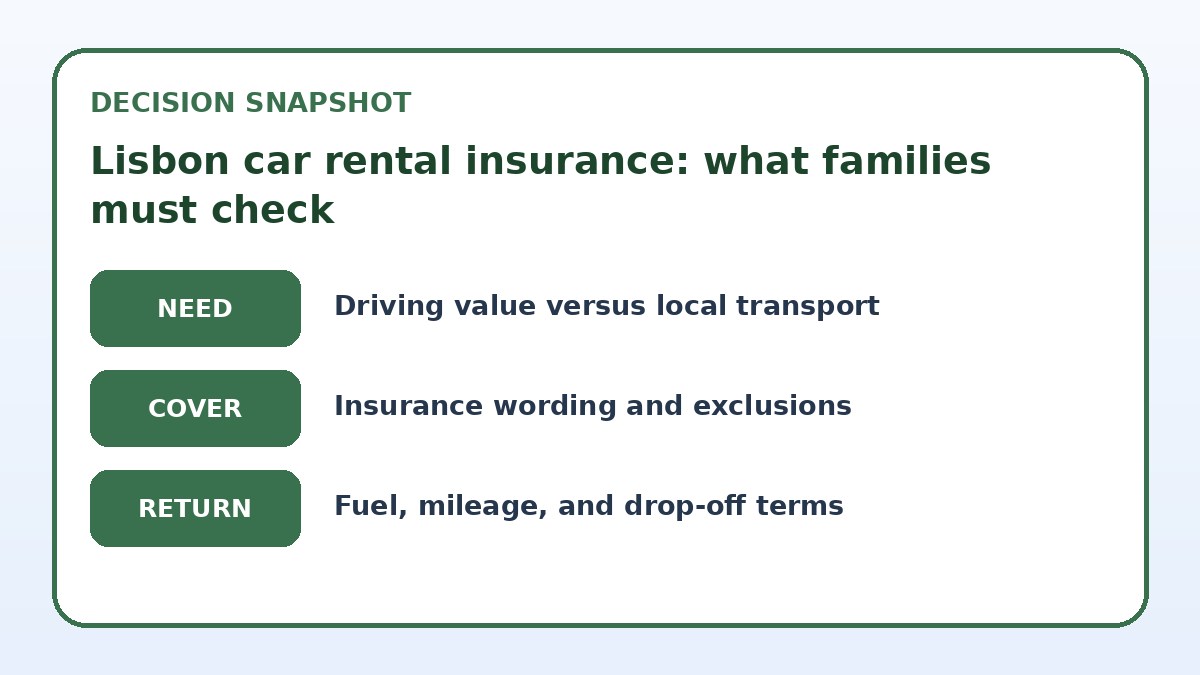
If you’re renting a car in Lisbon with children, the practical answer is simple: focus first on liability limits, collision coverage (CDW/LDW), excess amount, and what’s excluded for drivers and passengers. Make a short checklist before booking that lists the stated excess, whether theft protection is included, whether additional drivers (spouses, partners, or grandparents) are covered at no extra cost, and whether child seats are treated separately under the rental conditions. Keep the booking page and the rental contract open when you call or message the company, and note the exact wording about “damage not covered,” “uninsured third parties,” and “roadside assistance.” Families should also verify how claims are handled—do you pay up-front and reclaim, or does the company handle directly—so you’re not stranded with a large unexpected charge after an accident.
See current options before you compare the details
Availability and final conditions change. Open Trip.com now or keep reading for the practical comparison.
Which insurance words matter most to families
When scanning a Lisbon car rental policy, certain words carry outsize significance for families: liability, excess (or deductible), CDW/LDW (collision/damage waiver), TP (theft protection), and ‘third-party’ cover. Liability refers to bodily injury and property damage to others—the baseline protection required in Portugal. CDW or LDW reduces your financial responsibility for damage to the rented vehicle itself but usually comes with an excess. TP covers theft and sometimes vandalism. Families should pinpoint the numerical limits attached to these words and whether they are per incident, per rental, or per driver, because the way limits are expressed determines what you might owe after even a minor parking lot scrape.
Also watch for qualifiers like ‘comprehensive’ versus ‘basic’ or ‘partial’ coverage, and the word ‘exclusion,’ which signals situations where no cover applies. Exclusions often include misuse (for example, driving off-road), unauthorized drivers, and damage from unsecured children in the car. Some policies specify that items like child seats are not covered if they are damaged in an accident, even if the driver isn’t at fault. For a family, a policy that explicitly names these household scenarios gives more certainty than a vague promise of coverage—so highlight those lines and, if unclear, get written confirmation from the rental provider before you travel.
Excess (deductible): size, reduction options, and who pays
The excess—or deductible—is the amount you must pay toward damage before any insurer or waiver covers the balance. For families, the practical risk is that a child-related scuff or a parking lot dent can trigger a claim where you’re responsible for a significant portion. Some rental companies sell a ‘super’ or ‘zero-excess’ waiver to reduce this amount to zero, while third-party insurers sell similar excess-reduction products. When weighing these, read whether the reduction covers all damage types (glass, tires, undercarriage) or excludes common family mishaps like child-seat-related stains or interior damage.
Decide whether to buy the reduction from the rental company or an independent insurer by checking contract terms: some rental contracts require you to pay the full excess at the desk and then claim reimbursement later from a separate insurer—this affects cash flow on vacation. If you prefer not to front a high sum, ensure the booking page or contract states whether a credit-card pre-authorization will cover the excess and how long blocks remain on the card. Verify on the supplier’s final booking page how refunds work, the documentation needed for claims, and the timeline for returned holds so you’re not surprised when the authorization clears.
| Approach | Best for | Tradeoff to check |
|---|---|---|
| Minimal included cover (lowest base rate) | Families who only need a car for short, low-risk city drives and will accept higher excess. | Lower upfront cost but higher potential out-of-pocket expense for any damage or theft, and limited protection for interior or child-seat damage. |
| Rental-company excess reduction (bought at desk or online) | Families wanting simplicity and reduced out-of-pocket charges in case of damage without dealing with reimbursements. | Higher daily charge that can be nonrefundable; check exact cover items and whether it truly reduces excess to zero for all damage types. |
| Third-party excess insurance | Families seeking lower daily rates than desk waivers while protecting themselves against the rental excess via reimbursement. | You typically pay up-front at the desk and later claim refund from insurer; requires careful paperwork and can delay reimbursements. |
| Fully comprehensive package with additional driver and child-seat cover | Families who want minimal hassle and clear cover for drivers and equipment, ideal for longer trips and varied driving conditions. | Highest upfront cost but reduces administrative burden; still verify exclusions and read claim procedures before relying on it. |
Ready to check the option that fits your plan?
Use your exact dates and traveler details so the provider page can show the current total and conditions.
Who’s covered and how driver rules affect family trips
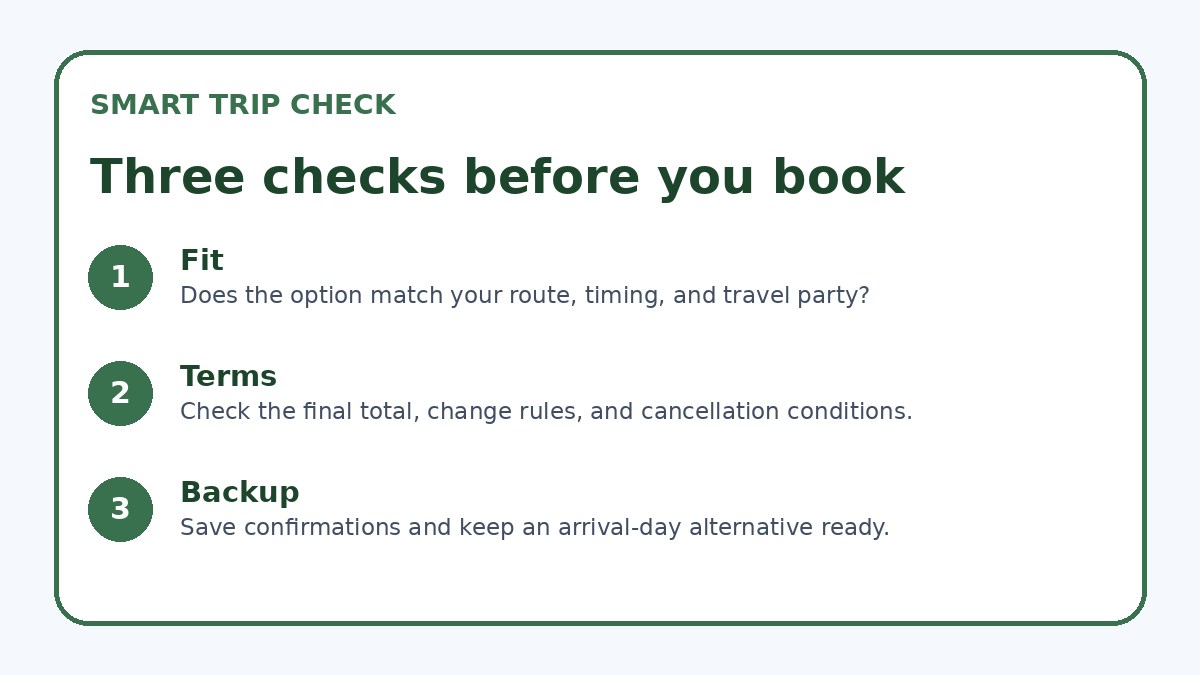
Families often rotate drivers during a holiday; confirm whether additional drivers are free or charged and whether named drivers must present specific documents like an accompanying driver’s license issued for a minimum period. Some policies exclude younger drivers or drivers with a short license history without stating it clearly on generic booking pages. Also check if partners, grandparents, or teenage drivers who might take short stints are contractually allowed; unauthorized drivers typically void insurance, leaving the primary renter financially liable for any damage or injury.
If you plan day trips outside Lisbon where local driving conditions differ—narrow lanes, hilly streets, or rural routes—look for wording about authorized territories. Some insurance covers Portugal only but excludes travel into neighboring countries, or adds conditions for driving on unpaved roads. Families who expect to explore beyond city limits should confirm whether the policy contains explicit territorial limits and whether extra cover is required for excursions that might increase risk, like longer mountain drives or coastal routes where breakdown assistance response times could be longer.
Before you book
- Open the rental terms and find the exact excess amount; make a note of whether it’s per incident or per rental.
- Confirm whether theft protection (TP) and collision damage waiver (CDW/LDW) include glass, tyres, and undercarriage.
- List all potential drivers and ensure each is listed as an authorized additional driver on the booking or contract.
- Photograph the car inside and out at pickup with timestamps and keep the signed inspection report or email confirmation.
- Verify whether child seats are charged separately and whether damage to them is covered under the policy.
- Read the claims procedure on the provider’s final booking page—check required documents, refund timings, and whether you must pay first.
Claims, inspections, and practical steps at pickup and return
At pickup, do a joint inspection with the attendant and photograph the vehicle from multiple angles, including interior and child seats. Ask the agent to initial or sign the inspection report, and keep a copy of any existing damage notes. If the rental company uses a mobile app for check-in, save time-stamped images and confirmation emails. Pay particular attention to pre-existing interior stains, ripped upholstery, or seat-belt malfunctions—these are often contested in family rentals and can lead to disputed damage claims if not recorded at handover.
When returning the vehicle, insist on a signed return receipt or final inspection report stating the car’s condition. If damage is found after you leave, policies vary in how long a company has to report and bill you. Some suppliers charge immediately while others take days to assess. Families should verify on the final booking page whether claims are handled directly by the supplier or routed to a third party, and what documentation (photos, police reports) is required. Knowing the steps reduces the chance of a post-trip charge that’s difficult to contest.
Frequently asked questions
Does the CDW/LDW shown on a booking page always remove my financial liability?
Not always. Collision damage waivers typically limit your liability but often leave a stated excess you’re responsible for. Some waivers reduce excess to zero only if you buy the supplier’s additional reduction or an approved third-party policy. Also check whether CDW/LDW excludes certain parts—glass, tyres, roof, and undercarriage are commonly listed separately. Read the exact wording on the final booking page and in the rental contract for any qualifiers and verify whether the waiver applies to all drivers.
Can an additional family driver be added at pickup, and will they be insured?
Many companies allow additional drivers but charge a fee or require the additional driver to be present with their license, ID, and payment card. Some bookings include one or more additional drivers for free—especially for spouses—so check the booking confirmation. Crucially, insurance often names ‘authorized drivers’ and will deny cover if an unlisted person drives. If you plan for grandparents or teenage drivers to take the wheel, ensure they’re included by name or category on the contract before departure.
What should families do if the rental company finds damage after return?
Immediately request the final inspection report and any photos or notes the company used to assess damage. If damage is reported after you’ve left, ask for timestamped evidence and a clear explanation of when the damage was first identified. Keep your pickup photos, the signed handover and return receipts, and any witness notes. If you used a third-party excess insurer, notify them promptly and follow their claim steps. Verify the supplier’s dispute and chargeback policy on the final booking page to understand timelines and required documentation.
Final planning note
Families planning a Lisbon car rental should prioritize understanding the exact wording on insurance pages rather than relying on labels alone. Identify the numerical excess, what CDW/LDW and theft protection actually cover, which drivers are authorized, and how child seats and interior damage are treated. At pickup and return, document the vehicle thoroughly and secure signed inspection notes. Before you complete a booking, verify the provider’s claims process, refund timelines, and whether pre-authorizations will block funds on your card. If in doubt, ask the supplier to email a clear explanation of any ambiguous wording and compare desk waivers with third-party options so you can pick the approach that balances cost, convenience, and peace of mind for your family trip.
Continue planning
Check current options and final conditions
Use the provider page to confirm live availability, the final total, cancellation terms, and every condition that matters to your trip.
This evergreen planning guide was created with AI-assisted drafting and a structured quality review. It does not display live prices, schedules, availability, visa guidance, or provider rankings. Verify current details before booking. Some links are affiliate links; we may earn a commission at no additional cost to you.