
If you’re traveling to Las Vegas on business, the most useful thing you can do before clicking “book” is add up the total outlay for the entire trip—not just the headline hotel or flight rate. Business travel often hides mandatory charges (resort fees, parking, Wi‑Fi surcharges) and time costs (late flights, long rides from the airport, pricey ride‑hail during conventions) that change the real budget and convenience. This article gives a practical checklist and decision steps so you can compare full trip costs across different itineraries and accommodation types, show clear options to a manager, and avoid last‑minute surprises on an expense report. I’ll explain what to verify on supplier booking pages, how to weigh convenience versus price, and which items to flag for preapproval or per‑diem adjustments.
See current options before you compare the details
Availability and final conditions change. Open Trip.com now or keep reading for the practical comparison.
Map the true components of a Las Vegas business trip
Start by listing every spend category from departure to return: air or ground travel, baggage and seat‑selection fees, airport transfers or parking, the hotel nightly rate plus resort or destination fees, in‑room Wi‑Fi if not complimentary, business center or printing charges, meals beyond per‑diem, and any local ground transport for meetings. Don’t forget incidental tips, laundry for multi‑day trips, and entertainment if client entertaining is part of the plan. Create a simple spreadsheet with rows for each category and columns for your candidate itineraries so you can compare totals side by side.
Also note non‑monetary costs that affect choices: total travel time, number of connections, arrival and departure times relative to meeting schedules, and the walk or transfer distance between your hotel and meeting venues on the Strip or downtown. These factors affect productivity and may justify higher expense. When possible, convert lost time into a dollar value (hourly rate or billing rate) to show stakeholders how a time‑saving option compares to a cheaper but slower alternative.
How to compare flights and ground transfers effectively
Don’t assume the lowest fare is the cheapest overall. Compare flight itineraries by total door‑to‑door time, connection risk, and baggage rules. A basic economy fare with no checked bag included can be more expensive than a higher fare class if you need luggage or last‑minute changes. For each flight option, add likely taxi or ride‑hail costs from the airport—McCarran/Las Vegas airport transfers vary dramatically during peak convention periods—and check whether your company’s preferred vendors or corporate rates provide better terms.
For ground transfers, consider prearranged shuttle or car‑service quotes and the value of guaranteed pickup windows for tight schedules. If you plan to drive, add rental fees, insurance not covered by company policy, parking at the hotel and meeting sites, and potential traffic delay costs. When providers list cancellation policies, baggage allowances, or vehicle‑type specifics on their booking pages, verify those exact terms before confirming the reservation so you don’t accept an unexpectedly costly condition.
| Approach | Best for | Tradeoff to check |
|---|---|---|
| Cheapest upfront fare and lowest nightly rate | Strict cost caps and flexible schedules | More hidden fees, longer transfers, and higher risk of missed meetings due to tighter connections or long commutes. |
| Higher fare plus centrally located hotel | Time‑sensitive schedules and high hourly billing rates | Higher headline cost but fewer transfers and less risk; needs manager sign‑off for higher spend. |
| Midprice flight with corporate car service | Predictable arrivals and avoiding ride‑hail surge pricing | More expensive than shuttle options; requires confirmation of corporate rates and pickup policies. |
| Drive or rental car and off‑Strip lodging | Teams transporting gear or multiple meeting stops | Parking, insurance, and traffic add costs and stress; parking fees can offset savings on room rates. |
Ready to check the option that fits your plan?
Use your exact dates and traveler details so the provider page can show the current total and conditions.
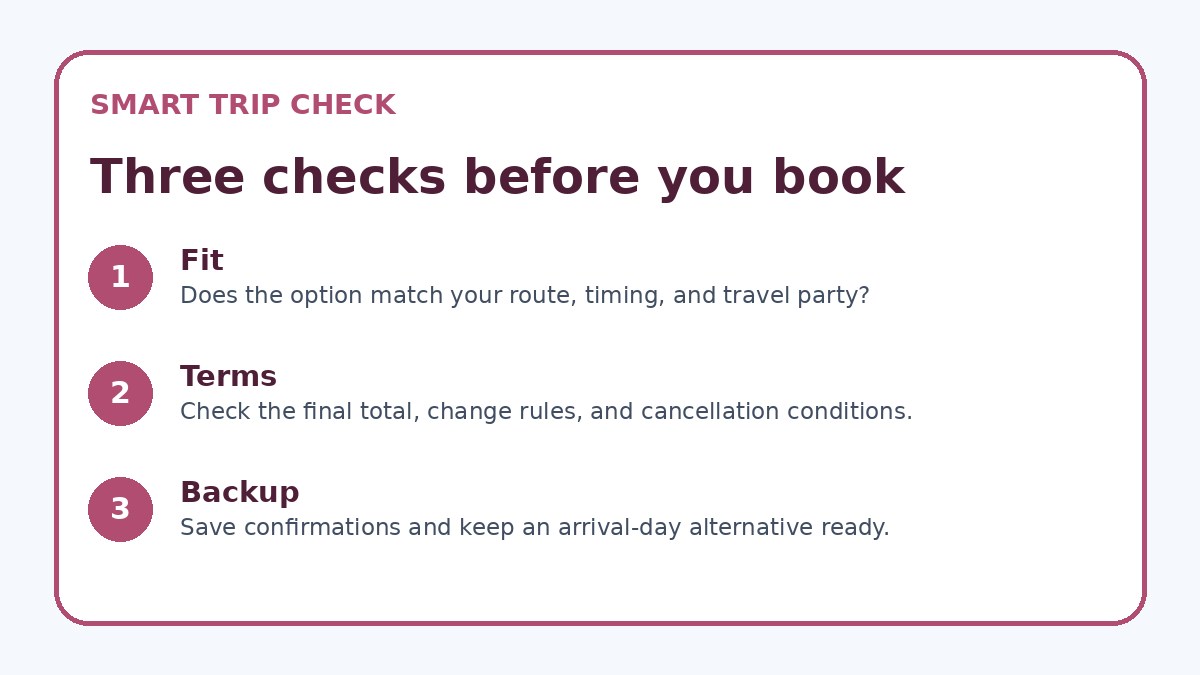
Pick lodging by total stay cost and meeting proximity
Hotel choice often dominates Las Vegas trip budgets because room rates can be complicated by mandatory resort fees, daily parking charges, and housekeeping or business‑service surcharges. When comparing hotels, add room rate plus the stated daily resort fee and parking to get an accurate nightly cost. If the booking page shows optional upgrades—late check‑out, suite upgrades, or breakfast packages—note whether those are refundable and whether they fit company policy. If you need meeting rooms or AV support, get firm quotes for those services rather than relying on advertised rates.
Proximity to where you need to be matters. Staying on the Strip near your meeting venue can reduce time and taxi costs; staying off‑Strip may cut the nightly rate but increase ride‑hail expenses and travel time. For a tight schedule, a moderately higher nightly cost can produce savings by avoiding expensive rush‑hour transfers and minimizing the risk of missing meetings. Prepare a tabulated comparison showing combined lodging plus first‑mile/last‑mile transfer costs for each option.
Before you book
- List every expense category—airfare, baggage, seat selection, transfers, parking, room rate, resort fees, Wi‑Fi, business services, meals, tips—and enter estimates for each.
- Compare door‑to‑door time for each flight option and convert time saved into a dollar rationale for management when needed.
- Verify mandatory hotel charges, parking terms, Wi‑Fi costs, meeting‑room fees, and cancellation policies on the hotel’s final booking page before confirming.
- Get an exact quote for airport transfers (shuttle, car service, ride‑hail) for your arrival/departure times, and check surge or event pricing risk.
- Prepare two manager‑ready itineraries (budget and convenience) with line‑item totals and a short justification for any policy exceptions.
- If using a corporate card or preferred vendor, confirm those rate rules and what expenses the company will not reimburse before booking.
Prepare a manager‑ready summary and negotiation points
Once you have the numbers, build a concise two‑option summary for approval: an economical itinerary and a convenience‑focused itinerary. List each option with line items and a final total, then flag differences that matter (time saved, baggage included, guaranteed pickups). Include an explanation of any nonstandard charges—resort fees, unusual cancellation penalties, or needed upgrades—and state what you’re requesting the manager to approve (e.g., higher per‑diem allowance, exception to hotel cap).
If corporate policy allows vendor selection, use the summary to negotiate better terms: ask the hotel for waived resort fees for business stays, request a corporate car‑service rate for airport transfers, or seek flexible ticket fare rules. When you contact providers, confirm the exact fees and cancellation rules shown on their booking pages before finalizing. Optionally compare availability and conditions on Trip.com, but always verify the provider’s final booking page for the authoritative terms.
Frequently asked questions
How do I handle resort fees and other mandatory hotel surcharges when booking for business?
Treat resort fees and mandatory surcharges as part of the nightly room cost and include them in your comparison. Before booking, find the hotel’s exact fee schedule on its official booking page and note whether the fee covers Wi‑Fi, fitness center access, or other services you’ll use for business. If corporate policy caps nightly spend, present a corrected total including those fees for approval or request the hotel waive the fee for a business rate. Don’t rely on third‑party sites alone—confirm the charge on the hotel’s final confirmation page.
What’s the best way to compare direct flights with connecting options for a business trip to Las Vegas?
Compare not just ticket price but total door‑to‑door time, likelihood of delays at connection hubs, and baggage transfer rules. For each option, add transfer time to and from airports and account for potential missed‑connection costs (rebooking, overnight stays, or expensive re‑routing). For tight schedules, prioritize direct flights despite higher fare if they reduce risk of missing meetings. Verify baggage allowances and change or refund rules on the airline’s booking page so you know the true flexibility and potential extra costs before purchasing.
Should I rent a car in Las Vegas or rely on ride‑hailing and hotel transfers for business travel?
Decide based on your meeting locations, number of people traveling, and parking costs at your hotel and meeting venues. If meetings are concentrated on the Strip or downtown and parking is expensive, ride‑hail or a corporate car service may be cheaper and less stressful. If you need multiple off‑site visits, carry equipment, or travel outside peak hours, a rental could save time despite insurance and parking fees. Get rental, parking, and estimated ride‑hail costs into your comparison and verify insurer rules and company reimbursement policies before booking.
Final planning note
Checking the full trip cost for Las Vegas travel deals before booking turns uncertain expense reports into predictable budgets and minimizes surprises during business travel. By mapping every monetary and time cost—airfare rules, baggage, transfers, mandatory hotel charges, parking, and meeting‑room needs—you can create clear, manager‑ready options that balance savings against productivity. Use side‑by‑side comparisons, quantify time savings when relevant, and always verify exact fees and cancellation terms on suppliers’ final booking pages. Presenting a simple budget and a convenience alternative speeds approvals and reduces personal liability for unexpected out‑of‑policy spending, making your Las Vegas business trip smoother and more defensible.
Continue planning
Check current options and final conditions
Use the provider page to confirm live availability, the final total, cancellation terms, and every condition that matters to your trip.
This evergreen planning guide was created with AI-assisted drafting and a structured quality review. It does not display live prices, schedules, availability, visa guidance, or provider rankings. Verify current details before booking. Some links are affiliate links; we may earn a commission at no additional cost to you.