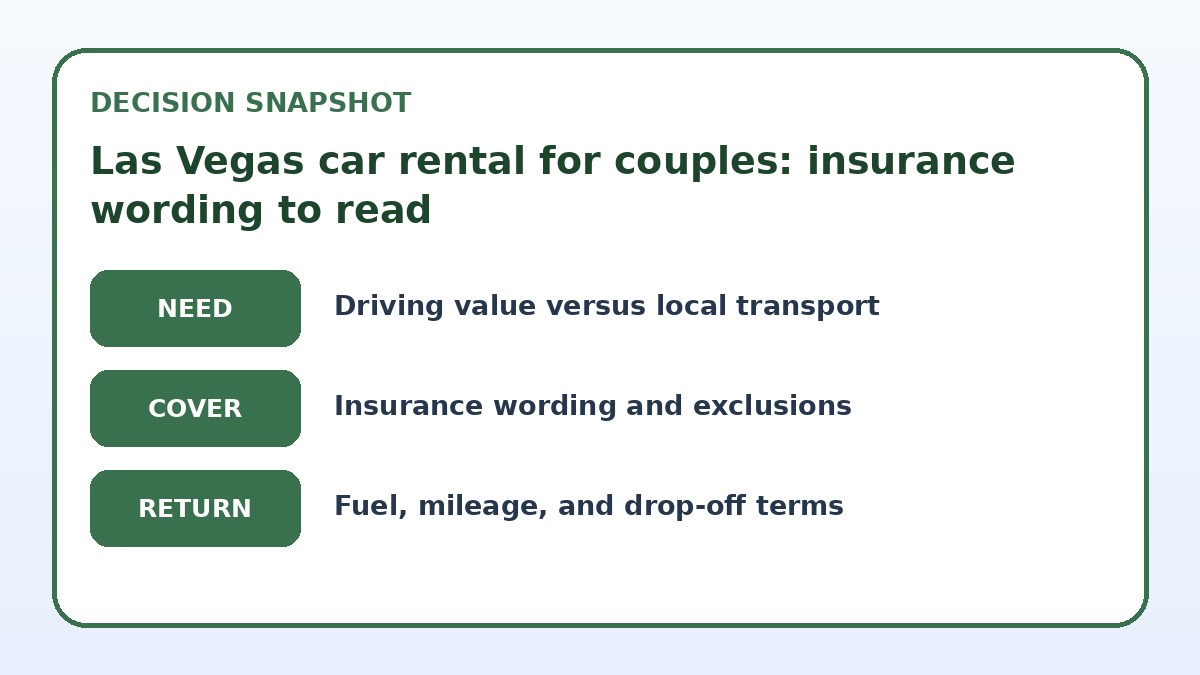
If you and your partner plan to rent a car in Las Vegas, read the insurance wording before you finish booking. The practical answer: check who is named as an authorized driver, whether collision damage waivers (CDW/LDW) reduce your financial responsibility, how liability coverage works in Nevada, and whether credit card benefits or your personal auto policy overlap — or conflict — with the rental terms. Do this before you click confirm so you can compare real out-of-pocket risk rather than sticker prices. The rest of this guide explains common policy language, the tradeoffs couples face when deciding on additional coverage, and the exact provider details to verify on the rental company’s final booking page.
See current options before you compare the details
Availability and final conditions change. Open Trip.com now or keep reading for the practical comparison.
Key insurance words couples must understand
Insurance wording on a Las Vegas car rental contract often uses terms like Collision Damage Waiver (CDW), Loss Damage Waiver (LDW), Supplemental Liability Insurance (SLI), and Loss of Use. CDW/LDW are not insurance in the traditional sense; they are waivers the rental company sells to limit your financial responsibility for damage to the vehicle. Couples should understand whether the waiver is absolute or subject to a deductible, and whether specific events—off-road driving, driving under influence, or unauthorized drivers—void the waiver entirely.
Supplemental Liability Insurance and third-party liability can be especially important in Nevada because they affect who pays for injuries or property damage to others after an accident. The rental’s liability coverage often starts at a low base and can be supplemented by SLI. Read the contract’s wording about “primary” versus “secondary” coverage language: if your personal auto policy is primary, the rental company’s SLI may act as a top-up; if your card provides primary protection, that changes how claims are processed.
How to decide between rental waivers and your own coverage
Start by listing the coverage already available to each partner: personal auto insurance, employer policies (for business rentals), and credit card benefits. If either partner has comprehensive and collision on their personal policy, the rental damage could be covered, but typically as secondary coverage — covering deductibles and gaps after the rental company’s charges. Couples should weigh whether paying for the rental firm’s CDW eliminates potential claims against their personal insurance file and future premiums, which might be worth the extra cost in some circumstances.
Credit card coverage can often be primary and cover damage if you pay for the rental with that card, but terms vary widely. Confirm whether the card’s protection allows multiple drivers, whether it covers certain vehicle categories (luxury cars, SUVs), and whether it excludes specific countries or U.S. states. For Nevada and Las Vegas, make sure the card issuer explicitly permits coverage in the rental contract’s jurisdiction and that the named drivers on the rental match the cardholder’s permitted list.
| Approach | Best for | Tradeoff to check |
|---|---|---|
| Use rental company CDW/LDW | Couples wanting a straightforward, immediate reduction of financial exposure | Higher daily cost but fewer steps when filing a claim and often no impact on personal insurance claims |
| Rely on personal auto insurance | Couples with robust collision/comprehensive policies who accept secondary coverage | Potential deductible and possible premium impact if you file a claim; may not cover all rental exclusions |
| Rely on credit card coverage | Couples who pay with a card offering primary rental protection and meet its terms | Card terms can exclude drivers, vehicle types, or require claim repayment processes that are slower and sometimes complex |
| Mix approaches (card + minimal SLI or occupant waiver) | Couples balancing lower rental fees with targeted extra liability protection | Requires careful reading to avoid overlapping gaps; managing multiple providers can complicate claims |
Ready to check the option that fits your plan?
Use your exact dates and traveler details so the provider page can show the current total and conditions.
Common contract traps to watch for in Las Vegas rentals
Watch the fine print on the reservation and the counter paperwork. Many couples assume the person who made the booking is the only driver covered; the rental company often requires every driver’s name, age, and license to be on the contract. Some companies add a per-day fee for additional drivers or for drivers under a certain age. If you and your partner plan to switch drivers during a trip, verify the wording that outlines authorized driver switching and any additional costs or exclusions that might void waivers when drivers change.
Another trap is assuming credit card protection and personal insurance cover everything. Contracts often list exclusions such as “loss of use” charges (the rental company’s lost revenue while the car is being repaired), administrative fees, and parts like tires or windshields that may not be covered unless specifically mentioned. Couples should ask the counter agent to point out exclusions and get clarification on whether the contract imposes responsibilities that are not covered by waivers or external policies.
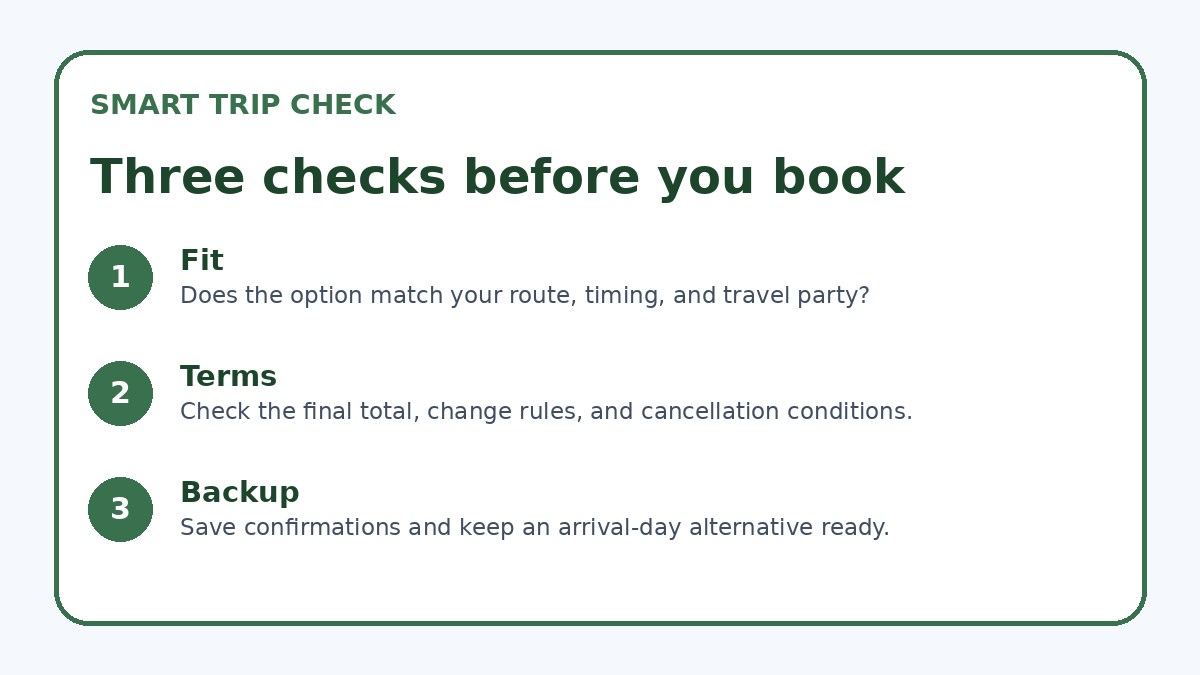
Before you book
- List both partners’ insurance and credit-card rental benefits with policy numbers before you book.
- Confirm on the rental booking page whether both drivers must be named now or can be added at pickup and note any additional-driver fees.
- Ask the counter agent to point out exclusions like off-road use, underage drivers, and specific parts not covered by CDW/LDW.
- If using credit card coverage, request the card issuer’s rental protection terms in writing and verify permitted drivers and vehicle categories.
- Take dated photos of the vehicle at pickup and note mileage and existing damage on the rental contract before you drive away.
- Keep all receipts and the signed rental agreement; if you decline coverage and later file through a card or personal policy, those documents are required for claims.
What to verify on the booking page and at pickup
Before finalizing a reservation, check the rental page for exact wording about included protections, who is allowed to drive, young driver fees, and cancellation policies. If the website lists insurance products by name, click through to the full policy PDF or terms and read for deductible amounts, coverage limits, and exclusions. Remember that promotional language on a booking page is not a substitute for the rental agreement you sign at pickup; always save or screenshot the exact terms shown at booking for later reference.
At the rental desk, take time to have the agent explain any add-ons and to show the insurance clauses in the contract. Confirm that both partners’ licenses and credit cards are acceptable and that any promised waivers or discounts are printed on the contract. If you plan to use credit card coverage, confirm with the agent that declining the company’s CDW is allowed and note any language that would require you to pay up-front and seek reimbursement from the card company.
Frequently asked questions
Does Nevada law change what rental companies must include in their insurance wording?
Nevada requires rental companies to display basic information about optional protections, but the specific waivers and limits are set by the rental company rather than state law. That means the contract’s wording governs your responsibilities and any obligations you accept at the counter. Couples should therefore read the rental agreement closely and ask the agent which tenant or vehicle uses (for example, driving into restricted areas) would void waivers. On the booking page and at pickup, verify the exact policy names, deductible amounts, and liability limits spelled out in the rental agreement rather than relying on summary text.
If my partner and I both have auto policies, which covers a rental in Las Vegas?
Often, the partner whose name is on the rental contract and who is the listed driver will be the primary contact for the rental company, but how coverage applies depends on each personal policy’s terms. Many personal auto policies extend coverage to permissive drivers, covering damage as either primary or secondary. Couples should call their insurers before travel to confirm whether a rental in Nevada is covered, whether coverage is primary or secondary, and whether there are exclusions for certain vehicle types or rental durations. Get written confirmation — an email or policy note — to present if needed for claims.
Can we rely on a credit card’s rental coverage if both of us intend to drive?
Possibly, but the card’s terms matter. Some cards allow only the primary cardholder to be covered; others permit additional household cardholders but may still require that anyone who drives be listed or meet age requirements. Contact the card issuer and request the exact rental coverage policy, asking specifically about permitted additional drivers, age limits, and whether coverage applies in Nevada. Also confirm whether the card requires you to decline the rental company’s CDW at the counter — and whether any refund or reimbursement process will require you to pay the rental firm first.
Final planning note
For couples renting in Las Vegas, the smartest move is to verify wording rather than assume coverage. Decide whether you value a simpler claims process and immediate CDW/LDW protection, or whether you prefer leveraging personal auto insurance or credit card benefits to save on rental fees. Always match the rental contract’s named drivers to the drivers listed by your insurer or card provider, get coverage terms in writing, and clarify deductibles and exclusions at pickup. Taking those steps keeps surprise charges off the final bill and helps you make a quicker, clearer claim if anything goes wrong while you’re in Nevada.
Continue planning
Check current options and final conditions
Use the provider page to confirm live availability, the final total, cancellation terms, and every condition that matters to your trip.
This evergreen planning guide was created with AI-assisted drafting and a structured quality review. It does not display live prices, schedules, availability, visa guidance, or provider rankings. Verify current details before booking. Some links are affiliate links; we may earn a commission at no additional cost to you.